Loading...
Cleisthenes vs Yi Seong-gye
Cleisthenes leads by 2.5 pts · 2 figures compared
…
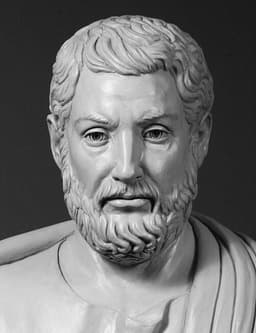
Cleisthenes
Politician · Ancient
78.3Total
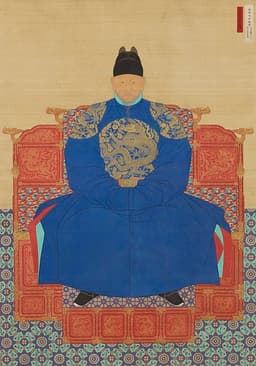
Yi Seong-gye
Emperor · Medieval
75.8Total
Basic Information
Born
-570
1335
Died
-508
1408
Era
Ancient
Medieval
Nationality
Greece
Korea
Occupation
Politician
Emperor
Civilization
Western
Eastern
Score Comparison
Military (10%)
49.4
74.7
Political (20%)
62.7
70.0
Influence (20%)
92.0
88.0
Legacy (20%)
92.0
75.0
Leadership (15%)
72.0
68.0
Strategy (15%)
71.3
69.1
TOTAL
78.3
75.8
Cleisthenes — Complete Timeline
510 BC
Expulsion of the PeisistratidsPolitical Action◆ Major
Cleisthenes, with the support of the Alcmaeonid family and Spartan assistance, led the overthrow of the tyrant Hippias, son of Peisistratus. This ended the Peisistratid tyranny in Athens and opened the way for democratic reforms.
Tyranny OverthrownAthensSparta
Impact: nationalconstructive
508 BC
Reforms of CleisthenesReform
Cleisthenes reorganized the Athenian citizen body into ten new tribes based on demes, replacing the old four Ionian tribes. He established the Council of 500 (Boule) and introduced ostracism, creating a system of isonomia (equal rights) that is considered the foundation of Athenian democracy.
Athenian DemocracyConstitutional ReformAncient Greece
Impact: globalprogressive
507 BC
Introduction of OstracismReform◆ Major
Cleisthenes instituted ostracism, a procedure allowing Athenian citizens to vote annually to exile a prominent citizen deemed a threat to democracy for ten years. This mechanism aimed to prevent the rise of a new tyrant and stabilize the democratic system.
Athenian DemocracyPolitical MechanismExile
Impact: national
Yi Seong-gye — Complete Timeline
1380 AD
Battle of HwangsanWar◆ Major
Yi Seong-gye led Goryeo forces against Japanese pirates (wokou) at the Battle of Hwangsan. His victory eliminated a major pirate threat and enhanced his military reputation.
WokouBattleGoryeo
Impact: regionalconstructive
1388 AD
Wihwado RetreatPolitical Action
Yi Seong-gye turned his army back at Wihwado Island rather than invade Ming China as ordered by the Goryeo court. This act of defiance led to a coup that eventually brought him to power.
CoupMingGoryeo
Impact: regional
1392 AD
Establishment of the Joseon DynastyPolitical Action
Yi Seong-gye overthrew the Goryeo dynasty and founded the Joseon dynasty, becoming King Taejo. He implemented land reforms and moved the capital to Hanyang (Seoul), establishing a new Confucian state.
JoseonDynasty FoundationReform
Impact: regionalconstructive
Expert Analysis
Origins
Cleisthenes was born into the aristocratic Alcmaeonid family in Athens around 570 BCE. His lineage was both a privilege and a liability: the Alcmaeonids were cursed for a massacre and often exiled. Cleisthenes' early life was shaped by the tyranny of Peisistratus and his sons, which forced his family into exile. This experience fueled his later democratic reforms. In contrast, Yi Seong-gye (1335–1408) was born into a military family in the declining Goryeo dynasty. His father, Yi Ja-chun, was a minor official, and Yi rose through military ranks. The late 14th century was a period of turmoil: Mongol influence waned, Japanese pirates raided coasts, and internal corruption plagued Goryeo. Yi's origins were humble compared to Cleisthenes, but both were products of unstable times.
Rise to Power
Cleisthenes returned to Athens in 510 BCE after the Spartan king Cleomenes I helped expel the tyrant Hippias. Initially, Cleisthenes faced competition from Isagoras, a pro-Spartan aristocrat. When Isagoras gained power, he exiled Cleisthenes again. But Cleisthenes rallied the Athenian demos (common people) by promising political reforms. With popular support, he overthrew Isagoras and implemented his reforms in 508/507 BCE. His rise was a political coup backed by the masses. Yi Seong-gye's rise was military. He distinguished himself in campaigns against Mongol-led Red Turbans and Japanese pirates. In 1388, he was ordered to invade the Ming dynasty but turned his army back at the Yalu River (Wihwado Retreat), a decisive act of defiance against the Goryeo court. This retreat, coupled with his military victories, garnered support from reform-minded officials and Confucian scholars. He gradually seized power, deposing King U and eventually founding the Joseon dynasty in 1392.
Leadership & Governance
Cleisthenes' leadership was transformative: he reorganized Athenian society into ten tribes based on demes (local communities), breaking the power of aristocratic clans. He created the Council of 500 (boule), with members chosen by lot, and introduced ostracism to prevent tyranny. These reforms established the foundations of Athenian democracy, empowering citizens regardless of wealth. His governance was innovative but limited to free adult males. Yi Seong-gye's governance was authoritarian but pragmatic. He centralized power, moved the capital to Hanyang (Seoul), and promoted Confucianism as state ideology, replacing Buddhism. He implemented land reforms (Gwajeon law) to redistribute land to officials, weakening the old aristocracy. He also established a strong bureaucracy based on merit exams. While Cleisthenes democratized, Yi consolidated monarchy. Both faced resistance: Cleisthenes from aristocrats, Yi from Goryeo loyalists.
Triumph & Tragedy
Cleisthenes' triumph was the successful implementation of his reforms, which survived despite Spartan intervention and internal strife. The tragedy was that his democracy was later corrupted by demagogues and eventually fell to Macedonian conquest. His personal fate is unclear; he likely died in obscurity. Yi Seong-gye's triumph was founding the Joseon dynasty, which lasted over 500 years. His tragedy was the internal conflict among his sons over succession. Yi deposed his own son (Jeongjong) and named another (Taejong) as heir, leading to bloodshed. He also faced a rebellion from his former ally, Jeong Do-jeon. Yi abdicated in 1398 and died in 1408, witnessing family strife.
Character & Destiny
Cleisthenes was a visionary reformer, willing to empower the common people despite his aristocratic background. He was strategic and resilient, surviving exile and political turmoil. His destiny was to be remembered as the "Father of Athenian Democracy," a title he earned by sacrificing aristocratic privilege for broader participation. Yi Seong-gye was a pragmatic military leader, decisive in battle but cautious in politics. He was influenced by Confucian ideals and sought legitimacy through ritual and reform. His destiny was to found a dynasty that shaped Korean history for centuries. Both men were ambitious but channeled ambition into lasting institutions: Cleisthenes into democratic processes, Yi into a dynastic state.
Legacy
Cleisthenes' legacy is immense: his reforms directly influenced later democracies, including the United States. The concept of ostracism and the council system are studied as early democratic innovations. His score of 92 in Innovation reflects this. Yi Seong-gye's legacy is the Joseon dynasty, which saw cultural flourishing (Hangul alphabet, Confucian scholarship) but also rigid social hierarchy. His military prowess and political acumen are admired, but his dynasty's long duration also meant stagnation. His Innovation score of 88 is high due to land and administrative reforms. Both have enduring national monuments: Cleisthenes in Athenian democracy, Yi in the Joseon legacy in modern Korea.
Conclusion
Cleisthenes and Yi Seong-gye were both founders of political systems, but their impacts differ. Cleisthenes created a system that valued citizen participation, while Yi created a centralized monarchy. Cleisthenes' democracy was more fragile but more influential globally. Yi's dynasty was stable but authoritarian. In a direct comparison, Cleisthenes edges ahead due to the universal appeal of democracy. His scores (Overall: 72.5) slightly surpass Yi's (70.0), but the gap is narrow. Cleisthenes wins for innovation and long-term ideological impact, while Yi wins for military and state-building. Ultimately, Cleisthenes' contribution to political thought is more significant, making him the victor in this historical matchup.
Rankings
🥇
CleisthenesLeader
Mil: 49.4Pol: 62.7Inf: 92.0
78.3
🥈
Yi Seong-gye
Mil: 74.7Pol: 70.0Inf: 88.0
75.8
+2.5 behind
How This Comparison Works
Algorithm
Each figure is scored on 6 dimensions (0—100 scale) based on structured historical data: Military (10%), Political (20%), Influence (20%), Legacy (20%), Leadership (15%), Strategy (15%). The weighted total produces the final ranking.
Data Sources
Scores are computed from structured sub-indicators in the database. Scale factors adjust for era (Ancient ×0.85, Modern ×1.0) and civilization size (Eastern ×1.05, Other ×0.80) to account for differences in population and military scale.
Maximum 3 Figures
Comparisons are limited to 2—3 figures to ensure readability and statistical meaningfulness.
Error Margins
±5 points per dimension — Sub-scores are derived from historical records with inherent uncertainty. Two figures within 5 points on a dimension should be considered roughly equivalent in that area.
Total Score Accuracy
±3 points overall — The weighted combination of 6 dimensions produces a total score with approximately ±3 points of uncertainty. Differences of less than 3 points are not statistically significant— the figures are effectively tied.
Known Limitations
- Historical records are incomplete and uneven across civilizations
- Figures from oral-tradition societies may be underrepresented
- Occupation labels can misclassify multi-role figures
- Scores measure capability and impact, not moral character
- Quantitative scoring is a comparison tool, not absolute truth
Capability Radar
Military (10%) — Battles & Warfare
Battles
58
75
Win Rate
62
80
Expansion
59
65
Political (20%) — Governance & Reform
Reform
95
85
Diplomacy
70
75
Economy
40
70
Influence (20%) — Cultural & Global Reach
Cultural
85
80
Global
85
55
Legacy (20%) — Historical Impact
Historical
90
85
Longevity
95
80
Leadership (15%) — Power & Stability
Tenure
30
60
Stability
60
65
Strategy (15%) — Tactics & Innovation
Strategy
62
82
Tactics
67
78
Reform
72
70
Similar Comparisons
Comments & Discussion
No comments yet. Be the first to share your thoughts!