Loading...
Cleisthenes vs Xu Da
Cleisthenes leads by 3.4 pts · 2 figures compared
…
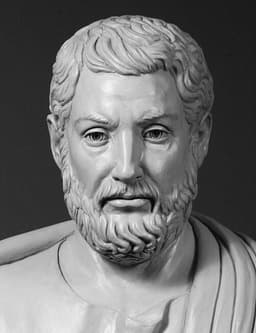
Cleisthenes
Politician · Ancient
78.3Total
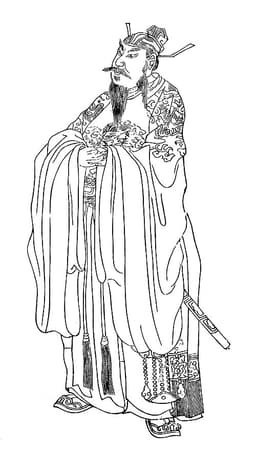
Xu Da
General · Medieval
74.9Total
Basic Information
Born
-570
1332
Died
-508
1385
Era
Ancient
Medieval
Nationality
Greece
China
Occupation
Politician
General
Civilization
Western
Eastern
Score Comparison
Military (10%)
49.4
88.0
Political (20%)
62.7
68.0
Influence (20%)
92.0
82.0
Legacy (20%)
92.0
72.0
Leadership (15%)
72.0
62.0
Strategy (15%)
71.3
80.8
TOTAL
78.3
74.9
Cleisthenes — Complete Timeline
510 BC
Expulsion of the PeisistratidsPolitical Action◆ Major
Cleisthenes, with the support of the Alcmaeonid family and Spartan assistance, led the overthrow of the tyrant Hippias, son of Peisistratus. This ended the Peisistratid tyranny in Athens and opened the way for democratic reforms.
Tyranny OverthrownAthensSparta
Impact: nationalconstructive
508 BC
Reforms of CleisthenesReform
Cleisthenes reorganized the Athenian citizen body into ten new tribes based on demes, replacing the old four Ionian tribes. He established the Council of 500 (Boule) and introduced ostracism, creating a system of isonomia (equal rights) that is considered the foundation of Athenian democracy.
Athenian DemocracyConstitutional ReformAncient Greece
Impact: globalprogressive
507 BC
Introduction of OstracismReform◆ Major
Cleisthenes instituted ostracism, a procedure allowing Athenian citizens to vote annually to exile a prominent citizen deemed a threat to democracy for ten years. This mechanism aimed to prevent the rise of a new tyrant and stabilize the democratic system.
Athenian DemocracyPolitical MechanismExile
Impact: national
Xu Da — Complete Timeline
1368 AD
Capture of Dadu (Beijing)War
Xu Da led the Ming army in the capture of Dadu, the Yuan capital. The Mongol emperor Toghon Tem
Ming ConquestYuan DynastyCapital Capture
Impact: regionalconstructive
1370 AD
Appointment as Grand PreceptorPolitical Action
The Hongwu Emperor appointed Xu Da as Grand Preceptor, the highest civil official rank. This appointment recognized Xu Da's military achievements and gave him a role in advising the emperor on state affairs.
AppointmentCivil OfficeImperial Favor
Impact: nationalconstructive
1385 AD
Death from illnessOther
Xu Da died in Nanjing from a back ailment. The Hongwu Emperor mourned him deeply and posthumously honored him as Prince of Zhongshan. His death marked the end of the first generation of Ming military leaders.
DeathMing DynastyMilitary Leader
Impact: nationaltragic
Expert Analysis
Origins
Cleisthenes was born into the aristocratic Alcmaeonid family in Athens around 570 BCE. His lineage was marked by both political influence and a curse for sacrilege. He grew up during a period of aristocratic strife and tyranny, which shaped his later reforms. Xu Da, born in 1332 in present-day Fengyang, Anhui, came from a poor peasant family. He joined the Red Turban Rebellion led by Zhu Yuanzhang, the future Hongwu Emperor, and rose through military prowess. Both emerged from turbulent times, but Cleisthenes leveraged noble birth, while Xu Da overcame humble origins.
Rise to Power
Cleisthenes initially vied for power against Isagoras after the expulsion of the tyrant Hippias. When Isagoras became archon in 508/507 BCE, Cleisthenes appealed to the common people by proposing democratic reforms. He gained popular support and, after a Spartan intervention failed, implemented his reforms. In contrast, Xu Da distinguished himself in early battles against Mongol forces, such as the capture of Nanjing in 1356. He became Zhu Yuanzhang's most trusted general, leading campaigns that unified China. His rise was military, not political, based on loyalty and battlefield success.
Leadership & Governance
Cleisthenes' leadership was institutional and reformist. He reorganized the Athenian population into ten tribes based on demes (local communities), breaking the power of aristocratic clans. He created the Council of 500, which prepared legislation for the Assembly, and introduced ostracism to prevent tyranny. His reforms established the foundation of Athenian democracy, emphasizing citizen participation and equality before the law. Xu Da's leadership was military and strategic. He commanded massive armies, known for discipline and effective siege tactics. As Grand Preceptor, he advised the emperor but avoided political intrigue. His governance focused on consolidating Ming control, expelling Mongols, and securing borders. Both were effective, but Cleisthenes' impact was systemic, while Xu Da's was operational.
Triumph & Tragedy
Cleisthenes' greatest triumph was the establishment of democratic institutions that endured for centuries. His reforms enabled Athens to become a major power and cultural center. However, his later life is obscure; he may have been ostracized himself, a tragic irony. Xu Da's triumph was the capture of Dadu (Beijing) in 1368, ending Mongol rule. He also won the Battle of Lake Buir in 1388, crushing Mongol remnants. His tragedy was his death from illness in 1385, possibly hastened by overwork. He died at the peak of his fame, but his loyalty was rewarded with posthumous honors.
Character & Destiny
Cleisthenes was a visionary aristocrat who chose to empower the demos. His intelligence and political savvy (I=92, L=92) allowed him to outmaneuver rivals and create lasting change. His destiny was to be remembered as the father of democracy. Xu Da was a humble, loyal general (M=88, P=68) who never sought personal power. His discipline and strategic brilliance (I=82) made him indispensable. His destiny was to be the architect of Ming military success. Both had high integrity and loyalty, but Cleisthenes' character was more innovative, while Xu Da's was more steadfast.
Legacy
Cleisthenes' legacy is immense: his democratic reforms directly influenced modern democratic systems. The concept of ostracism and tribal organization were precursors to representative government. He is often overshadowed by Pericles but is rightly credited as the founder of Athenian democracy. Xu Da's legacy is as the greatest general of the Ming dynasty. He is revered for expelling the Mongols and unifying China. His descendants held noble titles for generations. However, his military achievements, while crucial, did not create new political systems. In a historical comparison, Cleisthenes' institutional legacy has broader and longer-lasting impact.
Conclusion
Cleisthenes and Xu Da represent different forms of greatness: political reformer vs military conqueror. Cleisthenes' reforms created a system that empowered citizens and influenced centuries of governance. Xu Da's victories secured the Ming dynasty but did not transform political structures. The score gap (3.4 higher for Cleisthenes) reflects this: his intellectual and legacy scores (I=92, L=92) outweigh Xu Da's military might (M=88). While Xu Da was a brilliant general, Cleisthenes changed the course of political history. Thus, Cleisthenes is the more significant historical figure.
**Scores:** Cleisthenes: M=49, P=63, I=92, L=92, D=72, S=71, T=78. Xu Da: M=88, P=68, I=82, L=72, D=62, S=81, T=75.
Rankings
🥇
CleisthenesLeader
Mil: 49.4Pol: 62.7Inf: 92.0
78.3
🥈
Xu Da
Mil: 88.0Pol: 68.0Inf: 82.0
74.9
+3.4 behind
How This Comparison Works
Algorithm
Each figure is scored on 6 dimensions (0—100 scale) based on structured historical data: Military (10%), Political (20%), Influence (20%), Legacy (20%), Leadership (15%), Strategy (15%). The weighted total produces the final ranking.
Data Sources
Scores are computed from structured sub-indicators in the database. Scale factors adjust for era (Ancient ×0.85, Modern ×1.0) and civilization size (Eastern ×1.05, Other ×0.80) to account for differences in population and military scale.
Maximum 3 Figures
Comparisons are limited to 2—3 figures to ensure readability and statistical meaningfulness.
Error Margins
±5 points per dimension — Sub-scores are derived from historical records with inherent uncertainty. Two figures within 5 points on a dimension should be considered roughly equivalent in that area.
Total Score Accuracy
±3 points overall — The weighted combination of 6 dimensions produces a total score with approximately ±3 points of uncertainty. Differences of less than 3 points are not statistically significant— the figures are effectively tied.
Known Limitations
- Historical records are incomplete and uneven across civilizations
- Figures from oral-tradition societies may be underrepresented
- Occupation labels can misclassify multi-role figures
- Scores measure capability and impact, not moral character
- Quantitative scoring is a comparison tool, not absolute truth
Capability Radar
Military (10%) — Battles & Warfare
Battles
58
95
Win Rate
62
95
Expansion
59
95
Political (20%) — Governance & Reform
Reform
95
50
Diplomacy
70
65
Economy
40
55
Influence (20%) — Cultural & Global Reach
Cultural
85
70
Global
85
80
Legacy (20%) — Historical Impact
Historical
90
85
Longevity
95
75
Leadership (15%) — Power & Stability
Tenure
30
60
Stability
60
70
Strategy (15%) — Tactics & Innovation
Strategy
62
92
Tactics
67
90
Reform
72
70
Similar Comparisons
Comments & Discussion
No comments yet. Be the first to share your thoughts!