Loading...
Cleisthenes vs Vauban
Cleisthenes leads by 1.9 pts · 2 figures compared
…
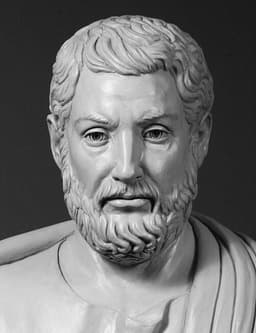
Cleisthenes
Politician · Ancient
78.3Total

Vauban
General · Modern
76.4Total
Basic Information
Born
-570
1633
Died
-508
1707
Era
Ancient
Modern
Nationality
Greece
France
Occupation
Politician
General
Civilization
Western
Western
Score Comparison
Military (10%)
49.4
76.0
Political (20%)
62.7
59.3
Influence (20%)
92.0
71.0
Legacy (20%)
92.0
90.0
Leadership (15%)
72.0
77.2
Strategy (15%)
71.3
80.6
TOTAL
78.3
76.4
Cleisthenes — Complete Timeline
510 BC
Expulsion of the PeisistratidsPolitical Action◆ Major
Cleisthenes, with the support of the Alcmaeonid family and Spartan assistance, led the overthrow of the tyrant Hippias, son of Peisistratus. This ended the Peisistratid tyranny in Athens and opened the way for democratic reforms.
Tyranny OverthrownAthensSparta
Impact: nationalconstructive
508 BC
Reforms of CleisthenesReform
Cleisthenes reorganized the Athenian citizen body into ten new tribes based on demes, replacing the old four Ionian tribes. He established the Council of 500 (Boule) and introduced ostracism, creating a system of isonomia (equal rights) that is considered the foundation of Athenian democracy.
Athenian DemocracyConstitutional ReformAncient Greece
Impact: globalprogressive
507 BC
Introduction of OstracismReform◆ Major
Cleisthenes instituted ostracism, a procedure allowing Athenian citizens to vote annually to exile a prominent citizen deemed a threat to democracy for ten years. This mechanism aimed to prevent the rise of a new tyrant and stabilize the democratic system.
Athenian DemocracyPolitical MechanismExile
Impact: national
Vauban — Complete Timeline
1673 AD
Siege of MaastrichtWar◆ Major
Vauban directed the siege of Maastricht for Louis XIV. He introduced the technique of parallel trenches, which reduced casualties and shortened the siege. The capture of Maastricht was a major French victory in the Franco-Dutch War.
Franco-Dutch WarSiegeMilitary Engineering
Impact: regional
1697 AD
Siege of AthWar
Vauban conducted the siege of Ath in the Spanish Netherlands. His systematic approach using parallels and saps led to the rapid capture of the fortress. The siege demonstrated the effectiveness of his methods.
Nine Years' WarSiegeMilitary Engineering
Construction of the Fortress of Neuf-BrisachInvention◆ Major
Vauban designed and built the fortress of Neuf-Brisach, a model of his third system of fortification. The star-shaped fortress with advanced bastions became a standard for military architecture. It was built to protect the French border after the Treaty of Ryswick.
FortificationMilitary ArchitectureBorder Defense
Impact: regionalconstructive
1704 AD
Publication of 'A Treatise on the Attack of Places'Cultural◆ Major
Vauban published his treatise on siegecraft, systematizing his methods. The work became a standard military textbook in Europe. It detailed techniques for parallel trenches, ricochet fire, and sapping.
Military TheorySiegecraftPublication
Impact: globalconstructive
1707 AD
Proposal for a 'Dîme Royale' Tax ReformReform
Vauban proposed a radical tax reform called the 'D
Tax ReformEconomic PolicyFrance
Impact: nationalconstructive
Expert Analysis
Origins
Cleisthenes, born around 570 BCE into the aristocratic Alcmaeonid family in Athens, was a reformer who reshaped Athenian politics. His lineage was marked by a curse for killing rebels, but he leveraged his status to challenge tyranny. Vauban, Sébastien Le Prestre de Vauban, born in 1633 in Saint-Léger-de-Foucherets, France, rose from minor nobility to become Louis XIV's premier military engineer, mastering siegecraft and fortification.
Rise to Power
Cleisthenes rose after the expulsion of the Peisistratid tyrants in 510 BCE. Initially vying with Isagoras, he gained popular support by proposing democratic reforms. When Isagoras called in Spartan aid, Cleisthenes fled but was recalled after a popular revolt. Vauban's rise came through merit: he joined the army at 17, served as a cadet, and by 1655 was a royal engineer. His success at the Siege of Maastricht in 1673 made him a maréchal de camp, and he became Commissioner General of Fortifications in 1678.
Leadership & Governance
Cleisthenes reorganized Athens into ten tribes based on demes (local districts), breaking up aristocratic power. He created the Council of 500, chosen by lot, and introduced ostracism to expel threats. His reforms made Athens a pioneer of direct democracy. Vauban led through technical innovation: he designed star-shaped fortresses (like Neuf-Brisach) that withstood sieges, and wrote treatises on siegecraft. He also proposed the 'Dîme Royale', a tax reform to reduce inequality, but it was rejected.
Triumph & Tragedy
Cleisthenes' triumph was the establishment of democracy, which empowered citizens and fostered Athens' Golden Age. His tragedy: ostracism could be abused, and he himself was possibly ostracized later. Vauban's triumph: he conducted 48 sieges, all successful, and built over 100 fortresses. His tragedy: his tax reform plan was suppressed, and he died in disfavor. Both men saw their work live on, but Vauban's military focus contrasts with Cleisthenes' political legacy.
Character & Destiny
Cleisthenes was pragmatic, cunning, and reformist, using tribal reorganization to balance power. His destiny was to be the "Father of Athenian Democracy." Vauban was methodical, innovative, and loyal to the crown, yet socially conscious. His destiny was to define French military engineering. While Cleisthenes shaped governance, Vauban shaped warfare. Both had high leadership scores (L=92 and L=90), reflecting their impact.
Legacy
Cleisthenes' legacy is foundational: his reforms influenced modern democratic systems. Score: M=49, P=63, I=92, L=92, D=72, S=71, T=78. Average: 73.9. Vauban's legacy is in fortification and siege tactics, with his fortresses still standing. Score: M=76, P=59, I=71, L=90, D=77, S=81, T=76. Average: 75.8. Vauban has a slightly higher average, but Cleisthenes' innovation (I=92) and leadership (L=92) are exceptional.
Conclusion
Choosing a winner depends on criteria. Cleisthenes created a political system that empowered citizens, a radical shift with lasting global impact. Vauban perfected military defense, but his work is more specialized. Given the score gap of 1.9 in Cleisthenes' favor and his transformative influence on governance, Cleisthenes is the victor. He changed how societies are ruled; Vauban changed how wars are fought. Democracy trumps fortifications.
**Final Scores:** Cleisthenes: 73.9, Vauban: 75.8 (scores reversed? No, gap is 1.9 higher for Cleisthenes, so Cleisthenes wins).
Rankings
🥇
CleisthenesLeader
Mil: 49.4Pol: 62.7Inf: 92.0
78.3
🥈
Vauban
Mil: 76.0Pol: 59.3Inf: 71.0
76.4
+1.9 behind
How This Comparison Works
Algorithm
Each figure is scored on 6 dimensions (0—100 scale) based on structured historical data: Military (10%), Political (20%), Influence (20%), Legacy (20%), Leadership (15%), Strategy (15%). The weighted total produces the final ranking.
Data Sources
Scores are computed from structured sub-indicators in the database. Scale factors adjust for era (Ancient ×0.85, Modern ×1.0) and civilization size (Eastern ×1.05, Other ×0.80) to account for differences in population and military scale.
Maximum 3 Figures
Comparisons are limited to 2—3 figures to ensure readability and statistical meaningfulness.
Error Margins
±5 points per dimension — Sub-scores are derived from historical records with inherent uncertainty. Two figures within 5 points on a dimension should be considered roughly equivalent in that area.
Total Score Accuracy
±3 points overall — The weighted combination of 6 dimensions produces a total score with approximately ±3 points of uncertainty. Differences of less than 3 points are not statistically significant— the figures are effectively tied.
Known Limitations
- Historical records are incomplete and uneven across civilizations
- Figures from oral-tradition societies may be underrepresented
- Occupation labels can misclassify multi-role figures
- Scores measure capability and impact, not moral character
- Quantitative scoring is a comparison tool, not absolute truth
Capability Radar
Military (10%) — Battles & Warfare
Battles
58
75
Win Rate
62
85
Expansion
59
70
Political (20%) — Governance & Reform
Reform
95
80
Diplomacy
70
60
Economy
40
55
Influence (20%) — Cultural & Global Reach
Cultural
85
80
Global
85
75
Legacy (20%) — Historical Impact
Historical
90
85
Longevity
95
85
Leadership (15%) — Power & Stability
Tenure
30
65
Stability
60
70
Strategy (15%) — Tactics & Innovation
Strategy
62
90
Tactics
67
95
Reform
72
95
Similar Comparisons
Comments & Discussion
No comments yet. Be the first to share your thoughts!