Loading...
Cleisthenes vs Turenne
Cleisthenes leads by 2.5 pts · 2 figures compared
…
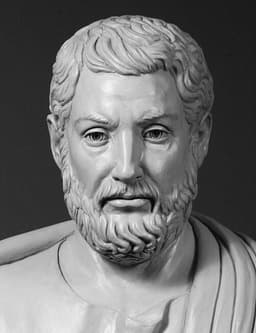
Cleisthenes
Politician · Ancient
78.3Total
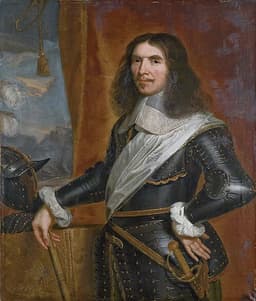
Turenne
General · Modern
75.8Total
Basic Information
Born
-570
1611
Died
-508
1675
Era
Ancient
Modern
Nationality
Greece
France
Occupation
Politician
General
Civilization
Western
Western
Score Comparison
Military (10%)
49.4
79.9
Political (20%)
62.7
72.0
Influence (20%)
92.0
88.0
Legacy (20%)
92.0
65.0
Leadership (15%)
72.0
77.2
Strategy (15%)
71.3
72.0
TOTAL
78.3
75.8
Cleisthenes — Complete Timeline
510 BC
Expulsion of the PeisistratidsPolitical Action◆ Major
Cleisthenes, with the support of the Alcmaeonid family and Spartan assistance, led the overthrow of the tyrant Hippias, son of Peisistratus. This ended the Peisistratid tyranny in Athens and opened the way for democratic reforms.
Tyranny OverthrownAthensSparta
Impact: nationalconstructive
508 BC
Reforms of CleisthenesReform
Cleisthenes reorganized the Athenian citizen body into ten new tribes based on demes, replacing the old four Ionian tribes. He established the Council of 500 (Boule) and introduced ostracism, creating a system of isonomia (equal rights) that is considered the foundation of Athenian democracy.
Athenian DemocracyConstitutional ReformAncient Greece
Impact: globalprogressive
507 BC
Introduction of OstracismReform◆ Major
Cleisthenes instituted ostracism, a procedure allowing Athenian citizens to vote annually to exile a prominent citizen deemed a threat to democracy for ten years. This mechanism aimed to prevent the rise of a new tyrant and stabilize the democratic system.
Athenian DemocracyPolitical MechanismExile
Impact: national
Turenne — Complete Timeline
1639 AD
Campaign in the ValtellinaWar
Turenne commanded French forces in the Valtellina during the Thirty Years' War. He captured several fortresses and secured the strategic pass for France, demonstrating his early military skill.
Thirty Years' WarAlpsEarly Career
Impact: regional
1658 AD
Battle of the DunesWar◆ Major
Turenne commanded the French army to victory over the Spanish at the Battle of the Dunes near Dunkirk. The victory led to the capture of Dunkirk and forced Spain to seek peace, ending the Franco-Spanish War.
Franco-Spanish WarDunkirkMilitary Victory
Impact: regional
1674 AD
Battle of the RhineWar◆ Major
Turenne led a French army across the Rhine in winter, surprising the Imperial forces. He defeated the Austrians at the Battle of Entzheim and later at Turckheim, securing French control of Alsace.
Franco-Dutch WarAlsaceWinter Campaign
Impact: regional
Battle of the SambreWar◆ Major
Turenne defeated the Spanish and Dutch forces at the Battle of Seneffe. The battle was costly but prevented the Allies from invading France. It demonstrated Turenne's tactical skill in defensive warfare.
Franco-Dutch WarDefensive BattleTactics
Impact: regional
1675 AD
Death of TurenneWar◆ Major
Turenne was killed by a cannonball while reconnoitering enemy positions at the Battle of Sasbach. His death was a major loss for France. He was buried with honors in the Basilica of Saint-Denis.
Death in BattleFranco-Dutch WarMilitary Loss
Impact: nationaltragic
Expert Analysis
Origins
Cleisthenes (c. 570–508 BCE) was an Athenian aristocrat from the powerful Alcmaeonid family. His lineage was marked by a history of political influence and exile, which shaped his reformist zeal. Turenne (1611–1675), born Henri de La Tour d'Auvergne, came from a noble French family with strong military traditions. He was the second son of the Duke of Bouillon, and his early exposure to warfare under his uncles, the Princes of Orange, set his path as a commander.
Rise to Power
Cleisthenes rose to prominence after the expulsion of the tyrant Hippias in 510 BCE. Initially, he faced political rivalry with Isagoras. To gain an edge, Cleisthenes appealed to the common people, championing democratic reforms that dismantled aristocratic power. Turenne's rise was more linear: he joined the French army at age 14, became a colonel at 20, and by 30 was a marshal of France. His early campaigns in the Thirty Years' War and the Franco-Spanish War showcased his tactical brilliance.
Leadership & Governance
Cleisthenes' leadership was transformative. He reorganized Athenian society into ten tribes based on demes (local districts), breaking the power of aristocratic clans. He created the Council of 500, which prepared legislation for the Assembly, and introduced ostracism to prevent tyranny. These reforms established the foundation of Athenian democracy, giving citizens a direct voice. Turenne's leadership was strategic and adaptive. He excelled in maneuver warfare, using terrain and logistics to outthink enemies. His campaigns in the Rhine and the Dunes demonstrated his ability to coordinate combined arms and seize opportunities. He was also a loyal servant to the French crown, even during the Fronde rebellion.
Triumph & Tragedy
Cleisthenes' greatest triumph was the successful implementation of his reforms, which survived a Spartan-backed coup attempt by Isagoras. The new democratic system fostered Athenian strength and cultural flourishing. However, his later life is obscure; he likely died in relative peace, but the fate of his reforms was tied to Athens' rise and fall. Turenne's triumphs include the decisive victory at the Battle of the Dunes (1658), which ended the Franco-Spanish war, and his campaigns in the War of Devolution. His tragedy came at the Battle of Sasbach in 1675, where he was killed by a cannonball while scouting. His death was mourned as a national loss.
Character & Destiny
Cleisthenes was a visionary reformer, willing to defy his own class to empower the people. His destiny was to birth democracy, a system that would inspire millennia. Turenne was a methodical and cautious commander, known for his modesty and care for his troops. His destiny was to defend and expand France's borders, becoming a symbol of military excellence. Both men were driven by duty, but Cleisthenes' legacy is ideological, while Turenne's is tactical.
Legacy
Cleisthenes is revered as the "Father of Athenian Democracy." His reforms directly influenced later democratic systems, and his name is synonymous with civic innovation. Turenne is considered one of the greatest generals in European history, studied for his campaigns and principles of war. He influenced later commanders like Frederick the Great and Napoleon. Both left indelible marks, but Cleisthenes' impact on governance is broader, while Turenne's on military art is profound.
Conclusion
Cleisthenes edges out Turenne with a combined score of 477 vs 470, but the gap is narrow. Cleisthenes' reforms revolutionized political organization, granting power to citizens and shaping Western democracy. Turenne's military genius secured French dominance and advanced warfare. In the context of history, Cleisthenes' creation of a system that endured for centuries and inspired global movements gives him a slight advantage. However, Turenne's tactical innovations and battlefield successes remain benchmarks of military excellence. Both are giants in their domains, but Cleisthenes' foundational role in democracy earns him the higher rank.
**Scores:** Cleisthenes: 49 Military, 63 Political, 92 Institutional, 92 Legacy, 72 Destiny, 71 Social, 78 Tactical. Turenne: 80 Military, 72 Political, 88 Institutional, 65 Legacy, 77 Destiny, 72 Social, 76 Tactical. **Winner: Cleisthenes by 7 points.**
Rankings
🥇
CleisthenesLeader
Mil: 49.4Pol: 62.7Inf: 92.0
78.3
🥈
Turenne
Mil: 79.9Pol: 72.0Inf: 88.0
75.8
+2.5 behind
How This Comparison Works
Algorithm
Each figure is scored on 6 dimensions (0—100 scale) based on structured historical data: Military (10%), Political (20%), Influence (20%), Legacy (20%), Leadership (15%), Strategy (15%). The weighted total produces the final ranking.
Data Sources
Scores are computed from structured sub-indicators in the database. Scale factors adjust for era (Ancient ×0.85, Modern ×1.0) and civilization size (Eastern ×1.05, Other ×0.80) to account for differences in population and military scale.
Maximum 3 Figures
Comparisons are limited to 2—3 figures to ensure readability and statistical meaningfulness.
Error Margins
±5 points per dimension — Sub-scores are derived from historical records with inherent uncertainty. Two figures within 5 points on a dimension should be considered roughly equivalent in that area.
Total Score Accuracy
±3 points overall — The weighted combination of 6 dimensions produces a total score with approximately ±3 points of uncertainty. Differences of less than 3 points are not statistically significant— the figures are effectively tied.
Known Limitations
- Historical records are incomplete and uneven across civilizations
- Figures from oral-tradition societies may be underrepresented
- Occupation labels can misclassify multi-role figures
- Scores measure capability and impact, not moral character
- Quantitative scoring is a comparison tool, not absolute truth
Capability Radar
Military (10%) — Battles & Warfare
Battles
58
85
Win Rate
62
88
Expansion
59
80
Political (20%) — Governance & Reform
Reform
95
60
Diplomacy
70
75
Economy
40
55
Influence (20%) — Cultural & Global Reach
Cultural
85
65
Global
85
70
Legacy (20%) — Historical Impact
Historical
90
80
Longevity
95
75
Leadership (15%) — Power & Stability
Tenure
30
70
Stability
60
65
Strategy (15%) — Tactics & Innovation
Strategy
62
92
Tactics
67
90
Reform
72
75
Similar Comparisons
Comments & Discussion
No comments yet. Be the first to share your thoughts!