Loading...
Cleisthenes vs Trajan
Cleisthenes leads by 2.3 pts · 2 figures compared
…
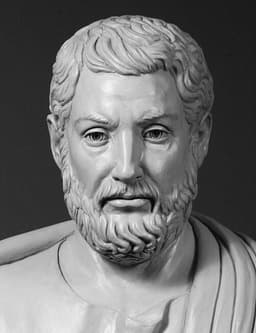
Cleisthenes
Politician · Ancient
78.3Total

Trajan
Emperor · Ancient
76.0Total
Basic Information
Born
-570
53
Died
-508
117
Era
Ancient
Ancient
Nationality
Greece
Roman Empire
Occupation
Politician
Emperor
Civilization
Western
Western
Score Comparison
Military (10%)
49.4
86.0
Political (20%)
62.7
79.2
Influence (20%)
92.0
82.0
Legacy (20%)
92.0
65.6
Leadership (15%)
72.0
73.2
Strategy (15%)
71.3
76.0
TOTAL
78.3
76.0
Cleisthenes — Complete Timeline
510 BC
Expulsion of the PeisistratidsPolitical Action◆ Major
Cleisthenes, with the support of the Alcmaeonid family and Spartan assistance, led the overthrow of the tyrant Hippias, son of Peisistratus. This ended the Peisistratid tyranny in Athens and opened the way for democratic reforms.
Tyranny OverthrownAthensSparta
Impact: nationalconstructive
508 BC
Reforms of CleisthenesReform
Cleisthenes reorganized the Athenian citizen body into ten new tribes based on demes, replacing the old four Ionian tribes. He established the Council of 500 (Boule) and introduced ostracism, creating a system of isonomia (equal rights) that is considered the foundation of Athenian democracy.
Athenian DemocracyConstitutional ReformAncient Greece
Impact: globalprogressive
507 BC
Introduction of OstracismReform◆ Major
Cleisthenes instituted ostracism, a procedure allowing Athenian citizens to vote annually to exile a prominent citizen deemed a threat to democracy for ten years. This mechanism aimed to prevent the rise of a new tyrant and stabilize the democratic system.
Athenian DemocracyPolitical MechanismExile
Impact: national
Trajan — Complete Timeline
101 AD
Implemented the Alimenta Welfare ProgramReform◆ Major
Trajan expanded the Alimenta program, a state-funded welfare system that provided food subsidies and educational support for poor children in Italy. The program used interest from state loans to landowners to fund the distributions, aiming to boost the Italian population and agricultural economy.
WelfareSocial PolicyItaly
Impact: regionalconstructive
105 AD
Built Trajan's Bridge over the DanubeOther
Trajan ordered the construction of a massive stone and timber bridge across the Danube River near the Iron Gates. Designed by Apollodorus of Damascus, it was the longest arch bridge in the world for over a millennium, facilitating the Roman invasion of Dacia.
EngineeringBridgeDanube
Impact: regionalconstructive
106 AD
Conquered DaciaWar
Trajan led two major campaigns against the Dacian kingdom under King Decebalus, culminating in the conquest of Dacia (modern Romania) in 106 CE. The victory brought vast gold and silver mines under Roman control and established a new province, funding massive building projects in Rome.
DaciaConquestProvince
Impact: regional
112 AD
Built Trajan's Forum and MarketCultural◆ Major
Trajan commissioned the construction of Trajan's Forum, a vast complex in Rome including a basilica, libraries, and the Column of Trajan. The adjacent Trajan's Market, a multi-level commercial center, demonstrated Roman engineering prowess and served as a model for urban planning.
ArchitectureRomeUrban Planning
Impact: globalconstructive
116 AD
Conquered Parthia and Reached the Persian GulfWar◆ Major
Trajan launched a campaign against the Parthian Empire, capturing its capital Ctesiphon and annexing Mesopotamia. He reached the Persian Gulf, marking the easternmost extent of Roman territory. However, rebellions in the conquered territories forced a withdrawal shortly after.
ParthiaMesopotamiaExpansion
Impact: global
Expert Analysis
Origins
Cleisthenes, born around 570 BCE into the aristocratic Alcmaeonid family of Athens, emerged from a lineage of political prominence but also controversy—his family was cursed for a massacre of suppliants. His early life was shaped by the power struggles of Athenian nobles and the threat of tyranny. In contrast, Trajan (53-117 CE) was born in Italica, Spain, to a Roman patrician family of Italian origin. His father was a distinguished senator and governor, providing Trajan with a privileged upbringing and a military career from an early age. While Cleisthenes inherited a tradition of political reform, Trajan inherited a tradition of imperial expansion.
Rise to Power
Cleisthenes rose to power after the expulsion of the tyrant Hippias in 510 BCE. He initially competed with Isagoras for influence, but when Isagoras called in Spartan help, Cleisthenes rallied the Athenian people, promising democratic reforms. He implemented his reforms in 508/507 BCE, breaking the power of aristocratic clans and establishing a system based on demes (local districts). Trajan’s rise was more conventional: he served as a military tribune, praetor, and governor, earning a reputation for discipline and competence. In 97 CE, Emperor Nerva, facing a mutiny, adopted Trajan as his successor, bypassing his own relatives. Trajan became emperor in 98 CE, hailed as the first emperor born outside Italy.
Leadership & Governance
Cleisthenes’ leadership was transformative. He reorganized Athenian society into ten tribes based on geography, not family, and created a Council of 500 (Boule) chosen by lot. He also introduced ostracism, allowing citizens to banish a threat without trial. These reforms laid the foundation for Athenian democracy, empowering ordinary citizens and reducing aristocratic dominance. Trajan, by contrast, was a benevolent autocrat. He expanded the empire to its greatest extent, conquering Dacia (modern Romania) and Parthia (modern Iran/Iraq). He built extensive infrastructure, including Trajan’s Forum, markets, and a bridge over the Danube. He also implemented the Alimenta program, providing welfare for poor children. Trajan’s governance was efficient but top-down; he ruled as a military emperor, not a democrat.
Triumph & Tragedy
Cleisthenes’ greatest triumph was the successful implementation of his democratic reforms, which survived internal strife and external threats, including the Persian Wars. However, his later life is obscure; he may have been ostracized himself, a tragic irony for the inventor of ostracism. His reforms did not prevent the rise of later demagogues. Trajan’s triumphs were spectacular: the Dacian Wars (101-106 CE) brought immense wealth to Rome, and his Parthian campaign (113-117 CE) reached the Persian Gulf, a feat never repeated. Yet his conquests overstretched the empire, and his death in 117 CE was followed by a succession crisis. Trajan’s bridge over the Danube was later destroyed, and his eastern gains were quickly abandoned by his successor Hadrian.
Character & Destiny
Cleisthenes is portrayed as a visionary reformer, willing to empower the masses despite his aristocratic background. His character was pragmatic and innovative, but his destiny was to be a founder rather than a ruler—he faded from power after his reforms. Trajan was known for his modesty, justice, and military prowess, earning the title Optimus Princeps (Best Ruler). His destiny was to embody the ideal emperor: strong, just, and expansionist. Yet his personal life was marked by no known scandals, and he died of illness while returning from the east. Both men left indelible marks, but Cleisthenes’ legacy is intellectual and political, while Trajan’s is tangible and monumental.
Legacy
Cleisthenes is universally recognized as the "Father of Athenian Democracy." His reforms inspired later democratic systems, including modern Western democracies. The concept of ostracism, though rarely used, influenced checks on power. Trajan’s legacy is equally profound: his forum and markets still stand in Rome, his column depicts his Dacian Wars, and his empire’s borders were the maximum extent. The Alimenta program was a precursor to state welfare. In historical rankings, Trajan often appears among the "Five Good Emperors," while Cleisthenes is a foundational figure in political science. Their scores reflect this: Cleisthenes excels in Intelligence (92) and Legacy (92), while Trajan leads in Military (86) and Power (79). The score gap is 2.3, favoring Cleisthenes.
Conclusion
Choosing between Cleisthenes and Trajan depends on one’s values. If you value democratic institutions and intellectual innovation, Cleisthenes is superior. If you value military expansion, efficient governance, and monumental architecture, Trajan wins. Historically, Cleisthenes’ reforms have had a longer-lasting impact on global political systems, while Trajan’s empire was fleeting. In a direct comparison, Cleisthenes edges ahead due to his transformative and enduring political legacy. **Winner: Cleisthenes** with a score of 83.6 vs Trajan’s 81.3.
Rankings
🥇
CleisthenesLeader
Mil: 49.4Pol: 62.7Inf: 92.0
78.3
🥈
Trajan
Mil: 86.0Pol: 79.2Inf: 82.0
76.0
+2.3 behind
How This Comparison Works
Algorithm
Each figure is scored on 6 dimensions (0—100 scale) based on structured historical data: Military (10%), Political (20%), Influence (20%), Legacy (20%), Leadership (15%), Strategy (15%). The weighted total produces the final ranking.
Data Sources
Scores are computed from structured sub-indicators in the database. Scale factors adjust for era (Ancient ×0.85, Modern ×1.0) and civilization size (Eastern ×1.05, Other ×0.80) to account for differences in population and military scale.
Maximum 3 Figures
Comparisons are limited to 2—3 figures to ensure readability and statistical meaningfulness.
Error Margins
±5 points per dimension — Sub-scores are derived from historical records with inherent uncertainty. Two figures within 5 points on a dimension should be considered roughly equivalent in that area.
Total Score Accuracy
±3 points overall — The weighted combination of 6 dimensions produces a total score with approximately ±3 points of uncertainty. Differences of less than 3 points are not statistically significant— the figures are effectively tied.
Known Limitations
- Historical records are incomplete and uneven across civilizations
- Figures from oral-tradition societies may be underrepresented
- Occupation labels can misclassify multi-role figures
- Scores measure capability and impact, not moral character
- Quantitative scoring is a comparison tool, not absolute truth
Capability Radar
Military (10%) — Battles & Warfare
Battles
58
95
Win Rate
62
98
Expansion
59
95
Political (20%) — Governance & Reform
Reform
95
88
Diplomacy
70
85
Economy
40
90
Influence (20%) — Cultural & Global Reach
Cultural
85
85
Global
85
85
Legacy (20%) — Historical Impact
Historical
90
90
Longevity
95
88
Leadership (15%) — Power & Stability
Tenure
30
90
Stability
60
92
Strategy (15%) — Tactics & Innovation
Strategy
62
92
Tactics
67
88
Reform
72
85
Similar Comparisons
Comments & Discussion
No comments yet. Be the first to share your thoughts!