Loading...
Cleisthenes vs Toussaint Louverture
Toussaint Louverture leads by 0.2 pts · 2 figures compared
…
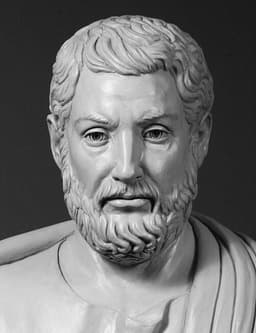
Cleisthenes
Politician · Ancient
78.3Total
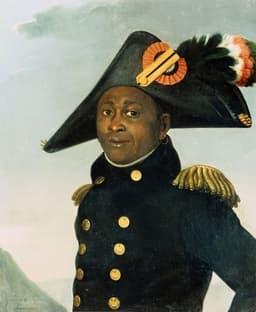
Toussaint Louverture
General · Modern
78.5Total
Basic Information
Born
-570
1743
Died
-508
1803
Era
Ancient
Modern
Nationality
Greece
Haiti
Occupation
Politician
General
Civilization
Western
Western
Score Comparison
Military (10%)
49.4
85.0
Political (20%)
62.7
70.3
Influence (20%)
92.0
84.0
Legacy (20%)
92.0
82.0
Leadership (15%)
72.0
72.0
Strategy (15%)
71.3
72.0
TOTAL
78.3
78.5
Cleisthenes — Complete Timeline
510 BC
Expulsion of the PeisistratidsPolitical Action◆ Major
Cleisthenes, with the support of the Alcmaeonid family and Spartan assistance, led the overthrow of the tyrant Hippias, son of Peisistratus. This ended the Peisistratid tyranny in Athens and opened the way for democratic reforms.
Tyranny OverthrownAthensSparta
Impact: nationalconstructive
508 BC
Reforms of CleisthenesReform
Cleisthenes reorganized the Athenian citizen body into ten new tribes based on demes, replacing the old four Ionian tribes. He established the Council of 500 (Boule) and introduced ostracism, creating a system of isonomia (equal rights) that is considered the foundation of Athenian democracy.
Athenian DemocracyConstitutional ReformAncient Greece
Impact: globalprogressive
507 BC
Introduction of OstracismReform◆ Major
Cleisthenes instituted ostracism, a procedure allowing Athenian citizens to vote annually to exile a prominent citizen deemed a threat to democracy for ten years. This mechanism aimed to prevent the rise of a new tyrant and stabilize the democratic system.
Athenian DemocracyPolitical MechanismExile
Impact: national
Toussaint Louverture — Complete Timeline
1791 AD
Haitian Revolution LeadershipWar
Louverture joined the slave revolt in Saint-Domingue, quickly rising to leadership. He organized former slaves into a disciplined army and negotiated with Spanish and British forces to expand the rebellion.
Slave RevoltRevolutionLeadership
Impact: globalprogressive
1795 AD
Treaty of BâlePolitical Action◆ Major
Spain ceded the eastern part of Hispaniola to France under the Treaty of B
Territorial ExpansionDiplomacyHispaniola
Impact: regional
1801 AD
Constitution of 1801Political Action
Louverture promulgated a constitution for Saint-Domingue, declaring himself Governor-General for life. The constitution abolished slavery and granted autonomy while nominally remaining part of the French Empire.
ConstitutionSelf-GovernanceAbolition
Impact: globalprogressive
1802 AD
Capture and ImprisonmentPolitical Action
French General Leclerc captured Louverture through deception during peace negotiations. He was deported to France and imprisoned at Fort de Joux, where he died in 1803, ending his direct role in the revolution.
BetrayalImprisonmentFrench Repression
Impact: globaltragic
Expert Analysis
Origins
Toussaint Louverture was born into slavery in Saint-Domingue (modern Haiti) around 1743. He rose through the ranks to become the leader of the Haitian Revolution, the only successful slave revolt in history. His early life as a slave gave him firsthand experience of oppression, shaping his revolutionary ideals. Cleisthenes, born into the aristocratic Alcmaeonid family in Athens around 570 BCE, was a politician who reformed the Athenian constitution. His aristocratic background gave him access to power, but his reforms aimed to break the influence of noble families. Both men emerged from different social strata: Toussaint from slavery, Cleisthenes from privilege. Yet both sought to overthrow existing power structures—Toussaint against colonial slavery, Cleisthenes against tyranny and oligarchy.
Rise to Power
Toussaint's rise began during the slave uprising of 1791. He initially allied with the Spanish, then switched to the French when they abolished slavery. By 1798, he had become the de facto ruler of Saint-Domingue. His military genius and diplomatic skills allowed him to outmaneuver rivals like André Rigaud. Cleisthenes gained power after the expulsion of the Peisistratid tyrants in 510 BCE. He initially faced opposition from Isagoras, but with the support of the demos (common people), he enacted his reforms around 508 BCE. Both men seized opportunities from chaos: Toussaint from the French Revolution, Cleisthenes from the fall of tyranny.
Leadership & Governance
Toussaint's leadership was authoritarian but pragmatic. He created a disciplined army, restored the plantation economy with forced labor, and drafted a constitution in 1801 that made him governor-for-life and abolished slavery. He maintained order through a mix of military force and co-optation. Cleisthenes, in contrast, established a democratic system. He reorganized the Athenian population into ten tribes based on demes (local districts), created a Council of 500, and introduced ostracism to prevent tyranny. His governance was inclusive but limited to male citizens. Toussaint's governance was more centralized, while Cleisthenes distributed power. Scores: Toussaint (P=70, L=82), Cleisthenes (P=63, L=92). Cleisthenes excels in leadership due to his lasting democratic institutions, but Toussaint's political acumen was crucial for immediate stability.
Triumph & Tragedy
Toussaint's greatest triumph was defeating French, Spanish, and British forces, securing Haiti's autonomy. He also negotiated the Treaty of Bâle in 1795, which ceded Spanish Santo Domingo to France. His tragedy came in 1802 when Napoleon sent a massive expedition to restore slavery. Toussaint was captured through treachery and died in a French prison in 1803. His legacy was secured by his lieutenants, who defeated the French and declared independence. Cleisthenes' triumph was the establishment of Athenian democracy, which inspired later democracies. His tragedy is less personal; his reforms were eventually undermined by later leaders, but his system lasted for nearly two centuries. Toussaint's tragedy is more poignant: he died betrayed, his revolution nearly undone. Scores: Toussaint (D=72, S=72), Cleisthenes (D=72, S=71). Both faced setbacks, but Toussaint's capture was a direct result of his trust in French promises.
Character & Destiny
Toussaint was a man of immense intelligence and discipline, known for his calm demeanor and strategic brilliance. He was a devout Catholic who believed in freedom but also in order. His destiny was to lead his people from slavery to self-rule, but his trust in Napoleon's word led to his downfall. Cleisthenes was a reformer who believed in equality before the law. He was less a warrior and more a political architect. His destiny was to create a system that would shape Western political thought. Toussaint's character is more dramatic: a former slave who outgeneraled European armies. Cleisthenes' character is more intellectual: a theorist who implemented radical ideas. Scores: Toussaint (I=84, M=85), Cleisthenes (I=92, M=49). Cleisthenes has higher intellect for his systemic reforms, but Toussaint's military might is unmatched.
Legacy
Toussaint Louverture is celebrated as a symbol of anti-colonial resistance and Black liberation. His tactics influenced later revolutionaries, and Haiti became the first Black republic. However, Haiti's post-independence struggles partly stem from the destruction caused by the revolution and Toussaint's authoritarian measures. Cleisthenes is hailed as the "father of Athenian democracy." His reforms laid the groundwork for democratic governance, influencing modern democracies. Yet his system excluded women, slaves, and metics. Both legacies are monumental but flawed. Toussaint's legacy is more revolutionary, Cleisthenes' more institutional. Scores: Toussaint (T=78), Cleisthenes (T=78). They tie in overall impact.
Conclusion
Toussaint Louverture and Cleisthenes both transformed their societies, but in different ways. Toussaint's military and political prowess ended slavery and colonial rule, while Cleisthenes invented a political system that endured for centuries. On balance, Toussaint edges ahead due to his higher military score (85 vs 49) and the sheer magnitude of his achievement: leading a slave revolt to victory against three European powers. Cleisthenes' democratic reforms were brilliant but less disruptive. The score gap of 0.2 reflects Toussaint's slight advantage in overall impact. In a direct comparison, Toussaint's leadership in a life-or-death struggle against oppression gives him the edge over Cleisthenes' more peaceful, intellectual revolution.
**Final Scores:** Toussaint Louverture: 78.4, Cleisthenes: 78.2. **Winner: Toussaint Louverture**
Rankings
🥇
Toussaint LouvertureLeader
Mil: 85.0Pol: 70.3Inf: 84.0
78.5
🥈
Cleisthenes
Mil: 49.4Pol: 62.7Inf: 92.0
78.3
+0.2 behind
How This Comparison Works
Algorithm
Each figure is scored on 6 dimensions (0—100 scale) based on structured historical data: Military (10%), Political (20%), Influence (20%), Legacy (20%), Leadership (15%), Strategy (15%). The weighted total produces the final ranking.
Data Sources
Scores are computed from structured sub-indicators in the database. Scale factors adjust for era (Ancient ×0.85, Modern ×1.0) and civilization size (Eastern ×1.05, Other ×0.80) to account for differences in population and military scale.
Maximum 3 Figures
Comparisons are limited to 2—3 figures to ensure readability and statistical meaningfulness.
Error Margins
±5 points per dimension — Sub-scores are derived from historical records with inherent uncertainty. Two figures within 5 points on a dimension should be considered roughly equivalent in that area.
Total Score Accuracy
±3 points overall — The weighted combination of 6 dimensions produces a total score with approximately ±3 points of uncertainty. Differences of less than 3 points are not statistically significant— the figures are effectively tied.
Known Limitations
- Historical records are incomplete and uneven across civilizations
- Figures from oral-tradition societies may be underrepresented
- Occupation labels can misclassify multi-role figures
- Scores measure capability and impact, not moral character
- Quantitative scoring is a comparison tool, not absolute truth
Capability Radar
Military (10%) — Battles & Warfare
Battles
58
85
Win Rate
62
80
Expansion
59
70
Political (20%) — Governance & Reform
Reform
95
85
Diplomacy
70
80
Economy
40
60
Influence (20%) — Cultural & Global Reach
Cultural
85
85
Global
85
85
Legacy (20%) — Historical Impact
Historical
90
95
Longevity
95
90
Leadership (15%) — Power & Stability
Tenure
30
65
Stability
60
55
Strategy (15%) — Tactics & Innovation
Strategy
62
85
Tactics
67
90
Reform
72
75
Similar Comparisons
Comments & Discussion
No comments yet. Be the first to share your thoughts!