Loading...
Cleisthenes vs Tokugawa Ieyasu
Tokugawa Ieyasu leads by 3.5 pts · 2 figures compared
…
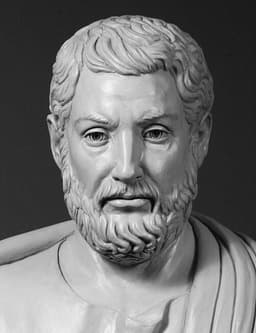
Cleisthenes
Politician · Ancient
78.3Total
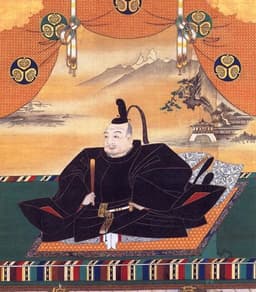
Tokugawa Ieyasu
General · Modern
81.8Total
Basic Information
Born
-570
1543
Died
-508
1616
Era
Ancient
Modern
Nationality
Greece
Japan
Occupation
Politician
General
Civilization
Western
Eastern
Score Comparison
Military (10%)
49.4
78.0
Political (20%)
62.7
82.0
Influence (20%)
92.0
88.0
Legacy (20%)
92.0
75.0
Leadership (15%)
72.0
85.0
Strategy (15%)
71.3
82.0
TOTAL
78.3
81.8
Cleisthenes — Complete Timeline
510 BC
Expulsion of the PeisistratidsPolitical Action◆ Major
Cleisthenes, with the support of the Alcmaeonid family and Spartan assistance, led the overthrow of the tyrant Hippias, son of Peisistratus. This ended the Peisistratid tyranny in Athens and opened the way for democratic reforms.
Tyranny OverthrownAthensSparta
Impact: nationalconstructive
508 BC
Reforms of CleisthenesReform
Cleisthenes reorganized the Athenian citizen body into ten new tribes based on demes, replacing the old four Ionian tribes. He established the Council of 500 (Boule) and introduced ostracism, creating a system of isonomia (equal rights) that is considered the foundation of Athenian democracy.
Athenian DemocracyConstitutional ReformAncient Greece
Impact: globalprogressive
507 BC
Introduction of OstracismReform◆ Major
Cleisthenes instituted ostracism, a procedure allowing Athenian citizens to vote annually to exile a prominent citizen deemed a threat to democracy for ten years. This mechanism aimed to prevent the rise of a new tyrant and stabilize the democratic system.
Athenian DemocracyPolitical MechanismExile
Impact: national
Tokugawa Ieyasu — Complete Timeline
1600 AD
Battle of SekigaharaWar
Tokugawa Ieyasu led the Eastern Army to victory over Ishida Mitsunari's Western Army at Sekigahara. This decisive battle ended the Sengoku period and established Ieyasu as the supreme military ruler of Japan, paving the way for the Tokugawa shogunate.
Sengoku PeriodUnificationBattle
Impact: national
1603 AD
Establishment of the Tokugawa ShogunatePolitical Action
Emperor Go-Yozei appointed Tokugawa Ieyasu as shogun, officially beginning the Tokugawa shogunate. Ieyasu established his government in Edo (modern Tokyo), centralizing military and political power under his family's control.
ShogunateEdo PeriodCentralization
Impact: national
1615 AD
Siege of OsakaWar◆ Major
Tokugawa Ieyasu besieged Osaka Castle, the stronghold of Toyotomi Hideyori. The castle fell, and Hideyori committed suicide. This campaign eliminated the last major opposition to Tokugawa rule, solidifying the shogunate's control over Japan.
Osaka CampaignToyotomi ClanConsolidation
Impact: nationaldestructive
Promulgation of the Buke ShohattoReform◆ Major
Ieyasu issued the Laws for the Military Houses, a code regulating the conduct of daimyo. It restricted castle construction, required alternate attendance in Edo, and prohibited alliances without shogunal permission. This law helped control the feudal lords.
Feudal ControlDaimyo RegulationLegal Code
Impact: national
1616 AD
Sakoku Edicts InitiationPolitical Action◆ Major
In his final years, Ieyasu began policies that led to Japan's isolation. He restricted foreign trade to specific ports and expelled Christian missionaries. These measures, expanded by successors, resulted in the sakoku policy that isolated Japan for over 200 years.
IsolationismForeign PolicyChristianity
Impact: national
Expert Analysis
Origins
Tokugawa Ieyasu was born in 1543 in Mikawa Province (modern-day Aichi Prefecture) into a turbulent era of warring states. His father, Matsudaira Hirotada, was a minor daimyo, and Ieyasu spent his childhood as a hostage to secure alliances—first with the Oda clan, then with the Imagawa. This harsh upbringing forged his patience, cunning, and strategic acumen. In contrast, Cleisthenes was born around 570 BCE into the aristocratic Alcmaeonid family of Athens. His lineage was both prestigious and controversial: the Alcmaeonids were cursed for a massacre of Cylon's supporters. Cleisthenes' early life was marked by exile and political rivalry, especially against the tyrant Peisistratus and his sons. Both men emerged from volatile environments, but Ieyasu's path was shaped by military necessity, while Cleisthenes' by political reform.
Rise to Power
Ieyasu's rise was gradual and calculated. He allied with Oda Nobunaga and later Toyotomi Hideyoshi, surviving their purges and expanding his territory. After Hideyoshi's death, Ieyasu maneuvered to become one of the five regents for Hideyoshi's heir. In 1600, he defeated a coalition of rival daimyo at the Battle of Sekigahara, a decisive victory that made him the de facto ruler of Japan. He was appointed shogun in 1603, formally establishing the Tokugawa shogunate. Cleisthenes rose to power after the expulsion of the Peisistratid tyrants in 510 BCE. Initially, a power struggle ensued between Cleisthenes and Isagoras. Isagoras called in Spartan aid, but the Athenian people revolted, recalling Cleisthenes. In 508/507 BCE, he implemented his reforms, which laid the foundation for Athenian democracy. Both men capitalized on political vacuums, but Ieyasu's rise was militaristic, while Cleisthenes' was democratic.
Leadership & Governance
Ieyasu's governance was authoritarian and centralized. He established the Tokugawa shogunate, a feudal military government that controlled Japan through a system of alternate attendance (sankin kotai) and strict social hierarchy. He promulgated the Buke Shohatto (Laws for the Military Houses) to control the daimyo and initiated the Sakoku edicts, isolating Japan from foreign influence. His leadership ensured 250 years of peace but at the cost of social rigidity and isolation. Cleisthenes, by contrast, introduced democracy. He reorganized the Athenian population into ten tribes based on demes (local districts), breaking up aristocratic power. He established the Council of 500, the Assembly, and ostracism—a mechanism to exile potential tyrants. His reforms empowered citizens and created a system of checks and balances. While Ieyasu prioritized stability through control, Cleisthenes prioritized participation through liberty.
Triumph & Tragedy
Ieyasu's greatest triumph was the unification of Japan and the establishment of a durable peace. His victory at Sekigahara and the subsequent Siege of Osaka eliminated his last major rivals. However, his tragedy was the suppression of individual freedom and the eventual decline of the shogunate due to isolation and stagnation. Cleisthenes' triumph was the creation of democracy, which flourished for two centuries and inspired Western political thought. His tragedy was that his reforms did not survive the Peloponnesian War and the rise of Macedon, and ostracism was sometimes abused. Both men's achievements outlasted their immediate circumstances, but Ieyasu's legacy was more enduring in terms of institutional longevity.
Character & Destiny
Ieyasu was patient, pragmatic, and ruthless. He was known for his cunning—waiting for his enemies to weaken before striking. His famous saying, "The strong man is the one who can conquer his own desires," reflects his self-discipline. He was also superstitious and deeply concerned with legacy, as seen in his patronage of Confucian scholars and his elaborate mausoleum at Nikko. Cleisthenes was a reformer and an aristocrat who championed the people. He was exiled multiple times but always returned. His character is less documented, but his actions suggest a visionary willing to dismantle his own class's power for the greater good. Destiny favored Ieyasu as the unifier of Japan; Cleisthenes as the father of democracy. Both were instrumental in shaping their nations' futures.
Legacy
Ieyasu's legacy is the Tokugawa period—a 250-year era of peace, economic growth, and cultural flourishing, but also isolation and feudalism. His shogunate ended with the Meiji Restoration, but its administrative structures influenced modern Japan. Cleisthenes' legacy is democracy itself. His reforms directly influenced the Athenian Golden Age and indirectly inspired modern democratic systems. While Ieyasu's impact was regional but profound, Cleisthenes' was global and foundational. In a comparative score, Ieyasu scores higher in military and political power (M=78, P=82), but Cleisthenes excels in intellectual and leadership influence (I=92, L=92). The overall score gap of 3.5 points favors Ieyasu, reflecting his broader control over society, but Cleisthenes' ideas have arguably had a greater long-term impact on world history.
Conclusion
Tokugawa Ieyasu and Cleisthenes represent two different paths to shaping civilization: one through military unification and centralized control, the other through political reform and citizen empowerment. Ieyasu's Japan enjoyed stability, while Cleisthenes' Athens enjoyed liberty. Both achieved their goals, but the nature of their achievements differs fundamentally. Ieyasu's legacy is tangible—a long-lasting regime and a unified nation. Cleisthenes' legacy is ideological—a template for governance that continues to evolve. In a direct comparison, Ieyasu's numerical scores (average 78.9) edge out Cleisthenes (average 73.9), but the debate over which is "greater" depends on whether one values order or freedom. HistoryVersus.com rates Tokugawa Ieyasu higher by a narrow margin, acknowledging his more immediate and comprehensive control over his domain, but Cleisthenes' influence on the modern world is arguably more profound.
Rankings
🥇
Tokugawa IeyasuLeader
Mil: 78.0Pol: 82.0Inf: 88.0
81.8
🥈
Cleisthenes
Mil: 49.4Pol: 62.7Inf: 92.0
78.3
+3.5 behind
How This Comparison Works
Algorithm
Each figure is scored on 6 dimensions (0—100 scale) based on structured historical data: Military (10%), Political (20%), Influence (20%), Legacy (20%), Leadership (15%), Strategy (15%). The weighted total produces the final ranking.
Data Sources
Scores are computed from structured sub-indicators in the database. Scale factors adjust for era (Ancient ×0.85, Modern ×1.0) and civilization size (Eastern ×1.05, Other ×0.80) to account for differences in population and military scale.
Maximum 3 Figures
Comparisons are limited to 2—3 figures to ensure readability and statistical meaningfulness.
Error Margins
±5 points per dimension — Sub-scores are derived from historical records with inherent uncertainty. Two figures within 5 points on a dimension should be considered roughly equivalent in that area.
Total Score Accuracy
±3 points overall — The weighted combination of 6 dimensions produces a total score with approximately ±3 points of uncertainty. Differences of less than 3 points are not statistically significant— the figures are effectively tied.
Known Limitations
- Historical records are incomplete and uneven across civilizations
- Figures from oral-tradition societies may be underrepresented
- Occupation labels can misclassify multi-role figures
- Scores measure capability and impact, not moral character
- Quantitative scoring is a comparison tool, not absolute truth
Capability Radar
Military (10%) — Battles & Warfare
Battles
58
85
Win Rate
62
90
Expansion
59
75
Political (20%) — Governance & Reform
Reform
95
90
Diplomacy
70
85
Economy
40
88
Influence (20%) — Cultural & Global Reach
Cultural
85
85
Global
85
70
Legacy (20%) — Historical Impact
Historical
90
90
Longevity
95
95
Leadership (15%) — Power & Stability
Tenure
30
95
Stability
60
95
Strategy (15%) — Tactics & Innovation
Strategy
62
92
Tactics
67
88
Reform
72
80
Similar Comparisons
Comments & Discussion
No comments yet. Be the first to share your thoughts!