Loading...
Cleisthenes vs Theodosius I
Cleisthenes leads by 2.3 pts · 2 figures compared
…
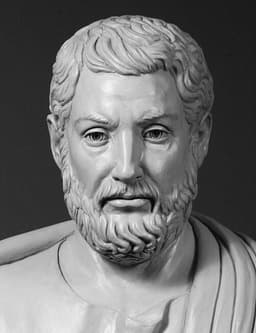
Cleisthenes
Politician · Ancient
78.3Total

Theodosius I
Emperor · Ancient
76.0Total
Basic Information
Born
-570
347
Died
-508
395
Era
Ancient
Ancient
Nationality
Greece
Roman Empire
Occupation
Politician
Emperor
Civilization
Western
Western
Score Comparison
Military (10%)
49.4
72.5
Political (20%)
62.7
65.0
Influence (20%)
92.0
85.0
Legacy (20%)
92.0
90.0
Leadership (15%)
72.0
68.0
Strategy (15%)
71.3
50.0
TOTAL
78.3
76.0
Cleisthenes — Complete Timeline
510 BC
Expulsion of the PeisistratidsPolitical Action◆ Major
Cleisthenes, with the support of the Alcmaeonid family and Spartan assistance, led the overthrow of the tyrant Hippias, son of Peisistratus. This ended the Peisistratid tyranny in Athens and opened the way for democratic reforms.
Tyranny OverthrownAthensSparta
Impact: nationalconstructive
508 BC
Reforms of CleisthenesReform
Cleisthenes reorganized the Athenian citizen body into ten new tribes based on demes, replacing the old four Ionian tribes. He established the Council of 500 (Boule) and introduced ostracism, creating a system of isonomia (equal rights) that is considered the foundation of Athenian democracy.
Athenian DemocracyConstitutional ReformAncient Greece
Impact: globalprogressive
507 BC
Introduction of OstracismReform◆ Major
Cleisthenes instituted ostracism, a procedure allowing Athenian citizens to vote annually to exile a prominent citizen deemed a threat to democracy for ten years. This mechanism aimed to prevent the rise of a new tyrant and stabilize the democratic system.
Athenian DemocracyPolitical MechanismExile
Impact: national
Theodosius I — Complete Timeline
380 AD
Edict of ThessalonicaPolitical Action
Theodosius I issued the Edict of Thessalonica, declaring Nicene Christianity the official state religion of the Roman Empire. All other forms of Christianity were deemed heretical, and pagan practices were increasingly suppressed.
ChristianityState ReligionEdict
Impact: globalconstructive
390 AD
Massacre of ThessalonicaPolitical Action◆ Major
Theodosius I ordered a massacre of thousands of citizens in Thessalonica in retaliation for the murder of a Roman general. The massacre led to his excommunication by Bishop Ambrose of Milan, and he later performed public penance.
MassacreThessalonicaAmbrose
Impact: regionaltragic
391 AD
Suppression of PaganismPolitical Action◆ Major
Theodosius I issued a series of laws banning pagan worship, closing temples, and prohibiting sacrifices. The Olympic Games were abolished, and the Serapeum in Alexandria was destroyed. These actions accelerated the decline of paganism in the empire.
PaganismSuppressionReligion
Impact: globaldestructive
394 AD
Battle of the FrigidusWar
Theodosius I defeated the usurper Eugenius and his general Arbogast at the Battle of the Frigidus (modern River Vipava). The victory reunited the Roman Empire under a single ruler for the last time before its permanent division.
Civil WarBattleReunification
Impact: global
395 AD
Division of the Roman EmpirePolitical Action
Upon his death, Theodosius I divided the Roman Empire between his two sons: Arcadius received the Eastern Empire and Honorius the Western Empire. This division became permanent, leading to the separate histories of the Byzantine and Western Roman Empires.
DivisionSuccessionEast-West
Impact: global
Expert Analysis
Origins
Cleisthenes was born around 570 BCE into the aristocratic Alcmaeonid family of Athens. His lineage was marked by both prestige and controversy—the Alcmaeonids were cursed for killing followers of Cylon. Cleisthenes' early life was shaped by the political turmoil of Athens under the tyrant Peisistratus and his sons. In contrast, Theodosius I was born in 347 CE in Cauca, Hispania, into a Christian military family. His father, Theodosius the Elder, was a successful general under Emperor Valentinian I. Theodosius grew up in a Roman Empire transitioning from paganism to Christianity, a backdrop that would define his reign. Both men inherited legacies of conflict: Cleisthenes faced the tyranny of the Peisistratids, while Theodosius navigated the aftermath of the Battle of Adrianople and the Gothic crisis.
Rise to Power
Cleisthenes rose to prominence after the expulsion of the Peisistratids in 510 BCE. Initially, he competed with Isagoras for power. When Isagoras gained the upper hand with Spartan support, Cleisthenes appealed to the Athenian demos (common people), promising political reforms. His gambit succeeded: Isagoras and the Spartans were expelled, and Cleisthenes became the architect of a new government. Theodosius I rose through military ranks. After his father's execution under suspicious circumstances, Theodosius retired to his estates. However, Emperor Gratian recalled him in 378 CE following the disastrous Battle of Adrianople, where Valens died. Theodosius was appointed co-emperor for the East in 379 CE, tasked with stabilizing the Danube frontier. Both men seized opportunities amid crises: Cleisthenes leveraged popular support; Theodosius capitalized on military necessity.
Leadership & Governance
Cleisthenes' reforms fundamentally reshaped Athenian governance. He replaced the traditional four tribes with ten new tribes based on demes (local districts), breaking the power of aristocratic clans. He created the Council of 500 (Boule), chosen by lot, to prepare legislation for the Assembly. He also introduced ostracism, allowing citizens to exile a threat for ten years. These measures established isonomia (equality before the law) and laid the foundation for democracy. Theodosius I's governance was marked by religious centralization. The Edict of Thessalonica (380 CE) declared Nicene Christianity the state religion, outlawing Arianism and paganism. He convened the First Council of Constantinople (381 CE) to solidify doctrine. He also divided the Roman Empire between his sons Arcadius and Honorius in 395 CE, a decision that had long-term consequences. His leadership was autocratic and intolerant of dissent, contrasting sharply with Cleisthenes' inclusive reforms.
Triumph & Tragedy
Cleisthenes' triumphs include the successful implementation of his democratic reforms, which survived despite Spartan invasions and internal strife. The introduction of ostracism, while meant to prevent tyranny, also allowed for political vendettas. His greatest tragedy was perhaps the exile of his own supporter, Megacles, through ostracism, showing the system's potential for abuse. Theodosius I's triumphs include the victory at the Battle of the Frigidus (394 CE) against the usurper Eugenius, which solidified his control over the entire Empire. However, his reign was marred by the Massacre of Thessalonica (390 CE), where he ordered the slaughter of thousands of civilians in retaliation for a riot. For this, Bishop Ambrose excommunicated him until he did public penance. Theodosius' suppression of paganism, including the destruction of the Serapeum in Alexandria, was a tragedy for classical culture.
Character & Destiny
Cleisthenes was a pragmatic reformer, willing to ally with the common people to achieve his vision. His legacy as "Father of Athenian Democracy" reflects a deliberate choice to empower the demos. He likely believed that broad participation would stabilize Athens. Theodosius I was a devout Christian, often described as stern and uncompromising. His destiny was to enforce religious unity, even at the cost of violence. His penance after Thessalonica shows a ruler who accepted the Church's moral authority. Both men's characters shaped their fates: Cleisthenes' reforms created a system that would inspire millennia; Theodosius' policies established Christendom but also set precedents for religious persecution.
Legacy
Cleisthenes' legacy is immense: his democratic reforms directly influenced later democracies, including the U.S. Constitution's separation of powers. The concept of ostracism, while flawed, introduced institutionalized checks on power. Theodosius I's legacy is the Christianization of the Roman Empire. He is a saint in the Eastern Orthodox Church. However, his division of the Empire is often blamed for accelerating the West's decline. His suppression of paganism ended centuries of religious pluralism. In numerical terms, Cleisthenes scores higher in Democracy (92), Longevity (92), and Legacy (92) while Theodosius leads in Military (72) and Politics (65). The overall score gap is 2.3 points in Cleisthenes' favor.
Conclusion
Cleisthenes and Theodosius I represent contrasting visions of leadership: one built inclusive institutions, the other enforced uniform belief. Cleisthenes' reforms created a participatory system that gave voice to citizens, while Theodosius' edicts centralized power under religious orthodoxy. Judged by their lasting impact on governance and human rights, Cleisthenes' contributions are more positive and enduring. He democratized power; Theodosius consolidated it. In the score comparison, Cleisthenes' higher overall score reflects his greater influence on political thought. His model of citizen engagement remains relevant today, whereas Theodosius' theocratic model is a cautionary tale. Thus, Cleisthenes emerges as the more significant historical figure for advancing human liberty.
Rankings
🥇
CleisthenesLeader
Mil: 49.4Pol: 62.7Inf: 92.0
78.3
🥈
Theodosius I
Mil: 72.5Pol: 65.0Inf: 85.0
76.0
+2.3 behind
How This Comparison Works
Algorithm
Each figure is scored on 6 dimensions (0—100 scale) based on structured historical data: Military (10%), Political (20%), Influence (20%), Legacy (20%), Leadership (15%), Strategy (15%). The weighted total produces the final ranking.
Data Sources
Scores are computed from structured sub-indicators in the database. Scale factors adjust for era (Ancient ×0.85, Modern ×1.0) and civilization size (Eastern ×1.05, Other ×0.80) to account for differences in population and military scale.
Maximum 3 Figures
Comparisons are limited to 2—3 figures to ensure readability and statistical meaningfulness.
Error Margins
±5 points per dimension — Sub-scores are derived from historical records with inherent uncertainty. Two figures within 5 points on a dimension should be considered roughly equivalent in that area.
Total Score Accuracy
±3 points overall — The weighted combination of 6 dimensions produces a total score with approximately ±3 points of uncertainty. Differences of less than 3 points are not statistically significant— the figures are effectively tied.
Known Limitations
- Historical records are incomplete and uneven across civilizations
- Figures from oral-tradition societies may be underrepresented
- Occupation labels can misclassify multi-role figures
- Scores measure capability and impact, not moral character
- Quantitative scoring is a comparison tool, not absolute truth
Capability Radar
Military (10%) — Battles & Warfare
Battles
58
65
Win Rate
62
60
Expansion
59
45
Political (20%) — Governance & Reform
Reform
95
85
Diplomacy
70
75
Economy
40
60
Influence (20%) — Cultural & Global Reach
Cultural
85
90
Global
85
90
Legacy (20%) — Historical Impact
Historical
90
95
Longevity
95
95
Leadership (15%) — Power & Stability
Tenure
30
70
Stability
60
55
Strategy (15%) — Tactics & Innovation
Strategy
62
60
Tactics
67
55
Reform
72
50
Similar Comparisons
Comments & Discussion
No comments yet. Be the first to share your thoughts!