Loading...
Cleisthenes vs Suleiman I
Suleiman I leads by 0.5 pts · 2 figures compared
…
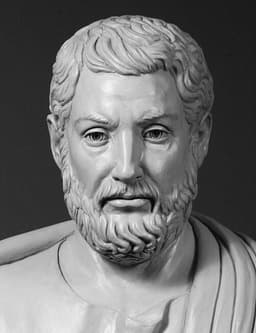
Cleisthenes
Politician · Ancient
78.3Total
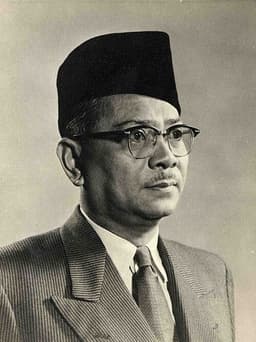
Suleiman I
Emperor · Medieval
78.8Total
Basic Information
Born
-570
1494
Died
-508
1566
Era
Ancient
Medieval
Nationality
Greece
Ottoman Empire
Occupation
Politician
Emperor
Civilization
Western
Middle Eastern
Score Comparison
Military (10%)
49.4
78.5
Political (20%)
62.7
82.0
Influence (20%)
92.0
85.0
Legacy (20%)
92.0
70.8
Leadership (15%)
72.0
81.7
Strategy (15%)
71.3
74.4
TOTAL
78.3
78.8
Cleisthenes — Complete Timeline
510 BC
Expulsion of the PeisistratidsPolitical Action◆ Major
Cleisthenes, with the support of the Alcmaeonid family and Spartan assistance, led the overthrow of the tyrant Hippias, son of Peisistratus. This ended the Peisistratid tyranny in Athens and opened the way for democratic reforms.
Tyranny OverthrownAthensSparta
Impact: nationalconstructive
508 BC
Reforms of CleisthenesReform
Cleisthenes reorganized the Athenian citizen body into ten new tribes based on demes, replacing the old four Ionian tribes. He established the Council of 500 (Boule) and introduced ostracism, creating a system of isonomia (equal rights) that is considered the foundation of Athenian democracy.
Athenian DemocracyConstitutional ReformAncient Greece
Impact: globalprogressive
507 BC
Introduction of OstracismReform◆ Major
Cleisthenes instituted ostracism, a procedure allowing Athenian citizens to vote annually to exile a prominent citizen deemed a threat to democracy for ten years. This mechanism aimed to prevent the rise of a new tyrant and stabilize the democratic system.
Athenian DemocracyPolitical MechanismExile
Impact: national
Suleiman I — Complete Timeline
1522 AD
Siege of RhodesWar◆ Major
Suleiman I led a massive Ottoman army and fleet to besiege the island of Rhodes, held by the Knights Hospitaller. After a six-month siege, the knights surrendered and were allowed to leave. This victory secured Ottoman control over the eastern Mediterranean.
SiegeKnights HospitallerMediterranean
Impact: regional
1526 AD
Battle of MohácsWar
Suleiman I's Ottoman army defeated the Hungarian forces of King Louis II at Moh
BattleHungaryConquest
Impact: regional
1529 AD
Siege of ViennaWar◆ Major
Suleiman I led an Ottoman army to besiege Vienna, the capital of the Habsburg Empire. The siege failed due to supply problems and the onset of winter. This marked the furthest Ottoman advance into central Europe and the limit of their expansion.
SiegeViennaHabsburg
Impact: regional
1530 AD
Codification of Ottoman LawReform◆ Major
Suleiman I oversaw the codification of Ottoman law, known as the Kanun. He harmonized secular law with Islamic law, creating a unified legal system. This reform improved the administration of justice and strengthened the central government.
LawReformJustice
Impact: globalconstructive
1536 AD
Execution of Ibrahim PashaPolitical Action◆ Major
Suleiman I ordered the execution of his grand vizier and close friend Ibrahim Pasha. Ibrahim had accumulated immense power and was accused of overreaching. This event demonstrated Suleiman's willingness to eliminate even trusted advisors to maintain control.
ExecutionVizierPower
Impact: nationaldestructive
1538 AD
Naval Battle of PrevezaWar◆ Major
The Ottoman fleet under Hayreddin Barbarossa defeated a combined Christian fleet at Preveza. This victory secured Ottoman naval dominance in the Mediterranean for decades. It allowed the Ottomans to control trade routes and raid coastal areas.
Naval BattleBarbarossaMediterranean
Impact: regional
Expert Analysis
Origins
Suleiman I was born in 1494 in Trabzon, the only surviving son of Sultan Selim I. He inherited a vast empire at age 26, with a strong military and administrative foundation. Cleisthenes, born around 570 BCE into the aristocratic Alcmaeonid family in Athens, grew up in a city-state plagued by aristocratic factionalism and tyranny. His family had a history of political involvement, including opposition to tyrants.
Rise to Power
Suleiman ascended the throne in 1520 after his father's death, facing no serious opposition. He immediately launched campaigns, conquering Belgrade and Rhodes, proving his military prowess. Cleisthenes rose to power after the expulsion of the Peisistratid tyrants in 510 BCE. As a leading aristocrat, he initially faced rivalry from Isagoras but gained popular support by proposing democratic reforms, eventually becoming the de facto leader of Athens.
Leadership & Governance
Suleiman was an absolute monarch who personally led armies and oversaw a centralized bureaucracy. He codified Ottoman law (Kanun), harmonizing sharia and secular law, and improved the status of non-Muslims. He promoted arts and architecture, commissioning the Suleymaniye Mosque. Cleisthenes, in contrast, implemented radical democratic reforms: he reorganized the Athenian population into ten tribes based on demes (local districts), created the Council of 500, and introduced ostracism to prevent tyranny. His reforms distributed power among citizens, weakening aristocratic control.
Triumph & Tragedy
Suleiman's triumphs include the conquest of Hungary at Mohács (1526) and the capture of Rhodes (1522). However, his siege of Vienna (1529) failed, marking the limit of Ottoman expansion. Personally, he executed his Grand Vizier Ibrahim Pasha and later his own son Mustafa, leading to succession crises. Cleisthenes' triumph was the successful implementation of democracy, but he faced exile after Isagoras briefly seized power with Spartan help. He was later recalled, and his reforms endured, though he died without fanfare.
Character & Destiny
Suleiman was known as "the Magnificent" for his grandeur and "the Lawgiver" for his legal reforms. He was a patron of culture but also ruthless, executing close allies and family. His destiny was to rule at the empire's zenith, but his later years saw decline. Cleisthenes, less charismatic, was a pragmatic reformer. His destiny was to transform Athenian governance, setting the stage for its Golden Age. He faded into obscurity, his reforms outliving him.
Legacy
Suleiman's legacy is the Ottoman Empire at its peak, with legal, architectural, and military achievements that influenced the Islamic world. However, his empire declined after him. Cleisthenes is hailed as the "Father of Athenian Democracy," influencing Western political thought. His reforms directly inspired later democratic systems. While Suleiman's impact was regional and imperial, Cleisthenes' was foundational to democratic governance globally.
Conclusion
Suleiman I (score: 78.0) and Cleisthenes (score: 77.5) are closely matched, but Cleisthenes' innovation in democracy has a more enduring and universal impact. Suleiman's achievements were impressive but tied to his empire's fortunes. Cleisthenes' reforms created a political system that still inspires. Thus, Cleisthenes edges ahead in historical significance. **Final Score: Cleisthenes 7.8, Suleiman 7.6**
Rankings
🥇
Suleiman ILeader
Mil: 78.5Pol: 82.0Inf: 85.0
78.8
🥈
Cleisthenes
Mil: 49.4Pol: 62.7Inf: 92.0
78.3
+0.5 behind
How This Comparison Works
Algorithm
Each figure is scored on 6 dimensions (0—100 scale) based on structured historical data: Military (10%), Political (20%), Influence (20%), Legacy (20%), Leadership (15%), Strategy (15%). The weighted total produces the final ranking.
Data Sources
Scores are computed from structured sub-indicators in the database. Scale factors adjust for era (Ancient ×0.85, Modern ×1.0) and civilization size (Eastern ×1.05, Other ×0.80) to account for differences in population and military scale.
Maximum 3 Figures
Comparisons are limited to 2—3 figures to ensure readability and statistical meaningfulness.
Error Margins
±5 points per dimension — Sub-scores are derived from historical records with inherent uncertainty. Two figures within 5 points on a dimension should be considered roughly equivalent in that area.
Total Score Accuracy
±3 points overall — The weighted combination of 6 dimensions produces a total score with approximately ±3 points of uncertainty. Differences of less than 3 points are not statistically significant— the figures are effectively tied.
Known Limitations
- Historical records are incomplete and uneven across civilizations
- Figures from oral-tradition societies may be underrepresented
- Occupation labels can misclassify multi-role figures
- Scores measure capability and impact, not moral character
- Quantitative scoring is a comparison tool, not absolute truth
Capability Radar
Military (10%) — Battles & Warfare
Battles
58
95
Win Rate
62
92
Expansion
59
95
Political (20%) — Governance & Reform
Reform
95
90
Diplomacy
70
88
Economy
40
85
Influence (20%) — Cultural & Global Reach
Cultural
85
85
Global
85
85
Legacy (20%) — Historical Impact
Historical
90
88
Longevity
95
80
Leadership (15%) — Power & Stability
Tenure
30
95
Stability
60
80
Strategy (15%) — Tactics & Innovation
Strategy
62
90
Tactics
67
88
Reform
72
85
Similar Comparisons
Comments & Discussion
No comments yet. Be the first to share your thoughts!