Loading...
Cleisthenes vs Sitiveni Rabuka
Cleisthenes leads by 26.6 pts · 2 figures compared
…
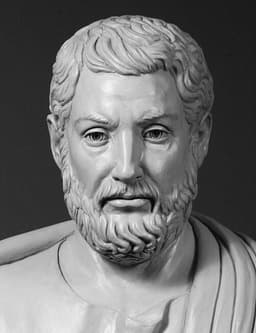
Cleisthenes
Politician · Ancient
78.3Total
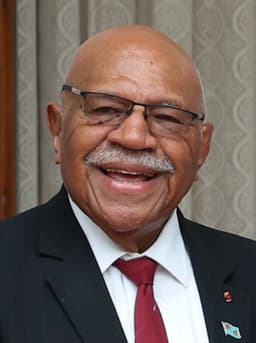
Sitiveni Rabuka
General · Modern
51.7Total
Basic Information
Born
-570
1948
Died
-508
—
Era
Ancient
Modern
Nationality
Greece
Fiji
Occupation
Politician
General
Civilization
Western
Other
Score Comparison
Military (10%)
49.4
10.2
Political (20%)
62.7
60.0
Influence (20%)
92.0
53.3
Legacy (20%)
92.0
46.7
Leadership (15%)
72.0
85.0
Strategy (15%)
71.3
39.6
TOTAL
78.3
51.7
Cleisthenes — Complete Timeline
510 BC
Expulsion of the PeisistratidsPolitical Action◆ Major
Cleisthenes, with the support of the Alcmaeonid family and Spartan assistance, led the overthrow of the tyrant Hippias, son of Peisistratus. This ended the Peisistratid tyranny in Athens and opened the way for democratic reforms.
Tyranny OverthrownAthensSparta
Impact: nationalconstructive
508 BC
Reforms of CleisthenesReform
Cleisthenes reorganized the Athenian citizen body into ten new tribes based on demes, replacing the old four Ionian tribes. He established the Council of 500 (Boule) and introduced ostracism, creating a system of isonomia (equal rights) that is considered the foundation of Athenian democracy.
Athenian DemocracyConstitutional ReformAncient Greece
Impact: globalprogressive
507 BC
Introduction of OstracismReform◆ Major
Cleisthenes instituted ostracism, a procedure allowing Athenian citizens to vote annually to exile a prominent citizen deemed a threat to democracy for ten years. This mechanism aimed to prevent the rise of a new tyrant and stabilize the democratic system.
Athenian DemocracyPolitical MechanismExile
Impact: national
Sitiveni Rabuka — Complete Timeline
1987 AD
1987 Fijian Coup d'étatPolitical Action
Rabuka, as a colonel in the Fijian military, led a coup overthrowing the elected government of Timoci Bavadra. The coup was motivated by ethnic Fijian opposition to Indo-Fijian political influence. Rabuka declared Fiji a republic.
CoupMilitary InterventionEthnic Tension
Impact: nationaldestructive
1992 AD
1992 Election as Prime MinisterPolitical Action◆ Major
Rabuka transitioned from military leader to civilian politician, winning the 1992 general election as leader of the Fijian Political Party. He became Prime Minister, serving until 1999.
ElectionCivilian GovernmentPolitical Transition
Impact: national
1997 AD
1997 Constitution ReformReform◆ Major
Rabuka's government oversaw the adoption of a new constitution that removed ethnic-based voting and provided for a multi-ethnic government. The constitution aimed to reduce ethnic tensions and promote national unity.
ConstitutionReformEthnic Reconciliation
Impact: nationalconstructive
1999 AD
1999 General Election DefeatPolitical Action◆ Major
Rabuka's government was defeated in the general election by the Labour Party led by Mahendra Chaudhry. Rabuka stepped down as Prime Minister, marking the end of his first period in power.
Election DefeatGovernment ChangeChaudhry
Impact: national
2022 AD
2022 Return as Prime MinisterPolitical Action◆ Major
Rabuka led the People's Alliance to victory in the 2022 general election, forming a coalition government. He became Prime Minister again, 23 years after his previous tenure, promising democratic reforms.
ElectionReturn to PowerCoalition Government
Impact: national
Expert Analysis
Cleisthenes vs Sitiveni Rabuka
# The Reformer's Gamble: Cleisthenes and Sitiveni Rabuka
On a dusty Athenian plain in 508 BCE, a nobleman named Cleisthenes stood before a crowd of citizens and proposed something unprecedented: that the people themselves should decide which of their leaders to banish. Two and a half millennia later, on a sun-drenched Pacific island, a Fijian colonel named Sitiveni Rabuka faced a different crowd—his own troops—and made a choice that would define his life: to seize power or to build it. Both men were reformers, both were outsiders in their own way, and both gambled everything on the idea that societies could be remade. But where one created democracy, the other spent decades trying to undo a coup and then to rebuild what he had broken. Why did their paths diverge so sharply?
Origins
Cleisthenes was born into the aristocratic Alcmaeonid family of Athens around 570 BCE, a clan that had been cursed, exiled, and politically marginalized for generations. His world was one of rival factions—the coastal party, the plains party, the hill party—each vying for control of a city-state still reeling from the tyranny of Peisistratus and his sons. Cleisthenes grew up in the shadow of exile, his family having fled Athens after a failed uprising. This rootlessness gave him a peculiar gift: he saw Athenian politics not as a fixed system of bloodlines and loyalties, but as a machine that could be redesigned.
Sitiveni Rabuka, born in 1948 on the island of Vanua Levu, came from a very different kind of margin. He was the son of a farmer and a catechist, raised in the Methodist faith that had become the spiritual backbone of indigenous Fijian identity. His Fiji was a British colony, a patchwork of ethnic Fijians, Indo-Fijian descendants of indentured laborers, and Europeans. Rabuka grew up in a world where race determined everything—land ownership, political representation, even the right to vote. He joined the military young, rising through the ranks of a colonial army that had been trained to keep order, not to create it.
Rise to Power
Cleisthenes’s rise was a masterclass in opportunism. In 510 BCE, he allied with Sparta—Athens’s traditional enemy—to expel the tyrant Hippias, the last of the Peisistratids. The expulsion was a military action, but Cleisthenes understood that the real battle was political. When a rival aristocrat, Isagoras, seized control with Spartan backing, Cleisthenes turned to the Athenian people. He proposed a radical reorganization of the city’s political structure, one that would dilute the power of the old clans and give ordinary citizens a voice. The gamble worked: the people rallied to him, Isagoras fled, and Cleisthenes was left to reshape Athens.
Rabuka’s rise was faster and bloodier. On May 14, 1987, as a 38-year-old colonel, he led a coup against the newly elected government of Timoci Bavadra, a coalition that included Indo-Fijian ministers. The coup was ostensibly about preserving indigenous Fijian dominance, but it was also about Rabuka’s own ambition. He seized power, declared himself head of state, and then—unlike most coup leaders—handed authority back to a civilian governor-general. But the instability he created would haunt him for decades.
Leadership & Governance
Cleisthenes’s reforms were not just political; they were architectural. He reorganized the Athenian citizen body into ten new tribes, each composed of demes—local villages or neighborhoods—from different regions of Attica. This broke the power of the old aristocratic clans and created a system where every citizen, rich or poor, had a stake in governance. He then introduced ostracism in 507 BCE, a mechanism that allowed the people to exile any citizen deemed too powerful. It was a safety valve for democracy, a way to prevent tyranny without violence. Cleisthenes did not lead armies or command battles; he built institutions.
Rabuka’s leadership was more personal and more volatile. After the coup, he transitioned from military ruler to elected prime minister in 1992, leading the Fijian Political Party. His government oversaw the 1997 Constitution Reform, which removed ethnic-based voting and created a multiracial system. It was a remarkable reversal for a man who had seized power to defend ethnic supremacy. But Rabuka’s governance was inconsistent—he was a populist who often spoke off the cuff, a leader who seemed to be learning democracy on the job. His 1999 election defeat was a bitter blow, but he returned in 2022, winning the prime ministership again as a democrat.
Triumph & Tragedy
Cleisthenes’s greatest triumph was the democracy he created, which would flourish for nearly two centuries and inspire the Western world. His tragedy was that he disappeared from history after his reforms—we have no record of his later life or death. He became the institution he built.
Rabuka’s triumph was his 1997 constitution, which gave Fiji a framework for multiracial democracy. His tragedy was the coup itself. By seizing power in 1987, he set a precedent that would be followed by others: another coup in 2000, and a fourth in 2006. Fiji’s democracy has never fully stabilized. Rabuka spent his later years apologizing for his actions, but the damage was done.
Character & Destiny
Cleisthenes was a pragmatist with a vision. He understood that power in a city-state came not from force but from consent, and he designed a system that would make consent possible. His personality—calculating, patient, and idealistic—shaped a destiny that was about building, not conquering.
Rabuka was a man of action who learned too late the cost of action. He was charming, impulsive, and deeply conflicted—a coup leader who became a democrat, a nationalist who wrote a multiracial constitution. His destiny was to be forever defined by the moment he chose violence over negotiation.
Legacy
Cleisthenes is remembered as the father of Athenian democracy, a title that places him among the architects of Western civilization. His reforms are still studied in classrooms and cited in debates about governance.
Rabuka is remembered as the man who broke Fiji’s democracy and then tried to fix it. His legacy is ambiguous: a hero to some indigenous Fijians, a villain to many Indo-Fijians, and a cautionary tale to the world about the fragility of democratic institutions.
Conclusion
The difference between Cleisthenes and Rabuka is not one of intention but of context. Cleisthenes lived in a world where political innovation was possible because the old order was already crumbling. Rabuka lived in a world where the old order—colonialism, ethnic hierarchy—was crumbling, but he chose to shore it up with force. One man built a system that outlasted him; the other built a system that he himself had to dismantle. In the end, the reformer’s gamble is always the same: to trust that people can govern themselves. Cleisthenes won that gamble. Rabuka is still playing it.
Rankings
🥇
CleisthenesLeader
Mil: 49.4Pol: 62.7Inf: 92.0
78.3
🥈
Sitiveni Rabuka
Mil: 10.2Pol: 60.0Inf: 53.3
51.7
+26.6 behind
How This Comparison Works
Algorithm
Each figure is scored on 6 dimensions (0—100 scale) based on structured historical data: Military (10%), Political (20%), Influence (20%), Legacy (20%), Leadership (15%), Strategy (15%). The weighted total produces the final ranking.
Data Sources
Scores are computed from structured sub-indicators in the database. Scale factors adjust for era (Ancient ×0.85, Modern ×1.0) and civilization size (Eastern ×1.05, Other ×0.80) to account for differences in population and military scale.
Maximum 3 Figures
Comparisons are limited to 2—3 figures to ensure readability and statistical meaningfulness.
Error Margins
±5 points per dimension — Sub-scores are derived from historical records with inherent uncertainty. Two figures within 5 points on a dimension should be considered roughly equivalent in that area.
Total Score Accuracy
±3 points overall — The weighted combination of 6 dimensions produces a total score with approximately ±3 points of uncertainty. Differences of less than 3 points are not statistically significant— the figures are effectively tied.
Known Limitations
- Historical records are incomplete and uneven across civilizations
- Figures from oral-tradition societies may be underrepresented
- Occupation labels can misclassify multi-role figures
- Scores measure capability and impact, not moral character
- Quantitative scoring is a comparison tool, not absolute truth
Capability Radar
Military (10%) — Battles & Warfare
Battles
58
5
Win Rate
62
5
Expansion
59
5
Political (20%) — Governance & Reform
Reform
95
50
Diplomacy
70
45
Economy
40
40
Influence (20%) — Cultural & Global Reach
Cultural
85
30
Global
85
20
Legacy (20%) — Historical Impact
Historical
90
40
Longevity
95
30
Leadership (15%) — Power & Stability
Tenure
30
55
Stability
60
35
Strategy (15%) — Tactics & Innovation
Strategy
62
10
Tactics
67
10
Reform
72
5
Similar Comparisons
Comments & Discussion
Historian8796/16/2026
Cleisthenes was no democrat—he was a desperate aristocrat playing the long game. When Isagoras had him exiled in 508 BCE, he bribed the Athenian demos with political power to get back in. The demes and tribes he created weren't about fairness; they were about breaking the old clan networks that had sidelined his Alcmaeonid family. Rabuka's 1987 coup at least had a clear ethnic logic—protecting indigenous Fijian land rights. Cleisthenes just dressed up self-interest as reform. History buffs forge