Loading...
Cleisthenes vs Saddam Hussein
Cleisthenes leads by 28.6 pts · 2 figures compared
…
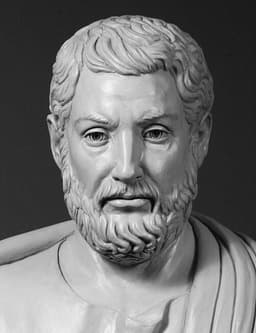
Cleisthenes
Politician · Ancient
78.3Total
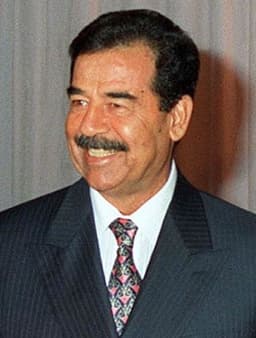
Saddam Hussein
Politician · Modern
49.7Total
Basic Information
Born
-570
1937
Died
-508
—
Era
Ancient
Modern
Nationality
Greece
Iraq
Occupation
Politician
Politician
Civilization
Western
Middle Eastern
Score Comparison
Military (10%)
49.4
52.5
Political (20%)
62.7
43.7
Influence (20%)
92.0
58.0
Legacy (20%)
92.0
47.5
Leadership (15%)
72.0
40.0
Strategy (15%)
71.3
55.0
TOTAL
78.3
49.7
Cleisthenes — Complete Timeline
510 BC
Expulsion of the PeisistratidsPolitical Action◆ Major
Cleisthenes, with the support of the Alcmaeonid family and Spartan assistance, led the overthrow of the tyrant Hippias, son of Peisistratus. This ended the Peisistratid tyranny in Athens and opened the way for democratic reforms.
Tyranny OverthrownAthensSparta
Impact: nationalconstructive
508 BC
Reforms of CleisthenesReform
Cleisthenes reorganized the Athenian citizen body into ten new tribes based on demes, replacing the old four Ionian tribes. He established the Council of 500 (Boule) and introduced ostracism, creating a system of isonomia (equal rights) that is considered the foundation of Athenian democracy.
Athenian DemocracyConstitutional ReformAncient Greece
Impact: globalprogressive
507 BC
Introduction of OstracismReform◆ Major
Cleisthenes instituted ostracism, a procedure allowing Athenian citizens to vote annually to exile a prominent citizen deemed a threat to democracy for ten years. This mechanism aimed to prevent the rise of a new tyrant and stabilize the democratic system.
Athenian DemocracyPolitical MechanismExile
Impact: national
Saddam Hussein — Complete Timeline
1979 AD
Became President of IraqPolitical Action
Saddam Hussein forced President Ahmed Hassan al-Bakr to resign on July 16, 1979, and assumed the presidency. He immediately purged the Ba'ath Party, executing 68 senior members in a televised purge. This consolidated his absolute control over Iraq's government and security apparatus.
Power ConsolidationPurgeBa'ath Party
Impact: nationaldestructive
1980 AD
Invaded IranWar
Saddam launched a full-scale invasion of Iran on September 22, 1980, aiming to seize the oil-rich Khuzestan province and overthrow the new Islamic regime. The war lasted eight years, resulting in hundreds of thousands of casualties and massive economic destruction for both countries, ending in a stalemate.
Iran-Iraq WarInvasionStalemate
Impact: regionaldestructive
1988 AD
Used chemical weapons against Kurds at HalabjaWar◆ Major
During the Anfal campaign, Iraqi forces under Saddam's orders attacked the Kurdish town of Halabja with mustard gas and nerve agents on March 16, 1988. An estimated 5,000 civilians were killed instantly. The attack is considered one of the worst chemical weapons attacks against a civilian population.
Chemical WeaponsWar CrimeKurds
Impact: nationaldestructive
1990 AD
Invaded KuwaitWar
Saddam ordered the invasion and annexation of Kuwait on August 2, 1990, claiming it was historically part of Iraq. The invasion was condemned internationally and led to the Gulf War. A US-led coalition expelled Iraqi forces in February 1991, and Iraq faced severe UN sanctions.
Gulf WarInvasionSanctions
Impact: globaldestructive
2003 AD
Captured by US forces and executedPolitical Action
After the US-led invasion of Iraq in March 2003, Saddam went into hiding. He was captured by US forces on December 13, 2003, near Tikrit. Tried by the Iraqi Special Tribunal for crimes against humanity, he was sentenced to death and executed by hanging on December 30, 2006.
CaptureTrialExecution
Impact: globaltragic
Expert Analysis
Cleisthenes vs Saddam Hussein
# The Architect and the Tyrant
On a summer day in 1979, Saddam Hussein stood before a room of his fellow Ba'ath Party leaders in Baghdad, reading aloud the names of those he considered traitors. One by one, men who had helped him rise were dragged away to be executed. In that moment, the mask of revolutionary solidarity fell away, revealing the face of absolute power. Twenty-five centuries earlier, in the Athenian agora, another man named Cleisthenes was doing something almost unimaginable by the standards of his age: he was giving power away. He was inventing a system where citizens, not kings or tyrants, would decide their own fate. One man built a cult of personality; the other built a constitution. The difference between them is not merely a matter of time or geography—it is a chasm of vision, character, and historical circumstance.
Origins
Cleisthenes was born around 570 BCE into the Alcmaeonid family, one of Athens's most powerful aristocratic clans. His world was a patchwork of rival city-states, where tyranny was the common path to power and democracy was an untested idea. The Alcmaeonids had a complicated legacy—they were cursed for a massacre of rebels, yet they also cultivated alliances across the Greek world. Cleisthenes grew up in an atmosphere of political intrigue and aristocratic competition, where the highest virtue was not loyalty to a single ruler but the pursuit of *isonomia*—equality before the law.
Saddam Hussein was born in 1937 in the village of Al-Awja, near Tikrit, into a poor family of shepherds. His father died before he was born, and his mother remarried a brutal stepfather. Young Saddam fled to Baghdad, where he was taken in by an uncle, a fervent Arab nationalist. The world that shaped him was one of colonial humiliation, coup d'états, and the intoxicating dream of a united Arab nation. Where Cleisthenes inherited a tradition of civic debate, Saddam inherited a tradition of violence as the ultimate political argument.
Rise to Power
Cleisthenes entered politics at a time when Athens was emerging from decades of tyranny under the Peisistratid family. In 510 BCE, with Spartan help, he led the expulsion of the tyrant Hippias. But power did not come to him automatically. His rival Isagoras, backed by the conservative aristocracy and the Spartan king Cleomenes, outmaneuvered him. Isagoras seized control and exiled Cleisthenes. It was a moment that would have crushed a lesser man. But Cleisthenes did something extraordinary: he appealed to the common people, the *demos*. He promised them a share in power. When Isagoras tried to dissolve the council, the Athenian people rose up, besieged the Acropolis, and forced Isagoras to flee. Cleisthenes returned not as a tyrant but as a reformer.
Saddam's rise was more direct. He joined the Ba'ath Party in his youth, and by 1968, when the Ba'athists seized power, he was already a key enforcer. As vice president under Ahmed Hassan al-Bakr, Saddam built an elaborate security apparatus, eliminated rivals, and cultivated a personality cult. On July 16, 1979, he forced al-Bakr to resign. Within days, he convened the party meeting where he purged his enemies. The path to power for Cleisthenes was a negotiation with the people; for Saddam, it was a liquidation of the opposition.
Leadership & Governance
Cleisthenes's reforms in 508-507 BCE were revolutionary. He reorganized the Athenian citizen body into ten new tribes, each composed of demes (local villages) from different regions. This broke the power of the old aristocratic clans and created a system where citizens from the coast, the city, and the countryside had to cooperate. He introduced the Council of Five Hundred, chosen by lot, to run the daily affairs of the state. And he invented ostracism, a peaceful mechanism to exile a dangerous leader without violence. His genius was not in seizing power but in distributing it so widely that no single faction could dominate.
Saddam's governance was the opposite. He centralized everything. He used oil revenues to build a modern state—schools, hospitals, highways—but all of it was tied to his personality cult. His military strategy, however, was reckless. In 1980, he invaded Iran, launching a war that would last eight years and cost hundreds of thousands of lives. When the Kurds in northern Iraq resisted, he used chemical weapons against them at Halabja in 1988. In 1990, he invaded Kuwait, triggering a catastrophic war with a US-led coalition. Where Cleisthenes built institutions, Saddam built a machine of fear.
Triumph & Tragedy
Cleisthenes's greatest triumph was the survival of his reforms. Despite later setbacks—the Persian Wars, the rise of Pericles, the disastrous Peloponnesian War—the democratic framework he created endured for nearly two centuries. His tragedy was personal: he was ostracized himself around 507 BCE, a victim of his own invention. He died in exile, but his ideas lived on.
Saddam's greatest moment was probably his defiance of the United States after the 1991 Gulf War, when he survived a massive bombing campaign and a domestic uprising. But his tragedy was total. The 2003 invasion of Iraq ended with his capture on December 13, 2003, hiding in a hole on a farm near Tikrit. He was executed by his own countrymen on December 30, 2006. His ambition to dominate the Arab world ended in rubble.
Character & Destiny
Cleisthenes was a pragmatist who believed that power shared was power strengthened. He understood that the loyalty of free citizens is worth more than the obedience of terrified subjects. His personality—calculating, patient, idealistic—shaped a destiny that changed the course of Western civilization.
Saddam was a survivor who believed that power hoarded was the only kind that mattered. His paranoia, his thirst for absolute control, and his willingness to destroy anyone who threatened him—these traits led to his rise, but they also guaranteed his fall. He could not share power, and so he lost everything.
Legacy
Cleisthenes is remembered as the Father of Athenian Democracy. His reforms influenced the American Founders, the architects of modern republics, and every movement for popular sovereignty. His legacy score of 87.6 reflects the simple truth: he gave the world a new way of being political.
Saddam's legacy is more ambiguous. He modernized Iraq but destroyed it. He united Arabs against foreign intervention but divided his own people. His legacy score of 62.4 captures a figure who was neither a great strategist nor a wise leader, but whose influence—for better and worse—is undeniable.
Conclusion
In the end, the difference between Cleisthenes and Saddam is the difference between building a temple and building a prison. One man looked at his city and asked, "How can the people rule themselves?" The other looked at his country and asked, "How can I rule the people?" The first question produced democracy; the second produced dictatorship. And history, in its slow, patient judgment, has already given its answer. Cleisthenes's Athens, for all its flaws, became the cradle of freedom. Saddam's Iraq became a graveyard of ambition. The choice between these two paths is the most fundamental choice any society can make.
Rankings
🥇
CleisthenesLeader
Mil: 49.4Pol: 62.7Inf: 92.0
78.3
🥈
Saddam Hussein
Mil: 52.5Pol: 43.7Inf: 58.0
49.7
+28.6 behind
How This Comparison Works
Algorithm
Each figure is scored on 6 dimensions (0—100 scale) based on structured historical data: Military (10%), Political (20%), Influence (20%), Legacy (20%), Leadership (15%), Strategy (15%). The weighted total produces the final ranking.
Data Sources
Scores are computed from structured sub-indicators in the database. Scale factors adjust for era (Ancient ×0.85, Modern ×1.0) and civilization size (Eastern ×1.05, Other ×0.80) to account for differences in population and military scale.
Maximum 3 Figures
Comparisons are limited to 2—3 figures to ensure readability and statistical meaningfulness.
Error Margins
±5 points per dimension — Sub-scores are derived from historical records with inherent uncertainty. Two figures within 5 points on a dimension should be considered roughly equivalent in that area.
Total Score Accuracy
±3 points overall — The weighted combination of 6 dimensions produces a total score with approximately ±3 points of uncertainty. Differences of less than 3 points are not statistically significant— the figures are effectively tied.
Known Limitations
- Historical records are incomplete and uneven across civilizations
- Figures from oral-tradition societies may be underrepresented
- Occupation labels can misclassify multi-role figures
- Scores measure capability and impact, not moral character
- Quantitative scoring is a comparison tool, not absolute truth
Capability Radar
Military (10%) — Battles & Warfare
Battles
58
65
Win Rate
62
40
Expansion
59
60
Political (20%) — Governance & Reform
Reform
95
40
Diplomacy
70
35
Economy
40
30
Influence (20%) — Cultural & Global Reach
Cultural
85
30
Global
85
50
Legacy (20%) — Historical Impact
Historical
90
55
Longevity
95
20
Leadership (15%) — Power & Stability
Tenure
30
75
Stability
60
20
Strategy (15%) — Tactics & Innovation
Strategy
62
50
Tactics
67
55
Reform
72
45
Similar Comparisons
Comments & Discussion
CLEON_THE_BOLD6/16/2026
People calling Cleisthenes a democrat are buying the Athenian PR machine. He was an aristocrat who designed tribes to break his rivals' power bases, not empower the poor. The *demos* got a vote, sure, but the Alcmaeonids kept the real strings. Saddam at least was honest: he built a cult and crushed enemies without pretending to hand them the rope.
尼罗河边的法典6/16/2026
拿萨达姆的惨烈对比克莱斯提尼的改革,真是给中国读者喂历史酸菜。萨达姆是石油时代的裸君,克莱斯提尼是民主的传教士——一个拿枪读名单,一个拿陶片划城邦。两千五百年能改变铁器,但改变不了人性的基本语法:要么分享权力,要么囤积恐惧。
HOPLITE_SCRIBE6/16/2026
The military angle is overlooked: Cleisthenes' tribal reforms reorganized the Athenian army. By mixing regions into ten tribes, he broke local loyalty to clan chiefs and made the *hoplite* phalanx fight for Athens, not for a strongman. Saddam's Republican Guard was a sectarian weapon for his person. One built a national army; the other built a shield for his throne. That's the practical difference.
长安宫阙黄昏后6/16/2026
克莱斯提尼是体制的建造师,萨达姆是恐惧的展示柜。中国历史看多了,就知道“革命”之后,要么走向制度化,要么走向人身依附。克莱斯提尼搞出五百人议事会,等于把独裁切成十块;萨达姆搞出革命指挥委员会,只不过把十个人变成一个人。名字相似,质地相反。
DATA_GLAZE6/16/2026
You want true democracy? Check the numbers. Cleisthenes' Athens had maybe 30,000 citizens out of 250,000 population—women, slaves, and metics excluded. Saddam's Iraq was 100% ruled by one man. Both systems had vicious exclusions, but Cleisthenes at least created a political class that debated, ostracized, and changed its mind. Saddam's system had no exit from its own logic. That's not just moral; it's structural resilience.