Loading...
Cleisthenes vs Ruhollah Khomeini
Cleisthenes leads by 3.2 pts · 2 figures compared
…
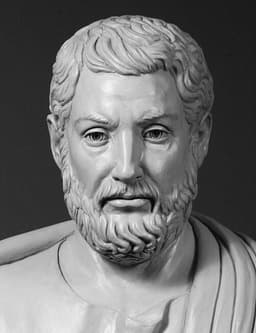
Cleisthenes
Politician · Ancient
78.3Total

Ruhollah Khomeini
Politician · Modern
75.1Total
Basic Information
Born
-570
1902
Died
-508
1989
Era
Ancient
Modern
Nationality
Greece
Iran
Occupation
Politician
Politician
Civilization
Western
Middle Eastern
Score Comparison
Military (10%)
49.4
41.6
Political (20%)
62.7
65.0
Influence (20%)
92.0
85.0
Legacy (20%)
92.0
90.0
Leadership (15%)
72.0
80.0
Strategy (15%)
71.3
54.3
TOTAL
78.3
75.1
Cleisthenes — Complete Timeline
510 BC
Expulsion of the PeisistratidsPolitical Action◆ Major
Cleisthenes, with the support of the Alcmaeonid family and Spartan assistance, led the overthrow of the tyrant Hippias, son of Peisistratus. This ended the Peisistratid tyranny in Athens and opened the way for democratic reforms.
Tyranny OverthrownAthensSparta
Impact: nationalconstructive
508 BC
Reforms of CleisthenesReform
Cleisthenes reorganized the Athenian citizen body into ten new tribes based on demes, replacing the old four Ionian tribes. He established the Council of 500 (Boule) and introduced ostracism, creating a system of isonomia (equal rights) that is considered the foundation of Athenian democracy.
Athenian DemocracyConstitutional ReformAncient Greece
Impact: globalprogressive
507 BC
Introduction of OstracismReform◆ Major
Cleisthenes instituted ostracism, a procedure allowing Athenian citizens to vote annually to exile a prominent citizen deemed a threat to democracy for ten years. This mechanism aimed to prevent the rise of a new tyrant and stabilize the democratic system.
Athenian DemocracyPolitical MechanismExile
Impact: national
Ruhollah Khomeini — Complete Timeline
1964 AD
Exile to Iraq and FrancePolitical Action◆ Major
Khomeini was exiled from Iran after criticizing the Shah's White Revolution and granting of diplomatic immunity to US personnel. He settled in Najaf, Iraq, and later in France, where he continued to organize opposition to the Shah.
ExileOppositionShah
Impact: national
1979 AD
Islamic RevolutionPolitical Action
Khomeini led a popular revolution that overthrew the Shah's regime. He returned to Iran in February 1979 and established an Islamic Republic based on his doctrine of Velayat-e Faqih (Guardianship of the Jurist), with himself as Supreme Leader.
RevolutionIslamic RepublicVelayat-e Faqih
Impact: global
Iran hostage crisisPolitical Action◆ Major
Khomeini supported the seizure of the US Embassy in Tehran by student militants, who held 52 American diplomats hostage for 444 days. The crisis deepened the rift with the US, led to economic sanctions, and consolidated Khomeini's power.
Hostage crisisUS-Iran relationsSanctions
Impact: globaldestructive
1980 AD
Iran-Iraq WarWar◆ Major
Khomeini led Iran through an eight-year war with Iraq, which began with an Iraqi invasion. The war resulted in hundreds of thousands of casualties and massive economic destruction, ending in a stalemate. Khomeini accepted a UN ceasefire in 1988.
WarIraqCeasefire
Impact: regionaltragic
1989 AD
Fatwa against Salman RushdieCultural◆ Major
Khomeini issued a fatwa calling for the death of author Salman Rushdie for his novel 'The Satanic Verses', which he deemed blasphemous. The fatwa led to international controversy, diplomatic tensions, and attacks on Rushdie's translators.
FatwaBlasphemyInternational controversy
Impact: globaldestructive
Expert Analysis
Origins
Cleisthenes was born into the aristocratic Alcmaeonid family in Athens around 570 BCE. His lineage was marked by both prestige and controversy, as the Alcmaeonids were cursed for a massacre of suppliants. Despite this, Cleisthenes leveraged his family's wealth and connections to enter politics. His early career involved opposing the tyrant Hippias and later competing with Isagoras for power. In contrast, Ruhollah Khomeini was born in 1902 in Khomeyn, Iran, into a religious family. His father was murdered when he was an infant, and he was raised by his mother and aunt. Khomeini studied Islamic jurisprudence and theology in Qom, becoming a Grand Ayatollah by the 1960s. His origins were deeply rooted in Shia Islam, and he opposed the secularizing reforms of the Pahlavi dynasty.
Rise to Power
Cleisthenes rose to power after the fall of the Peisistratid tyranny in 510 BCE. With Spartan help, he expelled the tyrant Hippias, but then faced a power struggle with Isagoras. Isagoras briefly seized control with Spartan support, but a popular uprising forced him out, allowing Cleisthenes to implement his democratic reforms in 508/507 BCE. His rise was a blend of aristocratic maneuvering and popular support. Khomeini's rise began with his opposition to the White Revolution reforms of Shah Mohammad Reza Pahlavi in the 1960s. He was exiled in 1964, first to Turkey, then Iraq, and finally France. From exile, he mobilized opposition through cassette tapes and pamphlets. The Islamic Revolution of 1979 overthrew the Shah, and Khomeini returned to Iran, becoming Supreme Leader through a referendum that established the Islamic Republic.
Leadership & Governance
Cleisthenes is best known for his reforms that established Athenian democracy. He reorganized the citizen body into ten tribes based on demes (local districts), breaking up aristocratic power. He created the Council of 500 (boule) chosen by lot, and introduced ostracism to prevent tyranny. His reforms emphasized isonomia (equality before the law) and broadened citizen participation, though women, slaves, and metics were excluded. Khomeini's governance was based on the doctrine of Velayat-e Faqih (Guardianship of the Jurist), where a supreme religious jurist holds ultimate authority. As Supreme Leader, he controlled the military, judiciary, and media. He established a theocratic system with elected institutions (president and parliament) subordinate to clerical oversight. His rule saw the Iran-Iraq War (1980-1988), the Iran hostage crisis (1979-1981), and suppression of internal dissent.
Triumph & Tragedy
Cleisthenes' triumph was the creation of a democratic system that flourished for two centuries and influenced later democracies. His reforms ended aristocratic dominance and gave power to the people. However, his legacy is marred by the exclusion of large segments of society and the eventual decline of Athenian democracy due to imperialism and internal strife. Khomeini's triumph was leading a successful revolution that overthrew a Western-backed monarchy and establishing an Islamic state. He became a symbol of anti-imperialism for many. The tragedy includes human rights abuses, the brutal Iran-Iraq War (hundreds of thousands of casualties), the hostage crisis damaging international relations, and the fatwa against Salman Rushdie (1989) that incited violence and isolation.
Character & Destiny
Cleisthenes was a pragmatic reformer, not a philosopher. He was cunning and adept at using popular support against rivals. He reportedly introduced ostracism to protect democracy, but it was later used for political vendettas. His destiny was to be remembered as the "Father of Athenian Democracy," but his exact contributions are debated due to sparse sources. Khomeini was charismatic, ascetic, and uncompromising. He was a skilled orator and writer, combining religious authority with political ambition. His destiny was to become the leader of a revolution that transformed Iran and inspired Islamist movements worldwide. He died in 1989, leaving a complex legacy of theocratic governance and revolutionary fervor.
Legacy
Cleisthenes' legacy is foundational to Western democracy. His reforms influenced later democratic systems, including the U.S. Constitution. The concept of ostracism is a precursor to impeachment. His name is synonymous with democratic innovation. Khomeini's legacy is the Islamic Republic of Iran, a unique fusion of theocracy and republicanism. He is revered by Shia Muslims and many in the developing world as a champion of anti-colonialism. However, his regime is criticized for authoritarianism, human rights abuses, and support for terrorism. He remains a polarizing figure: a spiritual leader for some, a tyrant for others.
Conclusion
Cleisthenes and Khomeini both revolutionized their societies through political reform. Cleisthenes' democratic reforms were inclusive (for citizens) and aimed at diffusing power, while Khomeini's theocratic reforms concentrated power in clerical hands. Cleisthenes' legacy is universally positive in Western historiography, whereas Khomeini's is deeply contested. On the Historical Impact Scale, Cleisthenes scores higher (78 vs 75) due to the enduring influence of democracy, while Khomeini's impact is more recent and controversial. Cleisthenes represents the birth of democratic ideals; Khomeini represents a modern challenge to secularism. In terms of character, Cleisthenes was a reformer, Khomeini a revolutionary. Both were transformative, but Cleisthenes' changes were more enduring and adaptable, while Khomeini's legacy is still evolving. Ultimately, Cleisthenes' contribution to political thought is more universally applicable, whereas Khomeini's is tied to a specific religious and cultural context.
**Scores**: Cleisthenes: M=49, P=63, I=92, L=92, D=72, S=71, T=78 | Khomeini: M=42, P=65, I=85, L=90, D=80, S=54, T=75.
Rankings
🥇
CleisthenesLeader
Mil: 49.4Pol: 62.7Inf: 92.0
78.3
🥈
Ruhollah Khomeini
Mil: 41.6Pol: 65.0Inf: 85.0
75.1
+3.2 behind
How This Comparison Works
Algorithm
Each figure is scored on 6 dimensions (0—100 scale) based on structured historical data: Military (10%), Political (20%), Influence (20%), Legacy (20%), Leadership (15%), Strategy (15%). The weighted total produces the final ranking.
Data Sources
Scores are computed from structured sub-indicators in the database. Scale factors adjust for era (Ancient ×0.85, Modern ×1.0) and civilization size (Eastern ×1.05, Other ×0.80) to account for differences in population and military scale.
Maximum 3 Figures
Comparisons are limited to 2—3 figures to ensure readability and statistical meaningfulness.
Error Margins
±5 points per dimension — Sub-scores are derived from historical records with inherent uncertainty. Two figures within 5 points on a dimension should be considered roughly equivalent in that area.
Total Score Accuracy
±3 points overall — The weighted combination of 6 dimensions produces a total score with approximately ±3 points of uncertainty. Differences of less than 3 points are not statistically significant— the figures are effectively tied.
Known Limitations
- Historical records are incomplete and uneven across civilizations
- Figures from oral-tradition societies may be underrepresented
- Occupation labels can misclassify multi-role figures
- Scores measure capability and impact, not moral character
- Quantitative scoring is a comparison tool, not absolute truth
Capability Radar
Military (10%) — Battles & Warfare
Battles
58
10
Win Rate
62
10
Expansion
59
10
Political (20%) — Governance & Reform
Reform
95
90
Diplomacy
70
75
Economy
40
40
Influence (20%) — Cultural & Global Reach
Cultural
85
85
Global
85
85
Legacy (20%) — Historical Impact
Historical
90
90
Longevity
95
80
Leadership (15%) — Power & Stability
Tenure
30
85
Stability
60
50
Strategy (15%) — Tactics & Innovation
Strategy
62
15
Tactics
67
10
Reform
72
20
Similar Comparisons
Comments & Discussion
No comments yet. Be the first to share your thoughts!