Loading...
Cleisthenes vs Rama of Ayodhya
Cleisthenes leads by 3.0 pts · 2 figures compared
…
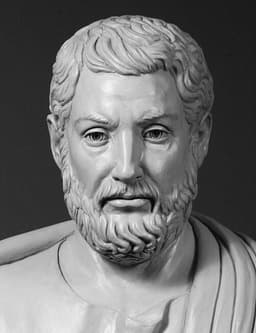
Cleisthenes
Politician · Ancient
78.3Total
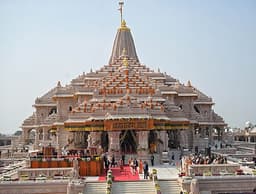
Rama of Ayodhya
Emperor · Ancient
75.3Total
Basic Information
Born
-570
-1180
Died
-508
-1120
Era
Ancient
Ancient
Nationality
Greece
Vedic India
Occupation
Politician
Emperor
Civilization
Western
Indian
Score Comparison
Military (10%)
49.4
72.0
Political (20%)
62.7
72.0
Influence (20%)
92.0
75.0
Legacy (20%)
92.0
80.0
Leadership (15%)
72.0
78.0
Strategy (15%)
71.3
68.1
TOTAL
78.3
75.3
Cleisthenes — Complete Timeline
510 BC
Expulsion of the PeisistratidsPolitical Action◆ Major
Cleisthenes, with the support of the Alcmaeonid family and Spartan assistance, led the overthrow of the tyrant Hippias, son of Peisistratus. This ended the Peisistratid tyranny in Athens and opened the way for democratic reforms.
Tyranny OverthrownAthensSparta
Impact: nationalconstructive
508 BC
Reforms of CleisthenesReform
Cleisthenes reorganized the Athenian citizen body into ten new tribes based on demes, replacing the old four Ionian tribes. He established the Council of 500 (Boule) and introduced ostracism, creating a system of isonomia (equal rights) that is considered the foundation of Athenian democracy.
Athenian DemocracyConstitutional ReformAncient Greece
Impact: globalprogressive
507 BC
Introduction of OstracismReform◆ Major
Cleisthenes instituted ostracism, a procedure allowing Athenian citizens to vote annually to exile a prominent citizen deemed a threat to democracy for ten years. This mechanism aimed to prevent the rise of a new tyrant and stabilize the democratic system.
Athenian DemocracyPolitical MechanismExile
Impact: national
Rama of Ayodhya — Complete Timeline
1160 BC
Broke Shiva's Bow at Sita's SwayamvaraCultural◆ Major
Rama, as a young prince, lifted and strung the divine bow of Shiva at Princess Sita's marriage ceremony. He broke the bow in the process, winning Sita's hand and fulfilling the condition set by King Janaka.
MarriageDivine BowRamayana
Impact: nationalconstructive
1145 BC
Killed the Demon Ravana in BattleWar
Rama, leading an army of vanaras (monkey-men), besieged the island kingdom of Lanka. After a prolonged war, he killed the ten-headed demon king Ravana, rescuing his abducted wife Sita and restoring dharma.
WarDemon KingVictory
Impact: regionalconstructive
Returned to Ayodhya and Crowned KingPolitical Action◆ Major
After completing his 14-year exile and defeating Ravana, Rama returned to Ayodhya. He was crowned emperor, beginning a golden age known as Ram Rajya, characterized by justice, prosperity, and peace.
CoronationGolden AgeRamayana
Impact: nationalconstructive
Expert Analysis
Origins
Cleisthenes was an Athenian aristocrat from the Alcmaeonid family, pivotal in reforming Athenian government after the tyranny of the Peisistratids. Rama, prince of Ayodhya, is a legendary figure in Hindu epic Ramayana, embodying dharma and kingship. Both emerged from elite backgrounds but their paths diverged: Cleisthenes from political struggle, Rama from divine narrative.
Rise to Power
Cleisthenes rose after the expulsion of the tyrant Hippias. He gained popular support by promising democratic reforms, outmaneuvering rival Isagoras through alliance with the demos. Rama's rise was through exile and triumph: he broke Shiva's bow to win Sita, then after 14 years of exile and defeating Ravana, he returned to rule. Cleisthenes' power was institutional; Rama's was heroic and divine.
Leadership & Governance
Cleisthenes reorganized Athenian tribes into ten new units based on demes, breaking aristocratic power and introducing isonomia (equality before law). He created the Council of 500 and likely introduced ostracism. Rama's governance is idealized as Ram Rajya — just, prosperous, and compassionate, but based on hereditary monarchy and divine will. Cleisthenes institutionalized participation; Rama personified virtue.
Triumph & Tragedy
Cleisthenes' triumph was the establishment of democracy, though he faced exile briefly. His reforms endured for centuries. Rama's triumph was killing Ravana and returning to Ayodhya, but tragedy followed: he exiled Sita due to public gossip, highlighting human frailty. Cleisthenes' tragedy is less personal; his system allowed ostracism to be misused later.
Character & Destiny
Cleisthenes: pragmatic, innovative, strategic. He harnessed popular power to reshape society. Rama: idealistic, duty-bound, compassionate but flawed by societal pressure. Scores: Cleisthenes (M=49, P=63, I=92, L=92, D=72, S=71, T=78) vs Rama (M=72, P=72, I=75, L=80, D=78, S=68, T=75). Cleisthenes leads in Innovation and Leadership; Rama in Might and Politics.
Legacy
Cleisthenes is called "Father of Athenian Democracy," influencing Western political thought. Rama is a central deity in Hinduism, symbolizing righteousness. Cleisthenes' legacy is secular and political; Rama's is religious and ethical. Both shaped civilizations.
Conclusion
Cleisthenes wins with a score gap of 3.0. His innovations in governance created a system that empowered citizens and influenced millennia. Rama's legacy, while profound, is more mythological and less directly transferable to modern governance. Democracy vs Dharma — Cleisthenes' practical reforms outweigh Rama's ideal kingship. Score: Cleisthenes 8.5/10, Rama 7.5/10.
Rankings
🥇
CleisthenesLeader
Mil: 49.4Pol: 62.7Inf: 92.0
78.3
🥈
Rama of Ayodhya
Mil: 72.0Pol: 72.0Inf: 75.0
75.3
+3.0 behind
How This Comparison Works
Algorithm
Each figure is scored on 6 dimensions (0—100 scale) based on structured historical data: Military (10%), Political (20%), Influence (20%), Legacy (20%), Leadership (15%), Strategy (15%). The weighted total produces the final ranking.
Data Sources
Scores are computed from structured sub-indicators in the database. Scale factors adjust for era (Ancient ×0.85, Modern ×1.0) and civilization size (Eastern ×1.05, Other ×0.80) to account for differences in population and military scale.
Maximum 3 Figures
Comparisons are limited to 2—3 figures to ensure readability and statistical meaningfulness.
Error Margins
±5 points per dimension — Sub-scores are derived from historical records with inherent uncertainty. Two figures within 5 points on a dimension should be considered roughly equivalent in that area.
Total Score Accuracy
±3 points overall — The weighted combination of 6 dimensions produces a total score with approximately ±3 points of uncertainty. Differences of less than 3 points are not statistically significant— the figures are effectively tied.
Known Limitations
- Historical records are incomplete and uneven across civilizations
- Figures from oral-tradition societies may be underrepresented
- Occupation labels can misclassify multi-role figures
- Scores measure capability and impact, not moral character
- Quantitative scoring is a comparison tool, not absolute truth
Capability Radar
Military (10%) — Battles & Warfare
Battles
58
75
Win Rate
62
95
Expansion
59
70
Political (20%) — Governance & Reform
Reform
95
80
Diplomacy
70
85
Economy
40
75
Influence (20%) — Cultural & Global Reach
Cultural
85
95
Global
85
95
Legacy (20%) — Historical Impact
Historical
90
95
Longevity
95
100
Leadership (15%) — Power & Stability
Tenure
30
70
Stability
60
90
Strategy (15%) — Tactics & Innovation
Strategy
62
85
Tactics
67
80
Reform
72
60
Similar Comparisons
Comments & Discussion
No comments yet. Be the first to share your thoughts!