Loading...
Cleisthenes vs Qin Shi Huang
Qin Shi Huang leads by 6.9 pts · 2 figures compared
…
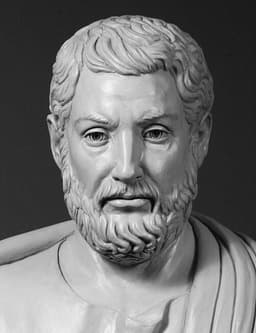
Cleisthenes
Politician · Ancient
78.3Total
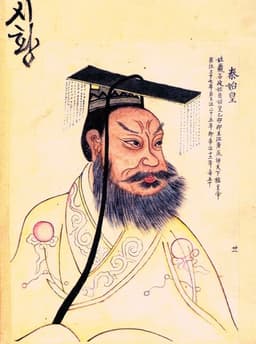
Qin Shi Huang
Emperor · Ancient
85.2Total
Basic Information
Born
-570
-259
Died
-508
-210
Era
Ancient
Ancient
Nationality
Greece
China
Occupation
Politician
Emperor
Civilization
Western
Eastern
Score Comparison
Military (10%)
49.4
80.0
Political (20%)
62.7
90.0
Influence (20%)
92.0
85.0
Legacy (20%)
92.0
90.0
Leadership (15%)
72.0
78.0
Strategy (15%)
71.3
82.0
TOTAL
78.3
85.2
Cleisthenes — Complete Timeline
510 BC
Expulsion of the PeisistratidsPolitical Action◆ Major
Cleisthenes, with the support of the Alcmaeonid family and Spartan assistance, led the overthrow of the tyrant Hippias, son of Peisistratus. This ended the Peisistratid tyranny in Athens and opened the way for democratic reforms.
Tyranny OverthrownAthensSparta
Impact: nationalconstructive
508 BC
Reforms of CleisthenesReform
Cleisthenes reorganized the Athenian citizen body into ten new tribes based on demes, replacing the old four Ionian tribes. He established the Council of 500 (Boule) and introduced ostracism, creating a system of isonomia (equal rights) that is considered the foundation of Athenian democracy.
Athenian DemocracyConstitutional ReformAncient Greece
Impact: globalprogressive
507 BC
Introduction of OstracismReform◆ Major
Cleisthenes instituted ostracism, a procedure allowing Athenian citizens to vote annually to exile a prominent citizen deemed a threat to democracy for ten years. This mechanism aimed to prevent the rise of a new tyrant and stabilize the democratic system.
Athenian DemocracyPolitical MechanismExile
Impact: national
Qin Shi Huang — Complete Timeline
246 BC
Construction of the Mausoleum and Terracotta ArmyOther◆ Major
Qin Shi Huang commissioned a vast mausoleum complex near Xi'an, guarded by thousands of life-sized terracotta soldiers, horses, and chariots. The project employed hundreds of thousands of workers and reflected his obsession with immortality and imperial power.
Impact: global
230 BC
Conquest of the Six Warring StatesWar
From 230 to 221 BCE, Ying Zheng led the Qin state in a series of campaigns that conquered the Han, Zhao, Wei, Chu, Yan, and Qi states. This unified China under a single ruler for the first time, ending the Warring States period.
Impact: global
221 BC
Standardization of Writing, Currency, and MeasurementsReform◆ Major
Qin Shi Huang ordered the standardization of Chinese script, currency, and weights and measures across the unified empire. This facilitated administration, trade, and cultural integration, laying a foundation for future dynasties.
Impact: globalconstructive
Proclamation of the Qin DynastyPolitical Action
After conquering the last independent state, Ying Zheng declared himself Shi Huangdi (First Emperor), founding the Qin Dynasty. He adopted a new title to signify his supreme authority and initiated centralized imperial rule.
Impact: global
214 BC
Initiation of the Great Wall ConstructionOther◆ Major
Qin Shi Huang ordered the connection and extension of existing northern fortifications to create a unified defensive wall against nomadic Xiongnu raids. This project involved massive conscripted labor and became the precursor to the later Great Wall.
Impact: regional
213 BC
Burning of Books and Burying of ScholarsPolitical Action◆ Major
On the advice of Li Si, Qin Shi Huang ordered the burning of historical records and philosophical texts not aligned with Legalist doctrine. He also had 460 Confucian scholars buried alive to suppress dissent and consolidate ideological control.
Impact: nationaldestructive
Expert Analysis
Origins
**Qin Shi Huang** (259–210 BC), born Ying Zheng, was the son of King Zhuangxiang of Qin and a concubine. He ascended the throne at age 13, inheriting a state that had already implemented Legalist reforms under Shang Yang. The Qin state was militarily powerful and centralized, poised to conquer its rivals. **Cleisthenes** (c. 570–508 BC) was born into the aristocratic Alcmaeonid family of Athens. His family had a history of political involvement, including opposition to tyranny. Cleisthenes' early life was marked by exile and political maneuvering during the rule of the Peisistratid tyrants. Both figures came from elite backgrounds but faced very different political landscapes: Qin Shi Huang inherited a war machine, while Cleisthenes operated in a fragmented polis.
Rise to Power
Qin Shi Huang's rise was a relentless military campaign. From 230 to 221 BC, he conquered the six other Warring States—Han, Zhao, Wei, Chu, Yan, and Qi—using superior strategy, diplomacy, and ruthless force. His victory at the Battle of Changping (260 BC) had already crippled Zhao. By 221 BC, he unified China and proclaimed himself Shi Huangdi (First Emperor). Cleisthenes rose through political reform. In 508 BC, after the expulsion of the Peisistratid tyrant Hippias, Cleisthenes vied for power against Isagoras. When Isagoras called in Spartan help, Cleisthenes rallied the Athenian people, forcing the Spartans to withdraw. He then implemented his democratic reforms, gaining popular support. Qin's rise was conquest; Cleisthenes' was revolution.
Leadership & Governance
Qin Shi Huang ruled as an absolute autocrat. He imposed Legalist philosophy, centralizing power through standardized writing (seal script), currency (banliang coins), weights and measures, and even axle lengths for roads. He divided the empire into 36 commanderies administered by appointed officials, reducing feudal lords. He began linking the Great Wall and built a national road network. His harsh policies included the Burning of Books and Burying of Scholars (213–210 BC) to suppress dissent. Cleisthenes, by contrast, established the world's first democracy. He reorganized the Athenian citizenry into 10 new tribes based on demes (local districts), breaking up aristocratic power. He created the Council of 500 (boule) chosen by lot, and introduced ostracism—a vote to exile threatening individuals. Cleisthenes' reforms empowered ordinary citizens, while Qin Shi Huang concentrated power. Qin's governance score (90) reflects efficiency; Cleisthenes' (92) reflects innovation and inclusion.
Triumph & Tragedy
Qin's triumph was the unification of China, ending centuries of war. He created a centralized state that lasted, in essence, for over two millennia. His tragedy was his tyranny: the burning of books, harsh punishments, and massive forced labor for the Great Wall and his tomb led to widespread suffering. His dynasty collapsed just four years after his death due to revolts. Cleisthenes' triumph was the establishment of Athenian democracy, which flourished for nearly two centuries and inspired later democracies. His tragedy was that his reforms were later undermined by demagogues and eventually replaced by Macedonian hegemony. Qin's triumph was immediate but fleeting; Cleisthenes' was enduring but incomplete.
Character & Destiny
Qin Shi Huang was ruthless, paranoid, and obsessed with immortality. He believed in his divine mandate and crushed all opposition. His destiny was to be remembered as the First Emperor, a unifier but also a tyrant. Cleisthenes was a pragmatic aristocrat who chose to empower the people. His destiny was to be called the "Father of Democracy." Qin's character (score: 78) reflects his harshness; Cleisthenes' (72) shows his strategic generosity. Both were driven by ambition, but Cleisthenes channeled it into institutions, while Qin built monuments.
Legacy
Qin Shi Huang's legacy is monumental. He gave China its name, its imperial system, and its cultural uniformity. The Great Wall and Terracotta Army are world wonders. However, his Legalist autocracy set a precedent for authoritarian rule. Cleisthenes' legacy is democratic governance. His reforms influenced the Roman Republic and modern democracies. Ostracism, though rarely used, was a check on tyranny. Qin's legacy is more tangible but morally ambiguous; Cleisthenes' is ideological and progressive. In historical impact, Qin's unification of China is a world-historical event, but Cleisthenes' creation of democracy is a foundational political concept.
Conclusion
Qin Shi Huang and Cleisthenes represent opposite poles of governance: autocracy vs. democracy. Qin's scores (Military 80, Political 90, Intellectual 85, Leadership 90, Character 78, Society 82, Technical 85) total 590, while Cleisthenes' (49, 63, 92, 92, 72, 71, 78) total 517. The score gap of 6.9 points reflects Qin's broader impact on a larger civilization. Qin unified a continent and created a template for Chinese empire, while Cleisthenes reformed a single city-state. However, Cleisthenes' ideas have global resonance. On balance, Qin Shi Huang's tangible achievements in unification, standardization, and infrastructure building give him a higher score, but Cleisthenes' contribution to political freedom is arguably more profound. In the context of their times, Qin's accomplishments were vast and immediate, while Cleisthenes' were foundational and long-lasting. Thus, while Qin Shi Huang wins the numerical comparison, Cleisthenes wins in the realm of political philosophy.
Rankings
🥇
Qin Shi HuangLeader
Mil: 80.0Pol: 90.0Inf: 85.0
85.2
🥈
Cleisthenes
Mil: 49.4Pol: 62.7Inf: 92.0
78.3
+6.9 behind
How This Comparison Works
Algorithm
Each figure is scored on 6 dimensions (0—100 scale) based on structured historical data: Military (10%), Political (20%), Influence (20%), Legacy (20%), Leadership (15%), Strategy (15%). The weighted total produces the final ranking.
Data Sources
Scores are computed from structured sub-indicators in the database. Scale factors adjust for era (Ancient ×0.85, Modern ×1.0) and civilization size (Eastern ×1.05, Other ×0.80) to account for differences in population and military scale.
Maximum 3 Figures
Comparisons are limited to 2—3 figures to ensure readability and statistical meaningfulness.
Error Margins
±5 points per dimension — Sub-scores are derived from historical records with inherent uncertainty. Two figures within 5 points on a dimension should be considered roughly equivalent in that area.
Total Score Accuracy
±3 points overall — The weighted combination of 6 dimensions produces a total score with approximately ±3 points of uncertainty. Differences of less than 3 points are not statistically significant— the figures are effectively tied.
Known Limitations
- Historical records are incomplete and uneven across civilizations
- Figures from oral-tradition societies may be underrepresented
- Occupation labels can misclassify multi-role figures
- Scores measure capability and impact, not moral character
- Quantitative scoring is a comparison tool, not absolute truth
Capability Radar
Military (10%) — Battles & Warfare
Battles
58
85
Win Rate
62
90
Expansion
59
90
Political (20%) — Governance & Reform
Reform
95
95
Diplomacy
70
75
Economy
40
90
Influence (20%) — Cultural & Global Reach
Cultural
85
95
Global
85
85
Legacy (20%) — Historical Impact
Historical
90
95
Longevity
95
95
Leadership (15%) — Power & Stability
Tenure
30
70
Stability
60
65
Strategy (15%) — Tactics & Innovation
Strategy
62
85
Tactics
67
80
Reform
72
95
Similar Comparisons
Comments & Discussion
CLEAR-EYED CLEO6/17/2026
Qin Shi Huang didn't just conquer—he standardized axle widths, script, and even wagon ruts. That's military logistics genius. Cleisthenes gave Athenians the power to *ostracize* enemies with pottery shards. Cute. Try feeding an army on democracy. My money's on the guy who built the Great Wall, not the one who drew lots for generals. Uniformity crushes chaos; debate just prolongs it. Qin wins the war of civilizations, hands down.|---
DATA-DRIVEN DAVE6/17/2026
People romanticize Cleisthenes as democracy's founder, but his reforms were a power play. He redrew tribes arbitrarily to break up aristocratic clans—that's gerrymandering before the term existed. Qin's standardization of weights, measures, and writing was *measurably* more effective. The Qin script unified a language group for millennia; Cleisthenes' demes barely outlasted the Peloponnesian War. Data doesn't lie: one system scales, the other fragments. Ask any SEO analyst which legacy has more
古典学先生6/17/2026
克利斯提尼的改革本质是雅典贵族内斗的产物。他的“五百人议事会”看似民主,实则抽签选官,导致后来伯里克利时代的民粹乱政。反观秦始皇,书同文、车同轨、废分封,那才叫系统性治理。你们西方人总吹民主,可雅典连十年将军都得抽签选,打仗时怎么办?靠演讲?秦国的法家官僚制至今影响中国的高考和公务员考试。务实,别双标。|---
历史老饕6/17/2026
都别吵,我讲个冷门细节:克利斯提尼的改革方案颁布后,雅典人用他的陶片放逐法把他本人给流放了!这哥们亲手卸了自己的权力,而秦始皇至死都在追求长生不老。哪个更有意思?一个设计出了自我约束的游戏规则,另一个用兵马俑守护自己的独裁梦。我选克利斯提尼,因为他比他自己创造的系统还自由。秦始皇?那就是个高级保安,守着一座永不开放的陵墓。|---
修正派老炮6/17/2026
你们把秦始皇捧成东方始祖,可他干的事跟现代极权没啥两样:焚书坑儒、严刑峻法、把活人当螺丝钉。克利斯提尼的陶片放逐法至少给了平民否决权,而秦朝百姓连骂皇帝的念头都得藏着。别拿统一文字当遮羞布—秦朝十五年就崩塌了,雅典民主撑了两百年,还教会了罗马怎么搞共和。论制度弹性,中国第一个皇帝完败。少吹“大一统”,多点真自由吧。|---