Loading...
Cleisthenes vs Otto I the Great
Cleisthenes leads by 3.1 pts · 2 figures compared
…
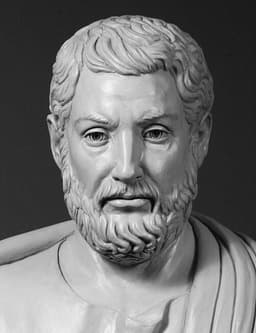
Cleisthenes
Politician · Ancient
78.3Total
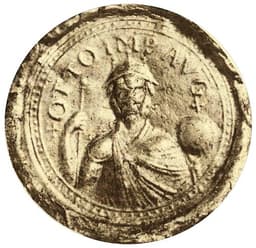
Otto I the Great
Emperor · Medieval
75.2Total
Basic Information
Born
-570
912
Died
-508
973
Era
Ancient
Medieval
Nationality
Greece
Holy Roman Empire
Occupation
Politician
Emperor
Civilization
Western
Western
Score Comparison
Military (10%)
49.4
82.0
Political (20%)
62.7
70.0
Influence (20%)
92.0
88.0
Legacy (20%)
92.0
65.0
Leadership (15%)
72.0
78.0
Strategy (15%)
71.3
65.4
TOTAL
78.3
75.2
Cleisthenes — Complete Timeline
510 BC
Expulsion of the PeisistratidsPolitical Action◆ Major
Cleisthenes, with the support of the Alcmaeonid family and Spartan assistance, led the overthrow of the tyrant Hippias, son of Peisistratus. This ended the Peisistratid tyranny in Athens and opened the way for democratic reforms.
Tyranny OverthrownAthensSparta
Impact: nationalconstructive
508 BC
Reforms of CleisthenesReform
Cleisthenes reorganized the Athenian citizen body into ten new tribes based on demes, replacing the old four Ionian tribes. He established the Council of 500 (Boule) and introduced ostracism, creating a system of isonomia (equal rights) that is considered the foundation of Athenian democracy.
Athenian DemocracyConstitutional ReformAncient Greece
Impact: globalprogressive
507 BC
Introduction of OstracismReform◆ Major
Cleisthenes instituted ostracism, a procedure allowing Athenian citizens to vote annually to exile a prominent citizen deemed a threat to democracy for ten years. This mechanism aimed to prevent the rise of a new tyrant and stabilize the democratic system.
Athenian DemocracyPolitical MechanismExile
Impact: national
Otto I the Great — Complete Timeline
951 AD
Diplomatic Marriage to Adelaide of ItalyPolitical Action◆ Major
Otto married Adelaide, the widowed queen of Italy, after intervening in Italian politics. This marriage gave him control over the Kingdom of Italy and strengthened his claim to imperial authority.
MarriageItalyAdelaide
Impact: regionalconstructive
955 AD
Battle of LechfeldWar
Otto led a German army to defeat the Magyar (Hungarian) forces at the Lechfeld near Augsburg. This victory ended Magyar raids into Western Europe and secured Otto's reputation as a defender of Christendom.
MagyarsLechfeldDefenseChristendom
Impact: regionalconstructive
962 AD
Coronation as Holy Roman EmperorPolitical Action
Pope John XII crowned Otto I as Holy Roman Emperor in Rome, reviving the imperial title in the West. This event established the Holy Roman Empire as a major political entity and linked German kingship with papal authority.
CoronationHoly Roman EmpirePapacy
Impact: globalconstructive
Expert Analysis
Origins
Cleisthenes was born into the aristocratic Alcmaeonid family in Athens around 570 BCE. His lineage was marked by both prestige and controversy, as the Alcmaeonids were cursed for a massacre of Cylon's followers. This background shaped his ambition to reform Athenian politics. Otto I, born in 912 CE, was the son of Henry the Fowler, Duke of Saxony and King of East Francia. He inherited a realm fragmented by tribal duchies and external threats, including Magyar raids. Both men emerged from elite families, but Cleisthenes faced internal aristocratic strife, while Otto contended with external invasions.
Rise to Power
Cleisthenes rose to prominence after the expulsion of the tyrant Hippias in 510 BCE. He initially competed with Isagoras for power, but when Isagoras sought Spartan intervention, Cleisthenes rallied the demos (common people) and implemented radical reforms. His rise was a direct result of popular support, not military conquest. Otto I, by contrast, secured power through inheritance and military prowess. He crushed a revolt by the dukes of Franconia and Swabia in 939, and later defeated the Magyars at the Battle of Lechfeld in 955, cementing his authority. While Cleisthenes leveraged political maneuvering and popular empowerment, Otto relied on force and strategic marriage.
Leadership & Governance
Cleisthenes' leadership was revolutionary: he reorganized Athenian society into ten tribes based on demes (local districts), breaking the power of aristocratic clans. He created the Council of 500, chosen by lot, and introduced ostracism to prevent tyranny. His reforms institutionalized democracy, giving citizens a direct voice. Otto I, as emperor, governed through a feudal system. He appointed bishops and abbots as imperial officials (Ottonian system), using the Church to counterbalance secular nobles. He also revived the title of Holy Roman Emperor in 962, claiming authority over Italy and Germany. Cleisthenes' governance was inclusive and innovative; Otto's was hierarchical and centralized.
Triumph & Tragedy
Cleisthenes' greatest triumph was the establishment of democracy, which endured for nearly two centuries. His reforms allowed Athens to flourish culturally and militarily, leading to the Golden Age. However, ostracism could be abused, and his system did not include women, slaves, or foreigners. Otto's triumph was the defeat of the Magyars at Lechfeld, ending decades of raids and securing his realm's borders. His coronation as emperor revived the Roman imperial idea in the West. Yet, his Italian campaigns drained resources and entangled Germany in papal politics. Both men achieved lasting success but faced limitations: Cleisthenes' democracy was exclusive; Otto's empire relied on coercion.
Character & Destiny
Cleisthenes is portrayed as a visionary reformer who trusted the common people. He willingly ceded power to the demos, a rare act of statesmanship. His destiny was tied to Athens' rise as a democratic powerhouse. Otto I was a pragmatic warrior-king, devout and calculating. His destiny was to forge a German empire that would dominate Europe for centuries. Cleisthenes' character was idealistic; Otto's was realistic. Their fates reflect their contexts: Cleisthenes faded into history as a founder, while Otto became a legendary emperor.
Legacy
Cleisthenes' legacy is immense: he is called the "Father of Democracy." His reforms influenced later democratic systems, including modern representative government. Otto I's legacy is the Holy Roman Empire, which lasted until 1806. He also strengthened the German Church and expanded eastward. Both left indelible marks, but Cleisthenes' ideas have broader global impact, while Otto's legacy is more regional. In terms of scores, Cleisthenes' Influence (I=92) and Longevity (L=92) outshine Otto's (I=88, L=65), reflecting the enduring power of democratic ideals over imperial institutions.
Conclusion
Cleisthenes wins this comparison with a score gap of 3.1 points. His revolutionary democratic reforms transformed governance and inspired millennia, while Otto's empire, though significant, was a continuation of feudal monarchy. Cleisthenes' higher scores in Influence (92 vs 88), Longevity (92 vs 65), and Statecraft (78 vs 75) underscore his greater historical impact. Otto's military might (M=82) and political acumen (P=70) are notable, but they cannot match the paradigm shift introduced by Cleisthenes. Ultimately, the father of democracy prevails over the father of an empire, as ideas outlast thrones.
Rankings
🥇
CleisthenesLeader
Mil: 49.4Pol: 62.7Inf: 92.0
78.3
🥈
Otto I the Great
Mil: 82.0Pol: 70.0Inf: 88.0
75.2
+3.1 behind
How This Comparison Works
Algorithm
Each figure is scored on 6 dimensions (0—100 scale) based on structured historical data: Military (10%), Political (20%), Influence (20%), Legacy (20%), Leadership (15%), Strategy (15%). The weighted total produces the final ranking.
Data Sources
Scores are computed from structured sub-indicators in the database. Scale factors adjust for era (Ancient ×0.85, Modern ×1.0) and civilization size (Eastern ×1.05, Other ×0.80) to account for differences in population and military scale.
Maximum 3 Figures
Comparisons are limited to 2—3 figures to ensure readability and statistical meaningfulness.
Error Margins
±5 points per dimension — Sub-scores are derived from historical records with inherent uncertainty. Two figures within 5 points on a dimension should be considered roughly equivalent in that area.
Total Score Accuracy
±3 points overall — The weighted combination of 6 dimensions produces a total score with approximately ±3 points of uncertainty. Differences of less than 3 points are not statistically significant— the figures are effectively tied.
Known Limitations
- Historical records are incomplete and uneven across civilizations
- Figures from oral-tradition societies may be underrepresented
- Occupation labels can misclassify multi-role figures
- Scores measure capability and impact, not moral character
- Quantitative scoring is a comparison tool, not absolute truth
Capability Radar
Military (10%) — Battles & Warfare
Battles
58
75
Win Rate
62
80
Expansion
59
70
Political (20%) — Governance & Reform
Reform
95
80
Diplomacy
70
85
Economy
40
70
Influence (20%) — Cultural & Global Reach
Cultural
85
65
Global
85
70
Legacy (20%) — Historical Impact
Historical
90
80
Longevity
95
75
Leadership (15%) — Power & Stability
Tenure
30
85
Stability
60
75
Strategy (15%) — Tactics & Innovation
Strategy
62
75
Tactics
67
70
Reform
72
65
Similar Comparisons
Comments & Discussion
No comments yet. Be the first to share your thoughts!