Loading...
Cleisthenes vs Napoleon Bonaparte
Cleisthenes leads by 7.4 pts · 2 figures compared
…
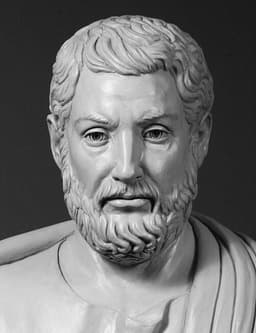
Cleisthenes
Politician · Ancient
78.3Total

Napoleon Bonaparte
General · Modern
70.9Total
Basic Information
Born
-570
1769
Died
-508
1821
Era
Ancient
Modern
Nationality
Greece
France
Occupation
Politician
General
Civilization
Western
Western
Score Comparison
Military (10%)
49.4
94.0
Political (20%)
62.7
72.0
Influence (20%)
92.0
40.0
Legacy (20%)
92.0
80.0
Leadership (15%)
72.0
78.0
Strategy (15%)
71.3
90.0
TOTAL
78.3
70.9
Cleisthenes — Complete Timeline
510 BC
Expulsion of the PeisistratidsPolitical Action◆ Major
Cleisthenes, with the support of the Alcmaeonid family and Spartan assistance, led the overthrow of the tyrant Hippias, son of Peisistratus. This ended the Peisistratid tyranny in Athens and opened the way for democratic reforms.
Tyranny OverthrownAthensSparta
Impact: nationalconstructive
508 BC
Reforms of CleisthenesReform
Cleisthenes reorganized the Athenian citizen body into ten new tribes based on demes, replacing the old four Ionian tribes. He established the Council of 500 (Boule) and introduced ostracism, creating a system of isonomia (equal rights) that is considered the foundation of Athenian democracy.
Athenian DemocracyConstitutional ReformAncient Greece
Impact: globalprogressive
507 BC
Introduction of OstracismReform◆ Major
Cleisthenes instituted ostracism, a procedure allowing Athenian citizens to vote annually to exile a prominent citizen deemed a threat to democracy for ten years. This mechanism aimed to prevent the rise of a new tyrant and stabilize the democratic system.
Athenian DemocracyPolitical MechanismExile
Impact: national
Napoleon Bonaparte — Complete Timeline
1799 AD
Coup of 18 BrumaireOther◆ Major
Napoleon Bonaparte, with support from his brother Lucien and key political figures, overthrew the Directory in a bloodless coup. He established the Consulate with himself as First Consul, effectively becoming the ruler of France. This event ended the French Revolution's most unstable period.
French RevolutionCoupRise to Power
Impact: regional
1804 AD
Promulgation of the Napoleonic CodeOther◆ Major
Napoleon enacted the Civil Code of the French, known as the Napoleonic Code, a comprehensive set of laws that replaced the fragmented feudal legal systems. The code established legal equality, protected property rights, and secularized law. It became the basis for legal systems in many European and world countries.
Legal ReformNapoleonic CodeCivil Law
Impact: globalconstructive
1805 AD
Battle of AusterlitzWar◆ Major
Napoleon's Grande Arm
Napoleonic WarsBattleDecisive Victory
Impact: global
1812 AD
Invasion of RussiaWar◆ Major
Napoleon led the Grande Arm
Napoleonic WarsInvasionDisaster
Impact: globaldestructive
1815 AD
Battle of WaterlooWar◆ Major
Napoleon's French army was defeated by the combined forces of the Duke of Wellington's Anglo-Allied army and Gebhard Leberecht von Bl
Napoleonic WarsBattleFinal Defeat
Impact: globaldestructive
Expert Analysis
cleisthenes-vs-napoleon-bonaparte
The Architect and the Emperor
In the winter of 508 BCE, a politician from one of Athens’ most powerful families stood before the citizen assembly and proposed a radical idea: that the people themselves, not a king or a tyrant, should govern the city. Two millennia later, in the summer of 1815, a French emperor watched his dreams of continental domination dissolve into the mud of a Belgian battlefield. One man built a system that would outlast him by thousands of years; the other built an empire that crumbled within a decade. Why did Cleisthenes, the father of Athenian democracy, succeed where Napoleon Bonaparte, the master of Europe, ultimately failed? The answer lies not in their talents, but in what they chose to build.
Origins
Napoleon Bonaparte was born in 1769 on the island of Corsica, a year after France had purchased the island from Genoa. His family was minor nobility, but poor. From childhood, he carried the resentment of a provincial outsider—a Corsican who would conquer France itself. He entered military school at nine, isolated and mocked for his accent and small stature. The French Revolution, which erupted when he was twenty, shattered the old order and opened a path for ambitious men of talent. Napoleon was not a child of privilege; he was a child of chaos.
Cleisthenes was born around 570 BCE into the Alcmaeonid family, one of Athens’ most powerful and controversial aristocratic clans. The Alcmaeonids carried a curse—they had once slaughtered suppliants in a temple—and were periodically exiled. Cleisthenes grew up in a world of competing aristocrats, where power was personal and unstable. But unlike Napoleon, he did not inherit a revolution; he inherited a crisis of governance. Athens was a small city-state of perhaps 30,000 citizens, constantly threatened by internal faction and external enemies. The question for Cleisthenes was not how to conquer, but how to create order without tyranny.
Rise to Power
Napoleon’s rise was meteoric. In 1793, at twenty-four, he drove British forces from the port of Toulon, earning promotion to brigadier general. In 1796, he took command of the French army in Italy and, within a year, defeated the Austrians in a series of dazzling campaigns. His political genius matched his military brilliance: he knew how to present himself as the savior of the revolution even as he suppressed it. In 1799, he staged a coup and made himself First Consul. By 1804, he crowned himself Emperor. He did not wait for power; he seized it.
Cleisthenes rose differently. In 510 BCE, with the help of Sparta, he helped expel the tyrant Hippias, ending the Peisistratid dynasty. For a moment, Athens was free—but freedom meant chaos. The old aristocratic factions, led by his rival Isagoras, fought for control. Isagoras called in the Spartans again, and Cleisthenes was forced into exile. But the people of Athens rose in revolt, expelled the Spartans, and recalled Cleisthenes. He did not seize power; power was given to him by a populace that wanted a new kind of order.
Leadership & Governance
Napoleon governed through will. He centralized the state, created the Napoleonic Code—a uniform legal system that enshrined equality before the law and protected property—and reformed education, banking, and infrastructure. But his rule was personal, not institutional. The code survived because it was useful, not because Napoleon designed it to outlast him. He was a brilliant administrator, but he was first and always a conqueror. Between 1805 and 1809, he defeated Austria, Prussia, and Russia, redrew the map of Europe, and placed his brothers on thrones. His military strategy was revolutionary: fast marches, decisive battles, and the use of mass conscription. His political strategy was simpler: fear and ambition.
Cleisthenes governed through architecture. In 508 BCE, he reorganized the entire Athenian citizen body. He abolished the old four tribes based on kinship and created ten new tribes based on demes—local villages and neighborhoods. Each tribe sent fifty representatives to a new Council of Five Hundred, which prepared the agenda for the citizen assembly. Every citizen, rich or poor, could vote and speak. In 507 BCE, he introduced ostracism: once a year, citizens could vote to exile any man deemed too powerful, without trial. It was a safety valve against tyranny. Cleisthenes did not rule; he designed a system that could rule itself.
Triumph & Tragedy
Napoleon’s greatest triumph was the Battle of Austerlitz in 1805, where he crushed the combined armies of Russia and Austria. His code and reforms modernized Europe. But his greatest tragedy was hubris. In 1812, he invaded Russia with over 600,000 men. The Russian winter, scorched-earth tactics, and logistical chaos destroyed his Grand Army. Fewer than 100,000 returned. In 1814, the Allies invaded France and forced him to abdicate. He returned in 1815 for the Hundred Days, but at Waterloo on June 18, 1815, he was defeated for good. Exiled to the remote island of Saint Helena, he died in 1821 at age fifty-one.
Cleisthenes’ triumph was invisible. He did not win a great battle or conquer a kingdom. He created the first democracy in history. His tragedy was that he disappeared from the historical record after his reforms. We do not know when or how he died. No monument marks his grave. He gave Athens a system that would produce Pericles, Sophocles, and Socrates—but he himself faded into obscurity.
Character & Destiny
Napoleon was driven by an insatiable hunger for glory. “Impossible is a word to be found only in the dictionary of fools,” he said. He trusted his own genius above all else. This made him unstoppable in victory, but blind in defeat. He could not share power, could not delegate, could not stop. His character was his destiny: he built an empire on his own ambition, and when that ambition exceeded his resources, the empire collapsed.
Cleisthenes was driven by a different instinct: the desire to make power sustainable. He understood that the greatest threat to Athens was not Sparta or Persia, but the cycle of tyranny and civil war. He built a system that distributed power so widely that no single man could seize it. His character was self-effacing; he did not need to be remembered, only for his work to endure.
Legacy
Napoleon’s legacy is a paradox. He is remembered as a military genius, a reformer, and a tyrant. The Napoleonic Code influenced legal systems across Europe and the world. His conquests spread nationalism and liberalism, but also destruction and death. His name is synonymous with ambition and its limits.
Cleisthenes’ legacy is quieter but deeper. Athenian democracy inspired the American and French revolutions, and through them, modern democratic governance. The principle that citizens should rule themselves, that power should be checked, that leaders should be accountable—all of this traces back to a politician in ancient Athens who chose to build a system rather than a throne.
Conclusion
Napoleon and Cleisthenes faced the same fundamental question: how to govern. Napoleon answered with himself. Cleisthenes answered with a system. One built a monument to his own glory; the other built a foundation for the ages. The difference was not in their brilliance—both were extraordinary—but in their ambition. Napoleon wanted to be remembered. Cleisthenes wanted to be unnecessary. In the end, the emperor’s empire fell, and the architect’s city endured.
Rankings
🥇
CleisthenesLeader
Mil: 49.4Pol: 62.7Inf: 92.0
78.3
🥈
Napoleon Bonaparte
Mil: 94.0Pol: 72.0Inf: 40.0
70.9
+7.4 behind
How This Comparison Works
Algorithm
Each figure is scored on 6 dimensions (0—100 scale) based on structured historical data: Military (10%), Political (20%), Influence (20%), Legacy (20%), Leadership (15%), Strategy (15%). The weighted total produces the final ranking.
Data Sources
Scores are computed from structured sub-indicators in the database. Scale factors adjust for era (Ancient ×0.85, Modern ×1.0) and civilization size (Eastern ×1.05, Other ×0.80) to account for differences in population and military scale.
Maximum 3 Figures
Comparisons are limited to 2—3 figures to ensure readability and statistical meaningfulness.
Error Margins
±5 points per dimension — Sub-scores are derived from historical records with inherent uncertainty. Two figures within 5 points on a dimension should be considered roughly equivalent in that area.
Total Score Accuracy
±3 points overall — The weighted combination of 6 dimensions produces a total score with approximately ±3 points of uncertainty. Differences of less than 3 points are not statistically significant— the figures are effectively tied.
Known Limitations
- Historical records are incomplete and uneven across civilizations
- Figures from oral-tradition societies may be underrepresented
- Occupation labels can misclassify multi-role figures
- Scores measure capability and impact, not moral character
- Quantitative scoring is a comparison tool, not absolute truth
Capability Radar
Military (10%) — Battles & Warfare
Battles
58
95
Win Rate
62
90
Expansion
59
95
Political (20%) — Governance & Reform
Reform
95
95
Diplomacy
70
80
Economy
40
85
Influence (20%) — Cultural & Global Reach
Cultural
85
85
Global
85
90
Legacy (20%) — Historical Impact
Historical
90
95
Longevity
95
90
Leadership (15%) — Power & Stability
Tenure
30
85
Stability
60
70
Strategy (15%) — Tactics & Innovation
Strategy
62
95
Tactics
67
98
Reform
72
92
Similar Comparisons
Comments & Discussion
No comments yet. Be the first to share your thoughts!