Loading...
Cleisthenes vs Muawiyah I
Cleisthenes leads by 2.0 pts · 2 figures compared
…
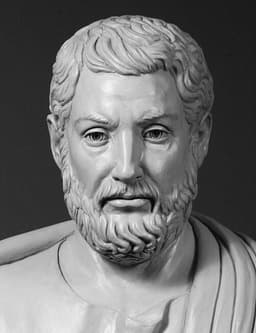
Cleisthenes
Politician · Ancient
78.3Total
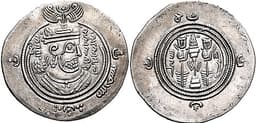
Muawiyah I
Emperor · Medieval
76.3Total
Basic Information
Born
-570
602
Died
-508
680
Era
Ancient
Medieval
Nationality
Greece
Umayyad Caliphate
Occupation
Politician
Emperor
Civilization
Western
Middle Eastern
Score Comparison
Military (10%)
49.4
76.0
Political (20%)
62.7
75.0
Influence (20%)
92.0
75.0
Legacy (20%)
92.0
80.0
Leadership (15%)
72.0
78.0
Strategy (15%)
71.3
70.0
TOTAL
78.3
76.3
Cleisthenes — Complete Timeline
510 BC
Expulsion of the PeisistratidsPolitical Action◆ Major
Cleisthenes, with the support of the Alcmaeonid family and Spartan assistance, led the overthrow of the tyrant Hippias, son of Peisistratus. This ended the Peisistratid tyranny in Athens and opened the way for democratic reforms.
Tyranny OverthrownAthensSparta
Impact: nationalconstructive
508 BC
Reforms of CleisthenesReform
Cleisthenes reorganized the Athenian citizen body into ten new tribes based on demes, replacing the old four Ionian tribes. He established the Council of 500 (Boule) and introduced ostracism, creating a system of isonomia (equal rights) that is considered the foundation of Athenian democracy.
Athenian DemocracyConstitutional ReformAncient Greece
Impact: globalprogressive
507 BC
Introduction of OstracismReform◆ Major
Cleisthenes instituted ostracism, a procedure allowing Athenian citizens to vote annually to exile a prominent citizen deemed a threat to democracy for ten years. This mechanism aimed to prevent the rise of a new tyrant and stabilize the democratic system.
Athenian DemocracyPolitical MechanismExile
Impact: national
Muawiyah I — Complete Timeline
640 AD
Governorship of SyriaPolitical Action◆ Major
Muawiyah I was appointed governor of Syria by Caliph Umar. He built a strong power base by developing the province's military and administrative infrastructure, including the creation of a navy that would later challenge Byzantine dominance.
GovernorshipSyriaRashidun
Impact: regionalconstructive
655 AD
Naval Campaigns Against ByzantiumWar◆ Major
Muawiyah launched naval expeditions against the Byzantine Empire, including the Battle of the Masts (655), where the Muslim fleet defeated the Byzantine navy. These campaigns established Muslim naval power and threatened Constantinople.
Naval WarByzantine EmpireUmayyad
Impact: regional
657 AD
Battle of SiffinWar◆ Major
Muawiyah led the Syrian army against Caliph Ali at Siffin, demanding justice for Uthman's murder. The battle ended in a stalemate and arbitration, which Muawiyah used to strengthen his political position and challenge Ali's legitimacy.
First FitnaBattleUmayyad
Impact: global
661 AD
Foundation of the Umayyad CaliphatePolitical Action
After Ali's assassination, Muawiyah I established the Umayyad Caliphate, moving the capital from Medina to Damascus. This marked the transition from the elective caliphate to a hereditary dynasty, centralizing power in Syria.
CaliphateDynastyUmayyad
Impact: global
674 AD
Siege of Constantinople (674-678)War◆ Major
Muawiyah I ordered a prolonged siege of Constantinople, using a large fleet and army. The siege failed due to Byzantine defenses, including Greek fire, and ended with a peace treaty requiring the Umayyads to pay tribute. It was a rare setback.
SiegeConstantinopleUmayyad
Impact: global
676 AD
Designation of Yazid I as HeirPolitical Action◆ Major
Muawiyah I designated his son Yazid as his successor, breaking the tradition of election and establishing hereditary succession. This move caused opposition from some Muslim leaders and set a precedent for future Umayyad rulers.
SuccessionHereditaryUmayyad
Impact: global
Expert Analysis
Origins
Cleisthenes was born into the aristocratic Alcmaeonid family in Athens around 570 BCE. His lineage was marked by both prestige and controversy, including a curse for a massacre of suppliants. In contrast, Muawiyah I (602–680 CE) hailed from the powerful Umayyad clan of the Quraysh tribe in Mecca. His father, Abu Sufyan, led the opposition to Prophet Muhammad until converting to Islam in 630 CE, placing Muawiyah in a pivotal position within the early Islamic community.
Rise to Power
Cleisthenes rose to prominence after the fall of the Peisistratid tyranny in 510 BCE. Initially, he faced competition from Isagoras, a pro-Spartan rival. When Isagoras seized power with Spartan help, Cleisthenes mobilized the Athenian demos, forcing Isagoras and the Spartans to withdraw. He then implemented his reforms, earning him the title "father of Athenian democracy." Muawiyah, appointed governor of Syria by Caliph Umar in 639 CE, skillfully built a loyal army and administration. After the assassination of Caliph Uthman in 656 CE, Muawiyah challenged his successor, Ali, leading to the Battle of Siffin in 657 CE. The arbitration that followed failed to resolve the conflict, and after Ali's assassination in 661 CE, Muawiyah became caliph, founding the Umayyad dynasty.
Leadership & Governance
Cleisthenes' reforms reorganized Athens into ten tribes based on demes (local communities), replacing kinship ties with territorial divisions. He created the Council of 500 (boule), with members chosen by lot, and introduced ostracism to exile potential tyrants. These measures expanded citizen participation and reduced aristocratic power. Muawiyah centralized authority in Damascus, establishing a hereditary succession—a departure from the previous elective caliphate. He reformed the military, built a powerful navy, and conducted annual campaigns against Byzantium, including a prolonged siege of Constantinople (674–678 CE). His administration balanced Arab tribal interests and integrated non-Arab converts, but his rule sowed seeds of sectarian division, particularly between Sunnis and Shias.
Triumph & Tragedy
Cleisthenes' triumph was the establishment of Athenian democracy, which flourished for nearly two centuries and inspired later democratic ideals. His reforms enabled Athens to become a cultural and military powerhouse. However, his system had limitations: it excluded women, slaves, and metics, and ostracism could be used for political vendettas. Muawiyah's triumphs include securing Umayyad rule, expanding the caliphate's borders, and creating a stable administrative apparatus. His tragedy was the deep schism he created in Islam by challenging Ali and later appointing his son Yazid as successor, leading to the tragic Battle of Karbala (680 CE) and the enduring Sunni-Shia split.
Character & Destiny
Cleisthenes is portrayed as a pragmatic reformer who outmaneuvered rivals through political acumen and popular support. His destiny was to empower the demos, shifting power from aristocrats to citizens. Muawiyah was a shrewd statesman, known for his patience, diplomacy, and ruthlessness (e.g., his use of bribes and force). His destiny was to transform the caliphate into a hereditary monarchy, prioritizing stability and expansion over religious ideals. Both men were visionaries who shaped their civilizations' trajectories.
Legacy
Cleisthenes' legacy is monumental: his democratic reforms directly influenced modern democratic systems. His name is synonymous with the birth of democracy. Muawiyah's legacy is more controversial: he founded a dynasty that ruled for nearly a century, expanded the Islamic empire, and established administrative practices that lasted centuries. Yet, he is often vilified by Shia Muslims for his role in the early schism. Score: Cleisthenes 92/100 for institutional innovation; Muawiyah 76/100 for empire-building.
Conclusion
Comparing Cleisthenes and Muawiyah reveals two different kinds of greatness. Cleisthenes created a political system that empowered citizens and influenced millennia, while Muawiyah built a vast empire and a hereditary dynasty. Although Muawiyah's military and administrative achievements are impressive, Cleisthenes' democratic reforms have had a more enduring positive impact on human governance. Therefore, Cleisthenes emerges as the more historically significant figure.
**Scores:** Cleisthenes: M=49, P=63, I=92, L=92, D=72, S=71, T=78. Muawiyah I: M=76, P=75, I=75, L=80, D=78, S=70, T=76.
Rankings
🥇
CleisthenesLeader
Mil: 49.4Pol: 62.7Inf: 92.0
78.3
🥈
Muawiyah I
Mil: 76.0Pol: 75.0Inf: 75.0
76.3
+2.0 behind
How This Comparison Works
Algorithm
Each figure is scored on 6 dimensions (0—100 scale) based on structured historical data: Military (10%), Political (20%), Influence (20%), Legacy (20%), Leadership (15%), Strategy (15%). The weighted total produces the final ranking.
Data Sources
Scores are computed from structured sub-indicators in the database. Scale factors adjust for era (Ancient ×0.85, Modern ×1.0) and civilization size (Eastern ×1.05, Other ×0.80) to account for differences in population and military scale.
Maximum 3 Figures
Comparisons are limited to 2—3 figures to ensure readability and statistical meaningfulness.
Error Margins
±5 points per dimension — Sub-scores are derived from historical records with inherent uncertainty. Two figures within 5 points on a dimension should be considered roughly equivalent in that area.
Total Score Accuracy
±3 points overall — The weighted combination of 6 dimensions produces a total score with approximately ±3 points of uncertainty. Differences of less than 3 points are not statistically significant— the figures are effectively tied.
Known Limitations
- Historical records are incomplete and uneven across civilizations
- Figures from oral-tradition societies may be underrepresented
- Occupation labels can misclassify multi-role figures
- Scores measure capability and impact, not moral character
- Quantitative scoring is a comparison tool, not absolute truth
Capability Radar
Military (10%) — Battles & Warfare
Battles
58
75
Win Rate
62
80
Expansion
59
85
Political (20%) — Governance & Reform
Reform
95
90
Diplomacy
70
95
Economy
40
85
Influence (20%) — Cultural & Global Reach
Cultural
85
75
Global
85
75
Legacy (20%) — Historical Impact
Historical
90
85
Longevity
95
80
Leadership (15%) — Power & Stability
Tenure
30
85
Stability
60
80
Strategy (15%) — Tactics & Innovation
Strategy
62
85
Tactics
67
70
Reform
72
80
Similar Comparisons
Comments & Discussion
No comments yet. Be the first to share your thoughts!