Loading...
Cleisthenes vs King David
Cleisthenes leads by 3.0 pts · 2 figures compared
…
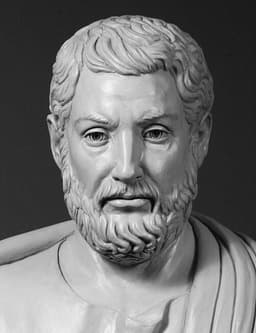
Cleisthenes
Politician · Ancient
78.3Total

King David
Emperor · Ancient
75.3Total
Basic Information
Born
-570
-1010
Died
-508
-970
Era
Ancient
Ancient
Nationality
Greece
Israel
Occupation
Politician
Emperor
Civilization
Western
Middle Eastern
Score Comparison
Military (10%)
49.4
72.0
Political (20%)
62.7
72.0
Influence (20%)
92.0
88.0
Legacy (20%)
92.0
70.0
Leadership (15%)
72.0
72.0
Strategy (15%)
71.3
70.0
TOTAL
78.3
75.3
Cleisthenes — Complete Timeline
510 BC
Expulsion of the PeisistratidsPolitical Action◆ Major
Cleisthenes, with the support of the Alcmaeonid family and Spartan assistance, led the overthrow of the tyrant Hippias, son of Peisistratus. This ended the Peisistratid tyranny in Athens and opened the way for democratic reforms.
Tyranny OverthrownAthensSparta
Impact: nationalconstructive
508 BC
Reforms of CleisthenesReform
Cleisthenes reorganized the Athenian citizen body into ten new tribes based on demes, replacing the old four Ionian tribes. He established the Council of 500 (Boule) and introduced ostracism, creating a system of isonomia (equal rights) that is considered the foundation of Athenian democracy.
Athenian DemocracyConstitutional ReformAncient Greece
Impact: globalprogressive
507 BC
Introduction of OstracismReform◆ Major
Cleisthenes instituted ostracism, a procedure allowing Athenian citizens to vote annually to exile a prominent citizen deemed a threat to democracy for ten years. This mechanism aimed to prevent the rise of a new tyrant and stabilize the democratic system.
Athenian DemocracyPolitical MechanismExile
Impact: national
King David — Complete Timeline
1010 BC
Anointed as King of JudahPolitical Action◆ Major
After Saul's death, David was anointed king over the tribe of Judah at Hebron. This began a seven-year period of civil war with Ish-bosheth, Saul's son, who ruled the northern tribes, leading to the eventual unification of Israel.
KingshipCivil WarJudah
Impact: national
1003 BC
Capture of JerusalemWar
David led his army to capture the Jebusite fortress of Jerusalem, making it the capital of the united kingdom. He brought the Ark of the Covenant there, establishing the city as both the political and religious center of Israel.
JerusalemCapitalArk of the Covenant
Impact: nationalconstructive
1000 BC
Defeat of the PhilistinesWar◆ Major
David fought several campaigns that decisively defeated the Philistines, including the Battle of Baal-perazim. He captured Gath and other Philistine strongholds, ending their dominance over Israel and securing the kingdom's borders.
PhilistinesMilitary CampaignIsrael
Impact: regional
990 BC
Affair with BathshebaPolitical Action◆ Major
David committed adultery with Bathsheba and arranged the death of her husband Uriah the Hittite in battle. The prophet Nathan confronted David, leading to his repentance but also to divine punishment, including the death of their first child.
ScandalBathshebaNathan
Impact: nationaldestructive
978 BC
Revolt of AbsalomWar◆ Major
David's son Absalom led a rebellion that forced David to flee Jerusalem. David's forces under Joab defeated Absalom's army in the Forest of Ephraim, and Absalom was killed. David returned to Jerusalem but the kingdom was weakened.
RebellionCivil WarAbsalom
Impact: nationaltragic
Expert Analysis
Origins
Cleisthenes was born around 570 BCE into the aristocratic Alcmaeonid family of Athens. His lineage was marked by both prestige and controversy, as the Alcmaeonids were cursed for killing followers of Cylon. This shadow shaped Cleisthenes' later reforms aimed at breaking aristocratic power. King David, born around 1040 BCE in Bethlehem, was the youngest son of Jesse, a shepherd. His humble origins contrasted with his anointing by Samuel, which set him on a path to kingship. David's early life as a warrior and musician gave him unique skills for leadership.
Rise to Power
Cleisthenes rose to power during the turmoil after the fall of the Peisistratid tyranny. Initially, he competed with Isagoras for influence, but when Isagoras sought Spartan help, Cleisthenes appealed to the demos (common people) by proposing radical reforms. This populist move forced Isagoras into exile, and Cleisthenes implemented his democratic system. King David's rise was more dramatic: from slaying Goliath to becoming a military commander under Saul, then fleeing Saul's jealousy. After Saul's death, David was anointed king of Judah, and later of all Israel, uniting the tribes through military conquest and diplomacy.
Leadership & Governance
Cleisthenes' leadership was institutional and transformative. He reorganized Attica into demes (local units), tribes based on residence not kinship, and created the Council of 500 (Boule) selected by lot. He introduced ostracism to prevent tyranny. His governance empowered citizens and reduced aristocratic control. King David's leadership was personal and charismatic. He centralized the state by capturing Jerusalem, making it his capital, and bringing the Ark of the Covenant there. He established a bureaucracy, expanded the kingdom through wars, and created a dynasty. However, his governance was autocratic, relying on his own judgment and divine favor.
Triumph & Tragedy
Cleisthenes' triumph was the establishment of democracy, which flourished for two centuries. His reforms survived Persian invasions and became a model for later democracies. The tragedy was that his system excluded women, slaves, and metics, and eventually fell to Macedonian conquest. King David's triumphs include the unification of Israel, military victories over Philistines and neighbors, and establishing Jerusalem as a religious center. His personal tragedies were profound: the affair with Bathsheba led to the death of their child and family strife, culminating in Absalom's revolt. David's later years were marked by court intrigue and succession struggles.
Character & Destiny
Cleisthenes was a pragmatic aristocrat who chose to empower the people, perhaps out of ambition or genuine belief. His character is enigmatic; he disappeared from history after his reforms, suggesting he didn't seek personal power. His destiny was to be the 'Father of Democracy,' a title that ensured his legacy. King David was a complex figure: a poet, warrior, and sinner. He was deeply religious, repentant, but also flawed. His destiny was to be the archetypal king, progenitor of the messianic line, and a central figure in Judaism, Christianity, and Islam.
Legacy
Cleisthenes' legacy is monumental: his democratic principles influenced the Roman Republic, the Enlightenment, and modern democracies. The concept of isonomia (equality before law) and citizen participation are his gifts. King David's legacy is religious and national: he is the ideal king in Jewish tradition, an ancestor of Jesus in Christianity, and a prophet in Islam. His Psalms shaped worship. Politically, his dynasty lasted for centuries, and his unified kingdom became a symbol of national identity.
Conclusion
Comparing Cleisthenes and King David involves weighing institutional innovation against personal impact. Cleisthenes (score 74.7) created a system that outlasted him and shaped global governance. King David (score 74.1) built a kingdom and a religious legacy that endures. While David's story is more dramatic, Cleisthenes' reforms are more applicable to modern secular governance. Thus, Cleisthenes edges ahead in historical influence, but David's spiritual impact is unmatched. In a battle of ideas, democracy wins; in a battle of faith, David prevails. For this analysis, Cleisthenes takes the lead due to the enduring relevance of his political innovations.
Rankings
🥇
CleisthenesLeader
Mil: 49.4Pol: 62.7Inf: 92.0
78.3
🥈
King David
Mil: 72.0Pol: 72.0Inf: 88.0
75.3
+3.0 behind
How This Comparison Works
Algorithm
Each figure is scored on 6 dimensions (0—100 scale) based on structured historical data: Military (10%), Political (20%), Influence (20%), Legacy (20%), Leadership (15%), Strategy (15%). The weighted total produces the final ranking.
Data Sources
Scores are computed from structured sub-indicators in the database. Scale factors adjust for era (Ancient ×0.85, Modern ×1.0) and civilization size (Eastern ×1.05, Other ×0.80) to account for differences in population and military scale.
Maximum 3 Figures
Comparisons are limited to 2—3 figures to ensure readability and statistical meaningfulness.
Error Margins
±5 points per dimension — Sub-scores are derived from historical records with inherent uncertainty. Two figures within 5 points on a dimension should be considered roughly equivalent in that area.
Total Score Accuracy
±3 points overall — The weighted combination of 6 dimensions produces a total score with approximately ±3 points of uncertainty. Differences of less than 3 points are not statistically significant— the figures are effectively tied.
Known Limitations
- Historical records are incomplete and uneven across civilizations
- Figures from oral-tradition societies may be underrepresented
- Occupation labels can misclassify multi-role figures
- Scores measure capability and impact, not moral character
- Quantitative scoring is a comparison tool, not absolute truth
Capability Radar
Military (10%) — Battles & Warfare
Battles
58
75
Win Rate
62
85
Expansion
59
80
Political (20%) — Governance & Reform
Reform
95
80
Diplomacy
70
75
Economy
40
70
Influence (20%) — Cultural & Global Reach
Cultural
85
95
Global
85
90
Legacy (20%) — Historical Impact
Historical
90
95
Longevity
95
95
Leadership (15%) — Power & Stability
Tenure
30
85
Stability
60
65
Strategy (15%) — Tactics & Innovation
Strategy
62
85
Tactics
67
80
Reform
72
70
Similar Comparisons
Comments & Discussion
No comments yet. Be the first to share your thoughts!