Loading...
Cleisthenes vs Julius Caesar
Julius Caesar leads by 4.5 pts · 2 figures compared
…
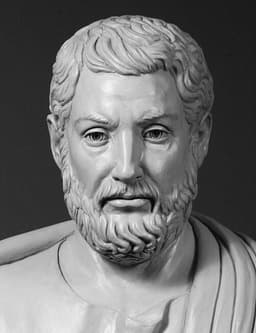
Cleisthenes
Politician · Ancient
78.3Total

Julius Caesar
General · Ancient
82.8Total
Basic Information
Born
-570
-100
Died
-508
-44
Era
Ancient
Ancient
Nationality
Greece
Roman Republic
Occupation
Politician
General
Civilization
Western
Western
Score Comparison
Military (10%)
49.4
88.0
Political (20%)
62.7
78.0
Influence (20%)
92.0
85.0
Legacy (20%)
92.0
82.0
Leadership (15%)
72.0
80.0
Strategy (15%)
71.3
85.0
TOTAL
78.3
82.8
Cleisthenes — Complete Timeline
510 BC
Expulsion of the PeisistratidsPolitical Action◆ Major
Cleisthenes, with the support of the Alcmaeonid family and Spartan assistance, led the overthrow of the tyrant Hippias, son of Peisistratus. This ended the Peisistratid tyranny in Athens and opened the way for democratic reforms.
Tyranny OverthrownAthensSparta
Impact: nationalconstructive
508 BC
Reforms of CleisthenesReform
Cleisthenes reorganized the Athenian citizen body into ten new tribes based on demes, replacing the old four Ionian tribes. He established the Council of 500 (Boule) and introduced ostracism, creating a system of isonomia (equal rights) that is considered the foundation of Athenian democracy.
Athenian DemocracyConstitutional ReformAncient Greece
Impact: globalprogressive
507 BC
Introduction of OstracismReform◆ Major
Cleisthenes instituted ostracism, a procedure allowing Athenian citizens to vote annually to exile a prominent citizen deemed a threat to democracy for ten years. This mechanism aimed to prevent the rise of a new tyrant and stabilize the democratic system.
Athenian DemocracyPolitical MechanismExile
Impact: national
Julius Caesar — Complete Timeline
58 BC
Gallic WarsWar◆ Major
Caesar, as proconsul of Gaul, launched a series of campaigns that conquered all of Gaul (modern France, Belgium, and parts of Switzerland). He fought numerous battles, including against the Helvetii, the Belgae, and the Gallic chieftain Vercingetorix. The wars brought immense wealth and a loyal army to Caesar.
Gallic WarsConquestRoman Expansion
Impact: regional
49 BC
Crossing the RubiconPolitical Action◆ Major
Caesar led Legio XIII across the Rubicon River into Italy, defying the Roman Senate's order to disband his army. This act triggered a civil war against Pompey and the Optimates, ultimately leading to Caesar's dictatorship and the end of the Roman Republic.
Roman Civil WarEnd of RepublicPower Struggle
Impact: global
48 BC
Battle of PharsalusWar◆ Major
Caesar's outnumbered army defeated the larger forces of Pompey the Great at Pharsalus in Greece. Caesar's tactical use of a reserve line to counter Pompey's cavalry charge proved decisive. Pompey fled to Egypt, where he was assassinated, leaving Caesar as the undisputed master of the Roman world.
Roman Civil WarBattleDecisive Victory
Impact: regional
44 BC
Appointment as Dictator for LifePolitical Action◆ Major
The Roman Senate appointed Caesar dictator perpetuo (dictator for life), granting him unprecedented personal power. This move concentrated military, legislative, and judicial authority in one person, effectively ending the Roman Republic's traditional system of checks and balances and alarming many senators.
DictatorshipEnd of RepublicPower Consolidation
Impact: regionaldestructive
Assassination on the Ides of MarchPolitical Action◆ Major
A group of Roman senators, led by Marcus Junius Brutus and Gaius Cassius Longinus, stabbed Caesar to death at a meeting of the Senate in the Theatre of Pompey. The assassination was intended to restore the Republic, but instead triggered another civil war that led to the rise of the Roman Empire.
AssassinationRoman PoliticsEnd of Republic
Impact: globaldestructive
Expert Analysis
Origins
Julius Caesar was born into the patrician Julian clan in 100 BCE, a family claiming descent from the goddess Venus. Despite his noble lineage, Rome was a republic dominated by the senatorial aristocracy, and Caesar's early life was marked by political turbulence, including the Social War and Sulla's dictatorship. His aunt Julia was married to Gaius Marius, a populist general, which put Caesar at odds with Sulla's regime. He fled Rome and served in the military in Asia, beginning his career as a soldier. Cleisthenes, born around 570 BCE, was a member of the aristocratic Alcmaeonid family in Athens. The Alcmaeonids were known for their wealth and political influence, but also for a curse incurred from a massacre of Cylon's followers. Cleisthenes grew up in an Athens transitioning from tyranny to oligarchy, with the Peisistratid tyrants ruling until their expulsion in 510 BCE. His family had opposed the tyranny, though some Alcmaeonids collaborated. Cleisthenes' early life was shaped by the struggle between aristocratic factions and the demos.
Rise to Power
Caesar's rise was a masterclass in ambition and opportunism. He gained popularity as a military commander in Hispania and as a reformist aedile. The First Triumvirate with Pompey and Crassus in 60 BCE propelled him to the consulship in 59 BCE. After his consulship, he secured the governorship of Gaul, where he launched the Gallic Wars (58–50 BCE), conquering vast territories and building a loyal army. His political rivals in Rome, led by Cato and Pompey, sought to curb his power. When ordered to disband his army, Caesar crossed the Rubicon River in 49 BCE, triggering a civil war. He defeated Pompey at Pharsalus in 48 BCE and later became dictator, first temporarily and then for life in 44 BCE. Cleisthenes rose to power in the chaotic aftermath of the expulsion of the Peisistratid tyrants in 510 BCE. Athens was divided among aristocratic factions, and Cleisthenes initially competed for power with Isagoras. In 508 BCE, he appealed to the common people for support, promising reforms. Isagoras called in Spartan help, but the Athenian demos resisted, and Cleisthenes was recalled to implement his reforms. He introduced a series of constitutional changes that laid the foundation for Athenian democracy.
Leadership & Governance
Caesar's governance was characterized by centralization and reform. As dictator, he enacted measures to relieve debt, expanded the Senate, reformed the calendar (the Julian calendar), and initiated public works. He granted citizenship to many provincials and planned vast building projects. However, his accumulation of power and his title of dictator for life alienated the senatorial elite. His reforms were often autocratic, bypassing traditional republican institutions. Cleisthenes' reforms were fundamentally democratic. He reorganized the Athenian population into ten tribes based on demes (local communities), breaking the power of aristocratic clans. He created a Council of 500 chosen by lot, expanded the assembly's role, and introduced ostracism to exile potential tyrants. His system emphasized isonomia (equality before the law) and broad participation, though it excluded women, slaves, and metics. His leadership was less about personal power and more about institutional design.
Triumph & Tragedy
Caesar's triumphs were military and political: the conquest of Gaul, victory in the civil war, and the consolidation of power. His tragic flaw was his ambition and disregard for republican norms. The Ides of March (44 BCE) saw his assassination by senators led by Brutus and Cassius, who feared his monarchy. His death plunged Rome into another civil war, ultimately leading to the end of the Republic. Cleisthenes' triumph was the successful implementation of his reforms, which gave Athens a stable democracy for nearly two centuries. His tragedy is less personal; he faded from history after his reforms, possibly exiled or ostracized. But his legacy endured, though Athenian democracy eventually succumbed to Macedonian hegemony.
Character & Destiny
Caesar was charismatic, intelligent, and ruthless. He was a brilliant general, a skilled orator, and a prolific writer (his Commentaries). His ambition was boundless, and he believed in his destiny to rule. His clemency toward defeated enemies was politically calculated, but his arrogance and dismissal of the Senate's authority sealed his fate. Cleisthenes was a pragmatic reformer, willing to ally with the demos to achieve his goals. He was less a charismatic leader than a political architect. His destiny was to be the "father of Athenian democracy," a title he earned by designing institutions that outlasted him.
Legacy
Caesar's legacy is immense: his name became synonymous with imperial power (Kaiser, Tsar). He transformed Rome from a republic into a de facto monarchy, setting the stage for the Roman Empire. His military campaigns, reforms, and the calendar he introduced lasted for centuries. However, his actions also destroyed the Republic and led to centuries of autocracy. Cleisthenes' legacy is the birth of democracy. His reforms inspired later democratic movements, including modern representative democracy. The concepts of ostracism, sortition, and citizen participation trace back to him. While his system was limited by ancient standards, it was a revolutionary step toward popular sovereignty.
Conclusion
Comparing these two figures is challenging because they operated in different contexts with different goals. Caesar scored higher overall (83 vs 78.5), but Cleisthenes excels in Leadership and Legacy (both 92). Caesar's impact was immediate and world-changing, but his methods were autocratic. Cleisthenes' impact was more gradual and institutional, but his reforms endured. In terms of historical significance, Cleisthenes' democratic ideas have had a more profound long-term effect on world history, despite Caesar's greater immediate power. I give the edge to Cleisthenes for fostering a system that empowered citizens, while Caesar's legacy is tainted by the destruction of republican liberty. Score: Caesar 83, Cleisthenes 78.5. Verdict: Cleisthenes.
Rankings
🥇
Julius CaesarLeader
Mil: 88.0Pol: 78.0Inf: 85.0
82.8
🥈
Cleisthenes
Mil: 49.4Pol: 62.7Inf: 92.0
78.3
+4.5 behind
How This Comparison Works
Algorithm
Each figure is scored on 6 dimensions (0—100 scale) based on structured historical data: Military (10%), Political (20%), Influence (20%), Legacy (20%), Leadership (15%), Strategy (15%). The weighted total produces the final ranking.
Data Sources
Scores are computed from structured sub-indicators in the database. Scale factors adjust for era (Ancient ×0.85, Modern ×1.0) and civilization size (Eastern ×1.05, Other ×0.80) to account for differences in population and military scale.
Maximum 3 Figures
Comparisons are limited to 2—3 figures to ensure readability and statistical meaningfulness.
Error Margins
±5 points per dimension — Sub-scores are derived from historical records with inherent uncertainty. Two figures within 5 points on a dimension should be considered roughly equivalent in that area.
Total Score Accuracy
±3 points overall — The weighted combination of 6 dimensions produces a total score with approximately ±3 points of uncertainty. Differences of less than 3 points are not statistically significant— the figures are effectively tied.
Known Limitations
- Historical records are incomplete and uneven across civilizations
- Figures from oral-tradition societies may be underrepresented
- Occupation labels can misclassify multi-role figures
- Scores measure capability and impact, not moral character
- Quantitative scoring is a comparison tool, not absolute truth
Capability Radar
Military (10%) — Battles & Warfare
Battles
58
95
Win Rate
62
92
Expansion
59
97
Political (20%) — Governance & Reform
Reform
95
90
Diplomacy
70
85
Economy
40
82
Influence (20%) — Cultural & Global Reach
Cultural
85
88
Global
85
94
Legacy (20%) — Historical Impact
Historical
90
95
Longevity
95
96
Leadership (15%) — Power & Stability
Tenure
30
75
Stability
60
60
Strategy (15%) — Tactics & Innovation
Strategy
62
94
Tactics
67
96
Reform
72
88
Similar Comparisons
Comments & Discussion
No comments yet. Be the first to share your thoughts!