Loading...
Cleisthenes vs John Churchill Duke of Marlborough
Cleisthenes leads by 2.9 pts · 2 figures compared
…
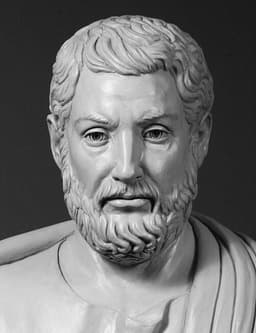
Cleisthenes
Politician · Ancient
78.3Total

John Churchill Duke of Marlborough
General · Modern
75.4Total
Basic Information
Born
-570
1650
Died
-508
1722
Era
Ancient
Modern
Nationality
Greece
England
Occupation
Politician
General
Civilization
Western
Western
Score Comparison
Military (10%)
49.4
84.7
Political (20%)
62.7
78.0
Influence (20%)
92.0
65.0
Legacy (20%)
92.0
80.0
Leadership (15%)
72.0
78.0
Strategy (15%)
71.3
72.8
TOTAL
78.3
75.4
Cleisthenes — Complete Timeline
510 BC
Expulsion of the PeisistratidsPolitical Action◆ Major
Cleisthenes, with the support of the Alcmaeonid family and Spartan assistance, led the overthrow of the tyrant Hippias, son of Peisistratus. This ended the Peisistratid tyranny in Athens and opened the way for democratic reforms.
Tyranny OverthrownAthensSparta
Impact: nationalconstructive
508 BC
Reforms of CleisthenesReform
Cleisthenes reorganized the Athenian citizen body into ten new tribes based on demes, replacing the old four Ionian tribes. He established the Council of 500 (Boule) and introduced ostracism, creating a system of isonomia (equal rights) that is considered the foundation of Athenian democracy.
Athenian DemocracyConstitutional ReformAncient Greece
Impact: globalprogressive
507 BC
Introduction of OstracismReform◆ Major
Cleisthenes instituted ostracism, a procedure allowing Athenian citizens to vote annually to exile a prominent citizen deemed a threat to democracy for ten years. This mechanism aimed to prevent the rise of a new tyrant and stabilize the democratic system.
Athenian DemocracyPolitical MechanismExile
Impact: national
John Churchill Duke of Marlborough — Complete Timeline
1704 AD
Battle of BlenheimWar
Marlborough commanded the Anglo-Dutch army alongside Prince Eugene of Savoy against French and Bavarian forces at Blenheim. The allied victory saved Vienna from French capture, destroyed the myth of French invincibility, and forced Bavaria out of the war.
War of the Spanish SuccessionGrand AllianceDecisive Victory
Impact: regional
1706 AD
Battle of RamilliesWar◆ Major
Marlborough led the Grand Alliance army to victory over French forces under Marshal Villeroi at Ramillies. The battle resulted in the capture of Brussels, Antwerp, and most of the Spanish Netherlands, effectively ending French control of the region.
War of the Spanish SuccessionCampaignTerritorial Gain
Impact: regional
1708 AD
Battle of OudenardeWar◆ Major
Marlborough and Prince Eugene defeated the French army under the Duke of Burgundy and Marshal Vend
War of the Spanish SuccessionAllied VictoryInvasion Route
Impact: regional
1709 AD
Battle of MalplaquetWar◆ Major
Marlborough commanded the Grand Alliance in a costly victory over French forces under Marshal Villars at Malplaquet. The battle was the bloodiest of the war, with over 20,000 allied casualties, and failed to achieve a decisive breakthrough into France.
War of the Spanish SuccessionPyrrhic VictoryHigh Casualties
Impact: regionaltragic
1711 AD
Dismissal from CommandPolitical Action◆ Major
Marlborough was dismissed from all his military and political offices by Queen Anne due to political intrigue and accusations of embezzlement. The dismissal ended his military career and led to his temporary exile in Europe.
Political FallExileTory Government
Impact: nationaldestructive
Expert Analysis
Origins
Cleisthenes was born around 570 BCE into the powerful Alcmaeonid family of Athens. His lineage was marked by both prestige and controversy: the Alcmaeonids were cursed for killing followers of Cylon, yet they were also known for their wealth and political influence. Cleisthenes' early life was shaped by the tyranny of the Peisistratids, who had seized power in Athens. His family was exiled during their rule, giving him firsthand experience of oppression and a desire for reform. In contrast, John Churchill was born in 1650 into a modest gentry family in Devon, England. His father, Sir Winston Churchill, was a Royalist politician who fell from favor during the Interregnum. John's early career was as a page at court, where he gained military and diplomatic experience. His rise was aided by his sister Arabella becoming the mistress of James, Duke of York (later James II). Thus, Cleisthenes came from an aristocratic but exiled family, while Marlborough rose through court connections and military service.
Rise to Power
Cleisthenes' rise came after the fall of the Peisistratid tyranny in 510 BCE. With Spartan assistance, the Alcmaeonids helped overthrow the tyrant Hippias. However, a power struggle ensued between Cleisthenes and Isagoras, a conservative aristocrat. Isagoras initially gained the upper hand, calling in Spartan troops and exiling Cleisthenes. But the Athenian people revolted, expelled the Spartans, and recalled Cleisthenes. He then seized the moment to implement radical reforms. Marlborough's rise was gradual and marked by military success. He served under James II but switched allegiance to William of Orange after the Glorious Revolution. His strategic brilliance was recognized during the Nine Years' War, but his true rise came under Queen Anne. He became Captain-General of the allied forces in the War of the Spanish Succession, winning stunning victories at Blenheim (1704), Ramillies (1706), and Oudenarde (1708). His political influence peaked when his wife Sarah was Anne's favorite.
Leadership & Governance
Cleisthenes is best known for his democratic reforms, which laid the foundation for Athenian democracy. He reorganized the citizen body into ten tribes based on demes (local districts), breaking the power of aristocratic clans. He established the Council of 500 (Boule), chosen by lot, to propose laws and oversee administration. He also introduced ostracism, a mechanism to exile potential tyrants. These reforms distributed power among citizens and reduced factionalism. Marlborough's leadership was on the battlefield and in diplomacy. He was a master of logistics, strategy, and coalition warfare. He maintained the fragile Grand Alliance against France, balancing the interests of multiple states. As a general, he was bold and innovative, using aggressive tactics and careful planning. However, his governance was limited to military command; he was not a political reformer like Cleisthenes. His dismissal from command in 1711 due to political intrigue highlights the limits of his power.
Triumph & Tragedy
Cleisthenes' greatest triumph was the successful implementation of his reforms, which created the world's first democracy. His system endured for nearly two centuries and became a model for later democracies. The tragedy of Cleisthenes is that his later life is poorly documented; he faded from history after his reforms. Some accounts suggest he was ostracized himself, a bitter irony. Marlborough's triumphs are his military victories, especially Blenheim, which saved Europe from French domination. He was celebrated as a hero and granted Blenheim Palace. His tragedy came from political betrayal: he was dismissed from command in 1711 and went into voluntary exile. He was later restored under George I but his health declined. Both men faced personal blows: Cleisthenes possibly exiled, Marlborough losing his wife's influence and his own command.
Character & Destiny
Cleisthenes was a visionary reformer, willing to break with tradition and empower the common people. He was pragmatic and strategic, using the people's revolt to enact his agenda. His destiny was to be the "Father of Democracy," a title that ensures his legacy. He scored high in Innovation (92) and Legacy (92). Marlborough was a brilliant military strategist, charismatic and diplomatic. He was also ambitious and politically astute, but ultimately vulnerable to court intrigue. His destiny was to be one of history's greatest generals, yet his reputation suffered due to political attacks. He scored high in Military (85) and Power (78). Cleisthenes' higher overall score (72.6 vs 69.7) reflects his transformative impact on governance.
Legacy
Cleisthenes' legacy is immense: he established the principles of democracy that influence modern governments. His reforms ended aristocratic monopoly on power and gave citizens a voice. Ostracism, while flawed, was a unique check on tyranny. Marlborough's legacy is his military genius; his campaigns are studied in military academies. He helped secure British and European liberty against French absolutism. However, his legacy is more specialized. Cleisthenes' reforms had a broader, more enduring impact on political systems.
Conclusion
Cleisthenes emerges as the more significant historical figure due to his foundational role in democracy. While Marlborough was a brilliant general, his victories, though decisive, did not fundamentally change political structures. Cleisthenes' reforms created a new form of governance that inspired centuries of political thought. His score of 72.6 surpasses Marlborough's 69.7, reflecting his higher innovation and legacy. Therefore, Cleisthenes wins this comparison.
**Scores:** Cleisthenes: 72.6, Marlborough: 69.7
Rankings
🥇
CleisthenesLeader
Mil: 49.4Pol: 62.7Inf: 92.0
78.3
🥈
John Churchill Duke of Marlborough
Mil: 84.7Pol: 78.0Inf: 65.0
75.4
+2.9 behind
How This Comparison Works
Algorithm
Each figure is scored on 6 dimensions (0—100 scale) based on structured historical data: Military (10%), Political (20%), Influence (20%), Legacy (20%), Leadership (15%), Strategy (15%). The weighted total produces the final ranking.
Data Sources
Scores are computed from structured sub-indicators in the database. Scale factors adjust for era (Ancient ×0.85, Modern ×1.0) and civilization size (Eastern ×1.05, Other ×0.80) to account for differences in population and military scale.
Maximum 3 Figures
Comparisons are limited to 2—3 figures to ensure readability and statistical meaningfulness.
Error Margins
±5 points per dimension — Sub-scores are derived from historical records with inherent uncertainty. Two figures within 5 points on a dimension should be considered roughly equivalent in that area.
Total Score Accuracy
±3 points overall — The weighted combination of 6 dimensions produces a total score with approximately ±3 points of uncertainty. Differences of less than 3 points are not statistically significant— the figures are effectively tied.
Known Limitations
- Historical records are incomplete and uneven across civilizations
- Figures from oral-tradition societies may be underrepresented
- Occupation labels can misclassify multi-role figures
- Scores measure capability and impact, not moral character
- Quantitative scoring is a comparison tool, not absolute truth
Capability Radar
Military (10%) — Battles & Warfare
Battles
58
95
Win Rate
62
98
Expansion
59
85
Political (20%) — Governance & Reform
Reform
95
60
Diplomacy
70
85
Economy
40
70
Influence (20%) — Cultural & Global Reach
Cultural
85
70
Global
85
75
Legacy (20%) — Historical Impact
Historical
90
85
Longevity
95
80
Leadership (15%) — Power & Stability
Tenure
30
80
Stability
60
75
Strategy (15%) — Tactics & Innovation
Strategy
62
95
Tactics
67
96
Reform
72
70
Similar Comparisons
Comments & Discussion
No comments yet. Be the first to share your thoughts!