Loading...
Cleisthenes vs J. B. M. Hertzog
Cleisthenes leads by 22.2 pts · 2 figures compared
…
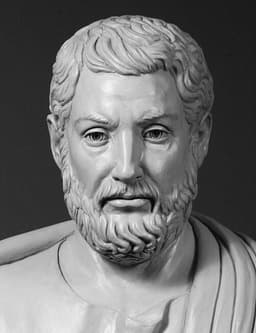
Cleisthenes
Politician · Ancient
78.3Total
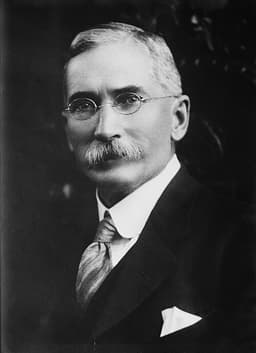
J. B. M. Hertzog
General · Modern
56.1Total
Basic Information
Born
-570
1866
Died
-508
1942
Era
Ancient
Modern
Nationality
Greece
South Africa
Occupation
Politician
General
Civilization
Western
Other
Score Comparison
Military (10%)
49.4
25.0
Political (20%)
62.7
60.0
Influence (20%)
92.0
56.7
Legacy (20%)
92.0
50.0
Leadership (15%)
72.0
79.8
Strategy (15%)
71.3
60.0
TOTAL
78.3
56.1
Cleisthenes — Complete Timeline
510 BC
Expulsion of the PeisistratidsPolitical Action◆ Major
Cleisthenes, with the support of the Alcmaeonid family and Spartan assistance, led the overthrow of the tyrant Hippias, son of Peisistratus. This ended the Peisistratid tyranny in Athens and opened the way for democratic reforms.
Tyranny OverthrownAthensSparta
Impact: nationalconstructive
508 BC
Reforms of CleisthenesReform
Cleisthenes reorganized the Athenian citizen body into ten new tribes based on demes, replacing the old four Ionian tribes. He established the Council of 500 (Boule) and introduced ostracism, creating a system of isonomia (equal rights) that is considered the foundation of Athenian democracy.
Athenian DemocracyConstitutional ReformAncient Greece
Impact: globalprogressive
507 BC
Introduction of OstracismReform◆ Major
Cleisthenes instituted ostracism, a procedure allowing Athenian citizens to vote annually to exile a prominent citizen deemed a threat to democracy for ten years. This mechanism aimed to prevent the rise of a new tyrant and stabilize the democratic system.
Athenian DemocracyPolitical MechanismExile
Impact: national
J. B. M. Hertzog — Complete Timeline
1899 AD
Boer War GeneralWar◆ Major
Hertzog served as a Boer general in the Second Boer War, commanding forces in the Orange Free State. He participated in several battles and became a prominent Afrikaner military leader.
Second Boer WarGeneralMilitary
Impact: regional
1914 AD
Founded the National PartyPolitical Action
Hertzog broke away from the South African Party and founded the National Party, which championed Afrikaner nationalism and opposed British imperial influence. The party would later implement apartheid.
National PartyAfrikaner NationalismFounding
Impact: nationalconstructive
1924 AD
Prime Minister of South AfricaPolitical Action◆ Major
Hertzog became Prime Minister after his National Party won the general election in coalition with the Labour Party. His government implemented policies to protect white workers and promote Afrikaner interests, including the 'civilized labour' policy.
Prime MinisterAfrikaner RightsLabour Policy
Impact: national
1934 AD
Merged with Smuts to Form United PartyPolitical Action◆ Major
Hertzog merged his National Party with Jan Smuts' South African Party to form the United Party. The coalition aimed to address the economic crisis of the Great Depression and promote national unity, but it alienated hardline Afrikaner nationalists.
United PartyCoalitionNational Unity
Impact: nationalconstructive
1936 AD
Passed the Representation of Natives ActReform◆ Major
Hertzog's government passed the Representation of Natives Act, which removed Black voters from the common voters' roll in the Cape Province and allowed them to elect white representatives instead. This further entrenched racial segregation.
SegregationDisenfranchisementLegislation
Impact: nationaldestructive
1939 AD
Resigned Over Neutrality in WWIIPolitical Action◆ Major
Hertzog advocated for South African neutrality in World War II, but his cabinet voted to enter the war on the Allied side. He resigned as Prime Minister and was succeeded by Jan Smuts, splitting the United Party.
World War IINeutralityResignation
Impact: national
Expert Analysis
Cleisthenes vs J. B. M. Hertzog
# The Architect and the General
In the winter of 508 BC, an exiled aristocrat returned to Athens with Spartan spears at his back, determined to tear down a tyranny—and, in doing so, to build something the world had never seen. Twenty-four centuries later, in the summer of 1939, a South African general sat in his cabinet room in Pretoria, watching his own government vote to enter a war he believed would destroy his people. One man invented democracy. The other dismantled it. Both were called reformers. Both were shaped by the same brutal question: What does it mean to build a nation?
Origins
Cleisthenes was born around 570 BC into the Alcmaeonid family, one of Athens' most powerful and controversial clans. His ancestors had been cursed for murder, exiled for conspiracy, and had once bribed the Oracle of Delphi. This was a world of city-states locked in perpetual rivalry, where power flowed through bloodlines and coups. Cleisthenes grew up knowing that politics was a knife fight conducted with words and alliances.
James Barry Munnik Hertzog was born in 1866 on a farm in the Cape Colony, the son of a Boer frontiersman. His world was the South African veld, where Dutch-speaking farmers lived under British colonial rule, nursing grievances over land, language, and the memory of the Great Trek. Hertzog studied law in Europe and returned to find his people caught between British imperialism and the rising power of Black African majorities. For him, politics was a war fought with laws.
Rise to Power
Cleisthenes entered history through exile. In 510 BC, with Spartan help, he expelled the tyrant Hippias, ending the Peisistratid dynasty that had ruled Athens for decades. But power did not fall neatly into his hands. A rival aristocrat, Isagoras, seized control and had Cleisthenes exiled again. This time, Cleisthenes did something unprecedented: he appealed to the common people. He promised them a voice in exchange for their support. When Isagoras tried to crush the uprising with Spartan force, the Athenian people rose, besieged their own acropolis, and brought Cleisthenes back in triumph.
Hertzog rose through war. As a Boer general in the Second Boer War of 1899, he fought the British across the Orange Free State, earning a reputation for stubborn courage. After defeat, he entered politics, but the trauma of British concentration camps and the loss of Boer independence never left him. In 1914, he broke away from the South African Party and founded the National Party, dedicated to Afrikaner nationalism. His moment came in 1924, when his party won the general election and he became Prime Minister.
Leadership & Governance
Cleisthenes governed in a single burst of creative destruction. In 508 BC, he reorganized Athens entirely. He replaced the old four Ionian tribes—built on kinship and vulnerable to aristocratic manipulation—with ten new tribes based on local demes, or neighborhoods. Every Athenian citizen now belonged to a political unit defined by where he lived, not who his father was. This shattered the power of the old clans and gave ordinary farmers and craftsmen a stake in government. Then, around 507 BC, Cleisthenes introduced ostracism: a yearly vote in which citizens could exile any dangerous politician for ten years. It was democracy's immune system, crude but brilliant.
Hertzog governed for fifteen years, and his reforms cut in the opposite direction. He passed laws to protect Afrikaans language and culture, and to shield white workers from competition. But his defining act came in 1936 with the Representation of Natives Act, which removed Black voters from the common roll in the Cape Province. Where Cleisthenes expanded citizenship, Hertzog contracted it. Where the Athenian built institutions to include, the South African built laws to exclude. In 1934, Hertzog merged his National Party with Jan Smuts' South African Party to form the United Party, a coalition meant to unite white South Africans—but only white South Africans.
Triumph & Tragedy
Cleisthenes' triumph was the creation of Athenian democracy itself. Within a generation, Athens would defeat Persia at Marathon and Salamis, enter its Golden Age, and produce the philosophy, drama, and art that shaped Western civilization. His tragedy was that he did not live to see it. He died around 508 BC, probably in his early sixties, just as his reforms began to take root. He vanished from history so completely that we do not know where he is buried.
Hertzog's triumph was the political unification of Afrikanerdom. He gave his people pride, language rights, and a sense of nationhood after the humiliation of the Boer War. His tragedy came in 1939. When World War II broke out, Hertzog argued for neutrality, fearing that war would drag South Africa into Britain's orbit and weaken Afrikaner independence. His cabinet voted to join the Allies. He resigned, broken, and retired to his farm. The National Party he founded would go on, after his death, to create apartheid—a system far crueler than anything he had imagined.
Character & Destiny
Cleisthenes was a pragmatist with a vision. He did not write philosophical treatises about democracy; he built a machine that made it work. He understood that power had to be distributed, not hoarded, and that the only way to break the cycle of tyranny was to give the people a stake in their own government. His personality remains shadowy—no speeches survive, no memoirs—but his actions speak of a man who trusted the common citizen more than his own class.
Hertzog was a man of principle and rigidity. He believed deeply in the rights of his people, but could not see the same rights in others. His legal mind sought order, but the order he built was hierarchical. When the world war came, he chose principle over popularity—and lost everything. His tragedy was that his vision of freedom was for some, not for all.
Legacy
Cleisthenes is remembered as the Father of Athenian Democracy. His reforms lasted nearly two centuries, until Macedonia conquered Greece. His name is carved into the foundation of Western political thought. When modern democracies hold elections, when they draw voting districts, when they impeach or recall their leaders, they are walking the path he cut.
Hertzog's legacy is more ambiguous. He is honored in South Africa as a founder of Afrikaner nationalism, but his name is also tied to the legal architecture that led to apartheid. The National Party he created ruled South Africa for decades, enforcing racial segregation until 1994. Today, statues of Hertzog have been removed from public squares. He is studied as a warning: that nationalism can be a liberating force for one group and a cage for another.
Conclusion
Standing on the Acropolis, looking out over the Aegean, Cleisthenes saw a city of citizens. Standing on the veld, looking out over a divided land, Hertzog saw a nation of tribes. Both were builders, but they built in opposite directions. Cleisthenes opened the door. Hertzog closed it. And the difference between them—between 508 BC and 1936 AD, between the birth of democracy and the birth of apartheid—is not a matter of time, but of choice. Every generation faces the same question: Who belongs? The answer, then as now, decides everything.
Rankings
🥇
CleisthenesLeader
Mil: 49.4Pol: 62.7Inf: 92.0
78.3
🥈
J. B. M. Hertzog
Mil: 25.0Pol: 60.0Inf: 56.7
56.1
+22.2 behind
How This Comparison Works
Algorithm
Each figure is scored on 6 dimensions (0—100 scale) based on structured historical data: Military (10%), Political (20%), Influence (20%), Legacy (20%), Leadership (15%), Strategy (15%). The weighted total produces the final ranking.
Data Sources
Scores are computed from structured sub-indicators in the database. Scale factors adjust for era (Ancient ×0.85, Modern ×1.0) and civilization size (Eastern ×1.05, Other ×0.80) to account for differences in population and military scale.
Maximum 3 Figures
Comparisons are limited to 2—3 figures to ensure readability and statistical meaningfulness.
Error Margins
±5 points per dimension — Sub-scores are derived from historical records with inherent uncertainty. Two figures within 5 points on a dimension should be considered roughly equivalent in that area.
Total Score Accuracy
±3 points overall — The weighted combination of 6 dimensions produces a total score with approximately ±3 points of uncertainty. Differences of less than 3 points are not statistically significant— the figures are effectively tied.
Known Limitations
- Historical records are incomplete and uneven across civilizations
- Figures from oral-tradition societies may be underrepresented
- Occupation labels can misclassify multi-role figures
- Scores measure capability and impact, not moral character
- Quantitative scoring is a comparison tool, not absolute truth
Capability Radar
Military (10%) — Battles & Warfare
Battles
58
45
Win Rate
62
40
Expansion
59
20
Political (20%) — Governance & Reform
Reform
95
60
Diplomacy
70
55
Economy
40
50
Influence (20%) — Cultural & Global Reach
Cultural
85
50
Global
85
45
Legacy (20%) — Historical Impact
Historical
90
55
Longevity
95
40
Leadership (15%) — Power & Stability
Tenure
30
65
Stability
60
45
Strategy (15%) — Tactics & Innovation
Strategy
62
50
Tactics
67
45
Reform
72
30
Similar Comparisons
Comments & Discussion
🎭 HERITAGE HITMAN6/16/2026
Hertzog wasn't a "reformer"—he was a racial demolition expert who used parliamentary tools to entrench white supremacy. His 1936 Representation of Natives Act literally removed Cape Coloureds from the voters' roll, while Cleisthenes gave Athenians citizenship through tribes *regardless* of clan. One man expanded the circle, the other shrunk it with legislative fire. Revisionist critics who call Hertzog a pragmatist are sanitizing apartheid's blueprint.
📜 ALCMAEON 2.06/16/2026
Cleisthenes didn't just "invent democracy"—he hacked the bloodline system. By replacing the four Ionian tribes with ten artificial *phylai* based on demes, he literally erased aristocratic genealogy as a power lever. My guy orchestrated the *ostrakon* lottery and turned political exile into a vote, not a coup. Hertzog? Couldn't even keep his own National Party unified—he got outvoted on neutrality in 1939. Cleisthenes outmaneuvered Isagoras with *persuaded Spartan intervention* then flipped it i
📉 DATA DETECTIVE6/16/2026
Let's crunch the numbers: Cleisthenes' reforms gave Athens about 30,000 citizens voting rights, expanding the elite pool maybe 10x. Hertzog's 1936 Act disenfranchised roughly 400,000 Coloured voters—a 100% removal. Cleisthenes grew participation; Hertzog erased it. Calling both "reformers" is like calling a gardener and an arsonist "landscape artists." The data screams one thing: Cleisthenes built, Hertzog burnt. Context doesn't sanitize 400,000 lost names.
🏺 AMERICAN APOLOGIST?6/16/2026
抱歉,但把克利斯提尼和赫佐格并列就像把青霉素和天花病毒放在一起比较。克利斯提尼的五百人议事会是抽签产生的——你能想象赫佐格让所有南非人抽签当议员吗?他连让布尔人和英国人同席喝茶都觉得难受。克利斯提尼的政治逻辑是“随机分配权力”,赫佐格是“集中权力给一小撮人”。这不是演变,这是退化。