Loading...
Cleisthenes vs Ivan III the Great
Cleisthenes leads by 3.0 pts · 2 figures compared
…
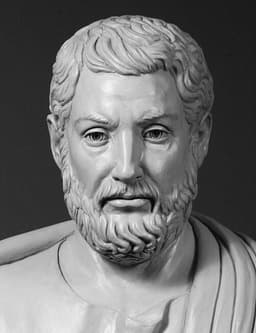
Cleisthenes
Politician · Ancient
78.3Total
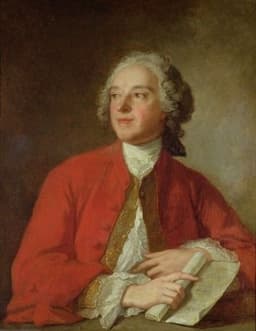
Ivan III the Great
Emperor · Medieval
75.3Total
Basic Information
Born
-570
1440
Died
-508
1505
Era
Ancient
Medieval
Nationality
Greece
Muscovy
Occupation
Politician
Emperor
Civilization
Western
Western
Score Comparison
Military (10%)
49.4
76.0
Political (20%)
62.7
70.0
Influence (20%)
92.0
75.0
Legacy (20%)
92.0
80.0
Leadership (15%)
72.0
78.0
Strategy (15%)
71.3
67.2
TOTAL
78.3
75.3
Cleisthenes — Complete Timeline
510 BC
Expulsion of the PeisistratidsPolitical Action◆ Major
Cleisthenes, with the support of the Alcmaeonid family and Spartan assistance, led the overthrow of the tyrant Hippias, son of Peisistratus. This ended the Peisistratid tyranny in Athens and opened the way for democratic reforms.
Tyranny OverthrownAthensSparta
Impact: nationalconstructive
508 BC
Reforms of CleisthenesReform
Cleisthenes reorganized the Athenian citizen body into ten new tribes based on demes, replacing the old four Ionian tribes. He established the Council of 500 (Boule) and introduced ostracism, creating a system of isonomia (equal rights) that is considered the foundation of Athenian democracy.
Athenian DemocracyConstitutional ReformAncient Greece
Impact: globalprogressive
507 BC
Introduction of OstracismReform◆ Major
Cleisthenes instituted ostracism, a procedure allowing Athenian citizens to vote annually to exile a prominent citizen deemed a threat to democracy for ten years. This mechanism aimed to prevent the rise of a new tyrant and stabilize the democratic system.
Athenian DemocracyPolitical MechanismExile
Impact: national
Ivan III the Great — Complete Timeline
1472 AD
Marriage to Sophia PalaiologinaPolitical Action◆ Major
Ivan III married Sophia (Zoe) Palaiologina, niece of the last Byzantine emperor. This marriage allowed Ivan to claim succession to the Byzantine Empire, adopt the double-headed eagle as a symbol, and promote Moscow as the Third Rome.
ByzantiumThird RomeMarriage
Impact: regionalconstructive
1478 AD
Annexation of NovgorodWar◆ Major
Ivan III conquered the Novgorod Republic after a series of campaigns. He abolished the veche (assembly) and removed the veche bell, incorporating Novgorod's vast territories into the Grand Principality of Moscow.
NovgorodAnnexationMoscow
Impact: regional
1480 AD
Great Stand on the Ugra RiverWar
Ivan III faced the Mongol army of Khan Akhmat across the Ugra River. After weeks of stalemate, the Mongols withdrew without battle. This event ended 240 years of Mongol suzerainty over Russia.
Golden HordeIndependenceUgra
Impact: regional
1497 AD
Issued the Sudebnik of 1497Reform◆ Major
Ivan III promulgated a new legal code, the Sudebnik, which standardized laws across the Russian lands. It restricted peasant mobility by limiting the time for transfer between landowners, a step toward serfdom.
Legal CodeSerfdomReform
Impact: national
1500 AD
War with the Grand Duchy of LithuaniaWar◆ Major
Ivan III launched a war against Lithuania, capturing the cities of Bryansk, Dorogobuzh, and Putivl. The war ended with the Truce of 1503, which ceded significant territories to Moscow.
LithuaniaTerritorial ExpansionWar
Impact: regional
Expert Analysis
Origins
Cleisthenes was an Athenian aristocrat from the Alcmaeonid family, a powerful clan often at odds with other noble factions. His early life was marked by political exile and conflict with the tyrant Peisistratus and his sons. After the expulsion of the Peisistratids in 510 BCE, Cleisthenes initially competed for power with Isagoras but, when losing, turned to the common people for support, introducing radical reforms.
Ivan III, born in 1440, was the Grand Prince of Moscow, inheriting a principality that had grown under his predecessors. His father, Vasily II, had consolidated power amid civil wars. Ivan was raised in a context of Mongol suzerainty, which he would later challenge. His marriage to Sophia Palaiologina, niece of the last Byzantine emperor, connected him to imperial prestige.
Rise to Power
Cleisthenes rose by leveraging popular support against aristocratic rivals. When Isagoras called in Spartan help, Cleisthenes was temporarily exiled, but the Athenian people revolted, recalled him, and empowered him to reform the state. His rise was swift and tied to democratic momentum.
Ivan III became Grand Prince in 1462 upon his father's death. He immediately pursued a policy of gathering Russian lands, subjugating Novgorod in 1478 and other principalities. His power grew through military conquest and strategic marriages, culminating in the refusal to pay tribute to the Mongol Khan, leading to the Great Stand on the Ugra River in 1480, which ended Mongol rule.
Leadership & Governance
Cleisthenes' leadership was transformative: he reorganized the Athenian population into ten tribes based on demes (local districts), breaking the power of aristocratic clans. He created the Council of 500 (Boule) with representatives chosen by lot, and the Assembly (Ekklesia) for all citizens. He introduced ostracism to prevent tyranny. His reforms established the first known democracy, spreading power among citizens.
Ivan III was an autocrat who centralized power in Moscow. He issued the Sudebnik of 1497, a legal code that standardized laws and increased the power of the state. He annexed Novgorod, confiscated boyar lands, and replaced local elites with Moscow-appointed officials. He also adopted the title "Tsar" and the double-headed eagle, asserting sovereignty. His governance strengthened the monarchy and laid foundations for the Russian autocratic state.
Triumph & Tragedy
Cleisthenes' triumph was the successful implementation of democratic reforms that made Athens a leading power. However, his system excluded women, slaves, and foreigners, limiting its scope. The tragedy is that his democracy eventually fell to Macedonian conquest, but his ideas survived.
Ivan III's greatest triumph was ending Mongol domination and unifying most Russian lands. He also expanded territory through wars with Lithuania. The tragedy includes brutal suppression of Novgorod and the imposition of serfdom-like restrictions (Sudebnik restricted peasant mobility). His centralization paved the way for later tsarist absolutism.
Character & Destiny
Cleisthenes is seen as a visionary democrat, willing to ally with the people against his own class. His destiny was to reshape Athenian government, earning him the title "Father of Athenian Democracy."
Ivan III was a shrewd, calculating ruler, patient and ruthless. His destiny was to create a unified Russian state and end Mongol yoke, earning him "the Great." His character combined caution with boldness, as seen in the bloodless stand at Ugra.
Legacy
Cleisthenes' legacy is immense: his reforms influenced modern democratic systems. His concept of isonomia (equality before law) and citizen participation remain foundational. Scores: M=49, P=63, I=92, L=92, D=72, S=71, T=78.
Ivan III's legacy is the unified Russian state and the end of Mongol rule. He established Moscow as the "Third Rome" and set precedents for autocratic rule. His legal code and administrative changes lasted for centuries. Scores: M=76, P=70, I=75, L=80, D=78, S=67, T=75.
Conclusion
Comparing these figures, Cleisthenes scores higher overall (3-point gap). His innovations in governance had a more profound and lasting global impact, shaping democratic ideals. Ivan III was a powerful consolidator but his autocratic model limited political freedom. Cleisthenes' vision of citizen participation marks a greater contribution to human political development. Thus, Cleisthenes is the more influential historical figure.
Rankings
🥇
CleisthenesLeader
Mil: 49.4Pol: 62.7Inf: 92.0
78.3
🥈
Ivan III the Great
Mil: 76.0Pol: 70.0Inf: 75.0
75.3
+3.0 behind
How This Comparison Works
Algorithm
Each figure is scored on 6 dimensions (0—100 scale) based on structured historical data: Military (10%), Political (20%), Influence (20%), Legacy (20%), Leadership (15%), Strategy (15%). The weighted total produces the final ranking.
Data Sources
Scores are computed from structured sub-indicators in the database. Scale factors adjust for era (Ancient ×0.85, Modern ×1.0) and civilization size (Eastern ×1.05, Other ×0.80) to account for differences in population and military scale.
Maximum 3 Figures
Comparisons are limited to 2—3 figures to ensure readability and statistical meaningfulness.
Error Margins
±5 points per dimension — Sub-scores are derived from historical records with inherent uncertainty. Two figures within 5 points on a dimension should be considered roughly equivalent in that area.
Total Score Accuracy
±3 points overall — The weighted combination of 6 dimensions produces a total score with approximately ±3 points of uncertainty. Differences of less than 3 points are not statistically significant— the figures are effectively tied.
Known Limitations
- Historical records are incomplete and uneven across civilizations
- Figures from oral-tradition societies may be underrepresented
- Occupation labels can misclassify multi-role figures
- Scores measure capability and impact, not moral character
- Quantitative scoring is a comparison tool, not absolute truth
Capability Radar
Military (10%) — Battles & Warfare
Battles
58
75
Win Rate
62
80
Expansion
59
85
Political (20%) — Governance & Reform
Reform
95
80
Diplomacy
70
85
Economy
40
70
Influence (20%) — Cultural & Global Reach
Cultural
85
70
Global
85
70
Legacy (20%) — Historical Impact
Historical
90
85
Longevity
95
80
Leadership (15%) — Power & Stability
Tenure
30
85
Stability
60
75
Strategy (15%) — Tactics & Innovation
Strategy
62
85
Tactics
67
70
Reform
72
65
Similar Comparisons
Comments & Discussion
No comments yet. Be the first to share your thoughts!