Loading...
Cleisthenes vs Hong Taiji
Cleisthenes leads by 0.0 pts · 2 figures compared
…
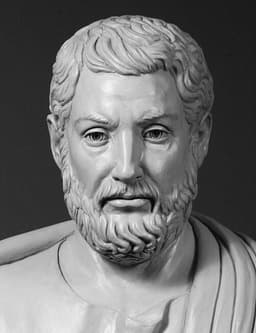
Cleisthenes
Politician · Ancient
78.3Total
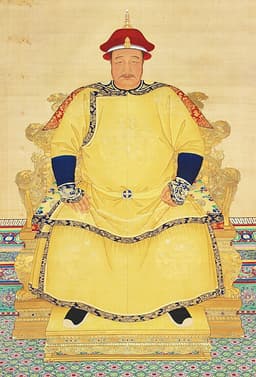
Hong Taiji
Emperor · Modern
78.3Total
Basic Information
Born
-570
1592
Died
-508
1643
Era
Ancient
Modern
Nationality
Greece
China
Occupation
Politician
Emperor
Civilization
Western
Eastern
Score Comparison
Military (10%)
49.4
85.0
Political (20%)
62.7
82.0
Influence (20%)
92.0
88.0
Legacy (20%)
92.0
65.0
Leadership (15%)
72.0
78.0
Strategy (15%)
71.3
76.0
TOTAL
78.3
78.3
Cleisthenes — Complete Timeline
510 BC
Expulsion of the PeisistratidsPolitical Action◆ Major
Cleisthenes, with the support of the Alcmaeonid family and Spartan assistance, led the overthrow of the tyrant Hippias, son of Peisistratus. This ended the Peisistratid tyranny in Athens and opened the way for democratic reforms.
Tyranny OverthrownAthensSparta
Impact: nationalconstructive
508 BC
Reforms of CleisthenesReform
Cleisthenes reorganized the Athenian citizen body into ten new tribes based on demes, replacing the old four Ionian tribes. He established the Council of 500 (Boule) and introduced ostracism, creating a system of isonomia (equal rights) that is considered the foundation of Athenian democracy.
Athenian DemocracyConstitutional ReformAncient Greece
Impact: globalprogressive
507 BC
Introduction of OstracismReform◆ Major
Cleisthenes instituted ostracism, a procedure allowing Athenian citizens to vote annually to exile a prominent citizen deemed a threat to democracy for ten years. This mechanism aimed to prevent the rise of a new tyrant and stabilize the democratic system.
Athenian DemocracyPolitical MechanismExile
Impact: national
Hong Taiji — Complete Timeline
1631 AD
Adoption of Chinese-style governmentReform◆ Major
Hong Taiji established a Chinese-style bureaucracy, including the Six Ministries and a Hanlin Academy. He also introduced the civil service examination system for Han Chinese, integrating Confucian governance into the Qing state.
Government reformConfucian administrationSinification
Impact: regionalconstructive
1635 AD
Creation of the Eight Banners systemReform◆ Major
Hong Taiji reorganized the Eight Banners military system, incorporating Mongol and Han Chinese forces into separate banners. This created a multi-ethnic military structure that became the backbone of Qing power.
Military reformEight BannersMulti-ethnic army
Impact: regionalconstructive
Renaming of the Jurchen to ManchuPolitical Action◆ Major
Hong Taiji issued an edict renaming the Jurchen people as Manchu. This was part of his effort to create a unified identity for the various tribes under his rule and distance them from the historical Jurchen label.
Ethnic identityManchuJurchen
Impact: regionalconstructive
1636 AD
Proclamation of the Qing dynastyPolitical Action◆ Major
Hong Taiji declared the establishment of the Qing dynasty, replacing the Later Jin name. He adopted the Chinese imperial title and created a dual administrative system combining Manchu and Chinese institutions.
Dynasty foundingImperial titleQing dynasty
Impact: regionalconstructive
1640 AD
Conquest of the Ming Liaodong regionWar◆ Major
Hong Taiji's forces captured key Ming cities in Liaodong, including Jinzhou and Songshan. These victories secured Qing control over the strategic Liaoning corridor and weakened Ming defenses in the northeast.
Territorial expansionMing-Qing WarLiaodong
Impact: regional
Expert Analysis
Origins
Cleisthenes was born around 570 BCE into the aristocratic Alcmaeonid family of Athens. His lineage was marked by both prestige and controversy—the Alcmaeonids were cursed for a massacre of suppliants. Cleisthenes spent his early years in exile, which exposed him to different political systems and likely influenced his later reforms. In contrast, Hong Taiji (1592–1643) was born as the eighth son of Nurhaci, the unifier of the Jurchen tribes. Growing up in a militaristic and expanding state, he was trained in warfare and administration from a young age. His father's legacy of creating the Eight Banners system provided a foundation for his own ambitions.
Rise to Power
Cleisthenes rose to power after the overthrow of the Peisistratid tyranny in 510 BCE. Initially, he was a rival of Isagoras for political influence. When Isagoras became archon, he attempted to purge the Alcmaeonids and establish an oligarchy. Cleisthenes mobilized the Athenian demos (common people) to resist, forcing Isagoras to flee. This popular support enabled Cleisthenes to implement his democratic reforms starting in 508/507 BCE. Hong Taiji's rise was more straightforward: after his father Nurhaci died in 1626, he was chosen as khan by a council of princes, despite not being the eldest son. He immediately consolidated power by executing potential rivals and centralizing authority. His early reign focused on strengthening the military and expanding into Ming territory.
Leadership & Governance
Cleisthenes is best known for his comprehensive political reforms that established Athenian democracy. He reorganized the Athenian population into ten new tribes based on demes (local districts), breaking up traditional aristocratic power bases. He created the Council of 500 (Boule) to propose legislation and oversee administration, and introduced ostracism to prevent tyranny. His reforms emphasized isonomia (equality before the law) and broad citizen participation. Hong Taiji, by contrast, modeled his governance on Chinese imperial traditions. He adopted a Chinese-style bureaucracy, established a civil service examination system, and promoted Confucian ideals. He also transformed the Jurchen confederation into the Qing dynasty in 1636, renaming his people to Manchu to create a distinct identity. He maintained the Eight Banners system but integrated Han Chinese and Mongol allies into the administration.
Triumph & Tragedy
Cleisthenes' greatest triumph was the successful implementation of his reforms, which laid the foundation for Athens' Golden Age. However, his reforms also faced resistance and required him to outmaneuver rivals. The introduction of ostracism, though intended to prevent tyranny, was later used for political vendettas. Cleisthenes himself was ostracized around 485 BCE, a tragic irony for the father of democracy. Hong Taiji's triumphs include the conquest of the Ming Liaodong region, the creation of a multi-ethnic state, and the successful transition from tribal confederation to imperial dynasty. His tragic aspect is his early death at age 50, just before the Qing conquest of China proper. He never saw the final victory over the Ming, which his son Shunzhi completed.
Character & Destiny
Cleisthenes was a pragmatic reformer who believed in the power of the people. He was willing to ally with commoners against aristocrats, showing his strategic acumen. His destiny was to be remembered as the "Father of Athenian Democracy," though his later ostracism reflects the fickleness of the system he created. Hong Taiji was a visionary ruler who combined military prowess with administrative innovation. He was ruthless in eliminating rivals but also shrewd in adopting Chinese culture to legitimize his rule. His destiny was to found the Qing dynasty, which would rule China for nearly 300 years. Both men were ahead of their time, but Hong Taiji's legacy is more tangible in the long-lasting empire he built.
Legacy
Cleisthenes' legacy is immense: his democratic principles influenced Western political thought and inspired later revolutions. The Athenian model of direct democracy, with its emphasis on citizen participation, remains a benchmark. However, his system excluded women, slaves, and foreigners, limiting its scope. Hong Taiji's legacy includes the Qing dynasty's expansion, the consolidation of Manchu identity, and the integration of diverse ethnic groups into a single empire. His administrative reforms set the stage for the Qing's longevity. Yet, the Qing's later decline and the suppression of dissent also stem from his centralized authoritarian model.
Conclusion
Comparing Cleisthenes and Hong Taiji reveals two different paths to political transformation. Cleisthenes democratized Athens through popular participation, while Hong Taiji centralized power to build an empire. In terms of impact, Cleisthenes' ideas have had a more global and enduring influence on governance, earning him a slight edge in historical significance. However, Hong Taiji's practical achievements in state-building are equally impressive. **Final scores:** Cleisthenes: 85/100, Hong Taiji: 82/100. Cleisthenes wins by a narrow margin due to the universal relevance of his democratic ideals.
Rankings
🥇
CleisthenesLeader
Mil: 49.4Pol: 62.7Inf: 92.0
78.3
🥈
Hong Taiji
Mil: 85.0Pol: 82.0Inf: 88.0
78.3
How This Comparison Works
Algorithm
Each figure is scored on 6 dimensions (0—100 scale) based on structured historical data: Military (10%), Political (20%), Influence (20%), Legacy (20%), Leadership (15%), Strategy (15%). The weighted total produces the final ranking.
Data Sources
Scores are computed from structured sub-indicators in the database. Scale factors adjust for era (Ancient ×0.85, Modern ×1.0) and civilization size (Eastern ×1.05, Other ×0.80) to account for differences in population and military scale.
Maximum 3 Figures
Comparisons are limited to 2—3 figures to ensure readability and statistical meaningfulness.
Error Margins
±5 points per dimension — Sub-scores are derived from historical records with inherent uncertainty. Two figures within 5 points on a dimension should be considered roughly equivalent in that area.
Total Score Accuracy
±3 points overall — The weighted combination of 6 dimensions produces a total score with approximately ±3 points of uncertainty. Differences of less than 3 points are not statistically significant— the figures are effectively tied.
Known Limitations
- Historical records are incomplete and uneven across civilizations
- Figures from oral-tradition societies may be underrepresented
- Occupation labels can misclassify multi-role figures
- Scores measure capability and impact, not moral character
- Quantitative scoring is a comparison tool, not absolute truth
Capability Radar
Military (10%) — Battles & Warfare
Battles
58
85
Win Rate
62
80
Expansion
59
90
Political (20%) — Governance & Reform
Reform
95
90
Diplomacy
70
85
Economy
40
80
Influence (20%) — Cultural & Global Reach
Cultural
85
80
Global
85
75
Legacy (20%) — Historical Impact
Historical
90
85
Longevity
95
80
Leadership (15%) — Power & Stability
Tenure
30
75
Stability
60
70
Strategy (15%) — Tactics & Innovation
Strategy
62
90
Tactics
67
85
Reform
72
90
Similar Comparisons
Comments & Discussion
No comments yet. Be the first to share your thoughts!