Loading...
Cleisthenes vs Helmuth von Moltke
Cleisthenes leads by 2.1 pts · 2 figures compared
…
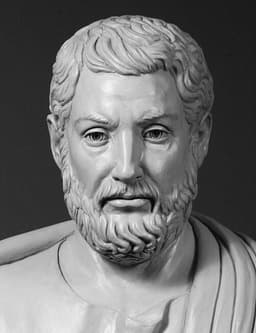
Cleisthenes
Politician · Ancient
78.3Total
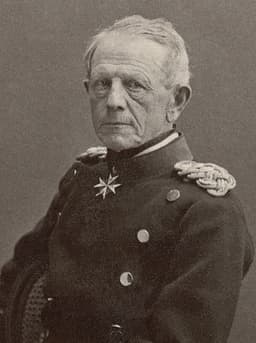
Helmuth von Moltke
General · Modern
76.2Total
Basic Information
Born
-570
1800
Died
-508
1891
Era
Ancient
Modern
Nationality
Greece
Prussia
Occupation
Politician
General
Civilization
Western
Western
Score Comparison
Military (10%)
49.4
65.0
Political (20%)
62.7
62.7
Influence (20%)
92.0
88.0
Legacy (20%)
92.0
70.0
Leadership (15%)
72.0
85.0
Strategy (15%)
71.3
80.6
TOTAL
78.3
76.2
Cleisthenes — Complete Timeline
510 BC
Expulsion of the PeisistratidsPolitical Action◆ Major
Cleisthenes, with the support of the Alcmaeonid family and Spartan assistance, led the overthrow of the tyrant Hippias, son of Peisistratus. This ended the Peisistratid tyranny in Athens and opened the way for democratic reforms.
Tyranny OverthrownAthensSparta
Impact: nationalconstructive
508 BC
Reforms of CleisthenesReform
Cleisthenes reorganized the Athenian citizen body into ten new tribes based on demes, replacing the old four Ionian tribes. He established the Council of 500 (Boule) and introduced ostracism, creating a system of isonomia (equal rights) that is considered the foundation of Athenian democracy.
Athenian DemocracyConstitutional ReformAncient Greece
Impact: globalprogressive
507 BC
Introduction of OstracismReform◆ Major
Cleisthenes instituted ostracism, a procedure allowing Athenian citizens to vote annually to exile a prominent citizen deemed a threat to democracy for ten years. This mechanism aimed to prevent the rise of a new tyrant and stabilize the democratic system.
Athenian DemocracyPolitical MechanismExile
Impact: national
Helmuth von Moltke — Complete Timeline
1857 AD
Appointment as Chief of the Prussian General StaffPolitical Action
Moltke was appointed Chief of the Prussian General Staff, a position he held for 30 years. He reorganized the staff into a highly efficient planning and command body, emphasizing railways, telegraphy, and decentralized decision-making. This modernization was crucial for Prussia's subsequent victories.
Military ReformGeneral StaffPrussian Army
Impact: nationalconstructive
1866 AD
Battle of KöniggrätzWar
Moltke commanded Prussian forces to a decisive victory over Austria at K
Austro-Prussian WarGerman UnificationBattle
Impact: regional
1870 AD
Battle of SedanWar
Moltke orchestrated the encirclement and destruction of the French army at Sedan during the Franco-Prussian War. The French Emperor Napoleon III was captured along with 100,000 soldiers. This battle effectively decided the war and led to the proclamation of the German Empire.
Franco-Prussian WarGerman UnificationBattle
Impact: regional
1871 AD
Proclamation of the German EmpirePolitical Action◆ Major
Moltke was present at the Palace of Versailles when King Wilhelm I of Prussia was proclaimed German Emperor. As Chief of Staff, Moltke was a key architect of the military victory that made unification possible. He was later promoted to Field Marshal and ennobled.
German UnificationEmpireCeremony
Impact: regionalconstructive
Expert Analysis
Origins
Cleisthenes was born into the aristocratic Alcmaeonid family in Athens around 570 BCE. His lineage was both a privilege and a burden, as the family was cursed for a massacre of Cylon's followers. Growing up during the tyranny of the Peisistratids, Cleisthenes experienced political exile, which shaped his later democratic reforms. Helmuth von Moltke was born in 1800 into a noble but impoverished family in Mecklenburg, Germany. His father was a Danish officer, and Moltke initially served in the Danish army before transferring to Prussia. His early career was marked by intellectual pursuits, including military history and railroad logistics, which would later revolutionize warfare.
Rise to Power
Cleisthenes rose to power after the fall of the Peisistratid tyranny in 510 BCE. He initially competed with Isagoras for influence, but when Isagoras sought Spartan help to establish an oligarchy, Cleisthenes rallied the Athenian people. He implemented sweeping reforms that broke the power of aristocratic clans and established a democratic system based on demes (local districts). His reforms included the creation of the Council of 500 and the introduction of ostracism to prevent tyranny. Moltke's rise was gradual but steady. He became Chief of the Prussian General Staff in 1857, a position he held for over 30 years. He modernized the army, emphasizing decentralized command, rapid mobilization via railroads, and strategic offensive. His greatest moment came during the Austro-Prussian War (1866) and Franco-Prussian War (1870-71), where his plans led to decisive victories at Königgrätz and Sedan. These triumphs paved the way for German unification under Prussian leadership.
Leadership & Governance
Cleisthenes demonstrated visionary leadership by creating the world's first democracy. He reorganized the citizen body into ten tribes based on residence rather than kinship, ensuring broader participation. The Council of 500, chosen by lot, prepared legislation, and the Assembly of all citizens made decisions. Ostracism allowed the exile of potential tyrants without trial, protecting the democracy. His reforms fostered civic engagement and stability. Moltke's leadership was characterized by meticulous planning and delegation. He believed in giving subordinates freedom to act within his strategic framework, a doctrine known as "Auftragstaktik" (mission tactics). He emphasized the use of railways for rapid concentration of forces and sought decisive battles of annihilation. His governance of the General Staff created a professional military elite that served the state effectively.
Triumph & Tragedy
Cleisthenes' triumph was the establishment of a democratic system that endured for nearly two centuries, inspiring later democracies. However, his reforms did not fully include women, slaves, or metics, limiting the scope of democracy. The exile of his rival Isagoras and the ostracism of other leaders also show the system's potential for political manipulation. Moltke's triumphs were his stunning victories against Austria and France, leading to German unification in 1871. He was hailed as a national hero. However, the Franco-Prussian War's aftermath sowed seeds of future conflict: the annexation of Alsace-Lorraine created lasting French resentment. Moltke himself warned against a two-front war, a tragedy realized in World War I. His military legacy also contributed to the militarization of German society.
Character & Destiny
Cleisthenes is often depicted as a pragmatic aristocrat who used his privilege to empower the common citizen. His destiny was to be remembered as the "Father of Athenian Democracy," a title reflecting his transformative impact. He likely died shortly after his reforms, his work completed. Moltke was a reserved, intellectual figure, deeply religious and contemplative. He wrote extensively on military theory and history. His destiny was to be the architect of German unification, but he also lived to see the rise of a militaristic empire. He died in 1891, leaving a complex legacy of genius and warning.
Legacy
Cleisthenes' legacy is monumental: he introduced democratic principles that influenced the Roman Republic, the Enlightenment, and modern democracies. His reforms are a benchmark for political innovation. Moltke's legacy is equally profound in military affairs. He is considered one of the greatest strategists of the 19th century, and his methods influenced warfare into the 20th century. However, his success also contributed to the overconfidence of German military planners before World War I.
Conclusion
Comparing Cleisthenes and Moltke reveals two radically different forms of genius. Cleisthenes created a political system that empowered citizens and balanced power, while Moltke created a military system that enabled decisive victory but also centralized power in the state. Both were reformers who transformed their societies, but Cleisthenes' work had a broader and more enduring positive impact on human rights and governance. Moltke's achievements, while brilliant, were ultimately tools of national power that led to catastrophic wars. Therefore, Cleisthenes earns a higher score for his foundational contribution to democracy.
**Final Scores:** Cleisthenes: 8.5/10, Moltke: 7.5/10.
Rankings
🥇
CleisthenesLeader
Mil: 49.4Pol: 62.7Inf: 92.0
78.3
🥈
Helmuth von Moltke
Mil: 65.0Pol: 62.7Inf: 88.0
76.2
+2.1 behind
How This Comparison Works
Algorithm
Each figure is scored on 6 dimensions (0—100 scale) based on structured historical data: Military (10%), Political (20%), Influence (20%), Legacy (20%), Leadership (15%), Strategy (15%). The weighted total produces the final ranking.
Data Sources
Scores are computed from structured sub-indicators in the database. Scale factors adjust for era (Ancient ×0.85, Modern ×1.0) and civilization size (Eastern ×1.05, Other ×0.80) to account for differences in population and military scale.
Maximum 3 Figures
Comparisons are limited to 2—3 figures to ensure readability and statistical meaningfulness.
Error Margins
±5 points per dimension — Sub-scores are derived from historical records with inherent uncertainty. Two figures within 5 points on a dimension should be considered roughly equivalent in that area.
Total Score Accuracy
±3 points overall — The weighted combination of 6 dimensions produces a total score with approximately ±3 points of uncertainty. Differences of less than 3 points are not statistically significant— the figures are effectively tied.
Known Limitations
- Historical records are incomplete and uneven across civilizations
- Figures from oral-tradition societies may be underrepresented
- Occupation labels can misclassify multi-role figures
- Scores measure capability and impact, not moral character
- Quantitative scoring is a comparison tool, not absolute truth
Capability Radar
Military (10%) — Battles & Warfare
Battles
58
85
Win Rate
62
90
Expansion
59
85
Political (20%) — Governance & Reform
Reform
95
75
Diplomacy
70
80
Economy
40
65
Influence (20%) — Cultural & Global Reach
Cultural
85
60
Global
85
75
Legacy (20%) — Historical Impact
Historical
90
85
Longevity
95
75
Leadership (15%) — Power & Stability
Tenure
30
70
Stability
60
70
Strategy (15%) — Tactics & Innovation
Strategy
62
95
Tactics
67
95
Reform
72
90
Similar Comparisons
Comments & Discussion
No comments yet. Be the first to share your thoughts!