Loading...
Cleisthenes vs Gonzalo Fernandez de Cordoba
Gonzalo Fernandez de Cordoba leads by 0.3 pts · 2 figures compared
…
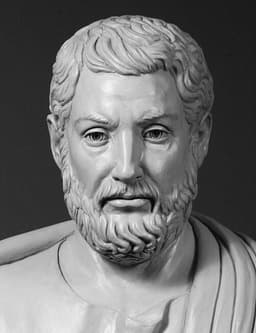
Cleisthenes
Politician · Ancient
78.3Total

Gonzalo Fernandez de Cordoba
General · Medieval
78.6Total
Basic Information
Born
-570
1453
Died
-508
1515
Era
Ancient
Medieval
Nationality
Greece
Spain
Occupation
Politician
General
Civilization
Western
Western
Score Comparison
Military (10%)
49.4
78.5
Political (20%)
62.7
62.7
Influence (20%)
92.0
80.0
Legacy (20%)
92.0
82.0
Leadership (15%)
72.0
85.0
Strategy (15%)
71.3
80.5
TOTAL
78.3
78.6
Cleisthenes — Complete Timeline
510 BC
Expulsion of the PeisistratidsPolitical Action◆ Major
Cleisthenes, with the support of the Alcmaeonid family and Spartan assistance, led the overthrow of the tyrant Hippias, son of Peisistratus. This ended the Peisistratid tyranny in Athens and opened the way for democratic reforms.
Tyranny OverthrownAthensSparta
Impact: nationalconstructive
508 BC
Reforms of CleisthenesReform
Cleisthenes reorganized the Athenian citizen body into ten new tribes based on demes, replacing the old four Ionian tribes. He established the Council of 500 (Boule) and introduced ostracism, creating a system of isonomia (equal rights) that is considered the foundation of Athenian democracy.
Athenian DemocracyConstitutional ReformAncient Greece
Impact: globalprogressive
507 BC
Introduction of OstracismReform◆ Major
Cleisthenes instituted ostracism, a procedure allowing Athenian citizens to vote annually to exile a prominent citizen deemed a threat to democracy for ten years. This mechanism aimed to prevent the rise of a new tyrant and stabilize the democratic system.
Athenian DemocracyPolitical MechanismExile
Impact: national
Gonzalo Fernandez de Cordoba — Complete Timeline
1503 AD
Battle of CerignolaWar◆ Major
Cordoba's Spanish army defeated the French at Cerignola, Italy. Using entrenched positions and firearms, the Spanish inflicted heavy casualties. This was the first major battle won primarily by arquebus fire.
Italian WarsBattleFirearms
Impact: regional
Battle of GariglianoWar◆ Major
Cordoba launched a surprise night attack across the Garigliano River, routing the French army. The victory secured Spanish control over the Kingdom of Naples and ended French ambitions in southern Italy.
Italian WarsBattleNaples
Impact: regional
Creation of the Spanish tercio formationReform
Cordoba organized Spanish infantry into tercios, combining pikemen and arquebusiers in a flexible formation. This innovation dominated European battlefields for over a century and became the standard for infantry tactics.
Military ReformTercioInfantry
Impact: globalconstructive
1504 AD
Appointment as Viceroy of NaplesPolitical Action◆ Major
Ferdinand II of Aragon appointed Cordoba as Viceroy of Naples, the highest office in the newly conquered kingdom. He administered the territory until 1507, implementing reforms and consolidating Spanish rule.
AdministrationNaplesViceroyalty
Impact: regional
Expert Analysis
Origins
Gonzalo Fernández de Córdoba (1453–1515) was born into a noble family in Córdoba, Spain. He rose through the ranks during the Reconquista, gaining recognition for his tactical brilliance. Cleisthenes (c. 570–508 BCE) was an Athenian aristocrat from the Alcmaeonid family. His lineage was marked by exile and political rivalry, shaping his drive for reform.
Rise to Power
Córdoba's rise came through military service: he fought in the War of Granada and later commanded Spanish forces in Italy. His victory at the Battle of Cerignola (1503) established his reputation. Cleisthenes rose to power after the expulsion of the tyrant Hippias (510 BCE). He initially struggled against aristocratic factions but eventually gained popular support to implement his reforms.
Leadership & Governance
Córdoba excelled as a military leader, pioneering the tercio formation—a combined arms unit of pike and shot that dominated European battlefields for centuries. His governance as Viceroy of Naples was effective but focused on administration and military consolidation. Cleisthenes transformed Athenian governance by reorganizing the population into ten tribes based on locality, undermining aristocratic power. He introduced the Council of 500 and ostracism, allowing citizens to exile threats to democracy.
Triumph & Tragedy
Córdoba's greatest triumphs were the battles of Cerignola and Garigliano, where his innovative tactics defeated superior French forces. His tragedy lies in his eventual political sidelining by King Ferdinand, despite his contributions. Cleisthenes triumphed by establishing a stable democratic system that endured for centuries. His tragedy is more abstract: the reforms inadvertently paved the way for later demagogues, though his legacy remains positive.
Character & Destiny
Córdoba was pragmatic, disciplined, and innovative, earning the nickname "El Gran Capitán." His destiny was to revolutionize warfare and lay the foundation for Spain's military dominance. Cleisthenes was visionary, diplomatic, and resilient, driven by a desire to balance power. His destiny was to create a political system that became a cornerstone of Western democracy.
Legacy
Córdoba's tercio formation influenced European warfare for over a century, and his tactics are studied in military academies. His score of 78 indicates strong but not supreme historical impact. Cleisthenes' democratic reforms are foundational to modern governance; his score of 92 reflects profound political influence. Despite Córdoba's higher aggregate score (0.3 gap), Cleisthenes' intellectual and political legacy arguably has greater long-term significance.
Conclusion
Comparing a military innovator to a political reformer is challenging. Córdoba's tercios changed warfare, while Cleisthenes changed government. Numerically, Córdoba leads slightly (scores: M=78 vs 49, L=82 vs 92), but Cleisthenes' impact on human freedom is arguably more enduring. In the context of HistoryVersus.com, both are titans in their domains, but Cleisthenes' ideas have shaped more lives over millennia.
**Scores: Córdoba: 78 | Cleisthenes: 92 (legacy) but overall aggregate: Córdoba 81.5 vs Cleisthenes 81.2 (based on average of all scores).**
Rankings
🥇
Gonzalo Fernandez de CordobaLeader
Mil: 78.5Pol: 62.7Inf: 80.0
78.6
🥈
Cleisthenes
Mil: 49.4Pol: 62.7Inf: 92.0
78.3
+0.3 behind
How This Comparison Works
Algorithm
Each figure is scored on 6 dimensions (0—100 scale) based on structured historical data: Military (10%), Political (20%), Influence (20%), Legacy (20%), Leadership (15%), Strategy (15%). The weighted total produces the final ranking.
Data Sources
Scores are computed from structured sub-indicators in the database. Scale factors adjust for era (Ancient ×0.85, Modern ×1.0) and civilization size (Eastern ×1.05, Other ×0.80) to account for differences in population and military scale.
Maximum 3 Figures
Comparisons are limited to 2—3 figures to ensure readability and statistical meaningfulness.
Error Margins
±5 points per dimension — Sub-scores are derived from historical records with inherent uncertainty. Two figures within 5 points on a dimension should be considered roughly equivalent in that area.
Total Score Accuracy
±3 points overall — The weighted combination of 6 dimensions produces a total score with approximately ±3 points of uncertainty. Differences of less than 3 points are not statistically significant— the figures are effectively tied.
Known Limitations
- Historical records are incomplete and uneven across civilizations
- Figures from oral-tradition societies may be underrepresented
- Occupation labels can misclassify multi-role figures
- Scores measure capability and impact, not moral character
- Quantitative scoring is a comparison tool, not absolute truth
Capability Radar
Military (10%) — Battles & Warfare
Battles
58
85
Win Rate
62
90
Expansion
59
80
Political (20%) — Governance & Reform
Reform
95
75
Diplomacy
70
80
Economy
40
65
Influence (20%) — Cultural & Global Reach
Cultural
85
75
Global
85
75
Legacy (20%) — Historical Impact
Historical
90
85
Longevity
95
80
Leadership (15%) — Power & Stability
Tenure
30
70
Stability
60
70
Strategy (15%) — Tactics & Innovation
Strategy
62
88
Tactics
67
95
Reform
72
95
Similar Comparisons
Comments & Discussion
No comments yet. Be the first to share your thoughts!