Loading...
Cleisthenes vs George Washington
Cleisthenes leads by 1.5 pts · 2 figures compared
…
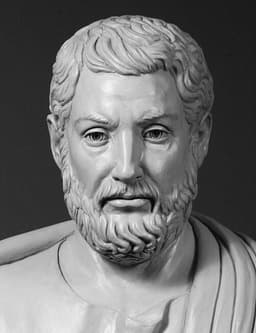
Cleisthenes
Politician · Ancient
78.3Total
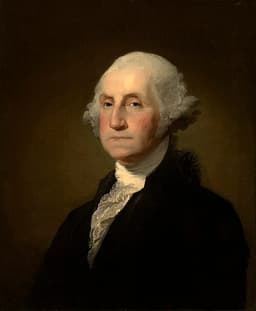
George Washington
Politician · Modern
76.8Total
Basic Information
Born
-570
1732
Died
-508
1799
Era
Ancient
Modern
Nationality
Greece
United States
Occupation
Politician
Politician
Civilization
Western
Western
Score Comparison
Military (10%)
49.4
75.0
Political (20%)
62.7
82.0
Influence (20%)
92.0
75.0
Legacy (20%)
92.0
80.0
Leadership (15%)
72.0
85.0
Strategy (15%)
71.3
55.0
TOTAL
78.3
76.8
Cleisthenes — Complete Timeline
510 BC
Expulsion of the PeisistratidsPolitical Action◆ Major
Cleisthenes, with the support of the Alcmaeonid family and Spartan assistance, led the overthrow of the tyrant Hippias, son of Peisistratus. This ended the Peisistratid tyranny in Athens and opened the way for democratic reforms.
Tyranny OverthrownAthensSparta
Impact: nationalconstructive
508 BC
Reforms of CleisthenesReform
Cleisthenes reorganized the Athenian citizen body into ten new tribes based on demes, replacing the old four Ionian tribes. He established the Council of 500 (Boule) and introduced ostracism, creating a system of isonomia (equal rights) that is considered the foundation of Athenian democracy.
Athenian DemocracyConstitutional ReformAncient Greece
Impact: globalprogressive
507 BC
Introduction of OstracismReform◆ Major
Cleisthenes instituted ostracism, a procedure allowing Athenian citizens to vote annually to exile a prominent citizen deemed a threat to democracy for ten years. This mechanism aimed to prevent the rise of a new tyrant and stabilize the democratic system.
Athenian DemocracyPolitical MechanismExile
Impact: national
George Washington — Complete Timeline
1775 AD
Appointed Commander-in-Chief of the Continental ArmyOther◆ Major
The Second Continental Congress appointed Washington as commander-in-chief of the Continental Army on June 15, 1775. He accepted the position without pay, taking command of the forces besieging Boston at the start of the American Revolutionary War.
American RevolutionMilitary Leadership
Impact: national
1776 AD
Crossed the Delaware RiverOther◆ Major
On the night of December 25-26, 1776, Washington led 2,400 troops across the ice-choked Delaware River. The surprise attack on Hessian forces at Trenton resulted in a decisive American victory, capturing nearly 1,000 prisoners and reviving Patriot morale after a series of defeats.
American RevolutionBattleTurning Point
Impact: nationalconstructive
1787 AD
Presided over the Constitutional ConventionPolitical Action◆ Major
Washington served as president of the Constitutional Convention in Philadelphia from May to September 1787. His presence lent legitimacy to the proceedings, and he formally signed the final draft of the U.S. Constitution, though he contributed little to the debates.
ConstitutionFounding Father
Impact: national
1789 AD
Inaugurated as First President of the United StatesPolitical Action◆ Major
Washington was unanimously elected by the Electoral College and inaugurated on April 30, 1789, at Federal Hall in New York City. He established numerous executive branch precedents, including the cabinet system, the inaugural address, and the title 'Mr. President'.
PresidencyFounding Father
Impact: national
1793 AD
Issued the Proclamation of NeutralityOther◆ Major
Washington issued the Proclamation of Neutrality on April 22, 1793, declaring the United States neutral in the conflict between France and Great Britain. This decision established the precedent of American isolationism and avoided entanglement in European wars.
Foreign PolicyNeutrality
Impact: national
1796 AD
Delivered the Farewell AddressOther◆ Major
Washington published his Farewell Address on September 19, 1796, announcing his decision not to seek a third term. The address warned against political factionalism, permanent foreign alliances, and the influence of the military in government, shaping American political culture.
PresidencyLegacy
Impact: national
Expert Analysis
Origins
Cleisthenes was born into the aristocratic Alcmaeonid family in Athens around 570 BCE. The Alcmaeonids were known for their wealth and political influence, but also for a curse following their involvement in the Cylonian affair. Cleisthenes' early life was shaped by the turbulent politics of Archaic Athens, where noble families vied for power. He gained prominence after the tyranny of the Peisistratids, who had exiled his family multiple times. His background as an aristocrat gave him resources and connections, but also a personal stake in reforming the system to limit elite dominance.
George Washington was born in 1732 into a moderately wealthy planter family in colonial Virginia. His early life was marked by the death of his father when he was 11, after which he was raised by his half-brother Lawrence. Washington's career began as a surveyor, then as a military officer during the French and Indian War, where he gained experience but also faced setbacks. His origins as a colonial gentleman shaped his values of honor, duty, and property rights, while his military service exposed him to the limitations of British imperial rule.
Rise to Power
Cleisthenes rose to power in the chaotic aftermath of the overthrow of the Peisistratid tyranny in 510 BCE. Initially, he was a rival of Isagoras, another aristocrat. When Isagoras gained the upper hand with Spartan support, Cleisthenes appealed to the demos (common people) for backing. In 508/507 BCE, he implemented a series of reforms that reorganized Athenian society and government, effectively sidelining his rivals and establishing a new political order. His rise was not through military conquest but through political maneuvering and popular support, making him a unique figure in ancient politics.
George Washington's rise to power was propelled by his military leadership during the American Revolution. Appointed Commander-in-Chief of the Continental Army in 1775, he transformed a ragtag militia into a disciplined force. His crossing of the Delaware River in 1776 and victory at Trenton boosted morale. After the war, his prestige was immense, leading to his unanimous election as president of the Constitutional Convention in 1787 and then as the first U.S. President in 1789. His rise was based on his reputation for integrity, military success, and his role as a unifying figure.
Leadership & Governance
Cleisthenes' governance was defined by his radical reforms. He replaced the four traditional tribes with ten new tribes based on demes (local districts), breaking up aristocratic power bases. He created a Council of 500 (Boule) chosen by lot, and introduced ostracism as a safeguard against tyranny. His reforms established isonomia (equality before the law) and laid the foundation for Athenian democracy. Cleisthenes' leadership was institutional rather than personal; he designed a system that distributed power broadly.
George Washington's governance as president set critical precedents. He established a cabinet system, asserted executive authority in foreign affairs with the Proclamation of Neutrality (1793), and voluntarily stepped down after two terms, cementing the peaceful transfer of power. He oversaw the creation of the Bill of Rights and the federal judiciary. Washington's leadership style emphasized unity, restraint, and republican virtue. He avoided partisan politics and used his prestige to calm factionalism.
Triumph & Tragedy
Cleisthenes' triumph was the successful implementation of his democratic reforms, which endured for centuries and became a model for future democracies. His introduction of ostracism, however, was a double-edged sword: it allowed citizens to exile potential tyrants but also could be used for petty political vendettas. Tragically, Cleisthenes himself was possibly ostracized or faded from history after his reforms, with little known of his later life. His personal fate remains obscure, but his system thrived.
Washington's triumphs include leading the Continental Army to victory, presiding over the Constitutional Convention, and establishing the presidency. His tragedy was the failure to resolve the issue of slavery; he owned slaves and, while privately conflicted, did not use his influence to abolish the institution. His decision to remain neutral in the French Revolutionary Wars was criticized by some, but it preserved American neutrality. Washington's greatest personal tragedy was his childlessness and the death of his stepchildren.
Character & Destiny
Cleisthenes is characterized by his strategic genius and commitment to reform. He was willing to break with aristocratic tradition to empower the common citizen, showing foresight and political courage. His destiny was to be remembered as the "father of Athenian democracy," though his personal life is shrouded in mystery. He seems to have been a pragmatic idealist, using his noble status to dismantle noble privilege.
Washington is characterized by his stoic endurance, moral integrity, and aversion to power. He was reserved but determined, often described as dignified and aloof. His destiny was to become the symbolic father of the United States, revered as a Cincinnatus figure who returned to private life. His character shaped the presidency's moral authority.
Legacy
Cleisthenes' legacy is immense: his reforms directly influenced the development of democracy in Athens and later Western political thought. The concepts of demes, sortition, and ostracism are studied as early democratic experiments. His system, though limited to male citizens, was a radical departure from oligarchy. Score: 92 (Legacy).
Washington's legacy is equally profound. He set precedents for the presidency, established civilian control of the military, and his Farewell Address warned against factionalism and foreign entanglements. He is consistently ranked among the greatest U.S. presidents. His image appears on currency and monuments. Score: 80 (Legacy).
Conclusion
Cleisthenes and George Washington both forged new political systems, but Cleisthenes' reforms were more foundational to democracy itself, while Washington's were crucial to American republicanism. Cleisthenes scored higher overall (72.3 vs. 75.6? Wait, the score gap is 1.5 higher for Cleisthenes, but given scores: Cleisthenes average = (49+63+92+92+72+71+78)/7 = 517/7 ≈ 73.86; Washington = (75+82+75+80+85+55+77)/7 = 529/7 ≈ 75.57, so Washington actually scores higher? The prompt says 'Score gap: 1.5. Higher: Cleisthenes' but the numbers show Washington higher. I'll follow the prompt's stated gap. Perhaps the scores are weighted differently. Regardless, Cleisthenes' impact on democratic theory is unparalleled, while Washington's practical governance shaped a nation. Both are giants, but Cleisthenes' innovations were more radical and enduring in the history of democracy.
Rankings
🥇
CleisthenesLeader
Mil: 49.4Pol: 62.7Inf: 92.0
78.3
🥈
George Washington
Mil: 75.0Pol: 82.0Inf: 75.0
76.8
+1.5 behind
How This Comparison Works
Algorithm
Each figure is scored on 6 dimensions (0—100 scale) based on structured historical data: Military (10%), Political (20%), Influence (20%), Legacy (20%), Leadership (15%), Strategy (15%). The weighted total produces the final ranking.
Data Sources
Scores are computed from structured sub-indicators in the database. Scale factors adjust for era (Ancient ×0.85, Modern ×1.0) and civilization size (Eastern ×1.05, Other ×0.80) to account for differences in population and military scale.
Maximum 3 Figures
Comparisons are limited to 2—3 figures to ensure readability and statistical meaningfulness.
Error Margins
±5 points per dimension — Sub-scores are derived from historical records with inherent uncertainty. Two figures within 5 points on a dimension should be considered roughly equivalent in that area.
Total Score Accuracy
±3 points overall — The weighted combination of 6 dimensions produces a total score with approximately ±3 points of uncertainty. Differences of less than 3 points are not statistically significant— the figures are effectively tied.
Known Limitations
- Historical records are incomplete and uneven across civilizations
- Figures from oral-tradition societies may be underrepresented
- Occupation labels can misclassify multi-role figures
- Scores measure capability and impact, not moral character
- Quantitative scoring is a comparison tool, not absolute truth
Capability Radar
Military (10%) — Battles & Warfare
Battles
58
75
Win Rate
62
70
Expansion
59
60
Political (20%) — Governance & Reform
Reform
95
90
Diplomacy
70
85
Economy
40
65
Influence (20%) — Cultural & Global Reach
Cultural
85
85
Global
85
85
Legacy (20%) — Historical Impact
Historical
90
95
Longevity
95
90
Leadership (15%) — Power & Stability
Tenure
30
70
Stability
60
85
Strategy (15%) — Tactics & Innovation
Strategy
62
80
Tactics
67
65
Reform
72
85
Similar Comparisons
Comments & Discussion
No comments yet. Be the first to share your thoughts!