Loading...
Cleisthenes vs Francisco Morazan
Cleisthenes leads by 20.3 pts · 2 figures compared
…
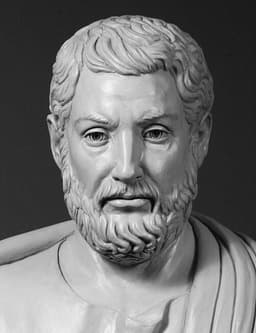
Cleisthenes
Politician · Ancient
78.3Total
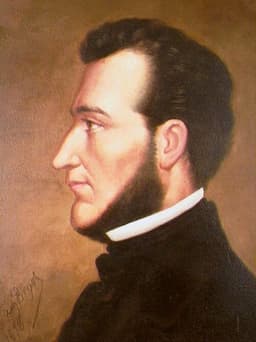
Francisco Morazan
General · Modern
58.0Total
Basic Information
Born
-570
1792
Died
-508
1842
Era
Ancient
Modern
Nationality
Greece
Honduras
Occupation
Politician
General
Civilization
Western
Western
Score Comparison
Military (10%)
49.4
52.5
Political (20%)
62.7
60.0
Influence (20%)
92.0
62.0
Legacy (20%)
92.0
50.0
Leadership (15%)
72.0
68.0
Strategy (15%)
71.3
55.0
TOTAL
78.3
58.0
Cleisthenes — Complete Timeline
510 BC
Expulsion of the PeisistratidsPolitical Action◆ Major
Cleisthenes, with the support of the Alcmaeonid family and Spartan assistance, led the overthrow of the tyrant Hippias, son of Peisistratus. This ended the Peisistratid tyranny in Athens and opened the way for democratic reforms.
Tyranny OverthrownAthensSparta
Impact: nationalconstructive
508 BC
Reforms of CleisthenesReform
Cleisthenes reorganized the Athenian citizen body into ten new tribes based on demes, replacing the old four Ionian tribes. He established the Council of 500 (Boule) and introduced ostracism, creating a system of isonomia (equal rights) that is considered the foundation of Athenian democracy.
Athenian DemocracyConstitutional ReformAncient Greece
Impact: globalprogressive
507 BC
Introduction of OstracismReform◆ Major
Cleisthenes instituted ostracism, a procedure allowing Athenian citizens to vote annually to exile a prominent citizen deemed a threat to democracy for ten years. This mechanism aimed to prevent the rise of a new tyrant and stabilize the democratic system.
Athenian DemocracyPolitical MechanismExile
Impact: national
Francisco Morazan — Complete Timeline
1824 AD
Abolition of slavery in Central AmericaReform◆ Major
As a key leader in the liberal movement, Moraz
AbolitionSlaveryLiberal Reform
Impact: regionalprogressive
1827 AD
Battle of La TrinidadWar◆ Major
Morazán led a liberal army to victory against conservative forces at La Trinidad, Honduras. This battle was a key turning point in the Central American civil war, allowing Morazán to consolidate power and eventually become president of the federation.
BattleLiberal VictoryCivil War
Impact: regional
1830 AD
Presidency of the Federal Republic of Central AmericaPolitical Action
Morazán was elected president of the Federal Republic of Central America, a union of Guatemala, El Salvador, Honduras, Nicaragua, and Costa Rica. He pursued liberal reforms including separation of church and state, free trade, and land reform, facing opposition from conservatives.
Federal RepublicLiberal ReformsCentral America
Impact: regionalconstructive
1842 AD
Execution by firing squadPolitical Action
After a failed attempt to restore the Federal Republic, Moraz
ExecutionEnd of FederationLiberal Defeat
Impact: regionaltragic
Expert Analysis
Cleisthenes vs Francisco Morazan
### The Architect and the Dreamer
In the Athenian agora, around 508 BCE, a man named Cleisthenes stood before the citizen assembly, proposing a radical reorganization of the city’s very identity. Two thousand three hundred years later, in a mud-walled courtroom in San José, Costa Rica, another man, Francisco Morazán, faced a firing squad, his dream of a unified Central America crumbling with the volley. Both were reformers, both were driven by a vision of a new political order, and both were consumed by the fires of their eras. But one is remembered as the father of democracy, the other as a tragic martyr of a failed union. Why the difference? The answer lies not merely in the scale of their ambitions, but in the soil in which they planted them.
### Origins: The Cradle of Reform
Cleisthenes was born into the aristocratic Alcmaeonid family of Athens around 570 BCE, a time when the city was a turbulent patchwork of clan loyalties and tyrannical rule. His world was a small, intense city-state where every citizen knew his neighbor, and political power was a matter of personal honor and family vendetta. The intellectual ferment of the Greek enlightenment—philosophy, drama, and the first stirrings of rational inquiry—was his inheritance. He did not invent democracy from nothing; he inherited a tradition of public debate and the memory of earlier reformers like Solon.
Francisco Morazán, born in 1792 in Tegucigalpa, Honduras, came of age in a very different world. The Spanish Empire was collapsing, and the vast, fragmented territory of Central America was a collection of isolated provinces—Guatemala, El Salvador, Honduras, Nicaragua, Costa Rica—with weak economies, deep social hierarchies, and little sense of shared nationhood. Where Cleisthenes could work within the walls of a single city, Morazán faced a geography of mountains and jungles, and a population divided by local loyalties, the legacy of colonial rule, and the bitter rivalry between liberal reformers and conservative landowners. His raw material was not a single polis but a brittle federation.
### Rise to Power: The Coup and the Battle
Cleisthenes’s path to power was a masterstroke of political maneuvering. In 510 BCE, after years of exile, he orchestrated the expulsion of the tyrant Hippias with the help of Spartan troops—a classic aristocratic coup. But his genius lay in what he did next. When a rival aristocrat, Isagoras, tried to seize power with Spartan backing, Cleisthenes did not fight with swords; he appealed to the *demos*—the common people. He promised them a share of power. In 508 BCE, the assembly ratified his reforms, and the old order was swept away.
Morazán’s rise was forged in gunpowder. A liberal intellectual turned soldier, he first gained prominence in 1827 at the Battle of La Trinidad in Honduras, where he led a ragtag liberal army to a stunning victory over conservative forces. This was not a political deal but a battlefield triumph. In 1830, he was elected president of the Federal Republic of Central America, a union that was already fraying at the seams. His authority rested on military victory, not popular consent; he was a general-president, not a civic reformer.
### Leadership & Governance: The Lawgiver vs. The General
Cleisthenes’s leadership was architectural. His reforms of 508 BCE were a complete redesign of Athenian society. He abolished the old four Ionian tribes, which were based on kinship and gave power to aristocratic clans, and created ten new tribes based on local districts called *demes*. This cut across family lines, mixing rich and poor, urban and rural, in each tribe. He then created a Council of 500, chosen by lot from all citizens, to run daily affairs. And in 507 BCE, he introduced ostracism—a peaceful, democratic mechanism to exile a dangerously popular citizen for ten years, preventing the return of tyranny. These were not laws imposed from above; they were structures that invited participation. He was, in essence, designing a machine of self-rule.
Morazán’s leadership was programmatic and forceful. He abolished slavery in 1824, a bold act that put him at odds with the landed elite. He promoted education, secularized church property, and attempted to build a unified legal code and infrastructure for the federation. But he governed by decree and relied on the army. His reforms were enlightened but alienating; they threatened the power of the clergy and the conservative landowners in each province. He was a liberal reformer in a land of conservative realities, and his union was held together by his personal authority and military force, not by a shared civic identity.
### Triumph & Tragedy: The Founding and the Fall
Cleisthenes’s greatest moment was not a battle but the creation of a system. His reforms gave Athens the stability and civic pride that would fuel its golden age—the victories at Marathon and Salamis, the plays of Sophocles, the philosophy of Socrates. The tragedy, if one can call it that, is that he himself disappears from history after his reforms; he was not a tyrant who clung to power. He succeeded so completely that his own personality became irrelevant.
Morazán’s triumph was the presidency of the federation in 1830; his tragedy was its collapse. By the late 1830s, the union had fractured into civil war. In 1839, the Federal Republic dissolved. Morazán, exiled, made a desperate last attempt to restore it, landing in Costa Rica in 1842. He was captured, and on September 15, 1842, he was executed by firing squad. His last words, according to tradition, were: “I die with no regret for my actions, but with the sorrow of leaving my country in anarchy.” He died for a dream that had already died.
### Character & Destiny: The Pragmatist and the Romantic
Cleisthenes was a pragmatist. He saw that the old system of aristocratic feuds was destroying Athens, and he built a new system that made those feuds irrelevant. He did not seek glory or personal power; he sought a stable, functioning polity. His strategy was to dilute power so widely that no one faction could dominate. His personality is opaque, but his work is transparent.
Morazán was a romantic. He believed in the liberal ideals of the Enlightenment—unity, progress, reason—and he tried to impose them on a fractured, stubborn reality. He was brave, principled, and relentless, but he lacked Cleisthenes’s subtlety. He fought battles, but he did not build institutions that could survive without him. His character was his destiny: a noble vision that could not bend to the world it sought to change.
### Legacy: The Foundation and the Ruin
Cleisthenes’s legacy is the very idea of democracy. His reforms were the template for the Athenian democracy that inspired the modern world. His name is less famous than Pericles or Solon, but his system was their foundation. He is remembered as a founder, not a martyr.
Morazán’s legacy is more ambiguous. In Honduras and Central America, he is a national hero, a symbol of liberal reform and unity. But his federation failed, and the region remained divided and unstable for generations. He is remembered as a martyr, a warning that even the noblest dreams can be shattered by a hostile world. His legacy is a question, not an answer.
### Conclusion: The Two Faces of Reform
Both men were reformers, but they operated in different dimensions. Cleisthenes reformed a city; Morazán tried to reform a continent. Cleisthenes built a system that could run without him; Morazán built a movement that depended on him. One succeeded because he understood the limits of power; the other failed because he refused to accept them. Their stories remind us that the greatest political art is not the dream of a perfect order, but the patient, humble work of creating the conditions in which imperfect people can govern themselves. One gave his people a tool; the other gave them a monument. In the end, tools endure, while monuments crumble.
Rankings
🥇
CleisthenesLeader
Mil: 49.4Pol: 62.7Inf: 92.0
78.3
🥈
Francisco Morazan
Mil: 52.5Pol: 60.0Inf: 62.0
58.0
+20.3 behind
How This Comparison Works
Algorithm
Each figure is scored on 6 dimensions (0—100 scale) based on structured historical data: Military (10%), Political (20%), Influence (20%), Legacy (20%), Leadership (15%), Strategy (15%). The weighted total produces the final ranking.
Data Sources
Scores are computed from structured sub-indicators in the database. Scale factors adjust for era (Ancient ×0.85, Modern ×1.0) and civilization size (Eastern ×1.05, Other ×0.80) to account for differences in population and military scale.
Maximum 3 Figures
Comparisons are limited to 2—3 figures to ensure readability and statistical meaningfulness.
Error Margins
±5 points per dimension — Sub-scores are derived from historical records with inherent uncertainty. Two figures within 5 points on a dimension should be considered roughly equivalent in that area.
Total Score Accuracy
±3 points overall — The weighted combination of 6 dimensions produces a total score with approximately ±3 points of uncertainty. Differences of less than 3 points are not statistically significant— the figures are effectively tied.
Known Limitations
- Historical records are incomplete and uneven across civilizations
- Figures from oral-tradition societies may be underrepresented
- Occupation labels can misclassify multi-role figures
- Scores measure capability and impact, not moral character
- Quantitative scoring is a comparison tool, not absolute truth
Capability Radar
Military (10%) — Battles & Warfare
Battles
58
55
Win Rate
62
60
Expansion
59
40
Political (20%) — Governance & Reform
Reform
95
70
Diplomacy
70
45
Economy
40
50
Influence (20%) — Cultural & Global Reach
Cultural
85
45
Global
85
35
Legacy (20%) — Historical Impact
Historical
90
50
Longevity
95
40
Leadership (15%) — Power & Stability
Tenure
30
55
Stability
60
30
Strategy (15%) — Tactics & Innovation
Strategy
62
55
Tactics
67
50
Reform
72
45
Similar Comparisons
Comments & Discussion
Tyrant-Slayer6/16/2026
Cleisthenes is the true father of democracy. Morazán? A glorified caudillo with a federalist fever dream. When Cleisthenes broke the aristocratic stranglehold by reorganizing Athens into demes and tribes based on location instead of clan, he created a system where a poor fisherman could outvote a noble. Morazán’s big idea was a Central American union held together by bayonets and his own charisma. One man gave the people power; the other tried to impose order from the top down. Not even close.
数据侦探6/16/2026
等一下,你们都在吹克利斯梯尼,但数据不会骗人。雅典民主制下,有资格投票的公民只占总人口的10-15%,妇女、奴隶和外邦人全被排除在外。而莫拉桑至少推动了中美洲废除奴隶制,给土著和混血人群争取了法律平等。克利斯梯尼的改革让少数自由男人掌权,莫拉桑的联邦梦虽然失败,却设想了更包容的社会。谁才是真正的进步?看数字说话。
Polder-Master6/16/2026
Here's the thing: Morazán was a tragic hero who actually understood federation in a world that wasn't ready. Cleisthenes had it easy—Athens was a single city-state with a shared language and religion. Morazán had to bridge Spanish-speaking, economically diverse, rival provinces with centuries of colonial baggage. The fact that his Central American Federation even held for a decade is a miracle. Cleisthenes built a temple on level ground; Morazán tried to build a cathedral on a fault line. I admi
古典漫步者6/16/2026
讲个冷知识:克利斯梯尼创立的陶片放逐法,本质上是一种民主化的暴力。每年雅典公民可以把最讨厌的人名写在陶片上,谁得票最多谁就滚蛋十年——不需要证据,不需要审判。这哪里是民主?这是民粹私刑。莫拉桑被行刑队处决前,至少还说了句:“做正确的选择吧,你们要为自己的国家负责。”一个用陶片杀人,一个用生命示警。谁更配得上“民主之父”的称号?我选那个面对枪口的人。
Revisionist_Gastronome6/16/2026
你们都在谈政治,我来谈谈阶级。克利斯梯尼的改革本质上是贵族内斗的产物——他本人就是阿尔克迈翁家族的成员,组建平民联盟是为了打击政敌。莫拉桑倒是真从底层爬上来的:出生在特古西加尔巴的穷家庭,自己读书当上律师,然后领导革命。雅典改革者在宴会上敲定方案,中美洲改革者在泥巴路上骑马谈判。莫拉桑输了,输得彻底,但输得光荣。克里蒂乌斯们永远不懂泥泞里的