Loading...
Cleisthenes vs Ferdinand I of Leon
Cleisthenes leads by 19.1 pts · 2 figures compared
…
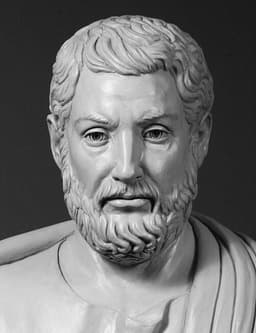
Cleisthenes
Politician · Ancient
78.3Total
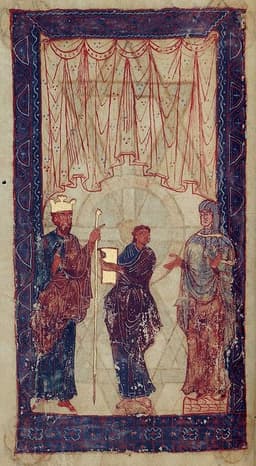
Ferdinand I of Leon
Emperor · Medieval
59.2Total
Basic Information
Born
-570
1015
Died
-508
1065
Era
Ancient
Medieval
Nationality
Greece
Leon
Occupation
Politician
Emperor
Civilization
Western
Western
Score Comparison
Military (10%)
49.4
70.0
Political (20%)
62.7
68.0
Influence (20%)
92.0
56.4
Legacy (20%)
92.0
49.2
Leadership (15%)
72.0
66.0
Strategy (15%)
71.3
57.5
TOTAL
78.3
59.2
Cleisthenes — Complete Timeline
510 BC
Expulsion of the PeisistratidsPolitical Action◆ Major
Cleisthenes, with the support of the Alcmaeonid family and Spartan assistance, led the overthrow of the tyrant Hippias, son of Peisistratus. This ended the Peisistratid tyranny in Athens and opened the way for democratic reforms.
Tyranny OverthrownAthensSparta
Impact: nationalconstructive
508 BC
Reforms of CleisthenesReform
Cleisthenes reorganized the Athenian citizen body into ten new tribes based on demes, replacing the old four Ionian tribes. He established the Council of 500 (Boule) and introduced ostracism, creating a system of isonomia (equal rights) that is considered the foundation of Athenian democracy.
Athenian DemocracyConstitutional ReformAncient Greece
Impact: globalprogressive
507 BC
Introduction of OstracismReform◆ Major
Cleisthenes instituted ostracism, a procedure allowing Athenian citizens to vote annually to exile a prominent citizen deemed a threat to democracy for ten years. This mechanism aimed to prevent the rise of a new tyrant and stabilize the democratic system.
Athenian DemocracyPolitical MechanismExile
Impact: national
Ferdinand I of Leon — Complete Timeline
1029 AD
Inheritance of the County of CastilePolitical Action◆ Major
Ferdinand I inherited the County of Castile from his father Sancho III of Navarre. He later expanded his territory through conquest and marriage, laying the foundation for the Kingdom of Castile.
Impact: regionalconstructive
1037 AD
Conquest of LeónWar◆ Major
Ferdinand I defeated and killed King Bermudo III of Le
Impact: regional
1056 AD
First Emperor of SpainPolitical Action◆ Major
Ferdinand I was crowned 'Imperator totius Hispaniae' (Emperor of all Spain) in 1056, claiming suzerainty over all Christian and Muslim rulers in Iberia. This title reflected his military dominance and political ambition.
Impact: regional
1065 AD
Division of the kingdomPolitical Action◆ Major
Upon his death, Ferdinand I divided his kingdom among his sons: Sancho II received Castile, Alfonso VI received Le
Impact: regionaldestructive
Expert Analysis
Cleisthenes vs Ferdinand I of Leon
# The Architect and the Emperor
In the winter of 508 BCE, an aging Athenian aristocrat stood before a crowd in the Agora, proposing a system that would hand power to ordinary citizens. Two thousand years later, on the dusty plains of Iberia, a king in armor would claim dominion over all of Spain, only to shatter his realm into pieces with a single act of paternal love. Cleisthenes and Ferdinand I of Leon—one a reformer who built a fragile democracy, the other a conqueror who built a kingdom—lived worlds apart, yet both faced the same elemental question: how does a ruler leave something that lasts?
Origins
Cleisthenes was born around 570 BCE into the Alcmaeonid family, one of Athens’ most powerful and controversial clans. His ancestors had been cursed for killing followers of a failed coup, and his family had spent generations in exile, plotting and negotiating their return. This precarious heritage shaped him: he understood that power in Athens was never absolute, always contingent on alliances, persuasion, and the shifting moods of the city’s fractious population.
Ferdinand I, born in 1015 CE, came from a different world entirely—one of blood and iron. He was the second son of Sancho III of Navarre, a king who had united much of Christian Spain through war and marriage. Ferdinand inherited the County of Castile in 1029, a territory forged in the crucible of the Reconquista, where every nobleman carried a sword and every border was contested. His world was hierarchical, violent, and deeply personal: loyalty meant kinship, and power meant conquest.
Rise to Power
Cleisthenes rose not through battle but through political maneuvering. In 510 BCE, with Spartan help, he led the expulsion of the tyrant Hippias, ending the Peisistratid dynasty that had ruled Athens for decades. But victory brought a new struggle: a rival aristocrat, Isagoras, seized control and exiled Cleisthenes. Rather than accept defeat, Cleisthenes returned, rallied the common people, and forced Isagoras out. His path to power was a knife-edge dance of exile, return, and popular appeal—a pattern that would define Athenian democracy itself.
Ferdinand’s rise was more direct. In 1037, at the Battle of Tamarón, he defeated and killed King Bermudo III of León, claiming the crown through conquest. Within two decades, he had subdued rival Christian lords and pushed deep into Moorish territory, extracting tribute from the taifa kingdoms of Toledo and Seville. By 1056, he was crowned “Imperator totius Hispaniae”—Emperor of all Spain—a title that reflected not actual unity but an audacious claim to supremacy over every Christian and Muslim ruler on the peninsula.
Leadership & Governance
The contrast in their ruling styles is stark. Cleisthenes governed through reform, not force. In 508 BCE, he reorganized Athens into ten new tribes based on local demes—neighborhood units—breaking the power of the old aristocratic clans. Every citizen, rich or poor, now belonged to a tribe that cut across family loyalties. He created a Council of Five Hundred, chosen by lot, to run daily affairs, and gave the Assembly of all citizens final say on laws. The following year, he introduced ostracism: a vote that could exile any dangerously popular leader for ten years. It was a system designed to prevent tyranny by dispersing power among the many.
Ferdinand ruled through war and inheritance. He expanded his territory relentlessly, but his governance was traditional: he rewarded loyal nobles with land, extracted tribute from defeated Muslims, and maintained order through personal authority. His most fateful act came in 1065, when he divided his kingdom among his three sons: Sancho received Castile, Alfonso received León, and García received Galicia. It was a decision rooted in medieval custom—a father’s duty to provide for all his children—but it guaranteed civil war. Within a decade, his sons were at each other’s throats.
Triumph & Tragedy
Cleisthenes’ greatest triumph was creating a system that survived him. The democracy he built would, within a generation, defeat the Persian Empire at Marathon and Salamis, and would nurture the golden age of Pericles. His tragedy was that he did not live to see it. He died around 508 BCE, likely before his reforms fully took root, and his name faded from Athenian memory—overshadowed by later heroes like Themistocles and Pericles. The architect vanished into his own building.
Ferdinand’s triumph was real: he was the first king to unite León and Castile, and his campaigns broke the back of Moorish power in the west. He died in 1065 as the most powerful Christian ruler in Spain. His tragedy was self-inflicted. By dividing his kingdom, he ensured that his life’s work would be undone by his own sons. The empire he had built splintered into warring fragments, and it would take another century before a Spanish king—Alfonso VIII—could reunite what Ferdinand had torn apart.
Character & Destiny
Cleisthenes was a pragmatist who thought in terms of institutions. He did not seek personal glory or dynastic permanence; he sought a system that could endure without him. His personality—calculating, patient, willing to share power—shaped his decisions. He trusted the people not because he idealized them, but because he understood that no aristocrat could rule Athens alone.
Ferdinand was a warrior who thought in terms of lineage. He saw his kingdom as a family possession, to be divided among his sons as he would divide his lands. His personality—proud, devout, bound by tradition—drove him to the fatal decision. He could not imagine that his sons might prefer war to cooperation, because he measured success by the number of his heirs, not the strength of his state.
Legacy
Cleisthenes is remembered as the “Father of Athenian Democracy,” though the title was applied centuries after his death. His reforms influenced the Roman Republic, the Enlightenment thinkers, and the architects of modern democracies. His legacy is abstract but vast: he proved that ordinary people could govern themselves.
Ferdinand I is remembered, if at all, as a footnote in Spanish history—a capable king undone by his own will. His title “Emperor of Spain” was never revived; his kingdom dissolved into civil war. His legacy is concrete but fragile: a few castles, a few chronicles, and a cautionary tale about the dangers of dividing power.
Conclusion
Standing at the edge of history, these two men faced the same challenge: how to build something that outlasts them. Cleisthenes chose to build a machine—a system of laws and votes that could run without a king. Ferdinand chose to build a family—a dynasty that would carry his blood forward. One succeeded beyond his wildest dreams; the other failed in the most intimate way possible. Their stories remind us that the most enduring structures are not made of stone or blood, but of ideas. And that the greatest threat to any legacy is often the person who builds it.
Rankings
🥇
CleisthenesLeader
Mil: 49.4Pol: 62.7Inf: 92.0
78.3
🥈
Ferdinand I of Leon
Mil: 70.0Pol: 68.0Inf: 56.4
59.2
+19.1 behind
How This Comparison Works
Algorithm
Each figure is scored on 6 dimensions (0—100 scale) based on structured historical data: Military (10%), Political (20%), Influence (20%), Legacy (20%), Leadership (15%), Strategy (15%). The weighted total produces the final ranking.
Data Sources
Scores are computed from structured sub-indicators in the database. Scale factors adjust for era (Ancient ×0.85, Modern ×1.0) and civilization size (Eastern ×1.05, Other ×0.80) to account for differences in population and military scale.
Maximum 3 Figures
Comparisons are limited to 2—3 figures to ensure readability and statistical meaningfulness.
Error Margins
±5 points per dimension — Sub-scores are derived from historical records with inherent uncertainty. Two figures within 5 points on a dimension should be considered roughly equivalent in that area.
Total Score Accuracy
±3 points overall — The weighted combination of 6 dimensions produces a total score with approximately ±3 points of uncertainty. Differences of less than 3 points are not statistically significant— the figures are effectively tied.
Known Limitations
- Historical records are incomplete and uneven across civilizations
- Figures from oral-tradition societies may be underrepresented
- Occupation labels can misclassify multi-role figures
- Scores measure capability and impact, not moral character
- Quantitative scoring is a comparison tool, not absolute truth
Capability Radar
Military (10%) — Battles & Warfare
Battles
58
55
Win Rate
62
60
Expansion
59
60
Political (20%) — Governance & Reform
Reform
95
50
Diplomacy
70
55
Economy
40
45
Influence (20%) — Cultural & Global Reach
Cultural
85
40
Global
85
30
Legacy (20%) — Historical Impact
Historical
90
45
Longevity
95
40
Leadership (15%) — Power & Stability
Tenure
30
65
Stability
60
50
Strategy (15%) — Tactics & Innovation
Strategy
62
55
Tactics
67
50
Reform
72
40
Similar Comparisons
Comments & Discussion
CastleCrusher6/16/2026
Classic case of "democracy vs feudalism" tilting absurdly in Cleisthenes' favor. Ferdinand's division of Leon, Castile, and Galicia among his sons is a textbook example of why primogeniture exists—his "love" caused centuries of fratricidal chaos. Cleisthenes, meanwhile, engineered institutions (ostracism, demes, boule) that let Athens punch way above its weight. Sorry, Ferdinand, but your kingdom broke before your legacy did.
数据狂人6/16/2026
吹得天花乱坠,可克利斯提尼的民主本质上就是雅典男性公民的寡头俱乐部——占人口大半的奴隶和妇女连投票权都没有。费迪南一世至少统一了伊比利亚北部,史书明确记载他在1037年塔马龙战役中击溃了莱昂军队,奠定了卡斯蒂利亚霸权。拿一套半成品制度去跟实打实的军事征服比?数据不会说谎,殖民和扩张才是硬道理。
TogaTitan6/16/2026
Both tackled the question of "how to build a durable state" but from opposite ends: Cleisthenes used redistribution of power to buy stability, Ferdinand used concentration of it to buy expansion. The key difference? Cleisthenes' reforms survived the Persian sack of 480 BCE—his institutions were robust enough to rebuild. Ferdinand's partition was undone within a generation by his own sons. My money's on the Athenian architect every time.
长安剑客6/16/2026
非要二选一,我站费迪南一世。克利斯提尼那套民主说到底就是雅典城邦的奢侈品——既没有常备军撑腰,也没有官僚体系去执行,连他自己家族都被放逐过。反观费迪南,他不仅用托罗条约吞并了莱昂,还建立了明确的继承法(尽管后来失败了),为西班牙的统一铺了路。政治家不看虚名,看的是手上有几座城、几把剑。
SkepticalSeer6/16/2026
The comparison is flawed from the start. Cleisthenes' "democracy" was a desperate elite power grab disguised as reform—he redistricted Athens to break up old aristocratic factions (the *gene*) precisely because his own family was losing influence. Ferdinand's kingdom-splitting was just as tactical: keeping three sons busy with separate territories prevented civil war in his lifetime. Both men were survivalists, not visionaries. History gave them labels they never earned.