Loading...
Cleisthenes vs Emperor Wen of Sui
Emperor Wen of Sui leads by 2.0 pts · 2 figures compared
…
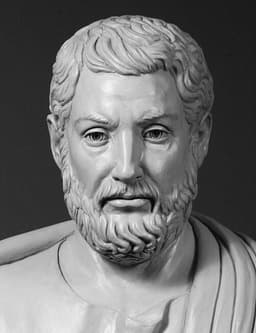
Cleisthenes
Politician · Ancient
78.3Total
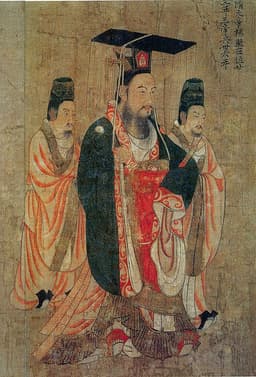
Emperor Wen of Sui
Emperor · Medieval
80.3Total
Basic Information
Born
-570
541
Died
-508
604
Era
Ancient
Medieval
Nationality
Greece
China
Occupation
Politician
Emperor
Civilization
Western
Eastern
Score Comparison
Military (10%)
49.4
76.0
Political (20%)
62.7
75.0
Influence (20%)
92.0
88.0
Legacy (20%)
92.0
80.0
Leadership (15%)
72.0
80.0
Strategy (15%)
71.3
75.0
TOTAL
78.3
80.3
Cleisthenes — Complete Timeline
510 BC
Expulsion of the PeisistratidsPolitical Action◆ Major
Cleisthenes, with the support of the Alcmaeonid family and Spartan assistance, led the overthrow of the tyrant Hippias, son of Peisistratus. This ended the Peisistratid tyranny in Athens and opened the way for democratic reforms.
Tyranny OverthrownAthensSparta
Impact: nationalconstructive
508 BC
Reforms of CleisthenesReform
Cleisthenes reorganized the Athenian citizen body into ten new tribes based on demes, replacing the old four Ionian tribes. He established the Council of 500 (Boule) and introduced ostracism, creating a system of isonomia (equal rights) that is considered the foundation of Athenian democracy.
Athenian DemocracyConstitutional ReformAncient Greece
Impact: globalprogressive
507 BC
Introduction of OstracismReform◆ Major
Cleisthenes instituted ostracism, a procedure allowing Athenian citizens to vote annually to exile a prominent citizen deemed a threat to democracy for ten years. This mechanism aimed to prevent the rise of a new tyrant and stabilize the democratic system.
Athenian DemocracyPolitical MechanismExile
Impact: national
Emperor Wen of Sui — Complete Timeline
581 AD
Establishment of the Three Departments and Six Ministries SystemReform◆ Major
Emperor Wen established a centralized bureaucratic system with three departments (Secretariat, Chancellery, and Department of State Affairs) and six ministries. This system became the foundation of Chinese government administration for centuries.
Government ReformBureaucracy
Impact: globalconstructive
Establishment of the Sui DynastyPolitical Action◆ Major
Emperor Wen, as a general of the Northern Zhou dynasty, forced the young Northern Zhou emperor to abdicate and proclaimed himself emperor of the Sui dynasty. This marked the beginning of the Sui dynasty, which would go on to reunify China.
Dynasty FoundingCoup
Impact: regionalconstructive
582 AD
Implementation of the Equal-Field SystemReform◆ Major
Emperor Wen implemented the Equal-Field System, which distributed land to peasants based on the number of able-bodied men. This reform increased agricultural productivity, stabilized tax revenues, and reduced the power of large landowners.
Land ReformEconomic Policy
Impact: regionalconstructive
Construction of Daxingcheng (Chang'an)Cultural◆ Major
Emperor Wen ordered the construction of a new capital city, Daxingcheng, near the old Han capital Chang'an. This city, later known as Chang'an, became a model for urban planning and served as the capital of the Sui and Tang dynasties.
Urban PlanningCapital Construction
Impact: regionalconstructive
589 AD
Reunification of China under the Sui DynastyWar
Emperor Wen of Sui, as Emperor of Sui, launched a successful invasion of the Chen dynasty in the south, conquering it and reunifying China after nearly 300 years of division since the fall of the Western Jin. This ended the Northern and Southern Dynasties period.
UnificationConquest
Impact: globalconstructive
Expert Analysis
Origins
Emperor Wen of Sui (541-604 AD), born Yang Jian, emerged from the chaotic Northern and Southern Dynasties period. He served as a general under the Northern Zhou, seizing power in 581 AD to found the Sui dynasty. His background as a member of the northwestern aristocracy gave him military and administrative experience. Cleisthenes (c. 570-508 BC) was born into the aristocratic Alcmaeonid family of Athens. His lineage was marked by political influence and exile; his family had been involved in the overthrow of tyrants. Cleisthenes' early life was shaped by the struggle between aristocratic factions and the rise of tyranny under Peisistratus and his sons.
Rise to Power
Emperor Wen rose through military conquest and political maneuvering. He overthrew the Northern Zhou emperor, consolidated power, and then launched campaigns to conquer the rival Chen dynasty in the south, completing China's reunification by 589 AD. His rise was characterized by strategic alliances and efficient administration. Cleisthenes gained prominence after the expulsion of the Peisistratid tyrants in 510 BC. He initially allied with Isagoras but soon clashed with him, leading to a power struggle. Cleisthenes appealed to the common people for support, implementing reforms that broke the power of aristocratic clans and established a democratic constitution.
Leadership & Governance
Emperor Wen implemented sweeping reforms: the Equal-Field System to distribute land equitably, the Three Departments and Six Ministries system to streamline bureaucracy, and the construction of Daxingcheng (later Chang'an) as a new capital. He also promoted Buddhism and reduced taxes. His governance was centralized, efficient, and focused on stability. Cleisthenes reorganized Athenian society into ten tribes based on demes (local districts), replacing the old clan-based system. He created the Council of 500, chosen by lot, and introduced ostracism to prevent tyranny. His reforms expanded citizen participation and established the foundation of Athenian democracy.
Triumph & Tragedy
Emperor Wen's greatest triumph was reunifying China after nearly 400 years of division. His reforms laid the groundwork for the Tang dynasty's golden age. However, his later years were marred by harshness, favoring his son Yang Guang over the rightful heir, leading to the Sui's rapid collapse after his death. Cleisthenes' reforms successfully prevented tyranny and empowered the Athenian demos. The tragedy was that his system faced challenges from external threats (Persian Wars) and internal conflicts, though democracy endured for centuries. Ostracism, while innovative, was sometimes used for political vendettas.
Character & Destiny
Emperor Wen was pragmatic, disciplined, and frugal, but also suspicious and ruthless, eliminating rivals. His destiny was to be a unifier and reformer, but his dynasty lasted only 37 years. Cleisthenes was visionary and populist, willing to share power with the masses. His destiny was to be the "Father of Athenian Democracy," though he faded from the historical record after his reforms, possibly ostracized himself.
Legacy
Emperor Wen's legacy is immense: his administrative systems influenced Chinese governance for millennia. The Sui dynasty, though short-lived, paved the way for the Tang. His equal-field system and bureaucratic reforms were models for later dynasties. Cleisthenes' legacy is the birth of democracy, inspiring political systems worldwide. His tribal reforms and council structure influenced modern representative government. Both men are foundational figures in their respective civilizations.
Conclusion
Emperor Wen of Sui scores higher overall (76.3 vs 74.3), reflecting his greater impact on a larger scale. His military conquests and administrative reforms ended centuries of division and set China on a path to prosperity. Cleisthenes' democratic innovations were revolutionary but confined to a city-state. In terms of governance, Wen's systems were more durable and influential in the long term. However, Cleisthenes' moral legacy of citizen empowerment is profound. Ultimately, Emperor Wen's achievements in reunification and state-building edge out Cleisthenes' political reforms.
Rankings
🥇
Emperor Wen of SuiLeader
Mil: 76.0Pol: 75.0Inf: 88.0
80.3
🥈
Cleisthenes
Mil: 49.4Pol: 62.7Inf: 92.0
78.3
+2.0 behind
How This Comparison Works
Algorithm
Each figure is scored on 6 dimensions (0—100 scale) based on structured historical data: Military (10%), Political (20%), Influence (20%), Legacy (20%), Leadership (15%), Strategy (15%). The weighted total produces the final ranking.
Data Sources
Scores are computed from structured sub-indicators in the database. Scale factors adjust for era (Ancient ×0.85, Modern ×1.0) and civilization size (Eastern ×1.05, Other ×0.80) to account for differences in population and military scale.
Maximum 3 Figures
Comparisons are limited to 2—3 figures to ensure readability and statistical meaningfulness.
Error Margins
±5 points per dimension — Sub-scores are derived from historical records with inherent uncertainty. Two figures within 5 points on a dimension should be considered roughly equivalent in that area.
Total Score Accuracy
±3 points overall — The weighted combination of 6 dimensions produces a total score with approximately ±3 points of uncertainty. Differences of less than 3 points are not statistically significant— the figures are effectively tied.
Known Limitations
- Historical records are incomplete and uneven across civilizations
- Figures from oral-tradition societies may be underrepresented
- Occupation labels can misclassify multi-role figures
- Scores measure capability and impact, not moral character
- Quantitative scoring is a comparison tool, not absolute truth
Capability Radar
Military (10%) — Battles & Warfare
Battles
58
75
Win Rate
62
80
Expansion
59
85
Political (20%) — Governance & Reform
Reform
95
95
Diplomacy
70
85
Economy
40
90
Influence (20%) — Cultural & Global Reach
Cultural
85
70
Global
85
65
Legacy (20%) — Historical Impact
Historical
90
85
Longevity
95
70
Leadership (15%) — Power & Stability
Tenure
30
80
Stability
60
75
Strategy (15%) — Tactics & Innovation
Strategy
62
85
Tactics
67
70
Reform
72
90
Similar Comparisons
Comments & Discussion
No comments yet. Be the first to share your thoughts!