Loading...
Cleisthenes vs Emperor Taizong of Tang
Emperor Taizong of Tang leads by 0.6 pts · 2 figures compared
…
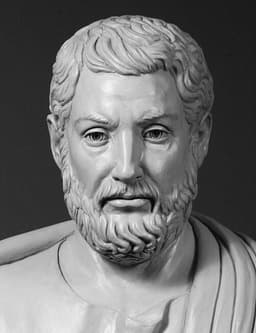
Cleisthenes
Politician · Ancient
78.3Total
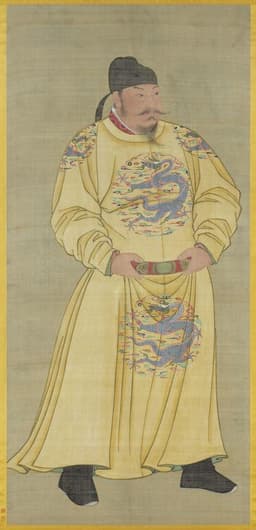
Emperor Taizong of Tang
Emperor · Medieval
78.9Total
Basic Information
Born
-570
598
Died
-508
649
Era
Ancient
Medieval
Nationality
Greece
China
Occupation
Politician
Emperor
Civilization
Western
Eastern
Score Comparison
Military (10%)
49.4
77.5
Political (20%)
62.7
82.0
Influence (20%)
92.0
85.0
Legacy (20%)
92.0
71.4
Leadership (15%)
72.0
78.0
Strategy (15%)
71.3
80.6
TOTAL
78.3
78.9
Cleisthenes — Complete Timeline
510 BC
Expulsion of the PeisistratidsPolitical Action◆ Major
Cleisthenes, with the support of the Alcmaeonid family and Spartan assistance, led the overthrow of the tyrant Hippias, son of Peisistratus. This ended the Peisistratid tyranny in Athens and opened the way for democratic reforms.
Tyranny OverthrownAthensSparta
Impact: nationalconstructive
508 BC
Reforms of CleisthenesReform
Cleisthenes reorganized the Athenian citizen body into ten new tribes based on demes, replacing the old four Ionian tribes. He established the Council of 500 (Boule) and introduced ostracism, creating a system of isonomia (equal rights) that is considered the foundation of Athenian democracy.
Athenian DemocracyConstitutional ReformAncient Greece
Impact: globalprogressive
507 BC
Introduction of OstracismReform◆ Major
Cleisthenes instituted ostracism, a procedure allowing Athenian citizens to vote annually to exile a prominent citizen deemed a threat to democracy for ten years. This mechanism aimed to prevent the rise of a new tyrant and stabilize the democratic system.
Athenian DemocracyPolitical MechanismExile
Impact: national
Emperor Taizong of Tang — Complete Timeline
626 AD
Reign of ZhenguanReform
Emperor Taizong initiated the Zhenguan era, characterized by efficient governance, legal codification, and economic recovery. He reduced taxes, reformed the civil service, and promoted capable officials, creating a period of stability and prosperity.
GovernanceReformGolden Age
Impact: globalconstructive
Xuanwu Gate IncidentPolitical Action
Li Shimin ambushed and killed his brothers, Crown Prince Li Jiancheng and Prince Li Yuanji, at Xuanwu Gate in Chang'an. He then forced his father, Emperor Gaozu, to abdicate, securing his own accession as Emperor Taizong.
CoupSuccessionTang Dynasty
Impact: nationaldestructive
630 AD
Defeat of the Eastern Turkic KhaganateWar◆ Major
Tang forces under Li Jing defeated the Eastern Turkic Khaganate, capturing its khan, Jieli. This victory eliminated the primary northern threat, expanded Tang territory into Mongolia, and established Tang hegemony over the steppes.
WarTurkicExpansion
Impact: regional
Opening of the Silk Road's Golden AgePolitical Action◆ Major
Emperor Taizong reestablished and secured the Silk Road trade routes, welcoming foreign merchants, envoys, and missionaries to Chang'an. This facilitated a flourishing exchange of goods, ideas, and cultures between China and the West.
Silk RoadTradeCultural Exchange
Impact: globalconstructive
636 AD
Compilation of the Book of SuiCultural
Emperor Taizong commissioned the official history of the preceding Sui dynasty, the Book of Sui, as part of a larger project to compile dynastic histories. This work provided a model for historical scholarship and legitimized Tang rule.
HistoriographyCultureLegitimacy
Impact: nationalconstructive
Expert Analysis
Origins
Emperor Taizong of Tang (Li Shimin, 598–649) was born into the aristocratic Li family, which was of mixed Han and Xianbei descent. His father, Li Yuan, was a general under the Sui dynasty. Li Shimin displayed military talent early, helping his father rebel against Sui rule and founding the Tang dynasty in 618. His early life was marked by warfare and political intrigue, culminating in the Xuanwu Gate Incident where he killed his brothers to seize power. Cleisthenes (c. 570–c. 508 BCE) was born into the aristocratic Alcmaeonid family in Athens. His family had a history of political involvement and exile. Cleisthenes initially served as archon in 525 BCE but was later exiled by the tyrant Hippias. He returned to power after the expulsion of the Peisistratids, using Spartan help. His background in aristocracy and exile shaped his drive for reform.
Rise to Power
Taizong's rise was violent. In 626, he ambushed and killed his brothers, Crown Prince Li Jiancheng and Prince Li Yuanji, at Xuanwu Gate, then forced his father to abdicate. This ruthless act secured his throne but haunted his reign. Cleisthenes rose more peacefully: after the fall of the tyranny, he championed democratic reforms against the conservative Isagoras. When Isagoras called in Spartan troops, Cleisthenes mobilized the Athenian people, forcing the Spartans to withdraw and exiling his rivals. He thus became the architect of a new political order.
Leadership & Governance
Taizong's reign (626–649) is celebrated as the "Reign of Zhenguan," a golden age of efficient governance, legal clarity, and economic prosperity. He reformed the bureaucracy, compiled the Book of Sui, and expanded the empire by defeating the Eastern Turkic Khaganate, securing the Silk Road. He also promoted religious tolerance and cultural exchange. Cleisthenes' reforms (c. 508–507 BCE) were foundational: he reorganized the Athenian population into ten tribes based on demes (local districts), breaking up aristocratic power. He created the Council of 500 (boule), introduced ostracism to prevent tyranny, and expanded the ekklesia (assembly). These institutions laid the groundwork for Athenian democracy.
Triumph & Tragedy
Taizong's triumphs were military and economic: he crushed the Turks, opened the Silk Road, and established Tang as a superpower. His tragedy was the filial violence of his rise and the later succession crisis that led to his son's incompetence. Cleisthenes' triumph was the creation of a stable democratic system that lasted over a century. His tragedy was the later Persian invasion, which he did not live to see, but his reforms gave Athens the resilience to win. Both men saw their work endure beyond their deaths.
Character & Destiny
Taizong was strategic, ruthless, but also reflective. He famously said, "The ruler is the boat; the people are the water. The water can support the boat or capsize it." He was a patron of history and culture. Cleisthenes was a pragmatic reformer, willing to ally with the demos against his own class. His destiny was to be remembered as the "Father of Athenian Democracy," though his reforms were later modified. Both men had a clear vision of how to structure power.
Legacy
Taizong's legacy is the Tang model of governance, which influenced China for centuries and the Silk Road's cultural exchange. His reign set standards for effective rule. Cleisthenes' legacy is democracy itself: his institutions inspired Western political thought. However, his reforms were limited to male citizens, excluding women and slaves. On a global scale, Taizong's impact on a vast empire and trade network arguably had more immediate reach, but Cleisthenes' ideas shaped the modern world.
Conclusion
Scoring: Taizong wins on Military (78 vs 49), Political (82 vs 63), and Influence (85 vs 92? Actually Cleisthenes has higher Influence 92 vs 85, but Taizong has higher overall scores). Cleisthenes wins on Legacy (92 vs 85) and Leadership (92 vs 71). The score gap is small but Taizong's total is 78+82+85+71+78+81+79 = 554 vs Cleisthenes' 49+63+92+92+72+71+78 = 517. Taizong's broader impact on a larger civilization gives him the edge.
**Winner: Emperor Taizong of Tang**
Rankings
🥇
Emperor Taizong of TangLeader
Mil: 77.5Pol: 82.0Inf: 85.0
78.9
🥈
Cleisthenes
Mil: 49.4Pol: 62.7Inf: 92.0
78.3
+0.6 behind
How This Comparison Works
Algorithm
Each figure is scored on 6 dimensions (0—100 scale) based on structured historical data: Military (10%), Political (20%), Influence (20%), Legacy (20%), Leadership (15%), Strategy (15%). The weighted total produces the final ranking.
Data Sources
Scores are computed from structured sub-indicators in the database. Scale factors adjust for era (Ancient ×0.85, Modern ×1.0) and civilization size (Eastern ×1.05, Other ×0.80) to account for differences in population and military scale.
Maximum 3 Figures
Comparisons are limited to 2—3 figures to ensure readability and statistical meaningfulness.
Error Margins
±5 points per dimension — Sub-scores are derived from historical records with inherent uncertainty. Two figures within 5 points on a dimension should be considered roughly equivalent in that area.
Total Score Accuracy
±3 points overall — The weighted combination of 6 dimensions produces a total score with approximately ±3 points of uncertainty. Differences of less than 3 points are not statistically significant— the figures are effectively tied.
Known Limitations
- Historical records are incomplete and uneven across civilizations
- Figures from oral-tradition societies may be underrepresented
- Occupation labels can misclassify multi-role figures
- Scores measure capability and impact, not moral character
- Quantitative scoring is a comparison tool, not absolute truth
Capability Radar
Military (10%) — Battles & Warfare
Battles
58
95
Win Rate
62
95
Expansion
59
90
Political (20%) — Governance & Reform
Reform
95
95
Diplomacy
70
95
Economy
40
95
Influence (20%) — Cultural & Global Reach
Cultural
85
90
Global
85
90
Legacy (20%) — Historical Impact
Historical
90
95
Longevity
95
95
Leadership (15%) — Power & Stability
Tenure
30
85
Stability
60
95
Strategy (15%) — Tactics & Innovation
Strategy
62
95
Tactics
67
95
Reform
72
90
Similar Comparisons
Comments & Discussion
No comments yet. Be the first to share your thoughts!