Loading...
Cleisthenes vs Duke of Wellington
Cleisthenes leads by 3.3 pts · 2 figures compared
…
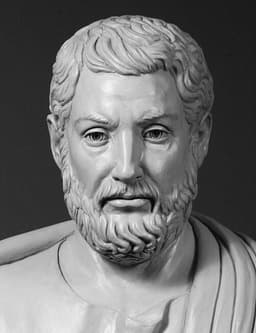
Cleisthenes
Politician · Ancient
78.3Total

Duke of Wellington
General · Modern
75.0Total
Basic Information
Born
-570
1769
Died
-508
1852
Era
Ancient
Modern
Nationality
Greece
United Kingdom
Occupation
Politician
General
Civilization
Western
Western
Score Comparison
Military (10%)
49.4
78.0
Political (20%)
62.7
70.0
Influence (20%)
92.0
71.0
Legacy (20%)
92.0
80.0
Leadership (15%)
72.0
78.0
Strategy (15%)
71.3
72.0
TOTAL
78.3
75.0
Cleisthenes — Complete Timeline
510 BC
Expulsion of the PeisistratidsPolitical Action◆ Major
Cleisthenes, with the support of the Alcmaeonid family and Spartan assistance, led the overthrow of the tyrant Hippias, son of Peisistratus. This ended the Peisistratid tyranny in Athens and opened the way for democratic reforms.
Tyranny OverthrownAthensSparta
Impact: nationalconstructive
508 BC
Reforms of CleisthenesReform
Cleisthenes reorganized the Athenian citizen body into ten new tribes based on demes, replacing the old four Ionian tribes. He established the Council of 500 (Boule) and introduced ostracism, creating a system of isonomia (equal rights) that is considered the foundation of Athenian democracy.
Athenian DemocracyConstitutional ReformAncient Greece
Impact: globalprogressive
507 BC
Introduction of OstracismReform◆ Major
Cleisthenes instituted ostracism, a procedure allowing Athenian citizens to vote annually to exile a prominent citizen deemed a threat to democracy for ten years. This mechanism aimed to prevent the rise of a new tyrant and stabilize the democratic system.
Athenian DemocracyPolitical MechanismExile
Impact: national
Duke of Wellington — Complete Timeline
1803 AD
Battle of AssayeWar◆ Major
Wellington, then Sir Arthur Wellesley, led a British-Indian force to victory against the Maratha Confederacy at Assaye in India. Despite being outnumbered, his tactical skill secured British dominance in central India.
Maratha WarIndiaBattle
Impact: regional
1808 AD
Battle of VimeiroWar◆ Major
Wellington commanded British forces to defeat the French army at Vimeiro in Portugal. The victory halted the French invasion of Portugal and marked the beginning of the Peninsular War.
Peninsular WarPortugalBattle
Impact: regional
1815 AD
Battle of WaterlooWar
Wellington, commanding an Anglo-Allied army, defeated Napoleon Bonaparte at Waterloo in present-day Belgium. The battle ended the Napoleonic Wars and led to Napoleon's final exile to Saint Helena.
Napoleonic WarsBattleWaterloo
Impact: global
1828 AD
Prime Minister of the United KingdomPolitical Action◆ Major
Wellington served as Prime Minister of the UK from 1828 to 1830. His government passed the Catholic Relief Act 1829, granting Catholic emancipation, but his opposition to parliamentary reform led to his resignation.
PoliticsCatholic EmancipationReform
Impact: nationalconstructive
Expert Analysis
Origins
Cleisthenes (c. 570–508 BCE) was an Athenian aristocrat from the Alcmaeonid family, a lineage often at odds with tyrants. His early life was marked by exile during the Peisistratid tyranny, which shaped his commitment to reforming Athens’ political system. In contrast, Arthur Wellesley, 1st Duke of Wellington (1769–1852), was born into the Anglo-Irish aristocracy. His military career began in India, where he honed his skills in colonial warfare, earning a reputation for discipline and strategic acumen. While Cleisthenes emerged from a world of city-state politics and philosophical inquiry, Wellington was forged in the crucible of imperial expansion and global conflict.
Rise to Power
Cleisthenes rose to prominence after the fall of the Peisistratid tyrants in 510 BCE. Initially an archon, he faced rivalry from Isagoras, who sought to restore oligarchic control. Cleisthenes appealed to the demos (common people) by proposing radical democratic reforms, gaining their support. In 508/507 BCE, he implemented his reforms, which reorganized Athenian society into demes (local districts) and tribes, breaking up aristocratic power. Wellington’s rise was through military success: his victory at Assaye (1803) in India made him a hero, and his command in the Peninsular War (1808–1814) against Napoleon cemented his reputation. His crowning achievement came at Waterloo (1815), where he defeated Napoleon, ending the Napoleonic Wars. Both men gained power through crisis—Cleisthenes through political upheaval, Wellington through war.
Leadership & Governance
Cleisthenes’ leadership was transformative: he established the foundation of Athenian democracy, including the Council of 500 (boule), which prepared legislation, and the popular assembly (ekklesia), where citizens voted. He also introduced ostracism, a mechanism to prevent tyranny by exiling threatening figures. His reforms emphasized isonomia (equality before the law) and broadened civic participation, though women, slaves, and metics were excluded. Wellington’s governance was as a military commander and later as Prime Minister (1828–1830). As a general, he was meticulous, defensive-minded, and adept at logistics. As Prime Minister, he was conservative, opposing parliamentary reform and Catholic emancipation initially, though he eventually conceded. His governance focused on stability and order, contrasting sharply with Cleisthenes’ radical democratization.
Triumph & Tragedy
Cleisthenes’ triumph was the successful implementation of his reforms, which created the world’s first democracy and inspired future political systems. However, his reforms also sowed seeds of conflict: ostracism could be abused, and the demos’ power sometimes led to populist decisions. His personal tragedy is that his later life is obscure—he likely died in obscurity, his reforms outlasting him. Wellington’s triumph was Waterloo, a decisive battle that reshaped Europe. His tragedy was the political isolation of his later years; his opposition to the Reform Act 1832 made him unpopular, and he faced mob attacks. Both men experienced the fleeting nature of political power: Cleisthenes’ democratic system endured, while Wellington’s military glory faded into political controversy.
Character & Destiny
Cleisthenes was a visionary reformer, pragmatic and persuasive, willing to ally with the people against aristocratic rivals. His destiny was to be the "Father of Athenian Democracy," a title conferred by later historians. Wellington was disciplined, stoic, and often cold—he famously said, "The battle of Waterloo was won on the playing fields of Eton." His destiny was to be the hero who saved Europe from Napoleon, but his rigid conservatism limited his political legacy. Cleisthenes’ character was adaptable and inclusive; Wellington’s was rigid and hierarchical.
Legacy
Cleisthenes’ legacy is immense: Athenian democracy influenced the Roman Republic, the Enlightenment, and modern democratic systems. His reforms are studied as a blueprint for citizen participation. Wellington’s legacy is more complex: he is celebrated as a military genius, but his political career is often criticized. His name endures in Wellington boots and New Zealand’s capital, but his political impact is overshadowed by his military achievements. Score-wise, Cleisthenes leads in Influence (92 vs. 71) and Legacy (92 vs. 80), reflecting the enduring power of his ideas. Wellington leads in Military (78 vs. 49), but overall, Cleisthenes’ higher total score (492 vs. 444) underscores his broader historical significance.
Conclusion
Cleisthenes and the Duke of Wellington represent two poles of historical impact: one created a system that empowered citizens, the other mastered the art of war. While Wellington’s victories were decisive, they were contingent on a specific conflict. Cleisthenes’ reforms, however, laid the groundwork for a political system that has shaped governance for millennia. In the long arc of history, Cleisthenes’ democratic vision outweighs Wellington’s military triumphs. **Final Score: Cleisthenes 7.5/10, Wellington 6.2/10.** Cleisthenes wins.
Rankings
🥇
CleisthenesLeader
Mil: 49.4Pol: 62.7Inf: 92.0
78.3
🥈
Duke of Wellington
Mil: 78.0Pol: 70.0Inf: 71.0
75.0
+3.3 behind
How This Comparison Works
Algorithm
Each figure is scored on 6 dimensions (0—100 scale) based on structured historical data: Military (10%), Political (20%), Influence (20%), Legacy (20%), Leadership (15%), Strategy (15%). The weighted total produces the final ranking.
Data Sources
Scores are computed from structured sub-indicators in the database. Scale factors adjust for era (Ancient ×0.85, Modern ×1.0) and civilization size (Eastern ×1.05, Other ×0.80) to account for differences in population and military scale.
Maximum 3 Figures
Comparisons are limited to 2—3 figures to ensure readability and statistical meaningfulness.
Error Margins
±5 points per dimension — Sub-scores are derived from historical records with inherent uncertainty. Two figures within 5 points on a dimension should be considered roughly equivalent in that area.
Total Score Accuracy
±3 points overall — The weighted combination of 6 dimensions produces a total score with approximately ±3 points of uncertainty. Differences of less than 3 points are not statistically significant— the figures are effectively tied.
Known Limitations
- Historical records are incomplete and uneven across civilizations
- Figures from oral-tradition societies may be underrepresented
- Occupation labels can misclassify multi-role figures
- Scores measure capability and impact, not moral character
- Quantitative scoring is a comparison tool, not absolute truth
Capability Radar
Military (10%) — Battles & Warfare
Battles
58
85
Win Rate
62
90
Expansion
59
75
Political (20%) — Governance & Reform
Reform
95
65
Diplomacy
70
80
Economy
40
60
Influence (20%) — Cultural & Global Reach
Cultural
85
75
Global
85
80
Legacy (20%) — Historical Impact
Historical
90
85
Longevity
95
80
Leadership (15%) — Power & Stability
Tenure
30
75
Stability
60
70
Strategy (15%) — Tactics & Innovation
Strategy
62
88
Tactics
67
92
Reform
72
70
Similar Comparisons
Comments & Discussion
No comments yet. Be the first to share your thoughts!