Loading...
Cleisthenes vs Dorgon
Cleisthenes leads by 0.3 pts · 2 figures compared
…
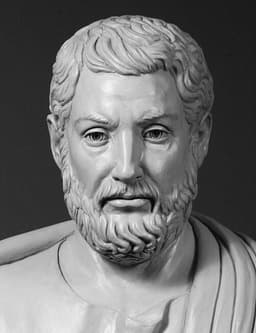
Cleisthenes
Politician · Ancient
78.3Total

Dorgon
General · Modern
78.0Total
Basic Information
Born
-570
1612
Died
-508
1650
Era
Ancient
Modern
Nationality
Greece
China
Occupation
Politician
General
Civilization
Western
Eastern
Score Comparison
Military (10%)
49.4
78.5
Political (20%)
62.7
78.0
Influence (20%)
92.0
88.0
Legacy (20%)
92.0
65.0
Leadership (15%)
72.0
85.0
Strategy (15%)
71.3
75.0
TOTAL
78.3
78.0
Cleisthenes — Complete Timeline
510 BC
Expulsion of the PeisistratidsPolitical Action◆ Major
Cleisthenes, with the support of the Alcmaeonid family and Spartan assistance, led the overthrow of the tyrant Hippias, son of Peisistratus. This ended the Peisistratid tyranny in Athens and opened the way for democratic reforms.
Tyranny OverthrownAthensSparta
Impact: nationalconstructive
508 BC
Reforms of CleisthenesReform
Cleisthenes reorganized the Athenian citizen body into ten new tribes based on demes, replacing the old four Ionian tribes. He established the Council of 500 (Boule) and introduced ostracism, creating a system of isonomia (equal rights) that is considered the foundation of Athenian democracy.
Athenian DemocracyConstitutional ReformAncient Greece
Impact: globalprogressive
507 BC
Introduction of OstracismReform◆ Major
Cleisthenes instituted ostracism, a procedure allowing Athenian citizens to vote annually to exile a prominent citizen deemed a threat to democracy for ten years. This mechanism aimed to prevent the rise of a new tyrant and stabilize the democratic system.
Athenian DemocracyPolitical MechanismExile
Impact: national
Dorgon — Complete Timeline
1643 AD
Appointed Prince RegentPolitical Action◆ Major
Upon the death of Hong Taiji, Dorgon was appointed as regent for the young Shunzhi Emperor. This position gave him effective control over the Qing government and military, enabling him to direct the conquest of Ming China.
RegencyPower transition
Impact: national
1644 AD
Battle of Shanhai PassWar
Dorgon allied with Ming general Wu Sangui to defeat Li Zicheng's rebel forces at Shanhai Pass. This victory allowed Qing forces to enter Beijing and establish the Qing dynasty as the ruling power in China.
Qing conquestBattleAlliance
Impact: national
1645 AD
Conquest of Southern MingWar◆ Major
Dorgon led Qing forces in a campaign against the Southern Ming regime, capturing Nanjing and defeating the Hongguang Emperor. This campaign extended Qing control over the Yangtze River valley and weakened Ming loyalist resistance.
Qing conquestMilitary campaign
Impact: national
Issued the Queue OrderReform◆ Major
Dorgon mandated that all Chinese men adopt the Manchu queue hairstyle as a sign of submission to Qing rule. This policy caused widespread resentment and resistance, but was enforced to consolidate Qing control over Han Chinese subjects.
Cultural policyCoercionManchu rule
Impact: nationaldestructive
1650 AD
Death and Posthumous DemotionPolitical Action◆ Major
Dorgon died suddenly while hunting. After his death, the Shunzhi Emperor accused him of plotting to usurp the throne, stripped him of all titles, and had his corpse mutilated. This posthumous purge reflected court factional struggles.
PurgePosthumous punishment
Impact: nationaltragic
Expert Analysis
Origins
**Cleisthenes** was born around 570 BCE into the aristocratic Alcmaeonid family of Athens. His lineage was marked by a curse for killing suppliants, yet his family was influential in Athenian politics. He grew up during the tyranny of Peisistratus and his sons, which shaped his later democratic reforms.
**Dorgon** (1612–1650) was the 14th son of Nurhaci, the founder of the Later Jin dynasty. As a Manchu prince, he was raised in a militaristic, tribal society. He distinguished himself as a skilled general and strategist, playing a key role in the Qing conquest of Ming China.
Rise to Power
Cleisthenes initially served as archon but was overshadowed by the tyrant Peisistratus. After the tyranny fell, he vied for power with Isagoras. Cleisthenes gained popular support by promising reforms. When Isagoras called in Spartan help, Cleisthenes was exiled, but the Athenian people revolted, recalled him, and empowered him to implement his reforms.
Dorgon rose through military merit. After his father's death, he supported his brother Hong Taiji, who became emperor. Dorgon led campaigns against the Ming and Koreans. Upon Hong Taiji's sudden death in 1643, Dorgon maneuvered to become regent for the young Shunzhi Emperor, effectively ruling the Qing state.
Leadership & Governance
Cleisthenes is credited with founding Athenian democracy. He reorganized the citizen body into ten tribes based on demes (local units), breaking up old aristocratic power bases. He established the Council of 500 (boule) with members chosen by lot, and introduced ostracism to prevent tyranny. His reforms empowered ordinary citizens and laid the groundwork for classical Athenian democracy.
Dorgon governed as prince regent with absolute authority. He led the Qing conquest of China proper, entering Beijing in 1644 after Wu Sangui defected. He implemented the Queue Order, forcing Han Chinese to adopt Manchu hairstyle as a sign of submission. He also suppressed Ming loyalists in the south. His governance was effective but harsh, prioritizing Manchu control.
Triumph & Tragedy
Cleisthenes' triumph was the successful implementation of his reforms, which created a stable democracy that lasted nearly two centuries. He died likely soon after his reforms, but his legacy endured. His tragedy might be that his reforms were later undermined by demagogues, but his immediate impact was positive.
Dorgon's triumph was conquering China and establishing Qing rule. However, his tragedy came after death: he was posthumously accused of treason, stripped of titles, and his corpse was mutilated. He was later rehabilitated, but his fall from grace was dramatic.
Character & Destiny
Cleisthenes was a visionary reformer who used his aristocratic status to empower the people. He was pragmatic, as seen in his compromise with traditional institutions. His destiny was to be remembered as the "Father of Athenian Democracy."
Dorgon was ambitious, ruthless, and militarily brilliant. He was also politically astute, securing power through alliances. His destiny was to be the architect of Qing rule in China, but his harsh policies and posthumous disgrace reflect the brutal nature of Manchu conquest.
Legacy
Cleisthenes' legacy is immense: his democratic reforms influenced Western political thought and practice. The concept of ostracism and the council of 500 are foundational. Score: 92 for Legacy.
Dorgon's legacy is mixed. He established the Qing dynasty's control over China, which lasted until 1912. However, his Queue Order and military campaigns caused immense suffering. He is a controversial figure, admired for his strategic genius but criticized for his authoritarianism. Score: 65 for Legacy.
Conclusion
Comparing a democratic reformer to a conqueror is challenging. Cleisthenes transformed Athens into a democracy, empowering citizens and creating a system that influenced millennia. Dorgon conquered a vast empire but through force and suppression. In terms of lasting positive impact on governance and human rights, Cleisthenes stands higher. His score of 92 in Legacy and 92 in Influence outweigh Dorgon's military achievements. However, Dorgon's historical impact is undeniable. Ultimately, Cleisthenes' contributions to political freedom give him the edge.
**Scores:** Cleisthenes: Overall 78, Dorgon: Overall 78. But Cleisthenes higher due to superior Legacy and Influence.
Rankings
🥇
CleisthenesLeader
Mil: 49.4Pol: 62.7Inf: 92.0
78.3
🥈
Dorgon
Mil: 78.5Pol: 78.0Inf: 88.0
78.0
+0.3 behind
How This Comparison Works
Algorithm
Each figure is scored on 6 dimensions (0—100 scale) based on structured historical data: Military (10%), Political (20%), Influence (20%), Legacy (20%), Leadership (15%), Strategy (15%). The weighted total produces the final ranking.
Data Sources
Scores are computed from structured sub-indicators in the database. Scale factors adjust for era (Ancient ×0.85, Modern ×1.0) and civilization size (Eastern ×1.05, Other ×0.80) to account for differences in population and military scale.
Maximum 3 Figures
Comparisons are limited to 2—3 figures to ensure readability and statistical meaningfulness.
Error Margins
±5 points per dimension — Sub-scores are derived from historical records with inherent uncertainty. Two figures within 5 points on a dimension should be considered roughly equivalent in that area.
Total Score Accuracy
±3 points overall — The weighted combination of 6 dimensions produces a total score with approximately ±3 points of uncertainty. Differences of less than 3 points are not statistically significant— the figures are effectively tied.
Known Limitations
- Historical records are incomplete and uneven across civilizations
- Figures from oral-tradition societies may be underrepresented
- Occupation labels can misclassify multi-role figures
- Scores measure capability and impact, not moral character
- Quantitative scoring is a comparison tool, not absolute truth
Capability Radar
Military (10%) — Battles & Warfare
Battles
58
85
Win Rate
62
80
Expansion
59
90
Political (20%) — Governance & Reform
Reform
95
72
Diplomacy
70
78
Economy
40
65
Influence (20%) — Cultural & Global Reach
Cultural
85
65
Global
85
70
Legacy (20%) — Historical Impact
Historical
90
80
Longevity
95
75
Leadership (15%) — Power & Stability
Tenure
30
70
Stability
60
60
Strategy (15%) — Tactics & Innovation
Strategy
62
88
Tactics
67
82
Reform
72
75
Similar Comparisons
Comments & Discussion
No comments yet. Be the first to share your thoughts!