Loading...
Cleisthenes vs Dinh Tien Hoang
Cleisthenes leads by 17.9 pts · 2 figures compared
…
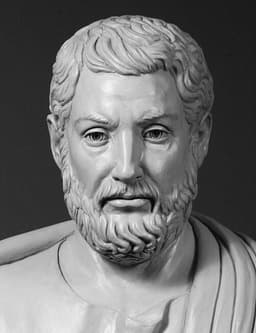
Cleisthenes
Politician · Ancient
78.3Total
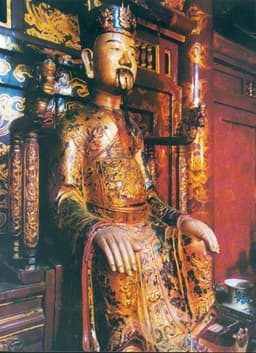
Dinh Tien Hoang
Emperor · Medieval
60.4Total
Basic Information
Born
-570
924
Died
-508
979
Era
Ancient
Medieval
Nationality
Greece
Vietnam
Occupation
Politician
Emperor
Civilization
Western
Eastern
Score Comparison
Military (10%)
49.4
60.0
Political (20%)
62.7
72.0
Influence (20%)
92.0
65.0
Legacy (20%)
92.0
40.0
Leadership (15%)
72.0
77.2
Strategy (15%)
71.3
58.0
TOTAL
78.3
60.4
Cleisthenes — Complete Timeline
510 BC
Expulsion of the PeisistratidsPolitical Action◆ Major
Cleisthenes, with the support of the Alcmaeonid family and Spartan assistance, led the overthrow of the tyrant Hippias, son of Peisistratus. This ended the Peisistratid tyranny in Athens and opened the way for democratic reforms.
Tyranny OverthrownAthensSparta
Impact: nationalconstructive
508 BC
Reforms of CleisthenesReform
Cleisthenes reorganized the Athenian citizen body into ten new tribes based on demes, replacing the old four Ionian tribes. He established the Council of 500 (Boule) and introduced ostracism, creating a system of isonomia (equal rights) that is considered the foundation of Athenian democracy.
Athenian DemocracyConstitutional ReformAncient Greece
Impact: globalprogressive
507 BC
Introduction of OstracismReform◆ Major
Cleisthenes instituted ostracism, a procedure allowing Athenian citizens to vote annually to exile a prominent citizen deemed a threat to democracy for ten years. This mechanism aimed to prevent the rise of a new tyrant and stabilize the democratic system.
Athenian DemocracyPolitical MechanismExile
Impact: national
Dinh Tien Hoang — Complete Timeline
968 AD
Defeat of the Twelve WarlordsWar
Dinh Bo Linh, later known as Dinh Tien Hoang, unified Vietnam by defeating the Twelve Warlords who had divided the country after the collapse of Chinese rule. He established the Dinh dynasty and became the first emperor of an independent Vietnam.
UnificationDinh DynastyVietnamese Independence
Impact: nationalconstructive
Establishment of the Dinh DynastyPolitical Action◆ Major
Dinh Tien Hoang founded the Dinh dynasty and declared himself Emperor. He moved the capital to Hoa Lu and implemented administrative reforms to consolidate power. This marked the beginning of a new era of Vietnamese independence after centuries of Chinese domination.
Dynasty FoundingCapital MoveAdministrative Reform
Impact: nationalconstructive
979 AD
Assassination of Dinh Tien HoangPolitical Action◆ Major
Dinh Tien Hoang and his crown prince were assassinated by a court official while sleeping. The murder plunged the Dinh dynasty into chaos, leading to a succession crisis and eventual takeover by Le Hoan. The assassination ended the short-lived Dinh dynasty.
AssassinationSuccession CrisisEnd of Dinh Dynasty
Impact: nationaltragic
Expert Analysis
Cleisthenes vs Dinh Tien Hoang
### The Architect and the Unifier: Two Paths to Founding a Nation
On a dusty Athenian hillside in the late sixth century BCE, a man named Cleisthenes watched a crowd of citizens cast their votes—not for a leader, but for the very idea of who belonged to the city. Half a world away and fifteen centuries later, in the fortified citadel of Hoa Lu, Emperor Dinh Tien Hoang gazed across a land he had conquered with blood and iron, a land that had not known a native ruler in a thousand years. Both men were founders, but they built with radically different tools. Cleisthenes dismantled a tyranny by inventing democracy; Dinh Tien Hoang forged a kingdom by crushing warlords. Why did their paths diverge so sharply? The answer lies not in their ambitions, but in the worlds they inherited.
### Origins
Cleisthenes was born into the aristocratic Alcmaeonid family of Athens, a clan steeped in political feuds and exile. The Athens of his youth was a city of oligarchic factions, where noble houses vied for power under the shadow of the Peisistratid tyrants. He grew up in a culture that prized rhetoric, debate, and the written word—a world where a man could persuade his peers rather than simply overpower them. The Greek city-states were small, fragmented, and obsessed with civic identity.
Dinh Tien Hoang, born Dinh Bo Linh in the Red River Delta of Vietnam, emerged from a very different crucible. For centuries, Vietnam had been a province of the Chinese Tang Empire, its culture shaped by Confucianism, its society organized around villages and clan loyalties. When the Tang collapsed in the early tenth century, Vietnam fractured into the Twelve Warlords—local strongmen who ruled by the sword. Dinh grew up in a world where authority was proven by victory in battle, not by votes in an assembly. His father had been a local chief; his childhood was likely spent learning to ride, fight, and command.
### Rise to Power
Cleisthenes’ rise was a masterclass in political maneuvering. In 510 BCE, after the Peisistratid tyrant Hippias had grown increasingly brutal, Cleisthenes allied with the Spartans—Athens’ traditional rivals—to expel the tyrant. But his triumph was short-lived. A rival aristocrat, Isagoras, seized power with Spartan backing, and Cleisthenes was forced into exile. Rather than raise an army, he turned to the Athenian people, promising them a radical new order in exchange for their support. When Isagoras tried to dissolve the council, the citizens of Athens rose up, besieging the Acropolis and forcing Isagoras to flee. Cleisthenes returned not on a wave of spears, but on a wave of popular will.
Dinh Tien Hoang’s path was far more direct. Starting as a local chieftain in the Hoa Lu region, he methodically defeated the Twelve Warlords one by one. His military campaigns were brutal and personal—he fought not for a political vision, but for survival and dominion. By 968 CE, he had unified the land under his control, declared himself Emperor, and moved his capital to Hoa Lu, a natural fortress of limestone mountains and rivers. His power rested on the loyalty of his generals and the fear he inspired in his enemies.
### Leadership & Governance
Cleisthenes’ reforms were his true weapon. In 508 BCE, he reorganized the entire Athenian citizen body into ten new tribes, each composed of demes (local villages) spread across the city’s three regions—coast, city, and interior. This broke the power of the old aristocratic clans, whose influence had been based on regional control. He then created a Council of Five Hundred, chosen by lot from the demes, to govern daily affairs. And in 507 BCE, he introduced ostracism—a peaceful mechanism to exile a dangerous leader without bloodshed. Cleisthenes did not rule; he built a system that made ruling itself a shared responsibility.
Dinh Tien Hoang governed from a throne, not a council. He centralized power in Hoa Lu, built a palace and a fortress, and imposed order through a strict legal code. He executed rebels and rewarded loyalists. His administration was modeled on Chinese bureaucracy, but it was personal and autocratic. He was the state. There were no elections, no debates—only edicts and obedience. Yet in a land torn by a century of war, his iron fist brought peace and stability.
### Triumph & Tragedy
Cleisthenes’ greatest triumph was the creation of Athenian democracy itself, a system that would inspire millennia. But his tragedy was personal: after his reforms, he largely vanishes from the historical record. He did not become a tyrant or a hero-king. He may have been ostracized himself, or simply faded into the background he had created. His legacy was a system that outlived him.
Dinh Tien Hoang’s triumph was the unification of Vietnam—a feat that ended the chaos of the Twelve Warlords and founded an independent dynasty. But his tragedy was sudden and sordid. In 979 CE, he and his crown prince were assassinated in their sleep by a court official, a man who had once been a warlord. The murder plunged the Dinh dynasty into crisis, and within a year, a new dynasty had taken power. Dinh’s hard-won kingdom was handed over by a dagger in the dark.
### Character & Destiny
Cleisthenes was a pragmatist and a visionary. He understood that power could be shared rather than hoarded, and he had the rare courage to give away authority. His personality was not that of a conqueror but of an architect—patient, cunning, and willing to work through institutions.
Dinh Tien Hoang was a warrior-emperor. He conquered because he had to; he ruled because he could. His personality was forged in battle—decisive, ruthless, and uncompromising. He trusted his sword more than his council, and in the end, that trust failed him. He died because his system of personal rule had no defense against a personal betrayal.
### Legacy
Cleisthenes is remembered as the “Father of Athenian Democracy,” a title that echoes through Western political thought. His reforms laid the groundwork for the golden age of Pericles, and ultimately for the democratic ideals that shape modern governance. His legacy is abstract, institutional, and global.
Dinh Tien Hoang is remembered as the first emperor of an independent Vietnam, a national unifier. His legacy is concrete, national, and patriotic. He is honored in temples and history books as the man who ended Chinese domination, but his dynasty crumbled within a decade. His name is revered, but his system was fragile.
### Conclusion
One man built a machine that could run without him; the other built a fortress that collapsed when he fell. Cleisthenes and Dinh Tien Hoang were both founders, but they founded fundamentally different things. The Athenian gave his people a process; the Vietnamese emperor gave his people a king. Their stories remind us that the most enduring foundations are not made of stone or steel, but of ideas and institutions that outlast the men who create them. In the end, the architect’s blueprint outlives the unifier’s sword.
Rankings
🥇
CleisthenesLeader
Mil: 49.4Pol: 62.7Inf: 92.0
78.3
🥈
Dinh Tien Hoang
Mil: 60.0Pol: 72.0Inf: 65.0
60.4
+17.9 behind
How This Comparison Works
Algorithm
Each figure is scored on 6 dimensions (0—100 scale) based on structured historical data: Military (10%), Political (20%), Influence (20%), Legacy (20%), Leadership (15%), Strategy (15%). The weighted total produces the final ranking.
Data Sources
Scores are computed from structured sub-indicators in the database. Scale factors adjust for era (Ancient ×0.85, Modern ×1.0) and civilization size (Eastern ×1.05, Other ×0.80) to account for differences in population and military scale.
Maximum 3 Figures
Comparisons are limited to 2—3 figures to ensure readability and statistical meaningfulness.
Error Margins
±5 points per dimension — Sub-scores are derived from historical records with inherent uncertainty. Two figures within 5 points on a dimension should be considered roughly equivalent in that area.
Total Score Accuracy
±3 points overall — The weighted combination of 6 dimensions produces a total score with approximately ±3 points of uncertainty. Differences of less than 3 points are not statistically significant— the figures are effectively tied.
Known Limitations
- Historical records are incomplete and uneven across civilizations
- Figures from oral-tradition societies may be underrepresented
- Occupation labels can misclassify multi-role figures
- Scores measure capability and impact, not moral character
- Quantitative scoring is a comparison tool, not absolute truth
Capability Radar
Military (10%) — Battles & Warfare
Battles
58
70
Win Rate
62
75
Expansion
59
65
Political (20%) — Governance & Reform
Reform
95
70
Diplomacy
70
65
Economy
40
60
Influence (20%) — Cultural & Global Reach
Cultural
85
65
Global
85
55
Legacy (20%) — Historical Impact
Historical
90
75
Longevity
95
70
Leadership (15%) — Power & Stability
Tenure
30
60
Stability
60
55
Strategy (15%) — Tactics & Innovation
Strategy
62
70
Tactics
67
65
Reform
72
60
Similar Comparisons
Comments & Discussion
ATHENS_ARCHIVIST6/16/2026
Comparing Cleisthenes to Dinh Tien Hoang is like comparing a surgeon to a blacksmith. Cleisthenes cut away the old tribal system and literally invented "dēmokratia"—rule by the people—by reorganizing Athenians into artificial demes. That’s structural genius. Dinh crushed 12 warlords and renamed himself emperor. Impressive, but that’s conqueror work, not nation-building. One man gave his people a voice; the other gave them a master. Give me the architect over the warlord any day.
铁骑重估者6/16/2026
把丁先皇比作克里斯提尼,简直是拿关公战秦琼。一个是用演说和投票放逐寡头的雅典改革家,另一个是用伏兵和铁剑收割十二使君的乱世豪杰。越南当时刚从一千年北属中挣脱,不靠血火怎么立国?克里斯提尼的民主是象牙塔里的游戏,丁先皇的帝制才是废墟上能活下来的硬道理。别拿希腊城邦的逻辑套红河三角洲,行不通。
SOCRATES_GHOST6/16/2026
Cleisthenes didn’t just invent democracy—he invented the demos itself. Before him, Athens was a bag of feuding clans. By splitting citizens into ten new tribes based on location, not birth, he made people think "I am Athenian" before "I am an Alcmaeonid." That’s a revolution of identity. Dinh Tien Hoang’s achievement? Imposing Chinese-style bureaucracy on Vietnam, which was just swapping one imperial model for a native one. Cleisthenes broke the old mold; Dinh poured himself into it.
南国霜刃6/16/2026
你们吹克里斯提尼的民主,可他改革时雅典自由民不到三万人,还是个奴隶制城邦。丁先皇面对的是刚刚脱离唐朝藩属的烂摊子,割据势力扎堆,如果不靠铁腕统一,越南早就碎成渣了。你说民主伟大?越南历史上直到二十世纪才有民主的影子,丁先皇的贡献是给了后世一个独立国的框架,没有这个壳,什么民主都是空谈。别用现代眼镜看古代。
SCRIPTOR_UMBRARUM6/16/2026
Fascinating how both men used "redistribution" to cement power. Cleisthenes reshuffled citizens into new tribes, ensuring no region could dominate—brilliant gerrymandering avant la lettre. Dinh redistributed land to his loyalists and centralised tax collection to starve the warlords. Same instinct, different tools: one used law, the other used logistics. But Cleisthenes’ system lasted 200 years; Dinh’s own son was assassinated by a courtier. Longevity favors the reformer, not the strongman.