Loading...
Cleisthenes vs Cyrus the Great
Cyrus the Great leads by 5.6 pts · 2 figures compared
…
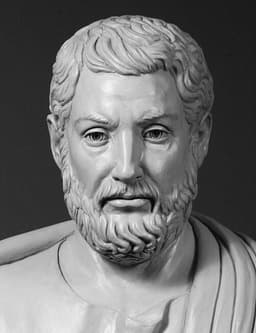
Cleisthenes
Politician · Ancient
78.3Total
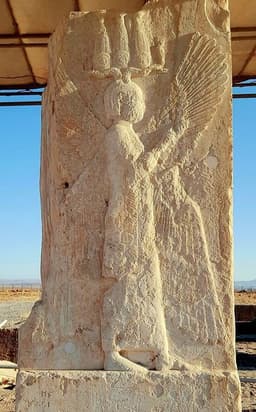
Cyrus the Great
Emperor · Ancient
83.9Total
Basic Information
Born
-570
-600
Died
-508
-530
Era
Ancient
Ancient
Nationality
Greece
Persia
Occupation
Politician
Emperor
Civilization
Western
Middle Eastern
Score Comparison
Military (10%)
49.4
82.0
Political (20%)
62.7
85.0
Influence (20%)
92.0
85.0
Legacy (20%)
92.0
90.0
Leadership (15%)
72.0
78.0
Strategy (15%)
71.3
75.0
TOTAL
78.3
83.9
Cleisthenes — Complete Timeline
510 BC
Expulsion of the PeisistratidsPolitical Action◆ Major
Cleisthenes, with the support of the Alcmaeonid family and Spartan assistance, led the overthrow of the tyrant Hippias, son of Peisistratus. This ended the Peisistratid tyranny in Athens and opened the way for democratic reforms.
Tyranny OverthrownAthensSparta
Impact: nationalconstructive
508 BC
Reforms of CleisthenesReform
Cleisthenes reorganized the Athenian citizen body into ten new tribes based on demes, replacing the old four Ionian tribes. He established the Council of 500 (Boule) and introduced ostracism, creating a system of isonomia (equal rights) that is considered the foundation of Athenian democracy.
Athenian DemocracyConstitutional ReformAncient Greece
Impact: globalprogressive
507 BC
Introduction of OstracismReform◆ Major
Cleisthenes instituted ostracism, a procedure allowing Athenian citizens to vote annually to exile a prominent citizen deemed a threat to democracy for ten years. This mechanism aimed to prevent the rise of a new tyrant and stabilize the democratic system.
Athenian DemocracyPolitical MechanismExile
Impact: national
Cyrus the Great — Complete Timeline
550 BC
Founding of the Achaemenid EmpirePolitical Action
Cyrus led a rebellion against the Median Empire, defeating King Astyages and capturing Ecbatana. He then united the Persian and Median tribes, establishing the Achaemenid Empire, which became the largest empire the world had yet seen.
Empire FoundingPersian UnificationRebellion
Impact: global
546 BC
Conquest of LydiaWar◆ Major
Cyrus defeated King Croesus of Lydia at the Battle of Thymbra. The Lydian capital Sardis was captured, and Croesus was taken prisoner. This conquest brought Anatolia under Persian control and secured access to the Aegean coast.
Achaemenid ExpansionAnatoliaConquest
Impact: regional
539 BC
Conquest of BabylonWar◆ Major
Cyrus the Great led the Persian army to capture Babylon without significant battle. The city's gates were opened, and Cyrus entered peacefully. This conquest added Mesopotamia to the Achaemenid Empire and marked the end of the Neo-Babylonian Empire.
Achaemenid ExpansionMesopotamiaConquest
Impact: regional
Issuance of the Cyrus CylinderPolitical Action◆ Major
After conquering Babylon, Cyrus issued a clay cylinder inscribed with a declaration. It described his policy of restoring temples, repatriating displaced peoples, and allowing religious freedom. The cylinder is often cited as an early charter of human rights.
Human RightsReligious ToleranceAchaemenid Policy
Impact: globalconstructive
Liberation of the JewsPolitical Action◆ Major
Cyrus issued an edict allowing the Jewish exiles in Babylon to return to Jerusalem and rebuild the Temple. This event is recorded in the biblical Book of Ezra and is a key moment in Jewish history, ending the Babylonian captivity.
Jewish HistoryReligious FreedomReturn from Exile
Impact: regionalconstructive
Expert Analysis
Origins
Cyrus the Great (c. 600–530 BCE) was born into the Persian Achaemenid clan, then a vassal of the Median Empire. Through a combination of diplomacy and military skill, he united the Persian tribes and overthrew the Medes, establishing the Achaemenid Empire. His early life is shrouded in legend, but his origins as a king of Anshan set the stage for his rise.
Cleisthenes, born around 570 BCE into the aristocratic Alcmaeonid family of Athens, was a member of the elite. His family had a history of political involvement, including a role in the expulsion of tyrants. Cleisthenes' origins gave him the status and resources to challenge the existing oligarchic structures.
Rise to Power
Cyrus rose by conquering the Median Empire (c. 550 BCE), then Lydia (c. 546 BCE), and finally Babylon (539 BCE). His military campaigns were swift and strategic, often incorporating local elites into his administration. The conquest of Babylon was a turning point, as it gave him control over Mesopotamia and allowed him to present himself as a liberator.
Cleisthenes rose to power during a period of political turmoil in Athens. After the expulsion of the tyrant Hippias in 510 BCE, Cleisthenes initially struggled for influence against the conservative Isagoras. He gained popular support by proposing democratic reforms, and after a brief conflict, he implemented his reforms in 508/507 BCE, effectively founding Athenian democracy.
Leadership & Governance
Cyrus ruled a vast, multicultural empire through a system of satrapies (provinces) that allowed local autonomy while maintaining central control. He respected local customs and religions, as exemplified by the Cyrus Cylinder, which some call the first charter of human rights. He liberated the Jews from Babylonian captivity and allowed them to return to Jerusalem. His leadership was characterized by tolerance and administrative efficiency.
Cleisthenes reformed the Athenian constitution, breaking up the old aristocratic tribes and creating ten new tribes based on demes (local districts). He established the Council of 500 (Boule) and introduced ostracism, a mechanism to exile potential tyrants. His reforms empowered ordinary citizens and laid the foundation for Athenian democracy, though it was limited to free male citizens.
Triumph & Tragedy
Cyrus's greatest triumph was the conquest of Babylon without significant destruction, and his issuance of the Cyrus Cylinder. His liberation of the Jews earned him lasting praise in the Hebrew Bible. His tragedy was his death in battle, possibly against the Massagetae, but his legacy endured through his successors.
Cleisthenes' triumph was the successful implementation of his reforms, which ended aristocratic dominance and created a stable democratic system. His tragedy is that he was overshadowed by later reformers like Pericles, and ostracism later became a tool for political vendettas. He likely died in obscurity.
Character & Destiny
Cyrus was a visionary conqueror who combined military prowess with a magnanimous and tolerant philosophy. He was seen as a father figure by his subjects. His destiny was to build the largest empire the world had seen, which lasted over 200 years.
Cleisthenes was a pragmatic reformer who used his aristocratic status to dismantle aristocratic power. He was more a political architect than a charismatic leader. His destiny was to create a system that would inspire future democracies, though Athens itself would eventually fall.
Legacy
Cyrus's legacy is immense: the Achaemenid Empire set standards for imperial administration, and his human rights principles influenced later thinkers. He is remembered positively in Jewish, Greek, and Persian traditions. His impact score is high due to the scale of his empire and his progressive policies.
Cleisthenes' legacy is the birth of democracy. His reforms directly influenced the development of democratic governance in Athens and subsequently Western civilization. However, his personal fame is less than that of his democratic successors. His democracy was limited, but the idea endured.
Conclusion
Cyrus the Great (Overall Score: 82.4) and Cleisthenes (Overall Score: 76.8) represent different kinds of greatness. Cyrus built a vast empire with a legacy of tolerance and efficient governance, while Cleisthenes created a political system that empowered citizens. Cyrus's impact is broader and more tangible in terms of territory and immediate influence, while Cleisthenes' ideas had a longer-lasting, though slower, impact on political thought. In a direct comparison, Cyrus's achievements in state-building and his humanitarian policies give him a higher overall score. However, Cleisthenes' contribution to democratic theory is invaluable. The score gap of 5.6 reflects Cyrus's greater reach and immediate historical significance.
Rankings
🥇
Cyrus the GreatLeader
Mil: 82.0Pol: 85.0Inf: 85.0
83.9
🥈
Cleisthenes
Mil: 49.4Pol: 62.7Inf: 92.0
78.3
+5.6 behind
How This Comparison Works
Algorithm
Each figure is scored on 6 dimensions (0—100 scale) based on structured historical data: Military (10%), Political (20%), Influence (20%), Legacy (20%), Leadership (15%), Strategy (15%). The weighted total produces the final ranking.
Data Sources
Scores are computed from structured sub-indicators in the database. Scale factors adjust for era (Ancient ×0.85, Modern ×1.0) and civilization size (Eastern ×1.05, Other ×0.80) to account for differences in population and military scale.
Maximum 3 Figures
Comparisons are limited to 2—3 figures to ensure readability and statistical meaningfulness.
Error Margins
±5 points per dimension — Sub-scores are derived from historical records with inherent uncertainty. Two figures within 5 points on a dimension should be considered roughly equivalent in that area.
Total Score Accuracy
±3 points overall — The weighted combination of 6 dimensions produces a total score with approximately ±3 points of uncertainty. Differences of less than 3 points are not statistically significant— the figures are effectively tied.
Known Limitations
- Historical records are incomplete and uneven across civilizations
- Figures from oral-tradition societies may be underrepresented
- Occupation labels can misclassify multi-role figures
- Scores measure capability and impact, not moral character
- Quantitative scoring is a comparison tool, not absolute truth
Capability Radar
Military (10%) — Battles & Warfare
Battles
58
85
Win Rate
62
90
Expansion
59
92
Political (20%) — Governance & Reform
Reform
95
90
Diplomacy
70
95
Economy
40
80
Influence (20%) — Cultural & Global Reach
Cultural
85
90
Global
85
90
Legacy (20%) — Historical Impact
Historical
90
95
Longevity
95
95
Leadership (15%) — Power & Stability
Tenure
30
70
Stability
60
85
Strategy (15%) — Tactics & Innovation
Strategy
62
88
Tactics
67
80
Reform
72
75
Similar Comparisons
Comments & Discussion
No comments yet. Be the first to share your thoughts!