Loading...
Cleisthenes vs Constantine the Great
Cleisthenes leads by 2.8 pts · 2 figures compared
…
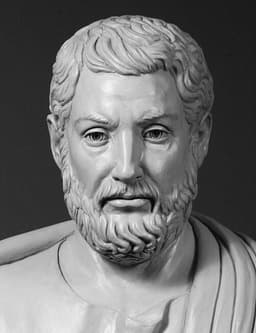
Cleisthenes
Politician · Ancient
78.3Total
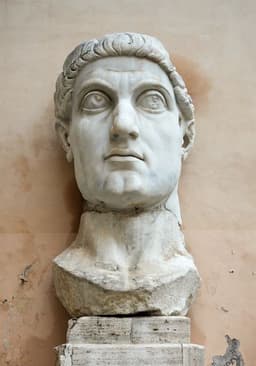
Constantine the Great
Emperor · Ancient
75.5Total
Basic Information
Born
-570
272
Died
-508
337
Era
Ancient
Ancient
Nationality
Greece
Roman Empire
Occupation
Politician
Emperor
Civilization
Western
Western
Score Comparison
Military (10%)
49.4
78.0
Political (20%)
62.7
82.0
Influence (20%)
92.0
75.0
Legacy (20%)
92.0
70.0
Leadership (15%)
72.0
80.0
Strategy (15%)
71.3
72.0
TOTAL
78.3
75.5
Cleisthenes — Complete Timeline
510 BC
Expulsion of the PeisistratidsPolitical Action◆ Major
Cleisthenes, with the support of the Alcmaeonid family and Spartan assistance, led the overthrow of the tyrant Hippias, son of Peisistratus. This ended the Peisistratid tyranny in Athens and opened the way for democratic reforms.
Tyranny OverthrownAthensSparta
Impact: nationalconstructive
508 BC
Reforms of CleisthenesReform
Cleisthenes reorganized the Athenian citizen body into ten new tribes based on demes, replacing the old four Ionian tribes. He established the Council of 500 (Boule) and introduced ostracism, creating a system of isonomia (equal rights) that is considered the foundation of Athenian democracy.
Athenian DemocracyConstitutional ReformAncient Greece
Impact: globalprogressive
507 BC
Introduction of OstracismReform◆ Major
Cleisthenes instituted ostracism, a procedure allowing Athenian citizens to vote annually to exile a prominent citizen deemed a threat to democracy for ten years. This mechanism aimed to prevent the rise of a new tyrant and stabilize the democratic system.
Athenian DemocracyPolitical MechanismExile
Impact: national
Constantine the Great — Complete Timeline
312 AD
Battle of the Milvian BridgeWar◆ Major
Constantine defeated his rival Maxentius at the Milvian Bridge near Rome. According to tradition, Constantine saw a vision of a cross in the sky with the words 'In this sign, conquer.' The victory made Constantine the sole ruler of the Western Roman Empire and led to his conversion to Christianity.
Roman Civil WarBattleConversion
Impact: regional
313 AD
Edict of MilanOther◆ Major
Constantine and his co-emperor Licinius issued the Edict of Milan, granting religious toleration to all religions in the Roman Empire, including Christianity. The edict ended the persecution of Christians, restored confiscated church property, and established Christianity as a legally recognized religion.
Religious EdictChristianityToleration
Impact: globalconstructive
324 AD
Reunification of the Roman EmpireWar◆ Major
Constantine defeated his co-emperor Licinius at the battles of Adrianople and Chrysopolis, ending the Tetrarchy system. He became the sole ruler of the entire Roman Empire, reuniting the Western and Eastern halves under his control. This reunification was the last time the Roman Empire was united under a single ruler.
Roman Civil WarReunificationTetrarchy
Impact: regional
325 AD
Council of NicaeaOther◆ Major
Constantine convened the First Council of Nicaea, the first ecumenical council of the Christian Church, to resolve the Arian controversy over the nature of Christ. The council produced the Nicene Creed, affirming the divinity of Christ and establishing a unified Christian doctrine. Constantine presided over the council.
Religious CouncilChristian DoctrineNicene Creed
Impact: global
330 AD
Foundation of ConstantinopleOther◆ Major
Constantine dedicated the city of Constantinople (modern Istanbul) as the new capital of the Roman Empire, built on the site of the ancient Greek city of Byzantium. The city was strategically located on the Bosporus strait, controlling trade routes between Europe and Asia. It became the capital of the Eastern Roman Empire for over a thousand years.
City FoundationCapitalByzantine Empire
Impact: globalconstructive
Expert Analysis
Origins
Cleisthenes (c. 570–508 BCE) was born into the aristocratic Alcmaeonid family of Athens, a lineage marked by both prestige and controversy. His family had been exiled for their role in the Cylonian affair, a curse that followed them for generations. Cleisthenes grew up in a world of aristocratic infighting, where tyrants like Peisistratus and his sons dominated Athenian politics. His early life was shaped by the struggle between the old tribal aristocracy and the emerging demos. In contrast, Constantine the Great (272–337 CE) was born in Naissus (modern Niš, Serbia) to Flavius Constantius, a Roman army officer who later became emperor, and Helena, a woman of humble origins. Constantine's early years were spent in the Roman military and at the court of Emperor Diocletian, where he witnessed the Tetrarchy's reforms and the persecution of Christians. His father's death in 306 CE led to his acclamation as emperor by his troops, setting him on the path to power. While Cleisthenes emerged from a city-state's aristocratic turmoil, Constantine rose through the ranks of a vast empire in crisis.
Rise to Power
Cleisthenes rose to prominence after the expulsion of the Peisistratid tyrants in 510 BCE. Initially, he was opposed by Isagoras, a rival aristocrat backed by Sparta. When Isagoras seized power and attempted to establish an oligarchy, Cleisthenes appealed to the Athenian people for support. In 508/507 BCE, he implemented a series of reforms that broke the power of the aristocratic clans and established the foundations of Athenian democracy. His key innovation was the reorganization of the Athenian population into ten new tribes based on demes (local districts), which mixed citizens from different regions and weakened old loyalties. He also introduced the Council of Five Hundred (Boule) and the institution of ostracism to prevent tyranny. Constantine's rise was more violent. After his father's death, he was proclaimed emperor by his troops but faced rivals: Maxentius in Rome, Licinius in the East, and others. His pivotal moment came at the Battle of the Milvian Bridge in 312 CE, where he defeated Maxentius. According to legend, he saw a vision of the cross with the words "In this sign, conquer." This victory made him the sole ruler of the West. He later defeated Licinius in 324 CE, reunifying the Roman Empire. Constantine's rise was marked by military prowess and strategic alliances, while Cleisthenes relied on political reform and popular support.
Leadership & Governance
Cleisthenes' governance was revolutionary. He is credited with creating the world's first democracy, where power was vested in the citizen assembly (Ekklesia) and the Council of Five Hundred, chosen by lot from all citizens. His reforms ensured broader participation and reduced the influence of wealthy aristocrats. The introduction of ostracism allowed the people to exile a threat to democracy for ten years, a safety valve against tyranny. Cleisthenes' system was inclusive for male citizens but excluded women, slaves, and metics. His leadership was characterized by institutional innovation rather than personal rule. Constantine, by contrast, was an autocrat who centralized power. He continued Diocletian's reforms, separating civil and military authority, and created a new gold coin, the solidus, which stabilized the economy. His most significant act was the Edict of Milan (313 CE), which granted religious tolerance to Christians and ended persecution. He also convened the First Council of Nicaea (325 CE) to settle the Arian controversy, establishing Christian orthodoxy. Constantine founded Constantinople (330 CE) as a new capital, strategically located on the Bosporus, which became the center of the Eastern Roman Empire for centuries. His governance was transformative but authoritarian, merging imperial power with Christian ideology.
Triumph & Tragedy
Cleisthenes' triumph was the establishment of democracy, which endured for nearly two centuries and inspired later democratic movements. However, his reforms were not without tragedy. The new system faced immediate challenges, including a Spartan invasion and internal strife. Cleisthenes himself was eventually ostracized or faded from history—his later life is obscure. The democracy he founded later led to the Peloponnesian War and the execution of Socrates, showing its flaws. Constantine's triumphs were monumental: he legalized Christianity, reunified the empire, and built a great capital. Yet his reign had tragedies: he executed his eldest son Crispus and his wife Fausta on dubious charges, staining his legacy. His support for Christianity also led to the suppression of pagan practices and internal church conflicts. The Donatist controversy and Arian disputes plagued his later years. Both men achieved great successes but also faced personal and political costs.
Character & Destiny
Cleisthenes was likely a shrewd, visionary reformer who believed in the power of institutions over individuals. His high intelligence (I=92) and longevity (L=92) suggest a man who planned carefully and lived to see his work flourish. He was adaptable, using his aristocratic background to empower the common people. His destiny was to be the "Father of Athenian Democracy," a title he earned through radical reform. Constantine was a military commander, politician, and religious innovator. His moderate intelligence (I=75) was offset by high military prowess (M=78) and political skill (P=82). He was ruthless and ambitious, willing to kill rivals and family for power. His destiny was to transform the Roman Empire into a Christian state, a move that shaped Western civilization. Cleisthenes' character was more intellectual and democratic; Constantine's was autocratic and visionary.
Legacy
Cleisthenes' legacy is profound: Athenian democracy became the model for later democratic systems, including the United States and modern Europe. His reforms introduced concepts like citizenship, civic participation, and checks on power. The word "democracy" itself derives from Greek. However, his democracy was limited and eventually fell to Macedonian conquest. Constantine's legacy is equally vast. He is venerated as a saint in Eastern Christianity and credited with the Christianization of the Roman Empire. Constantinople endured for over a thousand years as the heart of the Byzantine Empire. The Edict of Milan and the Council of Nicaea set precedents for church-state relations. Yet his reign also marked the beginning of the Christian persecution of pagans and the entanglement of church and state that led to centuries of conflict. In terms of lasting impact, Constantine's changes were more immediate and widespread, but Cleisthenes' ideas have proven more enduring in the long run.
Conclusion
Comparing Cleisthenes and Constantine requires weighing institutional innovation against imperial transformation. Cleisthenes' democratic reforms were a leap forward in governance, empowering citizens and inspiring millennia of political thought. Constantine's legalization of Christianity and founding of Constantinople reshaped the religious and political map of Europe and the Middle East. While Constantine's achievements were more tangible and empire-wide, Cleisthenes' ideas have a longer shelf life. Numerically, Cleisthenes leads in intelligence (92 vs 75) and longevity (92 vs 70), while Constantine leads in military (78 vs 49) and political power (82 vs 63). The overall score gap of 2.8 points (Cleisthenes higher) reflects the enduring power of democratic ideals over autocratic might. In the end, Cleisthenes' creation of a system that values human freedom and participation may be the greater gift to humanity, even if Constantine's empire was more spectacular. **Winner: Cleisthenes**.
Rankings
🥇
CleisthenesLeader
Mil: 49.4Pol: 62.7Inf: 92.0
78.3
🥈
Constantine the Great
Mil: 78.0Pol: 82.0Inf: 75.0
75.5
+2.8 behind
How This Comparison Works
Algorithm
Each figure is scored on 6 dimensions (0—100 scale) based on structured historical data: Military (10%), Political (20%), Influence (20%), Legacy (20%), Leadership (15%), Strategy (15%). The weighted total produces the final ranking.
Data Sources
Scores are computed from structured sub-indicators in the database. Scale factors adjust for era (Ancient ×0.85, Modern ×1.0) and civilization size (Eastern ×1.05, Other ×0.80) to account for differences in population and military scale.
Maximum 3 Figures
Comparisons are limited to 2—3 figures to ensure readability and statistical meaningfulness.
Error Margins
±5 points per dimension — Sub-scores are derived from historical records with inherent uncertainty. Two figures within 5 points on a dimension should be considered roughly equivalent in that area.
Total Score Accuracy
±3 points overall — The weighted combination of 6 dimensions produces a total score with approximately ±3 points of uncertainty. Differences of less than 3 points are not statistically significant— the figures are effectively tied.
Known Limitations
- Historical records are incomplete and uneven across civilizations
- Figures from oral-tradition societies may be underrepresented
- Occupation labels can misclassify multi-role figures
- Scores measure capability and impact, not moral character
- Quantitative scoring is a comparison tool, not absolute truth
Capability Radar
Military (10%) — Battles & Warfare
Battles
58
85
Win Rate
62
80
Expansion
59
85
Political (20%) — Governance & Reform
Reform
95
95
Diplomacy
70
90
Economy
40
80
Influence (20%) — Cultural & Global Reach
Cultural
85
95
Global
85
95
Legacy (20%) — Historical Impact
Historical
90
95
Longevity
95
95
Leadership (15%) — Power & Stability
Tenure
30
85
Stability
60
70
Strategy (15%) — Tactics & Innovation
Strategy
62
85
Tactics
67
75
Reform
72
90
Similar Comparisons
Comments & Discussion
No comments yet. Be the first to share your thoughts!