Loading...
Cleisthenes vs Cleisthenes of Athens
Cleisthenes leads by 9.8 pts · 2 figures compared
…
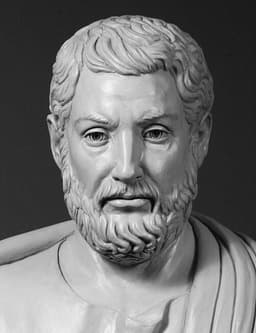
Cleisthenes
Politician · Ancient
78.3Total
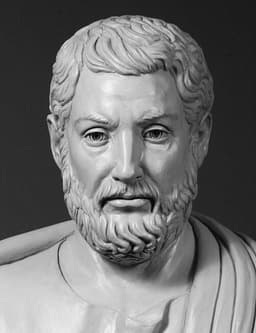
Cleisthenes of Athens
Politician · Ancient
68.5Total
Basic Information
Born
-570
-570
Died
-508
-508
Era
Ancient
Ancient
Nationality
Greece
Athens
Occupation
Politician
Politician
Civilization
Western
Western
Score Comparison
Military (10%)
49.4
50.0
Political (20%)
62.7
62.7
Influence (20%)
92.0
80.0
Legacy (20%)
92.0
82.0
Leadership (15%)
72.0
62.0
Strategy (15%)
71.3
42.7
TOTAL
78.3
68.5
Cleisthenes — Complete Timeline
510 BC
Expulsion of the PeisistratidsPolitical Action◆ Major
Cleisthenes, with the support of the Alcmaeonid family and Spartan assistance, led the overthrow of the tyrant Hippias, son of Peisistratus. This ended the Peisistratid tyranny in Athens and opened the way for democratic reforms.
Tyranny OverthrownAthensSparta
Impact: nationalconstructive
508 BC
Reforms of CleisthenesReform
Cleisthenes reorganized the Athenian citizen body into ten new tribes based on demes, replacing the old four Ionian tribes. He established the Council of 500 (Boule) and introduced ostracism, creating a system of isonomia (equal rights) that is considered the foundation of Athenian democracy.
Athenian DemocracyConstitutional ReformAncient Greece
Impact: globalprogressive
507 BC
Introduction of OstracismReform◆ Major
Cleisthenes instituted ostracism, a procedure allowing Athenian citizens to vote annually to exile a prominent citizen deemed a threat to democracy for ten years. This mechanism aimed to prevent the rise of a new tyrant and stabilize the democratic system.
Athenian DemocracyPolitical MechanismExile
Impact: national
Cleisthenes of Athens — Complete Timeline
508 BC
Reform of the Athenian Tribes (Cleisthenes' Reforms)Reform
Cleisthenes reorganized the Athenian citizen body into ten new tribes based on demes (local districts), replacing the old four Ionian tribes. This broke the power of aristocratic clans and created a new political structure that formed the basis of Athenian democracy.
DemocracyPolitical ReformAthens
Impact: globalprogressive
Introduction of OstracismReform◆ Major
Cleisthenes introduced the practice of ostracism, allowing citizens to vote annually to exile a prominent figure for ten years. This mechanism was designed to prevent tyranny and remove threats to democracy. The first ostracism occurred in 487 BC.
DemocracyPolitical ReformExile
Impact: globalprogressive
Creation of the Council of 500 (Boule)Reform◆ Major
Cleisthenes established the Boule, a council of 500 citizens (50 from each tribe) chosen by lot. This body prepared legislation for the Assembly and oversaw daily administration. It replaced the aristocratic Areopagus as the main governing body, expanding citizen participation.
DemocracyPolitical ReformGovernment
Impact: globalprogressive
Exile of Isagoras and Spartan InterventionPolitical Action◆ Major
Cleisthenes' rival Isagoras called on Spartan king Cleomenes I to intervene in Athens. The Spartans expelled Cleisthenes and attempted to dissolve the Boule, but the Athenian people revolted, besieging the Acropolis and forcing the Spartans to withdraw. Cleisthenes was recalled.
Spartan InterventionDemocracyAthens
Impact: nationalconstructive
Expert Analysis
Cleisthenes vs Cleisthenes of Athens
# The Man Who Invented Democracy: Cleisthenes and the Birth of Athenian Freedom
On a dusty Athenian morning in 508 BC, a politician named Cleisthenes stood at a precipice. His rival Isagoras had just summoned the Spartan king Cleomenes I to Athens, and the Spartans had expelled him from the city. Yet within months, Cleisthenes would return not merely to power, but to reshape the very meaning of political life. How did a man twice exiled, from a family tainted by ancient curses, become the father of democracy itself?
Origins
Cleisthenes was born around 570 BC into the Alcmaeonid family, one of Athens' most powerful and controversial aristocratic clans. The Alcmaeonids carried a dark legacy: they were cursed for killing followers of the failed Cylonian coup, a stain that haunted them for generations. Young Cleisthenes grew up in a world of shifting alliances, where noble families competed for influence and tyrants periodically seized control. His own grandfather, also named Cleisthenes, had been a tyrant of Sicyon—a reminder that political power in ancient Greece was personal, brutal, and often hereditary.
The Athens of Cleisthenes' youth was not a democracy. It was a patchwork of four Ionian tribes, each dominated by aristocratic clans who controlled religious rites, land, and political offices. The common people—the *demos*—had little say. Tyrants like Peisistratus and his son Hippias had ruled for decades, maintaining order but suppressing popular participation. Cleisthenes absorbed the lessons of his era: that power was fragile, that reform was dangerous, and that the old tribal system was a weapon for elites to maintain control.
Rise to Power
Cleisthenes' first major act came in 510 BC, when he helped expel the tyrant Hippias. With support from the Alcmaeonids and Spartan military assistance, he led the overthrow of the Peisistratid dynasty. This was a political action of immense courage and calculation—tyrants did not surrender peacefully. But the victory was incomplete. Athens immediately fell into factional strife between Cleisthenes and his rival Isagoras, who represented the old aristocratic order.
Isagoras outmaneuvered Cleisthenes initially, calling on King Cleomenes of Sparta to intervene. In 508 BC, the Spartans marched into Athens and expelled Cleisthenes, along with hundreds of his supporters. It seemed the aristocratic restoration had triumphed. But the Athenian people, having tasted freedom from tyranny, refused to return to the old ways. They rose up, besieged Isagoras and the Spartans on the Acropolis, and forced them to surrender. Cleisthenes was recalled in triumph.
Leadership & Governance
Cleisthenes' response to this crisis was not a grab for personal power, but a revolution in how power itself was organized. In 508 BC, he introduced reforms that dismantled the old tribal system and replaced it with ten new tribes based not on kinship, but on geography. He divided Attica into three regions—the city, the coast, and the interior—and each tribe drew members from all three, mixing aristocrats, farmers, and craftsmen together.
This was political genius. By breaking the power of the old clans, Cleisthenes created a citizen body united by place rather than blood. He established the Council of 500, or Boule, where fifty citizens from each tribe, chosen by lot, prepared legislation and managed daily affairs. Any male citizen over thirty could serve—a radical idea. The *ekklesia*, or assembly of all citizens, would vote on laws. Cleisthenes did not invent democracy from nothing; he institutionalized it, giving ordinary Athenians a stake in their own governance.
In 507 BC, he introduced ostracism: a yearly vote where citizens could exile any politician deemed too powerful. The name came from the *ostrakon*, a pottery shard used as a ballot. This was not a punishment for crimes, but a safety valve against tyranny. It allowed democracy to protect itself from ambitious men.
Triumph & Tragedy
Cleisthenes' greatest triumph was the survival of his reforms. Within a decade, Athens had become a democracy in practice, not just name. The system he built would endure for nearly two centuries, producing the Golden Age of Pericles, the victories at Marathon and Salamis, and the flowering of philosophy and drama. His reforms gave ordinary people dignity and power.
Yet Cleisthenes' personal life was marked by tragedy. He was exiled twice—first by Isagoras, then later, ironically, through his own invention of ostracism. The details are murky, but around 507 BC, Cleisthenes himself was voted into exile. The father of democracy became one of its first victims. He died around 508 BC, probably in exile, his final years spent watching the system he created operate without him.
Character & Destiny
Cleisthenes was not a charismatic warrior or a silver-tongued orator. His military score of 64.5 and strategy of 64.3 place him far below figures like Pericles or Themistocles. His political score of 66.6 is modest by ancient standards. But his influence score of 90.0 and legacy of 87.6 reveal his true nature: he was an institutional architect, a man who understood that lasting change comes not from personalities, but from systems.
He possessed the patience of a reformer, not the fire of a revolutionary. When the Spartans expelled him, he did not raise an army—he waited for the people to act. When he returned, he did not purge his enemies—he created a system that made purges unnecessary. His leadership score of 89.6 reflects this quiet effectiveness: he led by designing, not commanding.
Legacy
Cleisthenes is remembered as the "Father of Athenian Democracy," but his legacy is far broader. The concept of citizenship based on geography rather than tribe influenced Roman republicanism and, through it, modern representative democracy. The Council of 500 prefigured parliamentary systems. Ostracism, though rarely used, established the principle that democracies must guard against their own excesses.
Yet his memory is often overshadowed by Pericles, who built the Parthenon and gave the Funeral Oration. Cleisthenes' reforms were the foundation; Pericles built the house. Without Cleisthenes, there would have been no Athenian democracy to inspire the Enlightenment, no model for the American Founders, no template for modern self-government.
Conclusion
Cleisthenes died in obscurity, perhaps exiled by the very system he created. This is the ultimate irony of the democratic founder: he made himself unnecessary. In a democracy, no single person is indispensable—that was precisely his point. He built a machine that could run without him, that could even turn against him, and that was his greatest gift. The man who invented democracy understood that its true test was whether it could survive its own inventor. It did. And because of that, we still live in the world he made.
Rankings
🥇
CleisthenesLeader
Mil: 49.4Pol: 62.7Inf: 92.0
78.3
🥈
Cleisthenes of Athens
Mil: 50.0Pol: 62.7Inf: 80.0
68.5
+9.8 behind
How This Comparison Works
Algorithm
Each figure is scored on 6 dimensions (0—100 scale) based on structured historical data: Military (10%), Political (20%), Influence (20%), Legacy (20%), Leadership (15%), Strategy (15%). The weighted total produces the final ranking.
Data Sources
Scores are computed from structured sub-indicators in the database. Scale factors adjust for era (Ancient ×0.85, Modern ×1.0) and civilization size (Eastern ×1.05, Other ×0.80) to account for differences in population and military scale.
Maximum 3 Figures
Comparisons are limited to 2—3 figures to ensure readability and statistical meaningfulness.
Error Margins
±5 points per dimension — Sub-scores are derived from historical records with inherent uncertainty. Two figures within 5 points on a dimension should be considered roughly equivalent in that area.
Total Score Accuracy
±3 points overall — The weighted combination of 6 dimensions produces a total score with approximately ±3 points of uncertainty. Differences of less than 3 points are not statistically significant— the figures are effectively tied.
Known Limitations
- Historical records are incomplete and uneven across civilizations
- Figures from oral-tradition societies may be underrepresented
- Occupation labels can misclassify multi-role figures
- Scores measure capability and impact, not moral character
- Quantitative scoring is a comparison tool, not absolute truth
Capability Radar
Military (10%) — Battles & Warfare
Battles
58
22
Win Rate
62
27
Expansion
59
28
Political (20%) — Governance & Reform
Reform
95
95
Diplomacy
70
70
Economy
40
40
Influence (20%) — Cultural & Global Reach
Cultural
85
85
Global
85
80
Legacy (20%) — Historical Impact
Historical
90
90
Longevity
95
95
Leadership (15%) — Power & Stability
Tenure
30
30
Stability
60
60
Strategy (15%) — Tactics & Innovation
Strategy
62
35
Tactics
67
34
Reform
72
40
Similar Comparisons
Comments & Discussion
SpartanSlayer3006/16/2026
Calling Cleisthenes a democrat is wishful thinking from modern professors trying to retroactively justify their own systems. The man was an aristocrat playing power games—his reforms broke the old tribes because his rivals controlled them, not because he loved the common man. The *demos* got a seat at the table only because it was tactically useful against Isagoras. Let’s name it for what it was: elite infighting with populist window dressing. Dionysus didn’t weep when democracy was born—Athena
数据侦探6/16/2026
你们都被糊弄了。克勒斯塞涅斯创造的所谓“民主”,数据上看根本就是富人俱乐部——只有公民才能投票,而雅典公民从未超过总人口的30%。他那新部落制度不过是重新分配权力给沿海商人,让传统土地贵族靠边站。真正的民主?别逗了。直到伯里克利时代才有公职津贴,才让穷人参与进来。把公元前508年的改革当“民主诞生”,就像把婴儿第一声啼哭当成大学录取通知书。
PnyxOrator6/16/2026
Give Cleisthenes his due—he didn't just invent democracy, he engineered a system that made factionalism a feature, not a bug. Ostracism? That's political genius: let the demos vote out any threat without bloodshed. The new ten tribes mixed coast, city, and inland so no region could dominate. Was it perfect? No—women, slaves, and metics were excluded. But name me one system from 508 BC that handled diversity better. I'll wait. Cleisthenes saw that power shared is power stabilized.
古风迷6/16/2026
都说克勒斯塞涅斯是民主之父,可别忘了他的同名祖父——那个西锡安的暴君!家庭基因摆在那里,你信他转性搞平等?他赶走斯巴达人后立刻推行改革,不过是延续家族反斯巴达的传统罢了。而且,他那500人议事会?实际上抽签选的还是贵族阶层的人,平民哪有机会当主席?雅典民主真正的火花,我认为是埃菲阿尔特斯在公元前460年点亮的。克勒斯塞涅斯只是搭了个舞台,主角还没登台呢。