Loading...
Cleisthenes of Athens vs Napoleon Bonaparte
Napoleon Bonaparte leads by 2.4 pts · 2 figures compared
…
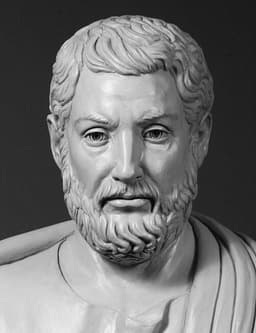
Cleisthenes of Athens
Politician · Ancient
68.5Total

Napoleon Bonaparte
General · Modern
70.9Total
Basic Information
Born
-570
1769
Died
-508
1821
Era
Ancient
Modern
Nationality
Athens
France
Occupation
Politician
General
Civilization
Western
Western
Score Comparison
Military (10%)
50.0
94.0
Political (20%)
62.7
72.0
Influence (20%)
80.0
40.0
Legacy (20%)
82.0
80.0
Leadership (15%)
62.0
78.0
Strategy (15%)
42.7
90.0
TOTAL
68.5
70.9
Cleisthenes of Athens — Complete Timeline
508 BC
Reform of the Athenian Tribes (Cleisthenes' Reforms)Reform
Cleisthenes reorganized the Athenian citizen body into ten new tribes based on demes (local districts), replacing the old four Ionian tribes. This broke the power of aristocratic clans and created a new political structure that formed the basis of Athenian democracy.
DemocracyPolitical ReformAthens
Impact: globalprogressive
Introduction of OstracismReform◆ Major
Cleisthenes introduced the practice of ostracism, allowing citizens to vote annually to exile a prominent figure for ten years. This mechanism was designed to prevent tyranny and remove threats to democracy. The first ostracism occurred in 487 BC.
DemocracyPolitical ReformExile
Impact: globalprogressive
Creation of the Council of 500 (Boule)Reform◆ Major
Cleisthenes established the Boule, a council of 500 citizens (50 from each tribe) chosen by lot. This body prepared legislation for the Assembly and oversaw daily administration. It replaced the aristocratic Areopagus as the main governing body, expanding citizen participation.
DemocracyPolitical ReformGovernment
Impact: globalprogressive
Exile of Isagoras and Spartan InterventionPolitical Action◆ Major
Cleisthenes' rival Isagoras called on Spartan king Cleomenes I to intervene in Athens. The Spartans expelled Cleisthenes and attempted to dissolve the Boule, but the Athenian people revolted, besieging the Acropolis and forcing the Spartans to withdraw. Cleisthenes was recalled.
Spartan InterventionDemocracyAthens
Impact: nationalconstructive
Napoleon Bonaparte — Complete Timeline
1799 AD
Coup of 18 BrumaireOther◆ Major
Napoleon Bonaparte, with support from his brother Lucien and key political figures, overthrew the Directory in a bloodless coup. He established the Consulate with himself as First Consul, effectively becoming the ruler of France. This event ended the French Revolution's most unstable period.
French RevolutionCoupRise to Power
Impact: regional
1804 AD
Promulgation of the Napoleonic CodeOther◆ Major
Napoleon enacted the Civil Code of the French, known as the Napoleonic Code, a comprehensive set of laws that replaced the fragmented feudal legal systems. The code established legal equality, protected property rights, and secularized law. It became the basis for legal systems in many European and world countries.
Legal ReformNapoleonic CodeCivil Law
Impact: globalconstructive
1805 AD
Battle of AusterlitzWar◆ Major
Napoleon's Grande Arm
Napoleonic WarsBattleDecisive Victory
Impact: global
1812 AD
Invasion of RussiaWar◆ Major
Napoleon led the Grande Arm
Napoleonic WarsInvasionDisaster
Impact: globaldestructive
1815 AD
Battle of WaterlooWar◆ Major
Napoleon's French army was defeated by the combined forces of the Duke of Wellington's Anglo-Allied army and Gebhard Leberecht von Bl
Napoleonic WarsBattleFinal Defeat
Impact: globaldestructive
Expert Analysis
cleisthenes-of-athens-vs-napoleon-bonaparte
# The Architect of Power and the Father of Democracy
On a sun-baked Athenian hillside in 508 BC, a reformer named Cleisthenes watched as citizens cast their votes—not for a leader, but for the fate of one. Ostracism, his invention, allowed the people to exile a powerful figure for a decade. Across the centuries, in the snow of a Russian winter, another man watched his Grand Army disintegrate, undone by the very ambition that had once made him master of Europe. Cleisthenes and Napoleon Bonaparte never met, never corresponded, yet both reshaped the Western world. One built a system that empowered the many; the other built an empire that depended on the one. What drove these two men to such different ends?
Origins
Cleisthenes was born around 570 BC into the aristocratic Alcmaeonid family of Athens—a clan of wealth, influence, and political volatility. His era was one of fragile transitions: Athens was emerging from the tyranny of Peisistratus and his sons, and the old nobility still fought for control. Cleisthenes grew up in a world where power was personal, inherited, and brutal. His family had been exiled more than once, and he understood that stability required more than a strongman.
Napoleon Bonaparte, born in 1769 on the island of Corsica, came from a different kind of turbulence—the dying embers of an old regime and the explosive birth of a new one. His family was minor nobility, but Corsica had only recently become French, and young Napoleon spoke Italian-accented French that marked him as an outsider. While Cleisthenes inherited a tradition of political reform, Napoleon inherited a world of revolution. The French Revolution had toppled kings and opened paths for talent over birth. For a brilliant, ambitious young man with a gift for mathematics and artillery, the timing could not have been more perfect.
Rise to Power
Cleisthenes rose not through conquest but through coalition. After the fall of the tyrant Hippias in 510 BC, Athens struggled between rival factions. Cleisthenes’ opponent, Isagoras, called on the Spartan king Cleomenes I to intervene—a dangerous move that briefly sent Cleisthenes into exile. But the Athenian people, weary of foreign interference and aristocratic infighting, rallied. They recalled Cleisthenes, and with popular support, he returned to power in 508 BC. His authority came not from an army but from a mandate.
Napoleon’s ascent was a firestorm. In 1796, at age twenty-six, he took command of the French army in Italy and turned a starving, demoralized force into a victorious one. His lightning campaigns shattered Austrian power and made him a national hero. By 1799, he staged a coup d’état and became First Consul. Five years later, he crowned himself Emperor. Where Cleisthenes waited for the people to call him back, Napoleon seized every opportunity. The difference was not merely temperament—it was opportunity. Cleisthenes lived in a city-state where power was negotiated; Napoleon lived in a nation where power was seized.
Leadership & Governance
Cleisthenes’ genius was structural. He reorganized the Athenian citizen body into ten new tribes based on local districts called demes, breaking the old aristocratic clans’ stranglehold on politics. He created the Council of 500 (the Boule), chosen by lot—fifty citizens from each tribe—to prepare legislation for the Assembly. He introduced ostracism, a peaceful mechanism to defuse factional conflict. These reforms were not about accumulating power for himself but about distributing it. As the historian Aristotle later noted, Cleisthenes “established the democracy.”
Napoleon’s governance was the opposite: centralized, efficient, and personal. His Napoleonic Code standardized French law, abolished feudal privileges, and enshrined meritocracy. He built schools, roads, and a modern bureaucracy. But every reform served the state, and the state served him. His political score of 75.0 reflects a ruler who could organize but not share power. His military score of 94.0 and strategy score of 93.0 tell the rest: he was a conqueror first. Where Cleisthenes built institutions to outlast any individual, Napoleon built a system that collapsed when he fell.
Triumph & Tragedy
Cleisthenes’ greatest moment was not a battle but a birth. His reforms of 508 BC gave Athens the democratic framework that would, in the next century, produce the Golden Age of Pericles, the tragedies of Sophocles, and the philosophy of Socrates. His tragedy was personal: after his reforms were enacted, he largely disappears from the historical record. He may have been ostracized himself—the ultimate irony for the father of ostracism. Yet his system endured.
Napoleon’s triumph was a continent at his feet. After Austerlitz in 1805, he redrew the map of Europe, placed relatives on thrones, and seemed invincible. His tragedy was his own making. The invasion of Russia in 1812 cost hundreds of thousands of lives and shattered his Grand Army. Exiled to Elba, he returned for a hundred days, only to meet final defeat at Waterloo in 1815. He died in 1821 on Saint Helena, a prisoner. His political score of 75.0 and legacy score of 78.0 reflect a man who achieved greatness but could not sustain it.
Character & Destiny
Cleisthenes appears to have been patient, calculating, and self-effacing. He did not seek to become a tyrant; he sought to make tyranny unnecessary. His reforms suggest a man who trusted the collective judgment of ordinary citizens—a radical idea for his time.
Napoleon was restless, brilliant, and insatiable. “Power is my mistress,” he once said. His character drove him to conquer, but also to overreach. He could not stop. His leadership score of 80.0 and strategy score of 93.0 show a mind that could plan a campaign but not a peace. Cleisthenes built a house for many; Napoleon built a monument to one.
Legacy
Cleisthenes is remembered as the father of Athenian democracy, an influence that echoes through every modern republic. His reforms laid the groundwork for the idea that citizens, not kings, should rule. His legacy score of 89.9 is the highest of his metrics—a fitting tribute to a man who gave power away.
Napoleon’s legacy is more ambiguous. He spread revolutionary ideals across Europe—equality before the law, meritocracy, secular governance—but he did so at the point of a bayonet. His military innovations influenced warfare for a century. His code influenced legal systems worldwide. Yet his name is also synonymous with tyranny and hubris. His total score of 82.4 reflects a complex figure: a genius who built and destroyed in equal measure.
Conclusion
Standing back, the contrast is stark. Cleisthenes, born into aristocratic privilege, used his position to dismantle privilege itself. Napoleon, born into modest nobility, used his talent to build an empire that ultimately consumed him. One man’s work required no monuments—only a voting booth. The other’s required armies, coronations, and a tomb at Les Invalides. Perhaps the deepest difference lies not in their actions but in their vision: Cleisthenes saw the future as a place where power was shared; Napoleon saw it as a prize to be won. In the end, the father of democracy gave the world a system. The emperor gave the world a lesson.
Rankings
🥇
Napoleon BonaparteLeader
Mil: 94.0Pol: 72.0Inf: 40.0
70.9
🥈
Cleisthenes of Athens
Mil: 50.0Pol: 62.7Inf: 80.0
68.5
+2.4 behind
How This Comparison Works
Algorithm
Each figure is scored on 6 dimensions (0—100 scale) based on structured historical data: Military (10%), Political (20%), Influence (20%), Legacy (20%), Leadership (15%), Strategy (15%). The weighted total produces the final ranking.
Data Sources
Scores are computed from structured sub-indicators in the database. Scale factors adjust for era (Ancient ×0.85, Modern ×1.0) and civilization size (Eastern ×1.05, Other ×0.80) to account for differences in population and military scale.
Maximum 3 Figures
Comparisons are limited to 2—3 figures to ensure readability and statistical meaningfulness.
Error Margins
±5 points per dimension — Sub-scores are derived from historical records with inherent uncertainty. Two figures within 5 points on a dimension should be considered roughly equivalent in that area.
Total Score Accuracy
±3 points overall — The weighted combination of 6 dimensions produces a total score with approximately ±3 points of uncertainty. Differences of less than 3 points are not statistically significant— the figures are effectively tied.
Known Limitations
- Historical records are incomplete and uneven across civilizations
- Figures from oral-tradition societies may be underrepresented
- Occupation labels can misclassify multi-role figures
- Scores measure capability and impact, not moral character
- Quantitative scoring is a comparison tool, not absolute truth
Capability Radar
Military (10%) — Battles & Warfare
Battles
22
95
Win Rate
27
90
Expansion
28
95
Political (20%) — Governance & Reform
Reform
95
95
Diplomacy
70
80
Economy
40
85
Influence (20%) — Cultural & Global Reach
Cultural
85
85
Global
80
90
Legacy (20%) — Historical Impact
Historical
90
95
Longevity
95
90
Leadership (15%) — Power & Stability
Tenure
30
85
Stability
60
70
Strategy (15%) — Tactics & Innovation
Strategy
35
95
Tactics
34
98
Reform
40
92
Similar Comparisons
Comments & Discussion
No comments yet. Be the first to share your thoughts!