Loading...
Alcide De Gasperi vs Cleisthenes of Athens
Cleisthenes of Athens leads by 13.0 pts · 2 figures compared
…
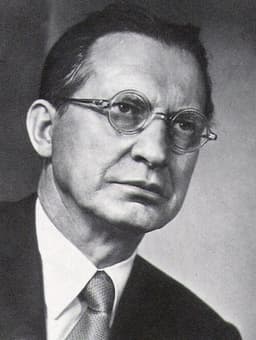
Alcide De Gasperi
Politician · Modern
55.5Total
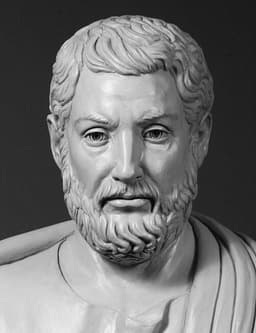
Cleisthenes of Athens
Politician · Ancient
68.5Total
Basic Information
Born
1881
-570
Died
1954
-508
Era
Modern
Ancient
Nationality
Italy
Athens
Occupation
Politician
Politician
Civilization
Western
Western
Score Comparison
Military (10%)
12.4
50.0
Political (20%)
85.0
62.7
Influence (20%)
65.0
80.0
Legacy (20%)
40.0
82.0
Leadership (15%)
80.7
62.0
Strategy (15%)
31.5
42.7
TOTAL
55.5
68.5
Alcide De Gasperi — Complete Timeline
1946 AD
First Prime Minister of the Italian RepublicPolitical Action
De Gasperi became the first prime minister of the newly proclaimed Italian Republic in December 1945. He led a coalition government that included Christian Democrats, Socialists, and Communists. His government oversaw the transition from monarchy to republic.
RepublicGovernmentTransition
Impact: nationalconstructive
1947 AD
Peace Treaty of ParisPolitical Action◆ Major
De Gasperi signed the Treaty of Paris, which formally ended World War II for Italy. Italy lost its colonies, ceded territory to Yugoslavia and France, and paid reparations. The treaty was unpopular but allowed Italy to regain sovereignty and join the Western alliance.
TreatyWorld War IIDiplomacy
Impact: global
Expulsion of Communists from GovernmentPolitical Action
De Gasperi expelled the Italian Communist Party and Socialist Party from his coalition government in May 1947. This move aligned Italy with the United States and the Marshall Plan, deepening the Cold War divide. It solidified Christian Democratic dominance for decades.
Cold WarMarshall PlanCoalition
Impact: global
1949 AD
Italian Membership in NATOPolitical Action◆ Major
De Gasperi led Italy into the North Atlantic Treaty Organization (NATO) as a founding member. This decision anchored Italy in the Western bloc during the Cold War and secured U.S. military and economic support. It was opposed by the Communist Party.
NATOCold WarAlliance
Impact: globalconstructive
Cleisthenes of Athens — Complete Timeline
508 BC
Reform of the Athenian Tribes (Cleisthenes' Reforms)Reform
Cleisthenes reorganized the Athenian citizen body into ten new tribes based on demes (local districts), replacing the old four Ionian tribes. This broke the power of aristocratic clans and created a new political structure that formed the basis of Athenian democracy.
DemocracyPolitical ReformAthens
Impact: globalprogressive
Introduction of OstracismReform◆ Major
Cleisthenes introduced the practice of ostracism, allowing citizens to vote annually to exile a prominent figure for ten years. This mechanism was designed to prevent tyranny and remove threats to democracy. The first ostracism occurred in 487 BC.
DemocracyPolitical ReformExile
Impact: globalprogressive
Creation of the Council of 500 (Boule)Reform◆ Major
Cleisthenes established the Boule, a council of 500 citizens (50 from each tribe) chosen by lot. This body prepared legislation for the Assembly and oversaw daily administration. It replaced the aristocratic Areopagus as the main governing body, expanding citizen participation.
DemocracyPolitical ReformGovernment
Impact: globalprogressive
Exile of Isagoras and Spartan InterventionPolitical Action◆ Major
Cleisthenes' rival Isagoras called on Spartan king Cleomenes I to intervene in Athens. The Spartans expelled Cleisthenes and attempted to dissolve the Boule, but the Athenian people revolted, besieging the Acropolis and forcing the Spartans to withdraw. Cleisthenes was recalled.
Spartan InterventionDemocracyAthens
Impact: nationalconstructive
Expert Analysis
Alcide De Gasperi vs Cleisthenes of Athens
### The Architect and the Founder
In the winter of 508 BC, an exiled Athenian politician named Cleisthenes watched from a distance as Spartan soldiers marched into his city, sent by his rival Isagoras. Within a few years, he would return, not merely to reclaim power, but to redraw the entire map of Athenian society. More than two millennia later, in the spring of 1947, another politician, Alcide De Gasperi, sat in a Roman office and made a cold calculation: to save his fragile republic, he had to break with the Communists who had helped him win the war. One man invented democracy; the other saved it from its own internal fractures. Both were founders, but their worlds, their tools, and their tragedies could not have been more different.
### Origins
Cleisthenes was born into the aristocratic Alcmaeonid clan of Athens around 570 BC, a family that had already endured exile and political violence. His lineage was both a blessing and a curse: it gave him wealth and connections, but also made him a target in the vicious factional struggles that defined archaic Athens. The city was then a collection of feuding noble families, each controlling rural districts and peasant clients. Cleisthenes grew up in a world where power was personal, not institutional.
Alcide De Gasperi emerged from an entirely different landscape. Born in 1881 in the Trentino region of the Austro-Hungarian Empire, he was the son of a local tax collector. His world was one of empires, nationalisms, and the emerging Catholic social movement. Raised in a multilingual borderland, De Gasperi learned early the arts of negotiation and survival. While Cleisthenes inherited a sword, De Gasperi inherited a catechism and a newspaper.
### Rise to Power
Cleisthenes entered politics at a moment of crisis. Around 510 BC, the tyrant Hippias was expelled from Athens, and the city fell into a power vacuum. Cleisthenes initially competed for influence against Isagoras, a rival aristocrat. When Isagoras called in Spartan king Cleomenes I to expel his enemies, Cleisthenes was forced into exile. But he did something unexpected: instead of rallying his own noble faction, he appealed to the common people—the *demos*. He promised them a share of power. In 508 BC, the Athenian populace rose up, besieged the Spartans on the Acropolis, and forced Isagoras to flee. Cleisthenes returned not as a tyrant, but as a reformer.
De Gasperi’s path was slower and more bureaucratic. He entered the Austrian parliament in 1911 as a deputy for the Italian minority, advocating for autonomy. After World War I, his native Trentino became part of Italy, and he joined the new Italian People’s Party. Under Mussolini’s fascist regime, De Gasperi was arrested and spent time in prison. He survived by hiding in the Vatican library, studying and waiting. In 1945, after the fall of Mussolini and the end of the war, the Allies and Italian anti-fascists turned to the 64-year-old Catholic as a safe pair of hands. He became Prime Minister in December 1945, a man shaped by decades of opposition.
### Leadership & Governance
The differences in their governing styles are stark. Cleisthenes was a radical institutional architect. In a single, breathtaking reform in 508 BC, he reorganized the entire Athenian citizen body into ten new tribes, each composed of demes (local districts) from different regions. This broke the power of the old noble families, who could no longer rely on geographic loyalties. He then created the Council of 500 (the Boule), chosen by lot, to prepare legislation, and introduced ostracism—a democratic safety valve that allowed citizens to vote to exile a dangerous politician for ten years. Cleisthenes did not rule; he built a machine that could rule itself.
De Gasperi governed in the age of mass parties and Cold War polarization. His leadership was one of patient coalition-building. He led four successive governments from 1945 to 1953, each a delicate balancing act among Christian Democrats, Socialists, Republicans, and Liberals. His most decisive act came in May 1947, when he expelled the Italian Communist Party and the Socialist Party from his coalition. This was not a coup but a calculated political surgery. He then signed the Peace Treaty of Paris, accepting harsh terms—loss of colonies, reparations—to secure Italy’s return to the international community. In 1949, he took Italy into NATO, anchoring the country firmly in the Western alliance.
Where Cleisthenes used law to fragment power, De Gasperi used diplomacy to consolidate it.
### Triumph & Tragedy
Cleisthenes’ greatest moment was the creation of the Athenian democracy itself. The reforms of 508 BC gave ordinary citizens—farmers, artisans, rowers—a voice in governance for the first time in history. His tragedy was personal: after his reforms were enacted, he vanished from the historical record. We do not know if he died in obscurity, exiled again, or simply retired. The father of democracy became a ghost in his own city.
De Gasperi’s triumph was the reconstruction of Italy. From the rubble of fascism and war, he built a functioning republic, a growing economy, and a respected place in Europe. His tragedy was political: in the 1953 election, his coalition fell short of the majority needed to pass electoral reform. He resigned, and within a year, he was dead. He died in 1954, a quiet man in a noisy world, his work incomplete but his foundation solid.
### Character & Destiny
Cleisthenes was bold, visionary, and willing to gamble everything on the common people. His personality was that of a revolutionary aristocrat—a man who saw that the old order was dying and chose to leap into the future. De Gasperi was cautious, devout, and methodical. He once said, “Politics is the art of the possible.” Where Cleisthenes dreamed of a new Athens, De Gasperi worried about a stable Italy.
Their different fates reflect their eras. Cleisthenes lived in a world of small city-states where one man’s idea could reshape a civilization. De Gasperi lived in a world of industrial nations and ideological blocs, where survival depended on alliances and patience. Cleisthenes created the first democracy; De Gasperi saved the last one from falling into a Soviet orbit.
### Legacy
Cleisthenes is remembered as the “Father of Athenian Democracy,” a title earned not by ruling but by designing. His reforms influenced the founders of modern democracies, from the American revolutionaries to nineteenth-century liberals. Yet his name is less known than Pericles or Socrates, precisely because his work was structural, not dramatic.
De Gasperi is one of the “founding fathers” of the European Union, alongside Schuman and Adenauer. His legacy is the Italian Republic itself, and the European project that grew from the ashes of war. In Italy, he is revered but not romanticized—a steady hand, not a flash of lightning.
### Conclusion
One man invented the ballot; the other used it to rebuild a nation. Cleisthenes broke the power of the few to empower the many; De Gasperi broke the power of the mob to save the many from themselves. Both were founders, but they faced opposite dangers: the first fought aristocracy, the second fought anarchy. In the end, they remind us that democracy is never finished. It must be invented, and then reinvented, generation after generation.
Rankings
🥇
Cleisthenes of AthensLeader
Mil: 50.0Pol: 62.7Inf: 80.0
68.5
🥈
Alcide De Gasperi
Mil: 12.4Pol: 85.0Inf: 65.0
55.5
+13.0 behind
How This Comparison Works
Algorithm
Each figure is scored on 6 dimensions (0—100 scale) based on structured historical data: Military (10%), Political (20%), Influence (20%), Legacy (20%), Leadership (15%), Strategy (15%). The weighted total produces the final ranking.
Data Sources
Scores are computed from structured sub-indicators in the database. Scale factors adjust for era (Ancient ×0.85, Modern ×1.0) and civilization size (Eastern ×1.05, Other ×0.80) to account for differences in population and military scale.
Maximum 3 Figures
Comparisons are limited to 2—3 figures to ensure readability and statistical meaningfulness.
Error Margins
±5 points per dimension — Sub-scores are derived from historical records with inherent uncertainty. Two figures within 5 points on a dimension should be considered roughly equivalent in that area.
Total Score Accuracy
±3 points overall — The weighted combination of 6 dimensions produces a total score with approximately ±3 points of uncertainty. Differences of less than 3 points are not statistically significant— the figures are effectively tied.
Known Limitations
- Historical records are incomplete and uneven across civilizations
- Figures from oral-tradition societies may be underrepresented
- Occupation labels can misclassify multi-role figures
- Scores measure capability and impact, not moral character
- Quantitative scoring is a comparison tool, not absolute truth
Capability Radar
Military (10%) — Battles & Warfare
Battles
11
22
Win Rate
15
27
Expansion
17
28
Political (20%) — Governance & Reform
Reform
85
95
Diplomacy
80
70
Economy
70
40
Influence (20%) — Cultural & Global Reach
Cultural
60
85
Global
65
80
Legacy (20%) — Historical Impact
Historical
70
90
Longevity
65
95
Leadership (15%) — Power & Stability
Tenure
75
30
Stability
75
60
Strategy (15%) — Tactics & Innovation
Strategy
21
35
Tactics
23
34
Reform
27
40
Similar Comparisons
Comments & Discussion
DemosHammer6/16/2026
Cleisthenes was a political engineer of genius, but calling him the "inventor of democracy" is Greek exceptionalism at its worst. He didn't invent demokratia from nothing—he codified and weaponized existing tribal reforms to break aristocratic power. His real innovation was the deme system, which diluted clan loyalties by scrambling citizens into artificial local units. That’s not creation ex nihilo; that’s gerrymandering with a humanist face. De Gasperi, by contrast, actually built a functional
斯巴达之眼6/16/2026
说克莱斯提尼“发明民主”,完全是雅典学阀的浪漫叙事。真实历史是,他只是在部落制底版上画了新棋盘。他的五百人议事会抽签制听着美,但全雅典只有不到三成人口有公民权——女人、奴隶、外邦人被排除在外。这算哪门子创始?德加斯佩里至少面对过真正的普选困境。拿公元前5世纪的贵族政变跟冷战时期的政党博弈相提并论,好比拿木犁比拖拉机,维度根本不对。
DataScalpel6/16/2026
The comparison is structurally clever but historically shallow. De Gasperi’s 1947 expulsion of the PCI was a cold survival calculation—he needed Marshall Plan cash and knew Togliatti’s Communists would drag Italy into Stalin’s orbit. Cleisthenes’ reforms were grounded in something messier: a desperate attempt to win popular support against Spartan-backed oligarchs. One is realpolitik with clear motives; the other is a gamble where we’ve filled in the gaps with democratic teleology. We’re compari
阿尔卑斯樵夫6/16/2026
德加斯佩里不是简单的“拯救民主”,他是个精明的政治马贩子。1947年把共产党踢出政府,根本原因是他嗅到了美国援助的气息——没有马歇尔计划,意大利早就崩了。他跟克莱斯提尼最像的地方在于:两人都懂得利用外部压力重塑内部格局。克莱斯提尼借斯巴达内乱推行改革,德加斯佩里借冷战铁幕清洗左翼。本质都是墙头草,只不过历史懒得记他们的狼狈。
AgoraGhost6/16/2026
The real irony is that both reformers inadvertently created the conditions for their own side’s eventual decline. Cleisthenes’ demes gave Athens ten equal tribes, but those new units became patronage machines for ambitious generals like Pericles. De Gasperi’s Catholic party built a 40-year dominance on anti-communism, then collapsed when the threat vanished. Founders design systems; they rarely anticipate how those systems will eat their own children. Cleisthenes died in exile, De Gasperi in rel