Loading...
Chiang Kai-shek vs William Pitt the Elder
William Pitt the Elder leads by 9.6 pts · 2 figures compared
…
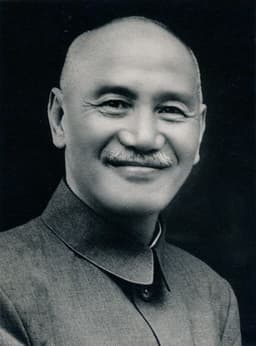
Chiang Kai-shek
Politician · Modern
60.6Total
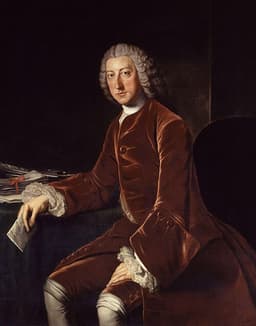
William Pitt the Elder
Politician · Modern
70.2Total
Basic Information
Born
1887
1708
Died
1975
1778
Era
Modern
Modern
Nationality
China
United Kingdom
Occupation
Politician
Politician
Civilization
Eastern
Western
Score Comparison
Military (10%)
70.0
67.3
Political (20%)
62.7
72.0
Influence (20%)
65.0
68.0
Legacy (20%)
52.0
68.0
Leadership (15%)
66.0
80.0
Strategy (15%)
50.0
67.2
TOTAL
60.6
70.2
Chiang Kai-shek — Complete Timeline
1926 AD
Northern ExpeditionWar◆ Major
Chiang Kai-shek led the National Revolutionary Army in the Northern Expedition to defeat warlords and unify China. The campaign succeeded in capturing Beijing and establishing Kuomintang control over most of the country.
UnificationMilitary campaign
Impact: national
1927 AD
Shanghai Massacre of 1927Political Action◆ Major
Chiang Kai-shek ordered the purge of communists and leftists in Shanghai, resulting in thousands of deaths. This event broke the First United Front between the Kuomintang and the Communist Party, leading to civil war.
PurgeCivil war
Impact: nationaldestructive
1937 AD
Leadership during the Second Sino-Japanese WarWar
Chiang Kai-shek, as leader of the Kuomintang, commanded Chinese forces during the Second Sino-Japanese War. He directed the defense of Shanghai and the relocation of the capital to Chongqing, maintaining resistance against Japan.
World War IIChinese resistance
Impact: global
1945 AD
Signing of the Sino-Soviet Treaty of 1945Political Action◆ Major
Chiang Kai-shek signed the Sino-Soviet Treaty of Friendship and Alliance, which recognized Soviet interests in Manchuria in exchange for Soviet support against Japan. The treaty later facilitated Communist gains in the civil war.
DiplomacySoviet Union
Impact: global
1949 AD
Retreat to TaiwanPolitical Action
After losing the Chinese Civil War to the Communists, Chiang Kai-shek retreated to Taiwan with the remnants of the Kuomintang government and military. He established the Republic of China on Taiwan, claiming legitimacy over all of China.
TaiwanExileCold War
Impact: globaltragic
William Pitt the Elder — Complete Timeline
1756 AD
Led Britain in Seven Years' WarWar
William Pitt the Elder served as Secretary of State from 1756 to 1761, directing British strategy in the Seven Years' War. His policies focused on naval supremacy and colonial campaigns, leading to victories in Canada, India, and the Caribbean.
Seven Years' WarColonial EmpireMilitary Strategy
Impact: global
1759 AD
Conquest of QuebecWar◆ Major
Under Pitt's direction, British forces under General James Wolfe captured Quebec City on September 13, 1759, after the Battle of the Plains of Abraham. This victory secured British control over Canada and marked a turning point in the Seven Years' War.
Seven Years' WarCanadaMilitary Victory
Impact: global
1766 AD
Became Prime MinisterPolitical Action
Pitt was appointed Prime Minister on July 30, 1766, forming a government. However, his health declined and he was elevated to the House of Lords as Earl of Chatham, which weakened his political base. His second ministry was less effective than his wartime leadership.
Prime MinisterGovernment18th Century
Impact: national
Opposed American TaxationPolitical Action◆ Major
Pitt argued for the repeal of the Stamp Act in 1766, asserting that Parliament had no right to tax the American colonies without representation. His speech in the Commons helped secure repeal, though he maintained Parliament's authority to legislate for the colonies.
American ColoniesTaxationParliamentary Debate
Impact: global
Expert Analysis
Chiang Kai-shek vs William Pitt the Elder
The Commoner and the Generalissimo
In the winter of 1949, a defeated man boarded a plane on the mainland of China and flew to an island he would never leave. Chiang Kai-shek, once the undisputed leader of four hundred million people, now ruled only Taiwan. Thirty years earlier, and half a world away, another leader had watched his nation rise from humiliation to global dominance. William Pitt the Elder died in 1778 with Britain at the height of its imperial power, his name synonymous with victory. Why did one man’s story end in triumph and the other’s in exile? The answer lies not in the stars, but in the soil of their birth—and the storms they chose to ride.
Origins
Chiang Kai-shek was born in 1887, in the twilight of the Qing Dynasty, a world of crumbling temples and foreign gunboats. He grew up in a China humiliated by opium wars and unequal treaties. His father died when he was nine, and his mother, a devout Buddhist, scraped together money for his education. He entered a military academy in Japan, absorbing the harsh discipline of bushido and the revolutionary fervor of Sun Yat-sen. This was a man forged in chaos, who learned that power came from the barrel of a gun and that trust was a luxury no leader could afford.
William Pitt the Elder, born in 1708, was the grandson of a governor of Madras. He grew up in an England already confident in its constitutional monarchy and expanding empire. His father was a wealthy merchant, his mother the daughter of a baronet. Pitt attended Eton and Oxford, but left without a degree, plagued by gout and a restless ambition. He entered Parliament as a young man, a brilliant orator in a system run by patronage. Unlike Chiang, who learned to fight in the shadows, Pitt learned to persuade in the open.
Rise to Power
Chiang’s path was forged in blood. In 1926, he led the Northern Expedition, a military campaign to crush the warlords who had carved up China after the fall of the empire. He was not a great tactician, but he was a master of coalition-building, bribing some enemies and crushing others. Then came the Shanghai Massacre of 1927. In a single week, he ordered the execution of thousands of communists and leftists, purging his allies to secure absolute control. It was a brutal, decisive act—and it sowed seeds of hatred that would bloom into civil war.
Pitt’s rise was quieter, but no less ruthless. He entered Parliament in 1735 and immediately attacked the government of Robert Walpole, calling him a “screen of iniquity.” His speeches were thunderous, his attacks personal. He was dismissed from the army for his criticisms, but he turned exile into a badge of honor, calling himself the “Great Commoner.” He waited. When the Seven Years’ War broke out in 1756, Britain was losing badly. King George II, desperate, turned to the man who had been right all along. Pitt became Secretary of State, not Prime Minister—but he was the real power.
Leadership & Governance
Chiang’s leadership was a paradox. He was a brilliant organizer of armies, but a poor governor of men. During the Second Sino-Japanese War from 1937 to 1945, he commanded the largest army in Asia, fighting a desperate war of attrition against Japan. He moved the capital to Chongqing, endured bombing, and kept China in the fight. But his rule was corrupt, his generals often more loyal to themselves than to him. He hoarded American aid, fought the communists even while fighting the Japanese, and allowed inflation to ravage the economy. He was a warlord who became a statesman, but never stopped thinking like a warlord.
Pitt governed by vision and delegation. He understood that Britain’s global empire depended on sea power and colonial alliances. He poured money into the Royal Navy, subsidized Frederick the Great of Prussia to keep France busy in Europe, and sent expeditions to capture French colonies in India, Africa, and North America. The conquest of Quebec in 1759, under General James Wolfe, was his masterpiece. He chose the right men and gave them the resources. He was not a micromanager—he was a strategist. He saw the world as a chessboard, and he moved pieces with a clarity Chiang never possessed.
Triumph & Tragedy
Chiang’s greatest moment was also his greatest tragedy. He stood against Japan, and he did not surrender. But the war exhausted him, and when it ended in 1945, his regime was hollow. The Sino-Soviet Treaty of 1945, which recognized Soviet interests in Manchuria, was a desperate gamble that backfired. Stalin turned around and handed the captured Japanese weapons to Mao Zedong. By 1949, Chiang’s armies collapsed, and he fled to Taiwan. He had unified China, but only to lose it.
Pitt’s triumph was the Treaty of Paris in 1763, which gave Britain Canada, Florida, and control of India. He had turned a struggling nation into the world’s dominant power. But his tragedy came later. In 1766, he became Prime Minister, but his health was shattered by gout and mental instability. He opposed taxing the American colonies, arguing for the repeal of the Stamp Act, but could not stop the drift toward revolution. He died in 1778, watching the empire he built begin to fracture.
Character & Destiny
Chiang was rigid, suspicious, and deeply Confucian. He believed in order, hierarchy, and the supremacy of the Chinese nation. But he could not adapt. He tried to fight a modern war with medieval loyalties, and he could not forgive his enemies—or trust his allies. His personality was his prison.
Pitt was arrogant, theatrical, and prone to depression. But he had a gift for inspiration. He spoke to the British people, not just to Parliament. He believed in liberty, even if it was a liberty that served British interests. He could compromise, delegate, and wait. His personality was a weapon.
Legacy
Chiang Kai-shek is remembered in Taiwan as a founding father, his face on every coin and his statue in every square. On the mainland, he is a footnote—the man who lost China. His legacy is a divided nation, a civil war that never ended, and a cautionary tale about the limits of military power.
William Pitt the Elder is remembered as the architect of the British Empire, the man who made “Rule Britannia” real. His name is on streets, schools, and a city in Pennsylvania. His legacy is a global language, a legal system, and a set of institutions that outlasted his empire.
Conclusion
One man built an empire; the other lost a nation. But both were prisoners of their times. Chiang Kai-shek could not escape the chaos of a dying dynasty, and William Pitt the Elder could not escape the arrogance of a rising one. History rewards those who understand the moment they live in—and punishes those who try to fight the future. In the end, the difference between triumph and tragedy is not strength or wisdom, but the simple, cruel accident of being born in the right place at the right time.
Rankings
🥇
William Pitt the ElderLeader
Mil: 67.3Pol: 72.0Inf: 68.0
70.2
🥈
Chiang Kai-shek
Mil: 70.0Pol: 62.7Inf: 65.0
60.6
+9.6 behind
How This Comparison Works
Algorithm
Each figure is scored on 6 dimensions (0—100 scale) based on structured historical data: Military (10%), Political (20%), Influence (20%), Legacy (20%), Leadership (15%), Strategy (15%). The weighted total produces the final ranking.
Data Sources
Scores are computed from structured sub-indicators in the database. Scale factors adjust for era (Ancient ×0.85, Modern ×1.0) and civilization size (Eastern ×1.05, Other ×0.80) to account for differences in population and military scale.
Maximum 3 Figures
Comparisons are limited to 2—3 figures to ensure readability and statistical meaningfulness.
Error Margins
±5 points per dimension — Sub-scores are derived from historical records with inherent uncertainty. Two figures within 5 points on a dimension should be considered roughly equivalent in that area.
Total Score Accuracy
±3 points overall — The weighted combination of 6 dimensions produces a total score with approximately ±3 points of uncertainty. Differences of less than 3 points are not statistically significant— the figures are effectively tied.
Known Limitations
- Historical records are incomplete and uneven across civilizations
- Figures from oral-tradition societies may be underrepresented
- Occupation labels can misclassify multi-role figures
- Scores measure capability and impact, not moral character
- Quantitative scoring is a comparison tool, not absolute truth
Capability Radar
Military (10%) — Battles & Warfare
Battles
75
60
Win Rate
35
75
Expansion
65
80
Political (20%) — Governance & Reform
Reform
55
75
Diplomacy
60
80
Economy
40
70
Influence (20%) — Cultural & Global Reach
Cultural
60
60
Global
65
75
Legacy (20%) — Historical Impact
Historical
70
80
Longevity
55
70
Leadership (15%) — Power & Stability
Tenure
85
70
Stability
30
65
Strategy (15%) — Tactics & Innovation
Strategy
60
85
Tactics
55
65
Reform
50
70
Similar Comparisons
Comments & Discussion
湾湾守望者6/16/2026
老蒋败就败在脱离群众,当年在台湾搞白色恐怖,镇压了多少本省人?反观小皮特,就算打仗也知道用海军封锁这种巧劲。老蒋那套军阀作风,拿到现代政治里就是笑话。历史早就判了:空有美械没有民心,注定去小岛当土皇帝。|
HistoryHacker6/16/2026
The comparison is fundamentally flawed - Pitt inherited a mature imperial machine while Chiang had to forge a modern nation from scratch. Pitt never faced simultaneous communist insurgency AND Japanese invasion. It's like comparing a pilot landing a perfectly maintained plane to one whose cockpit is literally on fire. Context matters more than personality.|
数字拆解师6/16/2026
光比GDP就有意思了:1756年英国人均GDP约$1,600,而1945年中国只有$500。但老蒋拿到的美援是皮特时期军费的30倍!钱花了却养出四大家族贪污体系。数据骗子们总爱扯战略,要我说就是资源利用率太差,同样是一战英国30%的国债用于海军,老蒋70%的军费却进了自己腰包。|
RevisionistPaul6/16/2026
Stop romanticizing Pitt's "glorious victories." He was the architect of the Bengal famine that killed 10 million Indians in 1770 - that's more than the entire Chinese civil war death toll on both sides! Chiang's atrocities are rightly condemned, but let's not pretend Pitt's success wasn't built on mass starvation and colonial exploitation. Both were ruthless warlords, just with different PR teams.|
古典军事控6/16/2026
皮特那套全球战略放在20世纪早过时了!他当年吹的"美洲用殖民地税养军队,印度用公司利润建海军"在核武器面前就是笑话。老蒋败在天真,榆林港和定海明明能建第二舰队,却把钱全砸陆军。要学皮特就该学他"以海制陆",而不是在山沟里打消耗战!