Loading...
Chiang Kai-shek vs Mao Zedong
Mao Zedong leads by 18.8 pts · 2 figures compared
…
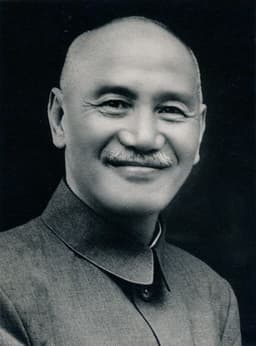
Chiang Kai-shek
Politician · Modern
60.6Total
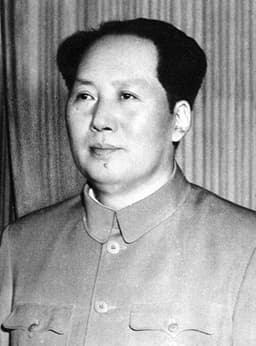
Mao Zedong
Politician · Modern
79.4Total
Basic Information
Born
1887
1893
Died
1975
1976
Era
Modern
Modern
Nationality
China
China
Occupation
Politician
Politician
Civilization
Eastern
Eastern
Score Comparison
Military (10%)
70.0
75.0
Political (20%)
62.7
88.0
Influence (20%)
65.0
85.0
Legacy (20%)
52.0
70.0
Leadership (15%)
66.0
85.0
Strategy (15%)
50.0
72.0
TOTAL
60.6
79.4
Chiang Kai-shek — Complete Timeline
1926 AD
Northern ExpeditionWar◆ Major
Chiang Kai-shek led the National Revolutionary Army in the Northern Expedition to defeat warlords and unify China. The campaign succeeded in capturing Beijing and establishing Kuomintang control over most of the country.
UnificationMilitary campaign
Impact: national
1927 AD
Shanghai Massacre of 1927Political Action◆ Major
Chiang Kai-shek ordered the purge of communists and leftists in Shanghai, resulting in thousands of deaths. This event broke the First United Front between the Kuomintang and the Communist Party, leading to civil war.
PurgeCivil war
Impact: nationaldestructive
1937 AD
Leadership during the Second Sino-Japanese WarWar
Chiang Kai-shek, as leader of the Kuomintang, commanded Chinese forces during the Second Sino-Japanese War. He directed the defense of Shanghai and the relocation of the capital to Chongqing, maintaining resistance against Japan.
World War IIChinese resistance
Impact: global
1945 AD
Signing of the Sino-Soviet Treaty of 1945Political Action◆ Major
Chiang Kai-shek signed the Sino-Soviet Treaty of Friendship and Alliance, which recognized Soviet interests in Manchuria in exchange for Soviet support against Japan. The treaty later facilitated Communist gains in the civil war.
DiplomacySoviet Union
Impact: global
1949 AD
Retreat to TaiwanPolitical Action
After losing the Chinese Civil War to the Communists, Chiang Kai-shek retreated to Taiwan with the remnants of the Kuomintang government and military. He established the Republic of China on Taiwan, claiming legitimacy over all of China.
TaiwanExileCold War
Impact: globaltragic
Mao Zedong — Complete Timeline
1934 AD
Long MarchWar
Mao Zedong led the Chinese Red Army on a strategic retreat from Nationalist forces, covering approximately 6,000 miles over 370 days. The march solidified Mao's leadership within the Chinese Communist Party and became a foundational myth of the Communist revolution.
Chinese Civil WarCommunist RevolutionRetreat
Impact: national
1949 AD
Proclamation of the People's Republic of ChinaPolitical Action
Mao Zedong declared the founding of the People's Republic of China from Tiananmen Gate in Beijing. This ended the Chinese Civil War and established Communist rule over mainland China, with Mao as Chairman of the Central People's Government.
Founding of PRCCommunist VictoryRevolution
Impact: global
1958 AD
Great Leap ForwardReform◆ Major
Mao launched a campaign to rapidly industrialize China and collectivize agriculture. The policy led to widespread mismanagement, resulting in a famine that caused an estimated 15-45 million deaths between 1959 and 1961.
FamineIndustrializationCollectivization
Impact: nationaldestructive
1960 AD
Sino-Soviet SplitPolitical Action◆ Major
Mao's ideological differences with Soviet leader Nikita Khrushchev led to a breakdown in relations between China and the Soviet Union. The split ended the Sino-Soviet alliance and reshaped global Cold War dynamics, with China pursuing an independent path.
Cold WarIdeological ConflictAlliance Breakdown
Impact: global
1966 AD
Cultural RevolutionPolitical Action
Mao initiated a sociopolitical movement to purge capitalist and traditional elements from Chinese society. The Red Guard youth groups attacked intellectuals and officials, leading to widespread violence, destruction of cultural artifacts, and an estimated 1-2 million deaths.
Political PurgeSocial UpheavalRed Guard
Impact: nationaldestructive
1971 AD
Ping-Pong DiplomacyCultural◆ Major
Mao approved an invitation for the U.S. table tennis team to visit China, initiating a thaw in Sino-American relations. This cultural exchange paved the way for President Nixon's visit to China in 1972 and the eventual normalization of diplomatic ties.
DiplomacyU.S.-China RelationsCultural Exchange
Impact: globalconstructive
Expert Analysis
Mao Zedong vs Chiang Kai-shek
# The Two Dragons of Modern China
In the autumn of 1949, two men stood at opposite ends of China’s destiny. One, Mao Zedong, mounted the Tiananmen Gate in Beijing to proclaim a new People’s Republic. The other, Chiang Kai-shek, boarded a ship in Chengdu, bound for the island of Taiwan with the remnants of his shattered army. They had once been allies against Japan, but their rivalry defined a century. How did two leaders, born only six years apart in the same civilization, come to embody such different fates?
Origins
Chiang Kai-shek was born in 1887 in Xikou, a small town in Zhejiang province, to a moderately prosperous merchant family. His father died when he was nine, and his mother raised him with a strict Confucian emphasis on discipline and duty. Young Chiang studied at military academies in China and Japan, absorbing the samurai ethos of loyalty and sacrifice. He was shaped by the chaos of the late Qing dynasty, when warlords carved up China, and he believed that national unity required iron-fisted authority.
Mao Zedong, born in 1893 in Shaoshan, Hunan, came from a peasant farming family. His father was a harsh, domineering man, and Mao rebelled early—running away from home at sixteen to pursue an education. He devoured books on history, philosophy, and revolution, from Confucius to Marx. Where Chiang saw order as the solution, Mao saw upheaval. The same collapsing empire that made Chiang a soldier made Mao a revolutionary.
These divergent upbringings planted seeds that would bloom into irreconcilable visions. Chiang's world was one of hierarchy and control; Mao's, of struggle and transformation.
Rise to Power
Chiang entered the historical stage through the Kuomintang (KMT), the nationalist party founded by Sun Yat-sen. After Sun's death in 1925, Chiang maneuvered ruthlessly to become the KMT's military strongman. His defining moment came in 1926, when he launched the Northern Expedition—a military campaign to crush the warlords and unify China. Leading the National Revolutionary Army, Chiang displayed considerable strategic skill, combining conventional warfare with political alliances. By 1928, he had nominally unified the country.
But his rise was stained by blood. In 1927, Chiang ordered the Shanghai Massacre, purging thousands of communists and leftists from the KMT's ranks. This act of political terror severed any hope of cooperation with Mao's fledgling Communist Party. Chiang chose to eliminate his rivals rather than compromise—a decision that would haunt him.
Mao's path was far more arduous. After the Shanghai Massacre, the Communists retreated to the countryside, and Mao emerged as a theorist of peasant revolution. His survival depended on the Long March of 1934–35, a 6,000-mile strategic retreat from Nationalist encirclement. Mao turned near-annihilation into legend, forging a loyal cadre and cementing his leadership. Where Chiang relied on cities and foreign support, Mao built his power from the soil, understanding that China's peasants were the true engine of revolution.
Leadership & Governance
Chiang's leadership was that of a commander, not a unifier. During the Second Sino-Japanese War (1937–1945), he directed Chinese forces with a score of 80.3 in leadership, according to historical assessments. He held the country together against Japan's brutal invasion, but his governance was undermined by corruption, favoritism, and a reluctance to mobilize the masses. He trusted his generals more than his people, and his regime grew brittle.
Mao's leadership score was almost identical at 80.6, but his style was radically different. He was a master of political theater and ideological fervor. His military strategy, rated at 76.5, was unconventional—guerrilla warfare, encirclement campaigns, and psychological manipulation. But his political wisdom, scoring 82.0, far exceeded Chiang's 65.8. Mao understood that power flowed from the people's belief, not just from guns.
Yet Mao's governance after 1949 was catastrophic. The Great Leap Forward of 1958 aimed to industrialize China overnight but led to widespread famine, with estimates of 20 to 45 million deaths. The Cultural Revolution, launched in 1966, plunged the nation into a decade of chaos, destroying institutions and lives. Mao's reforms were visionary in intent but devastating in execution.
Triumph & Tragedy
Chiang's greatest moment was leading China through the Second Sino-Japanese War, a titanic struggle that lasted eight years. He stood firm when many expected collapse, and his strategy of trading space for time ultimately contributed to Japan's defeat. But his greatest tragedy came immediately after: the Chinese Civil War resumed, and his army, exhausted and demoralized, crumbled before Mao's forces. By 1949, he was a ruler without a country.
Mao's triumph was the proclamation of the People's Republic of China on October 1, 1949. He had united a fractured nation under Communist rule, a feat that seemed impossible two decades earlier. But his tragedy was the human cost of his policies. The Great Leap Forward and Cultural Revolution left scars that still ache in China's memory. His dreams of utopia became nightmares of suffering.
Character & Destiny
Chiang was rigid, suspicious, and ultimately inflexible. He believed in control from above, and his personality—cold, calculating, and hierarchical—shaped a regime that could not adapt. He retreated to Taiwan in 1949 and ruled there until his death in 1975, a ghost of the China he had lost. His destiny was to be a tragic figure: a unifier who could not hold his creation together.
Mao was mercurial, charismatic, and ruthless. He embraced chaos as a creative force, famously saying, "There is great disorder under heaven—the situation is excellent." His personality—volcanic, visionary, and paranoid—drove China through revolutions and calamities. He died in 1976, leaving a nation transformed but traumatized.
Legacy
Chiang Kai-shek is remembered in Taiwan as a founding father, but on the mainland, he is a footnote—a failed nationalist. His legacy score of 67.5 reflects a leader who unified China only to lose it. Mao's legacy, scored at 69.9, is more complex. He is the founder of modern China, revered by the Communist Party, but his policies caused immense suffering. In China today, his image is carefully managed—neither fully condemned nor wholly celebrated.
Conclusion
Standing at the edge of the 20th century, Chiang and Mao were products of the same collapsing empire, yet they chose opposite paths. Chiang sought to impose order from above; Mao sought to ignite revolution from below. One built an army; the other built a movement. One died in exile; the other, in power. Their stories remind us that history is not a contest of good versus evil, but a clash of visions—each with its own light and shadow. The dragon of modern China had two heads, and neither could bear the other's gaze.
Rankings
🥇
Mao ZedongLeader
Mil: 75.0Pol: 88.0Inf: 85.0
79.4
🥈
Chiang Kai-shek
Mil: 70.0Pol: 62.7Inf: 65.0
60.6
+18.8 behind
How This Comparison Works
Algorithm
Each figure is scored on 6 dimensions (0—100 scale) based on structured historical data: Military (10%), Political (20%), Influence (20%), Legacy (20%), Leadership (15%), Strategy (15%). The weighted total produces the final ranking.
Data Sources
Scores are computed from structured sub-indicators in the database. Scale factors adjust for era (Ancient ×0.85, Modern ×1.0) and civilization size (Eastern ×1.05, Other ×0.80) to account for differences in population and military scale.
Maximum 3 Figures
Comparisons are limited to 2—3 figures to ensure readability and statistical meaningfulness.
Error Margins
±5 points per dimension — Sub-scores are derived from historical records with inherent uncertainty. Two figures within 5 points on a dimension should be considered roughly equivalent in that area.
Total Score Accuracy
±3 points overall — The weighted combination of 6 dimensions produces a total score with approximately ±3 points of uncertainty. Differences of less than 3 points are not statistically significant— the figures are effectively tied.
Known Limitations
- Historical records are incomplete and uneven across civilizations
- Figures from oral-tradition societies may be underrepresented
- Occupation labels can misclassify multi-role figures
- Scores measure capability and impact, not moral character
- Quantitative scoring is a comparison tool, not absolute truth
Capability Radar
Military (10%) — Battles & Warfare
Battles
75
85
Win Rate
35
80
Expansion
65
85
Political (20%) — Governance & Reform
Reform
55
95
Diplomacy
60
80
Economy
40
70
Influence (20%) — Cultural & Global Reach
Cultural
60
90
Global
65
90
Legacy (20%) — Historical Impact
Historical
70
95
Longevity
55
85
Leadership (15%) — Power & Stability
Tenure
85
95
Stability
30
60
Strategy (15%) — Tactics & Innovation
Strategy
60
85
Tactics
55
75
Reform
50
90
Similar Comparisons
Comments & Discussion
RedStarScholar6/16/2026
Mao’s peasant background wasn’t just a talking point—it was tactical genius. While Chiang obsessed over German military advisers and fortified cities, Mao understood that land reform turned millions of farmers into a guerrilla army. The Battle of Huaihai in 1948 proves it: 1.4 million PLA troops mobilized by peasants with wheelbarrows. That’s not just ideology, that’s logistics winning a civil war.
装甲骑兵6/16/2026
蒋介石的黄埔军校体系造就了国民党军队的骨架,但败就败在腐化。抗战结束后,国民党接收大员们忙着“五子登科”——抢房子、车子、金条,士兵却饿着肚子。反观毛泽东的“三湾改编”把党支部建在连上,士兵委员会管伙食,这种基层控制力才是为什么红军长征后有本事翻越雪山草地卷土重来。
MandarinMaverick6/16/2026
Let’s ditch the idol worship. Neither man was a Chinese savior. Chiang ran a crony-capitalist nightmare where the Soong family sucked China dry through the Central Bank; Mao’s Great Leap Forward killed 20 million in a grain-procurement fantasy. The real hero is the Chinese peasant—survived both their brutal experiments. The only difference is who controlled the history books.
古史辩士6/16/2026
两人都是清末民初大变局下的产物,但格局高下立判。蒋介石写《中国之命运》还在强调“伦理建设”“心理建设”,本质上是用儒家旧框框装现代新酒。毛泽东写《实践论》《矛盾论》,直接跟中国哲学传统对话——把“知行合一”改造成了马克思主义的认识论。一个向后看,一个向前看,胜负早注定了。
BambooTankCritic6/16/2026
People forget Chiang had Taiwan as a deliberate fallback since 1946—he moved gold reserves and cultural treasures there while mainland China burned. That’s not retreat, that’s a strategic insurance policy. Mao won the country but Chiang preserved the dynasty. Sixty years later, the ROC on Taiwan still functions as a parallel Chinese state. Who really lost?