Loading...
Chiang Kai-shek vs Joseph Stalin
Joseph Stalin leads by 8.2 pts · 2 figures compared
…
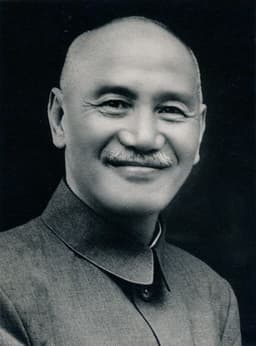
Chiang Kai-shek
Politician · Modern
60.6Total
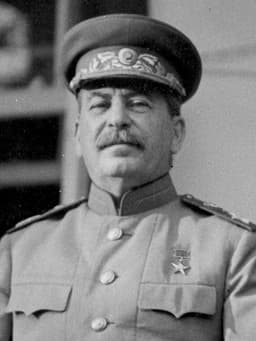
Joseph Stalin
Politician · Modern
68.8Total
Basic Information
Born
1887
1878
Died
1975
1953
Era
Modern
Modern
Nationality
China
Russia
Occupation
Politician
Politician
Civilization
Eastern
Western
Score Comparison
Military (10%)
70.0
75.0
Political (20%)
62.7
70.0
Influence (20%)
65.0
72.0
Legacy (20%)
52.0
55.0
Leadership (15%)
66.0
80.0
Strategy (15%)
50.0
70.0
TOTAL
60.6
68.8
Chiang Kai-shek — Complete Timeline
1926 AD
Northern ExpeditionWar◆ Major
Chiang Kai-shek led the National Revolutionary Army in the Northern Expedition to defeat warlords and unify China. The campaign succeeded in capturing Beijing and establishing Kuomintang control over most of the country.
UnificationMilitary campaign
Impact: national
1927 AD
Shanghai Massacre of 1927Political Action◆ Major
Chiang Kai-shek ordered the purge of communists and leftists in Shanghai, resulting in thousands of deaths. This event broke the First United Front between the Kuomintang and the Communist Party, leading to civil war.
PurgeCivil war
Impact: nationaldestructive
1937 AD
Leadership during the Second Sino-Japanese WarWar
Chiang Kai-shek, as leader of the Kuomintang, commanded Chinese forces during the Second Sino-Japanese War. He directed the defense of Shanghai and the relocation of the capital to Chongqing, maintaining resistance against Japan.
World War IIChinese resistance
Impact: global
1945 AD
Signing of the Sino-Soviet Treaty of 1945Political Action◆ Major
Chiang Kai-shek signed the Sino-Soviet Treaty of Friendship and Alliance, which recognized Soviet interests in Manchuria in exchange for Soviet support against Japan. The treaty later facilitated Communist gains in the civil war.
DiplomacySoviet Union
Impact: global
1949 AD
Retreat to TaiwanPolitical Action
After losing the Chinese Civil War to the Communists, Chiang Kai-shek retreated to Taiwan with the remnants of the Kuomintang government and military. He established the Republic of China on Taiwan, claiming legitimacy over all of China.
TaiwanExileCold War
Impact: globaltragic
Joseph Stalin — Complete Timeline
1928 AD
Launched the First Five-Year PlanReform
Stalin initiated a series of centralized economic plans aimed at rapid industrialization and collectivization of agriculture. The First Five-Year Plan set ambitious targets for heavy industry, leading to significant growth but also severe shortages and human cost.
Impact: global
1929 AD
Implemented forced collectivization of agricultureReform
Stalin ordered the consolidation of individual peasant farms into collective farms (kolkhozy). This was met with resistance, leading to the liquidation of kulaks (wealthy peasants) as a class. The policy caused a catastrophic famine, particularly in Ukraine (Holodomor), resulting in millions of deaths.
Impact: nationaldestructive
1937 AD
Conducted the Great Purge (Great Terror)Political Action
Stalin orchestrated a campaign of political repression against alleged enemies of the state. Millions were arrested, executed, or sent to the Gulag labor camps. The purges targeted the Communist Party, military leadership, intellectuals, and ordinary citizens, consolidating Stalin's absolute power.
Impact: nationaldestructive
1945 AD
Led the Soviet Union to victory in World War IIWar
Stalin served as Supreme Commander of the Soviet armed forces. The Soviet Union bore the brunt of the war against Nazi Germany, suffering immense casualties. The Red Army's victory at Stalingrad and the capture of Berlin were key turning points. The war ended with Soviet domination of Eastern Europe.
Impact: global
Established the Eastern Bloc and the Iron CurtainPolitical Action◆ Major
After WWII, Stalin imposed communist governments in Eastern European countries occupied by the Red Army, creating a buffer zone against the West. This division of Europe into Soviet and Western spheres of influence marked the beginning of the Cold War.
Impact: globaldestructive
Expert Analysis
Joseph Stalin vs Chiang Kai-shek
# The Iron Twins of the Twentieth Century
In the winter of 1945, as the guns of World War II fell silent across Europe and Asia, two men sat atop shattered empires, each believing they had secured their nation’s future. Joseph Stalin, in the Kremlin, toasted the Red Army’s march into Berlin. Chiang Kai-shek, in Chongqing, prepared to receive the Japanese surrender in Nanjing. Both had fought the same enemies—fascism and imperialism—and both had emerged victorious. Yet within four years, one would rule the largest empire on earth, while the other would flee to an island refuge, never to return to the mainland. What separated these two titans of modern history was not merely circumstance, but the very fabric of their characters and the paths they chose.
Origins
Chiang Kai-shek was born in 1887 to a salt merchant family in Fenghua, Zhejiang Province, a region steeped in Confucian tradition and commercial pragmatism. His father died when he was young, and his mother, a devout Buddhist, instilled in him a fierce sense of duty and discipline. He received a classical Chinese education before entering military academies in Baoding and later Tokyo, where he absorbed the samurai ethos of imperial Japan. Stalin, born in 1878 in the Georgian town of Gori, came from a vastly different world. His father was a drunken shoemaker who beat him; his mother, a devout Orthodox Christian, hoped he would become a priest. Instead, Stalin entered a seminary in Tiflis, where he discovered Marxist literature and was expelled for revolutionary activity. Where Chiang’s world was orderly, hierarchical, and family-centered, Stalin’s was chaotic, violent, and driven by ideological fury.
These origins shaped their fundamental outlooks. Chiang saw politics as a matter of personal loyalty and moral cultivation, a Confucian vision of virtuous leadership. Stalin saw politics as a ruthless struggle for power, a Darwinian contest where sentiment was weakness. One would rule through networks of personal allegiance; the other through systematic terror.
Rise to Power
Chiang’s ascent began in the chaos of post-imperial China. After the 1911 revolution overthrew the Qing dynasty, he joined Sun Yat-sen’s Kuomintang, becoming Sun’s protégé. In 1924, Sun sent him to Moscow to study Soviet military organization, an experience that taught him the mechanics of modern warfare but left him deeply suspicious of communist ideology. When Sun died in 1925, Chiang maneuvered to become the KMT’s military commander. In 1926, he launched the Northern Expedition, a brilliant campaign that defeated the warlords and unified China under KMT rule. It was a feat of strategic genius, combining military force with political alliances.
Stalin’s rise was slower, more subterranean. After the Bolshevik Revolution of 1917, he worked behind the scenes, building a power base as General Secretary of the Communist Party—a position that seemed administrative but gave him control over appointments. While Lenin lived, Stalin was a loyal functionary. After Lenin’s death in 1924, he outmaneuvered rivals like Trotsky, Zinoviev, and Bukharin through a combination of cunning alliances and brutal purges. By 1928, he was the undisputed master of the Soviet Union.
The key difference: Chiang rose through visible military triumph, Stalin through invisible bureaucratic manipulation. Chiang’s power was public and heroic; Stalin’s was hidden and conspiratorial.
Leadership & Governance
As China’s leader, Chiang attempted to build a modern state. He promoted infrastructure projects, standardized education, and sought to unify China’s fractious regions. But his governance was undermined by corruption, factionalism within the KMT, and his reliance on secret police and landlord elites. The 1927 Shanghai Massacre, where he ordered the slaughter of thousands of communists, revealed his willingness to use extreme violence against political enemies, but it also alienated many intellectuals and peasants.
Stalin’s governance was far more systematic and devastating. The First Five-Year Plan, launched in 1928, transformed the Soviet Union from an agrarian backwater into an industrial superpower in a decade. But the cost was staggering: forced collectivization of agriculture led to the Holodomor famine in Ukraine, killing millions. The Great Purge of 1937–1938 executed or imprisoned over a million people, including most of the Red Army’s officer corps. Stalin ruled through absolute terror, but he also built factories, power plants, and a massive military machine.
In military leadership, both men faced their greatest test in World War II. Chiang commanded Chinese forces against Japan from 1937 to 1945, directing a war of attrition that tied down millions of Japanese troops. He was a competent strategist but often micromanaged and failed to coordinate effectively with communist allies. Stalin, as Supreme Commander, initially blundered disastrously in 1941, but recovered to oversee the crushing of the German army at Stalingrad and Berlin. He learned from his mistakes; Chiang never fully did.
Triumph & Tragedy
Chiang’s greatest moment was the Northern Expedition, a campaign of breathtaking ambition that nearly unified China. His greatest tragedy was the loss of the mainland in 1949. After defeating Japan, his government collapsed amid hyperinflation, corruption, and military defeat by Mao’s communists. He retreated to Taiwan, ruling a rump state for another 26 years, but always dreaming of return.
Stalin’s greatest triumph was leading the Soviet Union to victory in World War II, a feat that earned him global prestige and an empire stretching from Berlin to Beijing. His greatest tragedy was the cost of that victory: perhaps 27 million Soviet dead, a society traumatized by terror, and a system that would collapse within decades of his death.
Character & Destiny
Chiang was aloof, moralistic, and stubborn. He kept a diary, wrote poetry, and believed in Confucian self-cultivation. But he was also indecisive, prone to favoritism, and unable to confront the deep corruption within his regime. Stalin was paranoid, calculating, and utterly ruthless. He trusted no one, killed his closest allies, and slept with a revolver under his pillow. Yet he was also a brilliant political tactician who understood the mechanics of power better than any leader of his age.
Chiang’s character led him to rely on personal loyalty, which failed him when his generals defected. Stalin’s character led him to rely on fear, which worked until his death, but left no successor capable of reform.
Legacy
Today, Chiang Kai-shek is remembered in Taiwan as the father of the nation, his image on currency and his mausoleum a pilgrimage site. In mainland China, he is vilified as a reactionary and a traitor. His legacy is ambiguous: a unifier who lost his country, a modernizer who failed to modernize.
Stalin is remembered with horror and grudging respect. In Russia, polls show many view him positively as a wartime leader who made the nation great, while others condemn him as a mass murderer. His legacy is the paradox of progress through terror: the Soviet Union he built could win wars but could not feed its people.
Conclusion
Standing at the edge of history, these two men seem almost like mirror images: both rose from humble origins to command empires; both fought fascism and lost to time. But the difference between them was not just in outcomes—it was in the nature of their power. Chiang built his on personal loyalty and moral authority, which proved brittle. Stalin built his on systematic terror and institutional control, which proved durable—until it wasn’t. In the end, both were consumed by the very forces they sought to master. Chiang died in exile, Stalin in power. But neither truly won. The twentieth century devoured them both, leaving only questions about whether any leader, however strong, can truly shape the destiny of a nation.
Rankings
🥇
Joseph StalinLeader
Mil: 75.0Pol: 70.0Inf: 72.0
68.8
🥈
Chiang Kai-shek
Mil: 70.0Pol: 62.7Inf: 65.0
60.6
+8.2 behind
How This Comparison Works
Algorithm
Each figure is scored on 6 dimensions (0—100 scale) based on structured historical data: Military (10%), Political (20%), Influence (20%), Legacy (20%), Leadership (15%), Strategy (15%). The weighted total produces the final ranking.
Data Sources
Scores are computed from structured sub-indicators in the database. Scale factors adjust for era (Ancient ×0.85, Modern ×1.0) and civilization size (Eastern ×1.05, Other ×0.80) to account for differences in population and military scale.
Maximum 3 Figures
Comparisons are limited to 2—3 figures to ensure readability and statistical meaningfulness.
Error Margins
±5 points per dimension — Sub-scores are derived from historical records with inherent uncertainty. Two figures within 5 points on a dimension should be considered roughly equivalent in that area.
Total Score Accuracy
±3 points overall — The weighted combination of 6 dimensions produces a total score with approximately ±3 points of uncertainty. Differences of less than 3 points are not statistically significant— the figures are effectively tied.
Known Limitations
- Historical records are incomplete and uneven across civilizations
- Figures from oral-tradition societies may be underrepresented
- Occupation labels can misclassify multi-role figures
- Scores measure capability and impact, not moral character
- Quantitative scoring is a comparison tool, not absolute truth
Capability Radar
Military (10%) — Battles & Warfare
Battles
75
85
Win Rate
35
80
Expansion
65
85
Political (20%) — Governance & Reform
Reform
55
90
Diplomacy
60
70
Economy
40
85
Influence (20%) — Cultural & Global Reach
Cultural
60
70
Global
65
95
Legacy (20%) — Historical Impact
Historical
70
95
Longevity
55
80
Leadership (15%) — Power & Stability
Tenure
85
95
Stability
30
60
Strategy (15%) — Tactics & Innovation
Strategy
60
85
Tactics
55
60
Reform
50
90
Similar Comparisons
Comments & Discussion
🧨BallisticBoris6/16/2026
These so-called "iron twins" are a joke. Stalin actually built an industrial superpower from scratch while fighting off Hitler's panzers; Chiang couldn't even hold onto the mainland against a bunch of peasant guerrillas. You don't see Stalin losing half his country to Mao's equivalent. Give me a break—Chiang was a warlord in a general's uniform, not Stalin's peer.
📉史坑侦探6/16/2026
这对比根本是数据造假!蒋在抗战时接收美国租借物资近16亿美元,却让国军精锐在豫湘桂一溃千里。斯大林卫国战争伤亡2700万人,可红军硬是反推回柏林。比伤亡比、生产效率、领土得失,蒋哪项数据能看?史盲才搞这种"双雄"叙事。
📜LogosOfTheRedTsar6/16/2026
As a classics scholar, I see this not as a comparison of equals but as a study in contrasting archetypes. Stalin was a modern Genghis Khan—ruthless, strategic, consolidating absolute power through terror and industrialization. Chiang was more like a late Ming mandarin—trapped by Confucian ritual, ineffective military command, and a fatal obsession with protocol over pragmatism. One reshaped Eurasia; the other reshaped... Taipei.
🗡️TigerKiller19496/16/2026
别扯什么"双雄"了!常凯申连个日本都打不过,国府迁到重庆蹲了八年,全靠美援和中共敌后抗战撑着。斯大林在莫斯科城下硬扛德军装甲集群,产能越打越多。蒋公呢?抗战一完就搞清党剿共,结果被赶到台湾岛。这种比较是侮辱斯大林,也是侮辱历史。
🧠RealityBites_Historian6/16/2026
Military historian here. The key difference is not character but strategic competence. Stalin correctly identified that total mobilization of economy and population was necessary for survival—1939 USSR produced 6,000 aircraft; by 1944, 40,000. Chiang's regime never industrialized a fraction of that. On the battlefield, Stalin delegated to Zhukov and tolerated competence; Chiang micromanaged from Chongqing and purged his best generals. That's not twinhood—that's a chasm.