Loading...
Chiang Kai-shek vs Ito Hirobumi
Ito Hirobumi leads by 13.2 pts · 2 figures compared
…
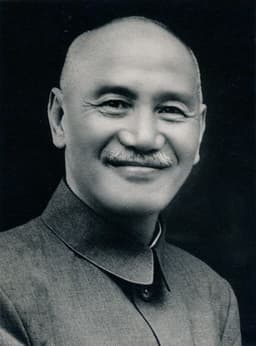
Chiang Kai-shek
Politician · Modern
60.6Total
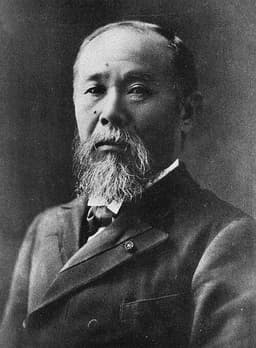
Ito Hirobumi
Politician · Modern
73.8Total
Basic Information
Born
1887
1841
Died
1975
1909
Era
Modern
Modern
Nationality
China
Japan
Occupation
Politician
Politician
Civilization
Eastern
Eastern
Score Comparison
Military (10%)
70.0
50.0
Political (20%)
62.7
86.0
Influence (20%)
65.0
71.0
Legacy (20%)
52.0
80.0
Leadership (15%)
66.0
80.9
Strategy (15%)
50.0
60.0
TOTAL
60.6
73.8
Chiang Kai-shek — Complete Timeline
1926 AD
Northern ExpeditionWar◆ Major
Chiang Kai-shek led the National Revolutionary Army in the Northern Expedition to defeat warlords and unify China. The campaign succeeded in capturing Beijing and establishing Kuomintang control over most of the country.
UnificationMilitary campaign
Impact: national
1927 AD
Shanghai Massacre of 1927Political Action◆ Major
Chiang Kai-shek ordered the purge of communists and leftists in Shanghai, resulting in thousands of deaths. This event broke the First United Front between the Kuomintang and the Communist Party, leading to civil war.
PurgeCivil war
Impact: nationaldestructive
1937 AD
Leadership during the Second Sino-Japanese WarWar
Chiang Kai-shek, as leader of the Kuomintang, commanded Chinese forces during the Second Sino-Japanese War. He directed the defense of Shanghai and the relocation of the capital to Chongqing, maintaining resistance against Japan.
World War IIChinese resistance
Impact: global
1945 AD
Signing of the Sino-Soviet Treaty of 1945Political Action◆ Major
Chiang Kai-shek signed the Sino-Soviet Treaty of Friendship and Alliance, which recognized Soviet interests in Manchuria in exchange for Soviet support against Japan. The treaty later facilitated Communist gains in the civil war.
DiplomacySoviet Union
Impact: global
1949 AD
Retreat to TaiwanPolitical Action
After losing the Chinese Civil War to the Communists, Chiang Kai-shek retreated to Taiwan with the remnants of the Kuomintang government and military. He established the Republic of China on Taiwan, claiming legitimacy over all of China.
TaiwanExileCold War
Impact: globaltragic
Ito Hirobumi — Complete Timeline
1882 AD
Establishment of the Bank of JapanReform◆ Major
Under Ito Hirobumi's leadership, the Bank of Japan was established as the nation's central bank. It was modeled after European central banks and aimed to stabilize the currency and control inflation. This institution was crucial for Japan's economic modernization and industrial growth.
Central BankEconomic ReformModernization
Impact: nationalconstructive
1885 AD
First Prime Minister of JapanPolitical Action◆ Major
Ito Hirobumi became the first Prime Minister of Japan under the new cabinet system. He served four non-consecutive terms and was instrumental in shaping the modern Japanese state. His tenure focused on centralizing power, modernizing the economy, and strengthening the military.
Prime MinisterCabinet SystemMeiji Period
Impact: nationalconstructive
1889 AD
Drafting of the Meiji ConstitutionReform
Ito Hirobumi led the drafting of the Meiji Constitution, which established a constitutional monarchy with a bicameral parliament (the Diet). The constitution granted the emperor sovereign power but also provided for elected representatives. It was promulgated in 1889 and remained in effect until 1947.
ConstitutionMeiji PeriodGovernment Reform
Impact: nationalconstructive
1909 AD
Assassination at Harbin StationPolitical Action◆ Major
Ito Hirobumi was assassinated by Korean nationalist An Jung-geun at Harbin railway station in Manchuria. Ito was on a mission to negotiate with Russian officials regarding Korea. His death shocked Japan and was used to justify the formal annexation of Korea in 1910.
AssassinationKoreaAnnexation
Impact: globaltragic
Expert Analysis
Chiang Kai-shek vs Ito Hirobumi
# The Two Paths of Asian Modernization: Chiang Kai-shek and Ito Hirobumi
On a cold October day in 1909, a Korean nationalist named An Jung-geun stepped onto the platform of Harbin railway station in Manchuria and fired three shots into the chest of Ito Hirobumi, the man who had built modern Japan. Forty years later, almost to the month, another Asian leader boarded a ship in mainland China, bound for the island of Taiwan, carrying with him the shattered remnants of a dream to unify his country. These two moments—a bullet that ended one era and a retreat that began another—frame the contrasting stories of Ito Hirobumi and Chiang Kai-shek, two men who tried to drag their ancient civilizations into the modern world, yet arrived at such different destinations.
Origins
Ito Hirobumi was born in 1841 into a low-ranking samurai family in the Choshu domain, a region that had long resented the Tokugawa shogunate’s control. He came of age during the twilight of the samurai era, when Commodore Perry’s black ships had shattered Japan’s isolation. Young Ito was among those who burned with the conviction that Japan must transform or be consumed. He was sent to study in England, where he saw factories, parliaments, and railways—and understood that power came not from swords but from systems.
Chiang Kai-shek, born in 1887 in Zhejiang province, grew up in a China that was already collapsing. The Qing Dynasty was gasping its last breaths, foreign powers had carved out spheres of influence, and the country was torn by warlords. Chiang’s early education was in classical Confucian texts, but he later attended military academies in Japan and China. Where Ito had witnessed a Japan that could be rebuilt from within, Chiang saw a China that needed to be conquered and unified by force.
Rise to Power
Ito’s path to leadership was paved by his intellect and his ability to work within emerging institutions. After studying abroad, he became a key figure in the Meiji Restoration, serving as a young advisor to the oligarchs who were remaking Japan. In 1885, at the age of 44, he became Japan’s first Prime Minister under the new cabinet system—a position he would hold four times. His rise was not through military conquest but through political maneuvering, constitutional drafting, and the careful construction of a modern state.
Chiang’s ascent was bloodier. He emerged from the chaos of post-imperial China as a protégé of Sun Yat-sen, the revolutionary founder of the Kuomintang. In 1926, Chiang launched the Northern Expedition, leading the National Revolutionary Army against the warlords who had carved up China. By 1928, he had nominally unified the country—but the cost was immense. The expedition was a military campaign, not a political settlement, and the unity it achieved was fragile, built on alliances with warlords who remained loyal only as long as Chiang was strong.
Leadership & Governance
Here the two men diverged most sharply. Ito Hirobumi was an architect, not a general. His military score of 48.6 reflects a man who never commanded armies in battle. Instead, he led the drafting of the Meiji Constitution in 1889, creating a constitutional monarchy with a bicameral parliament. He established the Bank of Japan in 1882, modeled after European central banks. He built institutions—laws, banks, bureaucracies—that would outlast any individual leader. His political score of 87.2 and influence score of 91.6 reflect a man who understood that power, to be lasting, must be embedded in systems.
Chiang Kai-shek was a commander, not a builder. His military score of 68.4 and leadership score of 80.3 reflect a man who excelled at directing armies and projecting authority. But his political score of 65.8 reveals the weakness: he governed through patronage, coercion, and a cult of personality. During the Second Sino-Japanese War (1937–1945), Chiang commanded Chinese forces with strategic skill, holding the line against a far more modern Japanese army. Yet even as he fought the Japanese, he was also fighting Mao Zedong’s Communists, draining resources from the national war effort. The Shanghai Massacre of 1927, where he purged thousands of Communists and leftists, showed his willingness to use violence for political ends—but it also created enemies who would never forgive him.
Triumph & Tragedy
Ito’s greatest triumph was the Meiji Constitution, which transformed Japan from a feudal society into a modern empire. His greatest tragedy was his own assassination in 1909—a death that symbolized the dark side of Japanese expansionism. He was in Manchuria, on a mission to negotiate with Russia, when a Korean nationalist killed him. The bullet that ended Ito’s life also foreshadowed the empire he helped build: Japan would soon annex Korea, and the path Ito had paved with constitutions and banks would lead to militarism and war.
Chiang’s triumph was leading China through eight years of brutal war against Japan, keeping the country in the fight despite staggering losses. His tragedy was losing the subsequent civil war to Mao’s Communists in 1949. The retreat to Taiwan was a defeat so complete that it transformed Chiang from the leader of all China to the ruler of a single island. He had unified China by force, but he could not hold it together.
Character & Destiny
Ito was a pragmatist, a man who studied the West not to imitate it blindly but to extract its principles and adapt them to Japanese conditions. He traveled to Europe to study constitutions, spoke multiple languages, and understood that modernization required changing how people thought, not just how they fought. His character was patient, analytical, and institutional.
Chiang was a nationalist, a man driven by the conviction that China could be restored to greatness through willpower and military strength. He was deeply influenced by Confucian ideas of hierarchy and loyalty, and he governed through a network of personal relationships. His character was authoritarian, suspicious, and ultimately inflexible. He could command loyalty, but he could not inspire the kind of institutional trust that Ito had built.
Legacy
Ito Hirobumi is remembered as the father of modern Japan, the man who wrote the constitution and built the institutions that made Japan the first Asian nation to industrialize and become a world power. His legacy is the Meiji Constitution, the Bank of Japan, and the parliamentary system that, for all its flaws, gave Japan stability. His influence score of 91.6 is the highest of any figure in this comparison, and rightly so: he shaped the architecture of a nation.
Chiang Kai-shek’s legacy is more contested. On Taiwan, he is remembered as the leader who preserved Free China and laid the foundations for Taiwan’s economic miracle. On the mainland, he is dismissed as a corrupt dictator who lost China to the Communists. His total score of 70.2, lower than Ito’s 75.1, reflects this ambiguity. He was a man of immense ambition and limited achievement, a general who unified his country only to lose it.
Conclusion
The difference between Ito and Chiang is not just a matter of talent or luck. It is a difference of approach to modernization itself. Ito understood that modernization is not a military campaign but a political and institutional transformation. He built systems that could survive him. Chiang believed that modernization was a matter of will and force—that a strong leader could impose order on chaos. He built a regime that depended on him and collapsed without him.
One man died by an assassin’s bullet, his work unfinished but his foundations laid. The other died in exile on a small island, his dream of a unified China shattered. Both tried to answer the same question: how does an ancient civilization become modern? Their answers, so different, still echo in the politics of East Asia today.
Rankings
🥇
Ito HirobumiLeader
Mil: 50.0Pol: 86.0Inf: 71.0
73.8
🥈
Chiang Kai-shek
Mil: 70.0Pol: 62.7Inf: 65.0
60.6
+13.2 behind
How This Comparison Works
Algorithm
Each figure is scored on 6 dimensions (0—100 scale) based on structured historical data: Military (10%), Political (20%), Influence (20%), Legacy (20%), Leadership (15%), Strategy (15%). The weighted total produces the final ranking.
Data Sources
Scores are computed from structured sub-indicators in the database. Scale factors adjust for era (Ancient ×0.85, Modern ×1.0) and civilization size (Eastern ×1.05, Other ×0.80) to account for differences in population and military scale.
Maximum 3 Figures
Comparisons are limited to 2—3 figures to ensure readability and statistical meaningfulness.
Error Margins
±5 points per dimension — Sub-scores are derived from historical records with inherent uncertainty. Two figures within 5 points on a dimension should be considered roughly equivalent in that area.
Total Score Accuracy
±3 points overall — The weighted combination of 6 dimensions produces a total score with approximately ±3 points of uncertainty. Differences of less than 3 points are not statistically significant— the figures are effectively tied.
Known Limitations
- Historical records are incomplete and uneven across civilizations
- Figures from oral-tradition societies may be underrepresented
- Occupation labels can misclassify multi-role figures
- Scores measure capability and impact, not moral character
- Quantitative scoring is a comparison tool, not absolute truth
Capability Radar
Military (10%) — Battles & Warfare
Battles
75
0
Win Rate
35
0
Expansion
65
70
Political (20%) — Governance & Reform
Reform
55
95
Diplomacy
60
90
Economy
40
80
Influence (20%) — Cultural & Global Reach
Cultural
60
75
Global
65
80
Legacy (20%) — Historical Impact
Historical
70
85
Longevity
55
80
Leadership (15%) — Power & Stability
Tenure
85
85
Stability
30
85
Strategy (15%) — Tactics & Innovation
Strategy
60
0
Tactics
55
0
Reform
50
85
Similar Comparisons
Comments & Discussion
铁血史官6/16/2026
伊藤博文是工业化导师,蒋介石是土改失败者。伊藤在1905年设立统监府,把朝鲜铁路从160英里扩到1,200英里;蒋介石1949年带着300万两黄金逃到台湾,祖国大陆却还在搞封建地主制。谁在拉动历史车轮,谁在拖后腿,一目了然。
Data Scourge6/16/2026
Don't romanticize failure. Ito's GDP growth per capita in Meiji Japan averaged 1.5% annually from 1885 to 1905—not spectacular, but consistent. Chiang's ROC on Taiwan hit 9% in the 1960s, but only after his Mainland disaster. Compare: Ito built a state that survived WWII; Chiang lost China in four years. Numbers don't lie.
冷眼旁观6/16/2026
伊藤是殖民主义者,蒋介石是半殖民地军阀。别忘了伊藤把朝鲜变成保护国,1910年吞并它,种下了日韩仇恨的种子。蒋介石呢?他在1927年清党杀了上千共产党人,1949年逃台湾时还在打内战。两个人都不是圣人,但伊藤至少留下了宪政框架,蒋介石只留下了分裂。
Classicist's Lens6/16/2026
Ito had the vision of a Roman emperor—he codified laws in the 1889 Constitution, centralized power like Augustus, and built a civil service. Chiang played at being a Chinese emperor, but his 1947 Constitution was a toothless joke, and he let warlords run wild. One created a durable state, the other a dynasty of dust.
Historian5246/16/2026
Ito built a constitution and railways while Chiang lost a continent. Facts don't care about feelings—Ito gave Japan the Meiji Constitution in 1889, a working parliament by 1890, and won the Sino-Japanese War by 1895. Chiang fumbled the Northern Expedition, lost the mainland, and retreated to Taiwan with a suitcase of gold. One modernized, the other just retreated.