Loading...
Chen Cheng vs Francisco Morazan
Francisco Morazan leads by 3.8 pts · 2 figures compared
…

Chen Cheng
General · Modern
54.2Total
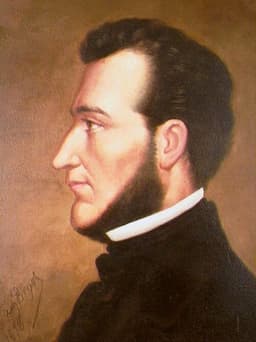
Francisco Morazan
General · Modern
58.0Total
Basic Information
Born
1897
1792
Died
1965
1842
Era
Modern
Modern
Nationality
China
Honduras
Occupation
General
General
Civilization
Eastern
Western
Score Comparison
Military (10%)
20.0
52.5
Political (20%)
68.0
60.0
Influence (20%)
54.9
62.0
Legacy (20%)
48.3
50.0
Leadership (15%)
68.0
68.0
Strategy (15%)
60.0
55.0
TOTAL
54.2
58.0
Chen Cheng — Complete Timeline
1933 AD
Led the Encirclement Campaigns against the CommunistsWar◆ Major
Chen Cheng commanded Nationalist forces in the Fifth Encirclement Campaign against the Chinese Communist Party's Jiangxi Soviet. His tactics, including blockhouses and economic blockade, forced the Communists to begin the Long March.
Chinese Civil WarEncirclement Campaign
Impact: nationaldestructive
1938 AD
Commander of the Battle of WuhanWar◆ Major
Chen Cheng commanded Chinese forces during the Battle of Wuhan, a major defensive campaign against the Japanese advance. Although Wuhan fell, the battle inflicted heavy casualties on Japanese forces and delayed their advance.
Second Sino-Japanese WarDefense
Impact: regional
1950 AD
Premier of the Republic of ChinaPolitical Action◆ Major
Chen Cheng was appointed Premier of the Republic of China (Taiwan) by President Chiang Kai-shek. He oversaw the government's relocation to Taiwan and implemented land reform and economic policies that stabilized the island.
GovernmentTaiwanReform
Impact: nationalconstructive
1954 AD
Vice President of the Republic of ChinaPolitical Action◆ Major
Chen Cheng was elected Vice President of the Republic of China, serving under President Chiang Kai-shek. He held this position until his death in 1965, playing a key role in Taiwan's governance and anti-communist policies.
GovernmentTaiwan
Impact: national
Francisco Morazan — Complete Timeline
1824 AD
Abolition of slavery in Central AmericaReform◆ Major
As a key leader in the liberal movement, Moraz
AbolitionSlaveryLiberal Reform
Impact: regionalprogressive
1827 AD
Battle of La TrinidadWar◆ Major
Morazán led a liberal army to victory against conservative forces at La Trinidad, Honduras. This battle was a key turning point in the Central American civil war, allowing Morazán to consolidate power and eventually become president of the federation.
BattleLiberal VictoryCivil War
Impact: regional
1830 AD
Presidency of the Federal Republic of Central AmericaPolitical Action
Morazán was elected president of the Federal Republic of Central America, a union of Guatemala, El Salvador, Honduras, Nicaragua, and Costa Rica. He pursued liberal reforms including separation of church and state, free trade, and land reform, facing opposition from conservatives.
Federal RepublicLiberal ReformsCentral America
Impact: regionalconstructive
1842 AD
Execution by firing squadPolitical Action
After a failed attempt to restore the Federal Republic, Moraz
ExecutionEnd of FederationLiberal Defeat
Impact: regionaltragic
Expert Analysis
Origins
Chen Cheng was born on January 4, 1897, in Qingtian, Zhejiang Province, China. He came from a modest farming family and received a traditional Confucian education before attending the Baoding Military Academy, graduating in 1922. His early military career was shaped by the chaotic warlord era, and he joined the Kuomintang (KMT) in 1924, becoming a protégé of Chiang Kai-shek.
Francisco Morazán was born on October 3, 1792, in Tegucigalpa, Honduras, into a middle-class Creole family. He studied law and administration at the University of San Carlos in Guatemala, but his education was interrupted by the independence movements. He was influenced by Enlightenment ideas and liberal reforms, which shaped his political philosophy.
Rise to Power
Chen Cheng rose through the ranks during the Northern Expedition (1926-1928), where he commanded the 11th Division and later the 18th Army. His loyalty to Chiang Kai-shek was rewarded with key commands. In 1931, he led the Fifth Encirclement Campaign against the Chinese Communist Party, employing blockhouse tactics that forced the Communists into the Long March. This success solidified his position as one of Chiang's top generals. By 1938, he was appointed commander of the Battle of Wuhan, the largest defensive campaign of the Second Sino-Japanese War. Although Wuhan fell, Chen's forces inflicted heavy casualties on the Japanese.
Morazán first gained prominence as a military leader in the liberal-conservative conflicts of Central America. In 1827, he commanded liberal forces at the Battle of La Trinidad, defeating conservative forces and capturing the Honduran capital. This victory propelled him to leadership of the liberal faction. In 1830, he was elected president of the Federal Republic of Central America, a union of Guatemala, El Salvador, Honduras, Nicaragua, and Costa Rica. He served three terms (1830-1839) and used his position to push for liberal reforms.
Leadership & Governance
Chen Cheng's leadership style was methodical and bureaucratic. As Premier and later Vice President of the Republic of China (Taiwan), he focused on administrative efficiency and economic development. He oversaw the implementation of land reform in Taiwan, redistributing land from landlords to tenants, which increased agricultural productivity and stabilized rural society. His governance was characterized by close cooperation with Chiang Kai-shek and a strong anti-communist stance. Chen scored 68.0 in political leadership, reflecting his effective but subordinate role.
Morazán was a charismatic reformer who sought to modernize Central America. He implemented liberal policies including the abolition of slavery (1824), freedom of the press, and separation of church and state. He also promoted public education and infrastructure development. However, his reforms faced strong opposition from conservative elites and the clergy, leading to constant civil wars. His political score of 60.0 reflects his ambitious but unstable governance.
Triumph & Tragedy
Chen Cheng's greatest success was his role in stabilizing Taiwan after the KMT's retreat from mainland China in 1949. As Premier (1950-1954) and Vice President (1954-1965), he implemented land reform, currency stabilization, and infrastructure projects that laid the foundation for Taiwan's economic miracle. His greatest failure was his military record: his score of 20.0 in military reflects his inability to prevent the loss of mainland China and his role in the disastrous campaigns against the Communists. The Battle of Wuhan, while heroic, ended in defeat.
Morazán's greatest triumph was the abolition of slavery and the creation of the Federal Republic of Central America, which for a brief period unified the region. He scored 52.5 in military for his battlefield victories, such as La Trinidad. His tragedy was the collapse of the federation due to internal divisions and conservative revolts. After being exiled, he attempted to restore the union in 1842 but was captured and executed by firing squad in Costa Rica on September 15, 1842. His death marked the end of Central American unification.
Character & Destiny
Chen Cheng was known for his discipline, loyalty, and administrative competence. He was a technocrat who followed orders rather than challenging authority. His destiny was tied to Chiang Kai-shek and the KMT's fate. He never sought the top leadership, preferring to serve as a deputy. His character allowed him to survive the turbulent politics of the KMT but limited his independent influence. Historical assessments view him as a capable administrator who lacked the strategic vision to change China's destiny.
Morazán was idealistic, bold, and uncompromising. He believed in liberal democracy and Central American unity, but his rigidity alienated potential allies. His character drove him to pursue grand reforms despite opposition. His destiny was shaped by the deep divisions in Central American society. Historians describe him as a visionary whose failure to consolidate power led to his tragic end. His leadership score of 68.0 aligns with his ability to inspire but not to build lasting institutions.
Legacy
Chen Cheng's legacy is deeply tied to Taiwan's development. The land reform he implemented is credited with reducing rural inequality and enabling industrialization. His administrative systems influenced Taiwan's governance for decades. However, his legacy is contested in mainland China, where he is remembered as a KMT general who fought against the Communists. His overall score of 54.2 reflects a moderate impact limited to Taiwan.
Morazán is revered as a national hero in Honduras and a symbol of Central American unity. His abolition of slavery and liberal reforms are celebrated, but his failure to maintain the federation is seen as a missed opportunity. His legacy scores 58.0, higher than Chen's, due to his broader influence across multiple countries. However, his actual political achievements were short-lived.
Conclusion
Francisco Morazán had greater impact than Chen Cheng, as reflected in his higher total score of 58.0 versus 54.2. Morazán's reforms—abolishing slavery, promoting education, and attempting unification—affected an entire region and inspired future generations. Chen Cheng's contributions, while significant for Taiwan's development, were limited to a single island and were largely administrative rather than transformative. Morazán's vision of a unified Central America, though unrealized, continues to resonate, while Chen Cheng's legacy is more localized and dependent on the KMT's fate. Therefore, Morazán emerges as the more influential figure.
Rankings
🥇
Francisco MorazanLeader
Mil: 52.5Pol: 60.0Inf: 62.0
58.0
🥈
Chen Cheng
Mil: 20.0Pol: 68.0Inf: 54.9
54.2
+3.8 behind
How This Comparison Works
Algorithm
Each figure is scored on 6 dimensions (0—100 scale) based on structured historical data: Military (10%), Political (20%), Influence (20%), Legacy (20%), Leadership (15%), Strategy (15%). The weighted total produces the final ranking.
Data Sources
Scores are computed from structured sub-indicators in the database. Scale factors adjust for era (Ancient ×0.85, Modern ×1.0) and civilization size (Eastern ×1.05, Other ×0.80) to account for differences in population and military scale.
Maximum 3 Figures
Comparisons are limited to 2—3 figures to ensure readability and statistical meaningfulness.
Error Margins
±5 points per dimension — Sub-scores are derived from historical records with inherent uncertainty. Two figures within 5 points on a dimension should be considered roughly equivalent in that area.
Total Score Accuracy
±3 points overall — The weighted combination of 6 dimensions produces a total score with approximately ±3 points of uncertainty. Differences of less than 3 points are not statistically significant— the figures are effectively tied.
Known Limitations
- Historical records are incomplete and uneven across civilizations
- Figures from oral-tradition societies may be underrepresented
- Occupation labels can misclassify multi-role figures
- Scores measure capability and impact, not moral character
- Quantitative scoring is a comparison tool, not absolute truth
Capability Radar
Military (10%) — Battles & Warfare
Battles
45
55
Win Rate
40
60
Expansion
30
40
Political (20%) — Governance & Reform
Reform
40
70
Diplomacy
50
45
Economy
45
50
Influence (20%) — Cultural & Global Reach
Cultural
30
45
Global
30
35
Legacy (20%) — Historical Impact
Historical
45
50
Longevity
35
40
Leadership (15%) — Power & Stability
Tenure
65
55
Stability
40
30
Strategy (15%) — Tactics & Innovation
Strategy
55
55
Tactics
50
50
Reform
35
45
Similar Comparisons
Comments & Discussion
No comments yet. Be the first to share your thoughts!