Loading...
Charles VIII of France vs Tailapa II
Tailapa II leads by 14.5 pts · 2 figures compared
…
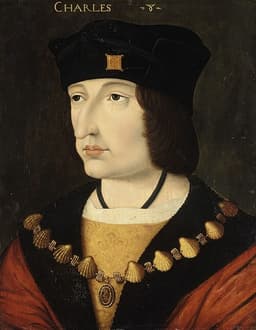
Charles VIII of France
Emperor · Medieval
45.9Total
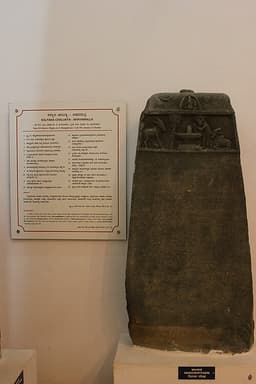
Tailapa II
Emperor · Medieval
60.4Total
Basic Information
Born
1470
957
Died
1498
997
Era
Medieval
Medieval
Nationality
France
India
Occupation
Emperor
Emperor
Civilization
Western
Indian
Score Comparison
Military (10%)
40.0
74.7
Political (20%)
30.8
53.8
Influence (20%)
54.9
61.0
Legacy (20%)
49.2
52.0
Leadership (15%)
45.0
72.0
Strategy (15%)
45.0
58.0
TOTAL
45.9
60.4
Charles VIII of France — Complete Timeline
1494 AD
Invasion of ItalyWar
Charles VIII led a French army into Italy to claim the Kingdom of Naples, beginning the Italian Wars. He marched through Italy unopposed, entered Florence and Rome, and conquered Naples in 1495, but was forced to retreat by the League of Venice.
Italian WarsInvasionCapetian
Impact: global
1495 AD
Battle of FornovoWar◆ Major
Charles VIII's French army fought the League of Venice at Fornovo. Though technically a French victory as they broke through the enemy lines, Charles VIII lost his baggage train and was forced to withdraw from Italy, ending his Neapolitan adventure.
Italian WarsBattleCapetian
Impact: regional
1498 AD
Death by AccidentOther◆ Major
Charles VIII died after striking his head on a low door lintel while walking to watch a tennis match at the Ch
Accidental DeathSuccessionCapetian
Impact: nationaltragic
Tailapa II — Complete Timeline
973 AD
Founding of the Western Chalukya DynastyPolitical Action◆ Major
Tailapa II overthrew the Rashtrakuta ruler Karka II and established the Western Chalukya dynasty. This marked the end of Rashtrakuta rule in the Deccan and the beginning of a new Chalukya era.
Impact: regional
995 AD
Defeat of the Paramara King MunjaWar◆ Major
Tailapa II defeated and captured the Paramara king Munja of Malwa. This victory consolidated Western Chalukya control over the northern Deccan and established their military reputation.
Impact: regional
Expert Analysis
Origins
Charles VIII of France was born on June 30, 1470, at the Château d'Amboise, the only surviving son of King Louis XI and Charlotte of Savoy. His father, known as the "Spider King," raised him in seclusion, fearing conspiracies. Charles received a limited education, focusing on chivalric romances and military tales. He became king at age 13 in 1483, with his elder sister Anne of Beaujeu acting as regent until 1491.
Tailapa II, born around 950 CE in the Deccan region of India, was a feudatory chief of the Rashtrakuta Empire, claiming descent from the earlier Chalukya dynasty. Little is known of his early life, but he rose from a vassal position to challenge the declining Rashtrakuta ruler Karka II. His background was martial, rooted in the warrior traditions of the Deccan.
Rise to Power
Charles VIII's rise was shaped by his regency and the Treaty of Étaples (1492) with England, which secured his northern border. In 1491, he married Anne of Brittany, effectively annexing Brittany to France. His ambition turned to Italy when the childless King Ferdinand I of Naples died in 1494. Charles claimed the Kingdom of Naples through his Angevin ancestry. He invaded Italy in September 1494 with a large army, including new artillery, and marched unopposed to Naples, entering the city in February 1495. This invasion triggered the Italian Wars, a series of conflicts lasting until 1559.
Tailapa II rose by exploiting the weakness of the Rashtrakuta Empire after the death of Krishna III. Around 973 CE, he rebelled against Karka II, defeating him and capturing the capital Manyakheta. He founded the Western Chalukya dynasty, which ruled from Kalyani (modern Basavakalyan). His victory was swift, taking advantage of Rashtrakuta decline after their wars with the Paramaras and Cholas.
Leadership & Governance
Charles VIII centralized French administration but his governance was focused on military campaigns. He left France under the control of regents during his Italian expedition, leading to domestic unrest. His tax policies funded the war but strained the economy. He had no long-term administrative reforms, and his reign saw the strengthening of the French monarchy through marriage alliances rather than institutional changes.
Tailapa II established a stable dynasty that lasted over 200 years. He reorganized the administration, restoring Chalukya traditions and patronizing Kannada literature and Jainism. He defeated the Paramara king Munja (c. 990-995), securing the northern Deccan. His governance was more focused on consolidation, building alliances, and promoting trade. He scored 72.0 in leadership compared to Charles's 45.0, reflecting his effective state-building.
Triumph & Tragedy
Charles VIII's greatest triumph was the rapid conquest of Naples in 1495, showcasing French military power. However, the League of Venice formed against him, and at the Battle of Fornovo (July 6, 1495), though technically a French victory as they broke through enemy lines, Charles failed to achieve his strategic goals. He lost most of his baggage train and retreated to France. His greatest tragedy was his sudden death on April 7, 1498, when he struck his head on a low door lintel at Amboise, leaving no male heir. This led to the Valois-Orléans succession and continued Italian Wars under Louis XII.
Tailapa II's triumph was the founding of the Western Chalukya dynasty and the defeat of Munja, which cemented his power. He scored 74.7 in military, significantly higher than Charles's 40.0. However, his later campaigns against the Cholas were less successful. His tragedy was the lack of a clear succession; after his death around 997 CE, his son Satyashraya faced rebellions, though the dynasty endured.
Character & Destiny
Charles VIII was described as chivalrous but naive, influenced by his advisors and romantic ideals. His decision to invade Italy was impulsive, driven by claims rather than strategic necessity. His death by accident symbolizes the fragility of his ambitions. Historian Philippe de Commynes noted his "good nature but lack of judgment."
Tailapa II was a pragmatic and ambitious warrior, skilled at timing his rebellion. He was patient, waiting for the Rashtrakuta decline, and demonstrated military skill in battle. His destiny was to restore Chalukya glory, and his character of decisive action shaped his success.
Legacy
Charles VIII's legacy is the initiation of the Italian Wars, which devastated Italy and bankrupted France. He scored 54.9 in influence and 49.2 in legacy. The wars introduced new military technology like artillery and pike formations, changing European warfare. However, his personal achievements were overshadowed by his successors.
Tailapa II's legacy is more enduring: he founded a dynasty that lasted from 973 to 1189 CE, ruling over a prosperous Deccan. He scored 61.0 in influence and 52.0 in legacy. The Western Chalukyas patronized architecture, literature, and trade, leaving monuments like the Kailasanatha Temple. His defeat of the Paramaras secured the northern Deccan for centuries.
Conclusion
Tailapa II had a greater impact than Charles VIII. With a total score of 60.4 against Charles's 45.9, Tailapa's military, leadership, and strategic scores were all higher. He founded a lasting dynasty that shaped the Deccan's political landscape for over two centuries, while Charles's Italian Wars, though significant, were a product of a broader European power struggle that he did not control. Charles's death by accident underscores his lack of lasting personal achievement. Tailapa's decisive victory over the Rashtrakutas and the Paramaras, and his establishment of a stable state, make him the more consequential figure.
Rankings
🥇
Tailapa IILeader
Mil: 74.7Pol: 53.8Inf: 61.0
60.4
🥈
Charles VIII of France
Mil: 40.0Pol: 30.8Inf: 54.9
45.9
+14.5 behind
How This Comparison Works
Algorithm
Each figure is scored on 6 dimensions (0—100 scale) based on structured historical data: Military (10%), Political (20%), Influence (20%), Legacy (20%), Leadership (15%), Strategy (15%). The weighted total produces the final ranking.
Data Sources
Scores are computed from structured sub-indicators in the database. Scale factors adjust for era (Ancient ×0.85, Modern ×1.0) and civilization size (Eastern ×1.05, Other ×0.80) to account for differences in population and military scale.
Maximum 3 Figures
Comparisons are limited to 2—3 figures to ensure readability and statistical meaningfulness.
Error Margins
±5 points per dimension — Sub-scores are derived from historical records with inherent uncertainty. Two figures within 5 points on a dimension should be considered roughly equivalent in that area.
Total Score Accuracy
±3 points overall — The weighted combination of 6 dimensions produces a total score with approximately ±3 points of uncertainty. Differences of less than 3 points are not statistically significant— the figures are effectively tied.
Known Limitations
- Historical records are incomplete and uneven across civilizations
- Figures from oral-tradition societies may be underrepresented
- Occupation labels can misclassify multi-role figures
- Scores measure capability and impact, not moral character
- Quantitative scoring is a comparison tool, not absolute truth
Capability Radar
Military (10%) — Battles & Warfare
Battles
45
70
Win Rate
40
75
Expansion
50
75
Political (20%) — Governance & Reform
Reform
25
65
Diplomacy
30
60
Economy
20
65
Influence (20%) — Cultural & Global Reach
Cultural
25
55
Global
35
40
Legacy (20%) — Historical Impact
Historical
55
60
Longevity
30
50
Leadership (15%) — Power & Stability
Tenure
40
70
Stability
15
60
Strategy (15%) — Tactics & Innovation
Strategy
30
70
Tactics
35
65
Reform
20
60
Similar Comparisons
Comments & Discussion
No comments yet. Be the first to share your thoughts!