Loading...
Charles VII of France vs Ghiyath al-Din Tughluq
Charles VII of France leads by 2.0 pts · 2 figures compared
…
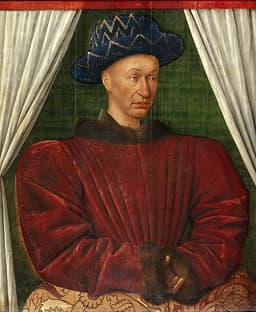
Charles VII of France
Emperor · Medieval
61.7Total
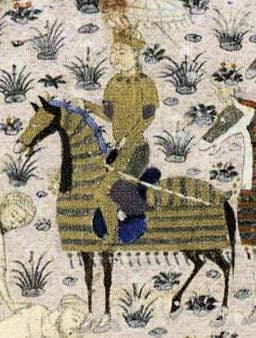
Ghiyath al-Din Tughluq
Emperor · Medieval
59.7Total
Basic Information
Born
1403
1300
Died
1461
1325
Era
Medieval
Medieval
Nationality
France
India
Occupation
Emperor
Emperor
Civilization
Western
Indian
Score Comparison
Military (10%)
67.5
61.7
Political (20%)
70.0
68.0
Influence (20%)
56.7
56.4
Legacy (20%)
55.0
48.3
Leadership (15%)
66.0
74.0
Strategy (15%)
66.3
60.7
TOTAL
61.7
59.7
Charles VII of France — Complete Timeline
1429 AD
Siege of OrléansWar◆ Major
Joan of Arc, acting under Charles VII's authority, led French forces to lift the English siege of Orl
Hundred Years' WarSiegeJoan of Arc
Impact: regional
Coronation at ReimsPolitical Action
Charles VII was crowned King of France at Reims Cathedral, a traditional site for French coronations, following the military successes of Joan of Arc. This coronation legitimized his claim against the English-backed Henry VI and boosted French morale.
CoronationHundred Years' WarJoan of Arc
Impact: nationalconstructive
1435 AD
Treaty of ArrasPolitical Action◆ Major
Charles VII signed the Treaty of Arras with Philip the Good of Burgundy, ending the Burgundian alliance with England. This diplomatic victory isolated the English and paved the way for French reconquest of English-held territories.
TreatyBurgundyDiplomacy
Impact: regionalconstructive
1438 AD
Pragmatic Sanction of BourgesReform◆ Major
Charles VII issued the Pragmatic Sanction of Bourges, asserting the authority of the French crown over the Catholic Church in France. It limited papal interference in ecclesiastical appointments and revenues, strengthening royal control.
Church ReformRoyal AuthorityGallicanism
Impact: nationalconstructive
1453 AD
Battle of CastillonWar
French forces under Charles VII's command defeated the English at Castillon, the final battle of the Hundred Years' War. The English lost Gascony, ending their territorial presence in France except for Calais.
Hundred Years' WarBattleEnd of War
Impact: regional
Ghiyath al-Din Tughluq — Complete Timeline
1320 AD
Founding of the Tughluq DynastyPolitical Action
Ghiyath al-Din Tughluq, then governor of Dipalpur, led a revolt against the Khilji sultan Khusrau Khan. He defeated Khusrau Khan at the Battle of Saraswati and captured Delhi, proclaiming himself sultan. This established the Tughluq dynasty.
Dynasty FoundingRevoltDelhi Sultanate
Impact: nationalconstructive
1321 AD
Construction of Tughlaqabad FortCultural
Ghiyath al-Din Tughluq founded the city of Tughlaqabad near Delhi and built a massive fort there. The fort was designed to be impregnable, with thick walls and a strategic location. It served as his capital and a symbol of his power.
Fort BuildingUrban PlanningArchitecture
constructive
1323 AD
Conquest of WarangalWar◆ Major
Ghiyath al-Din Tughluq led a campaign against the Kakatiya kingdom of Warangal. He defeated the Kakatiya ruler Prataparudra II and annexed the region to the Delhi Sultanate. This extended Tughluq control into the Deccan.
Deccan CampaignKakatiya WarTerritorial Expansion
Impact: regionaldestructive
1325 AD
Death in a Pavilion CollapseOther◆ Major
Ghiyath al-Din Tughluq was killed when a wooden pavilion collapsed on him during a victory parade near Tughlaqabad. The structure was reportedly built hastily. His son Muhammad bin Tughluq succeeded him amid suspicions of foul play.
Accidental DeathSuccessionConspiracy
Impact: nationaltragic
Expert Analysis
Origins
Charles VII of France was born in 1403 to King Charles VI and Isabeau of Bavaria. His father suffered from mental illness, leaving the kingdom in chaos. Charles was raised in a court fractured by civil war between the Armagnacs and Burgundians. He was disinherited by the Treaty of Troyes in 1420, which recognized Henry V of England as heir to France. His education was limited, but he developed a cautious, pragmatic nature.
Ghiyath al-Din Tughluq, born around 1320 in the Punjab region, was of Turkic descent. His father was a slave soldier in the service of the Khilji dynasty. Ghiyath rose through military ranks, becoming governor of Dipalpur under Sultan Alauddin Khilji. He gained experience in border warfare against Mongols and internal rebellions. His upbringing was martial, focusing on strategy and leadership.
Rise to Power
Charles VII became dauphin after the deaths of his older brothers. In 1422, his father died, and Charles claimed the throne, but much of northern France was under English control. His position was precarious: he lacked funds, a strong army, and full recognition. The turning point came in 1429 when Joan of Arc arrived at his court, claiming divine guidance. She led the relief of Orléans, a victory that boosted morale. Charles was crowned at Reims in July 1429, legitimizing his rule. The coronation was a key event, scoring high in political significance.
Ghiyath al-Din Tughluq rose by exploiting instability. In 1321, Sultan Khusrau Khan overthrew the Khilji dynasty. Ghiyath, then governor of Dipalpur, led a revolt. He defeated Khusrau Khan at the Battle of Saraswati in 1321 and captured Delhi. He founded the Tughluq dynasty, taking the title Ghiyath al-Din Tughluq. His rise was swift, based on military prowess and political acumen. His military score of 61.7 reflects competent but not extraordinary generalship, while his political score of 68.0 shows effective statecraft.
Leadership & Governance
Charles VII focused on restoring royal authority. He reorganized the army, creating a standing force of compagnies d'ordonnance, financed by a permanent tax (taille). This reduced reliance on feudal levies. He also issued the Pragmatic Sanction of Bourges in 1438, asserting control over the French Church and limiting papal interference. His leadership style was cautious and diplomatic, relying on advisors like Joan of Arc and later Jacques Coeur. However, he was indecisive at times, and his treatment of Joan (not intervening in her trial) shows a pragmatic ruthlessness.
Ghiyath al-Din Tughluq governed as a strong centralizer. He suppressed rebellions, reformed the revenue system, and promoted agriculture. He built the Tughlaqabad Fort, a massive fortification designed to secure Delhi. His leadership style was active and hands-on, earning a leadership score of 74.0. He personally led campaigns, including the conquest of Warangal in 1323, where he defeated the Kakatiya ruler Prataparudra II. His administrative reforms aimed at stability, but his reign was short (1321-1325), limiting his impact.
Triumph & Tragedy
Charles VII's greatest triumph was ending the Hundred Years' War. The Battle of Castillon in 1453 saw French artillery destroy an English army, securing victory. He also expanded royal power through fiscal and military reforms. His tragedy was the betrayal of Joan of Arc: he failed to save her from execution in 1431, a moral stain. Later, he became paranoid, exiling his son Louis XI. His legacy score of 55.0 reflects mixed achievements.
Ghiyath al-Din Tughluq's triumph was founding a dynasty that lasted nearly a century. His conquest of Warangal extended Delhi's rule south. His tragedy was his sudden death: in 1325, a wooden pavilion collapsed during a victory parade, killing him. The structure was reportedly built hastily, perhaps sabotaged. His influence score of 56.4 is modest, as his reign was too short for lasting reforms.
Character & Destiny
Charles VII was cautious, patient, and pragmatic. He survived disinheritance and civil war by biding his time. His reliance on Joan of Arc was a gamble that paid off. However, his indecision and ingratitude toward Joan reveal a calculating nature. He was known as 'Charles the Victorious,' but also as 'the Well-Served' for his reliance on capable advisors.
Ghiyath al-Din Tughluq was ambitious, energetic, and authoritarian. He seized power through rebellion and ruled with an iron hand. His construction of Tughlaqabad shows a desire for security and legacy. His death in a freak accident underscores the precariousness of medieval rule. Historians note his administrative competence but lack of long-term impact.
Legacy
Charles VII's legacy is the consolidation of France as a centralized state. His military reforms laid the groundwork for the French army. The Pragmatic Sanction influenced Gallicanism, limiting papal power. He is remembered as the king who ended the Hundred Years' War, though Joan of Arc often overshadows him. His total score of 61.7 reflects solid but not exceptional achievements.
Ghiyath al-Din Tughluq's legacy is the Tughluq dynasty, which ruled until 1414. His fortifications and administrative reforms influenced later sultans. However, his dynasty declined due to rebellions and economic mismanagement. He is often overlooked compared to later rulers like Muhammad bin Tughluq. His total score of 59.7 indicates a competent but limited impact.
Conclusion
Charles VII of France had a greater impact than Ghiyath al-Din Tughluq. Despite a lower leadership score (66.0 vs 74.0), Charles's political and military achievements were more consequential. He ended a century-long war, unified France, and established institutions that shaped French absolutism. His total score of 61.7 surpasses Tughluq's 59.7. Tughluq's reign was too brief to leave a lasting mark. Charles's legacy endured for centuries, while Tughluq's dynasty faded. In the long view, Charles VII stands as a pivotal figure in European history, whereas Tughluq was a capable but transient ruler.
Rankings
🥇
Charles VII of FranceLeader
Mil: 67.5Pol: 70.0Inf: 56.7
61.7
🥈
Ghiyath al-Din Tughluq
Mil: 61.7Pol: 68.0Inf: 56.4
59.7
+2.0 behind
How This Comparison Works
Algorithm
Each figure is scored on 6 dimensions (0—100 scale) based on structured historical data: Military (10%), Political (20%), Influence (20%), Legacy (20%), Leadership (15%), Strategy (15%). The weighted total produces the final ranking.
Data Sources
Scores are computed from structured sub-indicators in the database. Scale factors adjust for era (Ancient ×0.85, Modern ×1.0) and civilization size (Eastern ×1.05, Other ×0.80) to account for differences in population and military scale.
Maximum 3 Figures
Comparisons are limited to 2—3 figures to ensure readability and statistical meaningfulness.
Error Margins
±5 points per dimension — Sub-scores are derived from historical records with inherent uncertainty. Two figures within 5 points on a dimension should be considered roughly equivalent in that area.
Total Score Accuracy
±3 points overall — The weighted combination of 6 dimensions produces a total score with approximately ±3 points of uncertainty. Differences of less than 3 points are not statistically significant— the figures are effectively tied.
Known Limitations
- Historical records are incomplete and uneven across civilizations
- Figures from oral-tradition societies may be underrepresented
- Occupation labels can misclassify multi-role figures
- Scores measure capability and impact, not moral character
- Quantitative scoring is a comparison tool, not absolute truth
Capability Radar
Military (10%) — Battles & Warfare
Battles
65
65
Win Rate
70
70
Expansion
55
70
Political (20%) — Governance & Reform
Reform
85
55
Diplomacy
75
50
Economy
70
50
Influence (20%) — Cultural & Global Reach
Cultural
60
40
Global
55
30
Legacy (20%) — Historical Impact
Historical
75
50
Longevity
70
40
Leadership (15%) — Power & Stability
Tenure
70
60
Stability
65
45
Strategy (15%) — Tactics & Innovation
Strategy
75
65
Tactics
60
60
Reform
80
55
Similar Comparisons
Comments & Discussion
No comments yet. Be the first to share your thoughts!