Loading...
Borommarachathirat II vs Charles VII of France
Charles VII of France leads by 4.2 pts · 2 figures compared
…
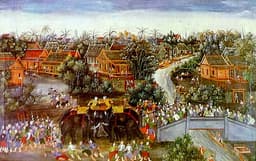
Borommarachathirat II
Emperor · Medieval
57.5Total
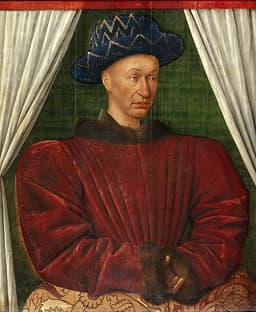
Charles VII of France
Emperor · Medieval
61.7Total
Basic Information
Born
1389
1403
Died
1448
1461
Era
Medieval
Medieval
Nationality
Thailand
France
Occupation
Emperor
Emperor
Civilization
Eastern
Western
Score Comparison
Military (10%)
70.0
67.5
Political (20%)
61.3
70.0
Influence (20%)
54.9
56.7
Legacy (20%)
46.7
55.0
Leadership (15%)
68.0
66.0
Strategy (15%)
57.5
66.3
TOTAL
57.5
61.7
Borommarachathirat II — Complete Timeline
1424 AD
Construction of Wat RatchaburanaCultural
Borommarachathirat II ordered the construction of Wat Ratchaburana in Ayutthaya to commemorate his two older brothers who died in a duel for the throne. The temple became a significant religious site and a symbol of royal patronage of Buddhism, featuring a prominent prang and crypt.
Temple ConstructionBuddhismRoyal Patronage
Impact: nationalconstructive
1431 AD
Sack of AngkorWar
Borommarachathirat II led Ayutthayan forces in a successful siege of Angkor, the capital of the Khmer Empire. The city was captured and looted, leading to the Khmer abandonment of Angkor and the relocation of their capital to Phnom Penh. This event marked the decline of the Khmer Empire.
Military ConquestKhmer EmpireAngkor
Impact: regionaldestructive
1440 AD
Campaign Against the Kingdom of LannaWar◆ Major
Borommarachathirat II launched a military expedition against the northern kingdom of Lanna, capturing several towns and asserting Ayutthaya's dominance in the region. The campaign resulted in a temporary tributary relationship with Lanna, expanding Ayutthaya's sphere of influence.
Military CampaignLannaTerritorial Expansion
Impact: regional
Charles VII of France — Complete Timeline
1429 AD
Siege of OrléansWar◆ Major
Joan of Arc, acting under Charles VII's authority, led French forces to lift the English siege of Orl
Hundred Years' WarSiegeJoan of Arc
Impact: regional
Coronation at ReimsPolitical Action
Charles VII was crowned King of France at Reims Cathedral, a traditional site for French coronations, following the military successes of Joan of Arc. This coronation legitimized his claim against the English-backed Henry VI and boosted French morale.
CoronationHundred Years' WarJoan of Arc
Impact: nationalconstructive
1435 AD
Treaty of ArrasPolitical Action◆ Major
Charles VII signed the Treaty of Arras with Philip the Good of Burgundy, ending the Burgundian alliance with England. This diplomatic victory isolated the English and paved the way for French reconquest of English-held territories.
TreatyBurgundyDiplomacy
Impact: regionalconstructive
1438 AD
Pragmatic Sanction of BourgesReform◆ Major
Charles VII issued the Pragmatic Sanction of Bourges, asserting the authority of the French crown over the Catholic Church in France. It limited papal interference in ecclesiastical appointments and revenues, strengthening royal control.
Church ReformRoyal AuthorityGallicanism
Impact: nationalconstructive
1453 AD
Battle of CastillonWar
French forces under Charles VII's command defeated the English at Castillon, the final battle of the Hundred Years' War. The English lost Gascony, ending their territorial presence in France except for Calais.
Hundred Years' WarBattleEnd of War
Impact: regional
Expert Analysis
Origins
Borommarachathirat II (also known as King Sam Phraya) was born around 1408 as the third son of King Intharacha of Ayutthaya. His early life was shaped by the courtly intrigues of the Siamese kingdom. He received a traditional education in Buddhist scriptures and military arts. His two older brothers died in a duel for the throne, leaving him as the heir.
Charles VII of France was born on 22 February 1403 in Paris, the fifth son of King Charles VI and Isabeau of Bavaria. His upbringing was marred by his father's mental illness and the ongoing conflict with England. He was raised in the midst of civil war between the Armagnacs and Burgundians. He received a knightly education but was often overshadowed by his older brothers.
Rise to Power
Borommarachathirat II ascended the throne in 1424 after his father's death and the fatal duel between his brothers. He quickly consolidated power by eliminating rivals. His early reign focused on expanding Ayutthaya's influence. In 1431, he led a campaign against the Khmer Empire, culminating in the sack of Angkor. This victory established his reputation as a military leader and brought immense wealth to Ayutthaya.
Charles VII's rise was far more precarious. He became Dauphin in 1415 after his brothers died. In 1420, the Treaty of Troyes disinherited him, naming Henry V of England as heir. Charles was forced to flee Paris and rule from Bourges, controlling only a fraction of France. His turning point came in 1429 when Joan of Arc arrived at his court, convincing him to allow her to lead an army to relieve Orléans. After the victory at Orléans, Charles was crowned at Reims on 17 July 1429, legitimizing his claim.
Leadership & Governance
Borommarachathirat II governed as an absolute monarch typical of Ayutthaya. He centralized administration, appointed loyal nobles to key positions, and promoted Buddhism. He commissioned Wat Ratchaburana to commemorate his brothers, reflecting his use of religion to legitimize rule. His military campaigns against Lanna (1442-1443) demonstrated assertive expansionism. However, his governance lacked institutional reforms; power remained personal.
Charles VII reformed French governance significantly. He issued the Pragmatic Sanction of Bourges in 1438, asserting royal authority over the Church and limiting papal interference. He established the first standing army (the compagnies d'ordonnance) in 1445, funded by a permanent tax (taille). He also centralized royal finances and administration. His leadership during the Hundred Years' War was cautious but effective, relying on competent commanders like Joan of Arc and later the Bureau brothers.
Triumph & Tragedy
Borommarachathirat II's greatest triumph was the sack of Angkor in 1431, which broke Khmer power and brought Ayutthaya dominance in the region. He also expanded northward against Lanna. However, his legacy is marred by the destruction of Angkor, which led to the decline of Khmer civilization. His military score of 70.0 reflects success but not strategic brilliance (57.5). Politically, he scored 61.3, but his influence was limited to Southeast Asia.
Charles VII's triumph is the end of the Hundred Years' War. The Battle of Castillon in 1453 secured French victory, expelling the English from all but Calais. He also signed the Treaty of Arras in 1435, ending the Burgundian alliance with England. His tragedy was his dependence on Joan of Arc, whom he failed to save from execution in 1431. His political score of 70.0 shows adept diplomacy, but his military score of 67.5 is slightly below Borommarachathirat II's.
Character & Destiny
Borommarachathirat II was decisive and ruthless. He seized the throne after his brothers' deaths and did not hesitate to eliminate rivals. His character was shaped by the violent succession politics of Ayutthaya. He was a patron of Buddhism but also a conqueror. His destiny was to expand the kingdom, but his lack of institutional legacy meant his achievements faded.
Charles VII was cautious, possibly indecisive, but pragmatic. He was known as "the Victorious" but also "the Well-Served" because he relied on capable advisors. His character evolved from a timid Dauphin to a confident king. His fate was intertwined with Joan of Arc, whose intervention saved his cause. His strategic score of 66.3 reflects careful planning, while his leadership score of 66.0 shows steady command.
Legacy
Borommarachathirat II's legacy is mixed. He is remembered for sacking Angkor and building Wat Ratchaburana, but his impact was regional. The Angkor sack led to the decline of the Khmer Empire, but Ayutthaya itself fell to the Burmese in 1767. His total score of 57.5 reflects limited enduring influence (54.9) and legacy (46.7).
Charles VII's legacy is profound. He ended the Hundred Years' War, established a standing army, and strengthened royal authority. The Pragmatic Sanction of Bourges influenced the Gallican Church. He set the stage for French absolutism. His total score of 61.7, with legacy at 55.0, shows greater lasting impact. His influence (56.7) also surpasses Borommarachathirat II's.
Conclusion
Charles VII had greater impact. With a total score of 61.7 versus 57.5, he outperformed Borommarachathirat II in political (70.0 vs 61.3), influence (56.7 vs 54.9), legacy (55.0 vs 46.7), and strategy (66.3 vs 57.5). While Borommarachathirat II's military score (70.0) slightly exceeds Charles's (67.5), the French king's reforms and ending of a century-long war reshaped Europe. Borommarachathirat II's triumphs were temporary; Charles VII's institutional changes endured. Therefore, Charles VII stands as the more consequential historical figure.
Rankings
🥇
Charles VII of FranceLeader
Mil: 67.5Pol: 70.0Inf: 56.7
61.7
🥈
Borommarachathirat II
Mil: 70.0Pol: 61.3Inf: 54.9
57.5
+4.2 behind
How This Comparison Works
Algorithm
Each figure is scored on 6 dimensions (0—100 scale) based on structured historical data: Military (10%), Political (20%), Influence (20%), Legacy (20%), Leadership (15%), Strategy (15%). The weighted total produces the final ranking.
Data Sources
Scores are computed from structured sub-indicators in the database. Scale factors adjust for era (Ancient ×0.85, Modern ×1.0) and civilization size (Eastern ×1.05, Other ×0.80) to account for differences in population and military scale.
Maximum 3 Figures
Comparisons are limited to 2—3 figures to ensure readability and statistical meaningfulness.
Error Margins
±5 points per dimension — Sub-scores are derived from historical records with inherent uncertainty. Two figures within 5 points on a dimension should be considered roughly equivalent in that area.
Total Score Accuracy
±3 points overall — The weighted combination of 6 dimensions produces a total score with approximately ±3 points of uncertainty. Differences of less than 3 points are not statistically significant— the figures are effectively tied.
Known Limitations
- Historical records are incomplete and uneven across civilizations
- Figures from oral-tradition societies may be underrepresented
- Occupation labels can misclassify multi-role figures
- Scores measure capability and impact, not moral character
- Quantitative scoring is a comparison tool, not absolute truth
Capability Radar
Military (10%) — Battles & Warfare
Battles
55
65
Win Rate
60
70
Expansion
60
55
Political (20%) — Governance & Reform
Reform
45
85
Diplomacy
50
75
Economy
50
70
Influence (20%) — Cultural & Global Reach
Cultural
40
60
Global
30
55
Legacy (20%) — Historical Impact
Historical
45
75
Longevity
35
70
Leadership (15%) — Power & Stability
Tenure
70
70
Stability
55
65
Strategy (15%) — Tactics & Innovation
Strategy
55
75
Tactics
50
60
Reform
40
80
Similar Comparisons
Comments & Discussion
No comments yet. Be the first to share your thoughts!