Loading...
Charles VII of France vs Julius Caesar
Julius Caesar leads by 21.1 pts · 2 figures compared
…
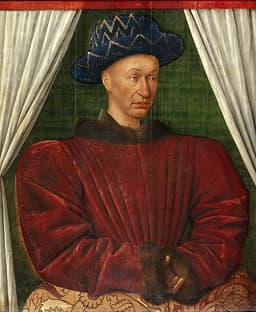
Charles VII of France
Emperor · Medieval
61.7Total

Julius Caesar
General · Ancient
82.8Total
Basic Information
Born
1403
-100
Died
1461
-44
Era
Medieval
Ancient
Nationality
France
Roman Republic
Occupation
Emperor
General
Civilization
Western
Western
Score Comparison
Military (10%)
67.5
88.0
Political (20%)
70.0
78.0
Influence (20%)
56.7
85.0
Legacy (20%)
55.0
82.0
Leadership (15%)
66.0
80.0
Strategy (15%)
66.3
85.0
TOTAL
61.7
82.8
Charles VII of France — Complete Timeline
1429 AD
Siege of OrléansWar◆ Major
Joan of Arc, acting under Charles VII's authority, led French forces to lift the English siege of Orl
Hundred Years' WarSiegeJoan of Arc
Impact: regional
Coronation at ReimsPolitical Action
Charles VII was crowned King of France at Reims Cathedral, a traditional site for French coronations, following the military successes of Joan of Arc. This coronation legitimized his claim against the English-backed Henry VI and boosted French morale.
CoronationHundred Years' WarJoan of Arc
Impact: nationalconstructive
1435 AD
Treaty of ArrasPolitical Action◆ Major
Charles VII signed the Treaty of Arras with Philip the Good of Burgundy, ending the Burgundian alliance with England. This diplomatic victory isolated the English and paved the way for French reconquest of English-held territories.
TreatyBurgundyDiplomacy
Impact: regionalconstructive
1438 AD
Pragmatic Sanction of BourgesReform◆ Major
Charles VII issued the Pragmatic Sanction of Bourges, asserting the authority of the French crown over the Catholic Church in France. It limited papal interference in ecclesiastical appointments and revenues, strengthening royal control.
Church ReformRoyal AuthorityGallicanism
Impact: nationalconstructive
1453 AD
Battle of CastillonWar
French forces under Charles VII's command defeated the English at Castillon, the final battle of the Hundred Years' War. The English lost Gascony, ending their territorial presence in France except for Calais.
Hundred Years' WarBattleEnd of War
Impact: regional
Julius Caesar — Complete Timeline
58 BC
Gallic WarsWar◆ Major
Caesar, as proconsul of Gaul, launched a series of campaigns that conquered all of Gaul (modern France, Belgium, and parts of Switzerland). He fought numerous battles, including against the Helvetii, the Belgae, and the Gallic chieftain Vercingetorix. The wars brought immense wealth and a loyal army to Caesar.
Gallic WarsConquestRoman Expansion
Impact: regional
49 BC
Crossing the RubiconPolitical Action◆ Major
Caesar led Legio XIII across the Rubicon River into Italy, defying the Roman Senate's order to disband his army. This act triggered a civil war against Pompey and the Optimates, ultimately leading to Caesar's dictatorship and the end of the Roman Republic.
Roman Civil WarEnd of RepublicPower Struggle
Impact: global
48 BC
Battle of PharsalusWar◆ Major
Caesar's outnumbered army defeated the larger forces of Pompey the Great at Pharsalus in Greece. Caesar's tactical use of a reserve line to counter Pompey's cavalry charge proved decisive. Pompey fled to Egypt, where he was assassinated, leaving Caesar as the undisputed master of the Roman world.
Roman Civil WarBattleDecisive Victory
Impact: regional
44 BC
Appointment as Dictator for LifePolitical Action◆ Major
The Roman Senate appointed Caesar dictator perpetuo (dictator for life), granting him unprecedented personal power. This move concentrated military, legislative, and judicial authority in one person, effectively ending the Roman Republic's traditional system of checks and balances and alarming many senators.
DictatorshipEnd of RepublicPower Consolidation
Impact: regionaldestructive
Assassination on the Ides of MarchPolitical Action◆ Major
A group of Roman senators, led by Marcus Junius Brutus and Gaius Cassius Longinus, stabbed Caesar to death at a meeting of the Senate in the Theatre of Pompey. The assassination was intended to restore the Republic, but instead triggered another civil war that led to the rise of the Roman Empire.
AssassinationRoman PoliticsEnd of Republic
Impact: globaldestructive
Expert Analysis
charles-vii-of-france-vs-julius-caesar
# The Conqueror and the Victorious
On a January morning in 49 BCE, a Roman general stood on the banks of a small river in northern Italy. The Rubicon was little more than a stream, but crossing it with an army meant civil war—an act of treason against the Republic. Julius Caesar hesitated only briefly before giving the order. In contrast, nearly fifteen centuries later, another king sat in a drafty castle at Chinon, uncertain and isolated, as English armies ravaged his kingdom. Charles VII of France was a man who seemed destined for obscurity, yet he would end a war that had lasted a century. Both men transformed their worlds, but they did so from opposite ends of the spectrum of human ambition: one who reached for everything and lost it, another who waited for everything and won it.
Origins
Caesar was born into the chaos of the late Roman Republic, a time when noble families competed for power through bribery, alliances, and military glory. His family, the Julii, claimed descent from the goddess Venus, but they were not among the richest. From childhood, Caesar learned that in Rome, status was earned through audacity. He was captured by pirates as a young man, laughed at their ransom demand, and later crucified them after his release. This was not cruelty for its own sake; it was a calculated display of Roman might.
Charles VII was born into a different kind of chaos. In 1403, France was bleeding from the Hundred Years' War, and the royal family was torn apart by the madness of Charles VI. Young Charles grew up in a court where his own mother, Queen Isabeau, disinherited him and declared him illegitimate. He was the Dauphin, but he had no army, no treasury, and no confidence. Where Caesar learned that the world rewards the bold, Charles learned that survival depends on patience and the loyalty of others.
Rise to Power
Caesar’s path was a masterpiece of strategic timing. He climbed the political ladder through military commands in Spain, then formed the First Triumvirate with Pompey and Crassus. The conquest of Gaul (58–50 BCE) was not just a war; it was a political machine. Caesar’s *Commentaries* turned brutal campaigns into heroic narratives, building his reputation with the Roman public. When the Senate ordered him to disband his army, he knew that compliance meant prosecution and exile. The Rubicon was the only door left open.
Charles VII’s rise was slower and more painful. In 1429, when he was crowned at Reims Cathedral, it was a political miracle. The English controlled Paris, and Charles had been mocked as the “King of Bourges” for his limited territory. His turning point came not from his own sword but from a peasant girl. Joan of Arc appeared at his court, convinced him of her divine mission, and led his army to lift the Siege of Orléans. Charles did not lead the charge; he allowed himself to be led. That act of trust—or perhaps desperation—changed everything.
Leadership & Governance
Caesar governed through sheer force of personality and military genius. As dictator, he reformed the calendar, granted citizenship to provincials, and launched massive building projects. His strategy was always offensive: attack first, negotiate later. At the Battle of Alesia (52 BCE), he besieged the Gallic stronghold while simultaneously building defenses against a relief army—a double siege that remains a textbook example of military brilliance. But his governance was also reckless. He centralized power, offended the Senate, and treated the Republic as his personal property.
Charles VII governed through political wisdom and institutional reform. After the Treaty of Arras in 1435, he skillfully detached Burgundy from the English alliance, turning a former enemy into a neutral partner. The Pragmatic Sanction of Bourges in 1438 asserted royal control over the French Church, strengthening the crown without provoking open rebellion. His military reforms—creating a standing army and standardizing artillery—culminated in the Battle of Castillon in 1453, where French cannons destroyed the English army. Where Caesar conquered through speed and surprise, Charles conquered through organization and patience.
Triumph & Tragedy
Caesar’s greatest triumph was his conquest of Gaul, which added a vast territory to the Roman world and made him the most powerful man in the Republic. His greatest tragedy was the Ides of March, 44 BCE, when sixty senators stabbed him to death. His last words to Brutus—“You too, my child?”—echo through history as a warning about the limits of personal power.
Charles VII’s greatest triumph was the end of the Hundred Years' War in 1453, a victory that united France and expelled the English from all territory except Calais. His greatest tragedy was the betrayal of Joan of Arc. After the English captured her in 1430, Charles did nothing to ransom or rescue her. She was burned at the stake in Rouen. The king who owed his crown to a peasant girl let her die alone.
Character & Destiny
Caesar’s character was a double-edged sword. His ambition was boundless, his charm irresistible, his confidence absolute. But he could not imagine a world where his enemies were anything but obstacles to be crushed. This blindness led him to forgive his assassins and ignore warnings—a fatal arrogance.
Charles VII’s character was shaped by insecurity. He was cautious, suspicious, and often indecisive. Yet these qualities served him well in a war of attrition. He knew when to wait, when to delegate, and when to compromise. His destiny was not to be remembered as a warrior but as a restorer—the king who rebuilt France after generations of ruin.
Legacy
Caesar’s legacy is the Roman Empire itself. His adopted heir, Octavian, became Augustus, and the Republic became a monarchy. Caesar’s name became a title: Kaiser, Tsar. He is remembered as the man who changed the course of Western civilization, for better and for worse.
Charles VII’s legacy is the modern French state. He centralized power, professionalized the military, and ended the medieval nightmare of the Hundred Years' War. Yet he is often overshadowed by Joan of Arc, the saint who saved him, and by his son, Louis XI, the spider king who perfected his father’s reforms.
Conclusion
Caesar and Charles VII offer two models of historical greatness. Caesar’s story is a tragedy of overreach—a man who conquered everything except his own limits. Charles VII’s story is a triumph of endurance—a king who succeeded by knowing what not to do. One crossed a river and changed the world; the other waited for a miracle and built a kingdom. In the end, perhaps the greatest lesson is that history does not favor the bold or the patient alone. It favors those who understand the moment they are given.
Rankings
🥇
Julius CaesarLeader
Mil: 88.0Pol: 78.0Inf: 85.0
82.8
🥈
Charles VII of France
Mil: 67.5Pol: 70.0Inf: 56.7
61.7
+21.1 behind
How This Comparison Works
Algorithm
Each figure is scored on 6 dimensions (0—100 scale) based on structured historical data: Military (10%), Political (20%), Influence (20%), Legacy (20%), Leadership (15%), Strategy (15%). The weighted total produces the final ranking.
Data Sources
Scores are computed from structured sub-indicators in the database. Scale factors adjust for era (Ancient ×0.85, Modern ×1.0) and civilization size (Eastern ×1.05, Other ×0.80) to account for differences in population and military scale.
Maximum 3 Figures
Comparisons are limited to 2—3 figures to ensure readability and statistical meaningfulness.
Error Margins
±5 points per dimension — Sub-scores are derived from historical records with inherent uncertainty. Two figures within 5 points on a dimension should be considered roughly equivalent in that area.
Total Score Accuracy
±3 points overall — The weighted combination of 6 dimensions produces a total score with approximately ±3 points of uncertainty. Differences of less than 3 points are not statistically significant— the figures are effectively tied.
Known Limitations
- Historical records are incomplete and uneven across civilizations
- Figures from oral-tradition societies may be underrepresented
- Occupation labels can misclassify multi-role figures
- Scores measure capability and impact, not moral character
- Quantitative scoring is a comparison tool, not absolute truth
Capability Radar
Military (10%) — Battles & Warfare
Battles
65
95
Win Rate
70
92
Expansion
55
97
Political (20%) — Governance & Reform
Reform
85
90
Diplomacy
75
85
Economy
70
82
Influence (20%) — Cultural & Global Reach
Cultural
60
88
Global
55
94
Legacy (20%) — Historical Impact
Historical
75
95
Longevity
70
96
Leadership (15%) — Power & Stability
Tenure
70
75
Stability
65
60
Strategy (15%) — Tactics & Innovation
Strategy
75
94
Tactics
60
96
Reform
80
88
Similar Comparisons
Comments & Discussion
No comments yet. Be the first to share your thoughts!