Loading...
Charles VII of France vs Qin Shi Huang
Qin Shi Huang leads by 23.5 pts · 2 figures compared
…
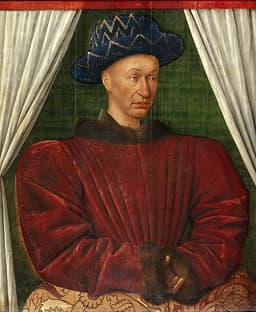
Charles VII of France
Emperor · Medieval
61.7Total
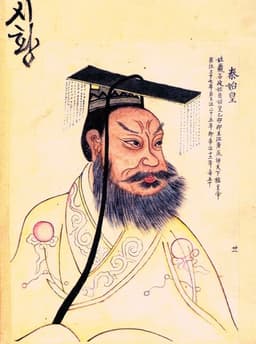
Qin Shi Huang
Emperor · Ancient
85.2Total
Basic Information
Born
1403
-259
Died
1461
-210
Era
Medieval
Ancient
Nationality
France
China
Occupation
Emperor
Emperor
Civilization
Western
Eastern
Score Comparison
Military (10%)
67.5
80.0
Political (20%)
70.0
90.0
Influence (20%)
56.7
85.0
Legacy (20%)
55.0
90.0
Leadership (15%)
66.0
78.0
Strategy (15%)
66.3
82.0
TOTAL
61.7
85.2
Charles VII of France — Complete Timeline
1429 AD
Siege of OrléansWar◆ Major
Joan of Arc, acting under Charles VII's authority, led French forces to lift the English siege of Orl
Hundred Years' WarSiegeJoan of Arc
Impact: regional
Coronation at ReimsPolitical Action
Charles VII was crowned King of France at Reims Cathedral, a traditional site for French coronations, following the military successes of Joan of Arc. This coronation legitimized his claim against the English-backed Henry VI and boosted French morale.
CoronationHundred Years' WarJoan of Arc
Impact: nationalconstructive
1435 AD
Treaty of ArrasPolitical Action◆ Major
Charles VII signed the Treaty of Arras with Philip the Good of Burgundy, ending the Burgundian alliance with England. This diplomatic victory isolated the English and paved the way for French reconquest of English-held territories.
TreatyBurgundyDiplomacy
Impact: regionalconstructive
1438 AD
Pragmatic Sanction of BourgesReform◆ Major
Charles VII issued the Pragmatic Sanction of Bourges, asserting the authority of the French crown over the Catholic Church in France. It limited papal interference in ecclesiastical appointments and revenues, strengthening royal control.
Church ReformRoyal AuthorityGallicanism
Impact: nationalconstructive
1453 AD
Battle of CastillonWar
French forces under Charles VII's command defeated the English at Castillon, the final battle of the Hundred Years' War. The English lost Gascony, ending their territorial presence in France except for Calais.
Hundred Years' WarBattleEnd of War
Impact: regional
Qin Shi Huang — Complete Timeline
246 BC
Construction of the Mausoleum and Terracotta ArmyOther◆ Major
Qin Shi Huang commissioned a vast mausoleum complex near Xi'an, guarded by thousands of life-sized terracotta soldiers, horses, and chariots. The project employed hundreds of thousands of workers and reflected his obsession with immortality and imperial power.
Impact: global
230 BC
Conquest of the Six Warring StatesWar
From 230 to 221 BCE, Ying Zheng led the Qin state in a series of campaigns that conquered the Han, Zhao, Wei, Chu, Yan, and Qi states. This unified China under a single ruler for the first time, ending the Warring States period.
Impact: global
221 BC
Standardization of Writing, Currency, and MeasurementsReform◆ Major
Qin Shi Huang ordered the standardization of Chinese script, currency, and weights and measures across the unified empire. This facilitated administration, trade, and cultural integration, laying a foundation for future dynasties.
Impact: globalconstructive
Proclamation of the Qin DynastyPolitical Action
After conquering the last independent state, Ying Zheng declared himself Shi Huangdi (First Emperor), founding the Qin Dynasty. He adopted a new title to signify his supreme authority and initiated centralized imperial rule.
Impact: global
214 BC
Initiation of the Great Wall ConstructionOther◆ Major
Qin Shi Huang ordered the connection and extension of existing northern fortifications to create a unified defensive wall against nomadic Xiongnu raids. This project involved massive conscripted labor and became the precursor to the later Great Wall.
Impact: regional
213 BC
Burning of Books and Burying of ScholarsPolitical Action◆ Major
On the advice of Li Si, Qin Shi Huang ordered the burning of historical records and philosophical texts not aligned with Legalist doctrine. He also had 460 Confucian scholars buried alive to suppress dissent and consolidate ideological control.
Impact: nationaldestructive
Expert Analysis
charles-vii-of-france-vs-qin-shi-huang
# The Unifier and the Victorious: Two Paths to Founding a Dynasty
On a spring morning in 221 BC, a young king in his late thirties stood before the assembled nobility of a fractured land and declared himself *Shi Huangdi*—the First Emperor. He had conquered six rival kingdoms in a mere nine years, and now he would reshape the world. More than sixteen centuries later, on a July day in 1429, another monarch knelt in the ancient cathedral of Reims, receiving the holy oil that anointed him King of France. Charles VII was not a conqueror; he was a claimant, a man whose own mother had disinherited him, whose kingdom was occupied by the English, and whose cause seemed all but lost. Yet both men would become founding figures of their nations. How did two such different rulers—one a ruthless absolutist, the other a cautious survivor—both achieve the monumental task of forging a unified state? The answer lies in the eras that shaped them, the paths they took, and the profound differences between building an empire from nothing and reclaiming a kingdom from the brink of collapse.
Origins
Qin Shi Huang was born into war. China in the third century BC was a cauldron of seven competing states, locked in the brutal chaos of the Warring States period. Ying Zheng, as he was then known, ascended the throne of Qin at the age of thirteen in 246 BC, a boy king in a militaristic state that had already embraced Legalist philosophy—a doctrine that valued order, discipline, and the absolute authority of the ruler above all else. His childhood was shaped by court intrigue and the looming threat of assassination. The Qin state, perched on the western frontier, was seen by the other kingdoms as a semi-barbarian power, but it had honed its military and bureaucracy into the most efficient war machine in Chinese history.
Charles VII was born into a different kind of crisis. In 1403, France was deep into the Hundred Years' War, a conflict that had dragged on for nearly seven decades. The French monarchy was hemorrhaging territory and legitimacy. Charles's father, Charles VI, suffered bouts of madness, and the royal family was torn apart by the rivalry between the Armagnacs and the Burgundians. Young Charles was not raised to be a warrior but a survivor. His mother, Queen Isabeau, signed the Treaty of Troyes in 1420, which disinherited him and declared the English king Henry V the heir to France. At nineteen, Charles found himself the Dauphin of a broken kingdom, controlling only the lands south of the Loire River, his authority mocked by half of France.
Rise to Power
The rise of Qin Shi Huang was a masterclass in cold, calculated aggression. Between 230 and 221 BC, he unleashed a series of campaigns that systematically dismantled each of the six rival states. He did not lead his armies from the front; instead, he relied on brilliant generals like Wang Jian and the Legalist strategist Li Si. His method was relentless: divide, conquer, and absorb. When the state of Zhao resisted, he flooded its capital. When the state of Chu fought back, he sent an army of 600,000 men. By 221 BC, every independent kingdom had fallen. Ying Zheng did not simply defeat his enemies; he erased them. Their royal families were taken captive, their nobles were relocated to the Qin capital, and their histories were rewritten.
Charles VII's rise was the opposite: slow, uncertain, and dependent on a miracle. That miracle came in the form of a seventeen-year-old peasant girl named Joan of Arc. In 1429, Joan arrived at Charles's court in Chinon, claiming divine guidance to drive the English from France. Charles, desperate and skeptical, sent her to the besieged city of Orléans. The Siege of Orléans was broken in a matter of days, a stunning victory that reversed the tide of the war. Joan then led the Dauphin on a risky march through enemy territory to Reims, where he was crowned on July 17, 1429. The coronation was a political masterstroke: it transformed Charles from a disputed claimant into the anointed King of France, a title that carried sacred weight in the medieval mind.
Leadership & Governance
Once in power, Qin Shi Huang governed with an iron will. He divided his empire into thirty-six commanderies, each governed by officials appointed by the central court—a system that broke the power of the old feudal nobility. He standardized the written script, so that a man from the former state of Chu could read a document written in the former state of Qi. He unified currency, weights, and measurements, making trade possible across the entire realm. He ordered the construction of roads and canals, and he began linking the northern fortifications into what would become the Great Wall. But his governance had a dark side. In 213 BC, on the advice of Li Si, he ordered the Burning of Books and the Burying of Scholars—a purge of historical records and Confucian texts that did not align with Legalist ideology. Dissent was crushed, and the people were subjected to harsh laws and crushing taxes.
Charles VII governed through patience and diplomacy. The Treaty of Arras in 1435 was his greatest political triumph: he reconciled with Philip the Good of Burgundy, ending the Burgundian alliance with England and isolating the English in France. He then turned to reform. The Pragmatic Sanction of Bourges in 1438 asserted the authority of the French crown over the Catholic Church in France, giving the king control over ecclesiastical appointments and revenues. He reorganized the French army, creating a standing force of *compagnies d'ordonnance* that were loyal to the crown rather than to local nobles. He reformed taxation, establishing the *taille royale*, a direct tax that funded the military without needing parliamentary approval. These reforms were not flashy, but they were durable.
Triumph & Tragedy
Qin Shi Huang's greatest triumph was also his greatest tragedy. He unified China and laid the foundations of an imperial system that would endure for two millennia. But his obsession with immortality—he sent expeditions to find the elixir of life—led him to consume mercury pills, likely poisoning him. He died in 210 BC at the age of forty-nine, and within three years, the Qin Dynasty collapsed in rebellion. His magnificent mausoleum, guarded by the Terracotta Army, was built by hundreds of thousands of laborers, many of whom died in its construction. The First Emperor left behind a unified China, but also a legacy of tyranny that inspired the next dynasty to rule more gently.
Charles VII's triumph came at the Battle of Castillon in 1453, where French artillery destroyed the English army, ending the Hundred Years' War. After a century of conflict, France was finally free of English occupation. Charles was hailed as "the Victorious." Yet his tragedy was personal and political. He never fully trusted Joan of Arc after her capture and execution by the English in 1431; he made no serious attempt to ransom her. In his later years, he grew paranoid, alienating his son, the future Louis XI, who fled to the court of Burgundy. Charles died in 1461, a successful but lonely king.
Character & Destiny
Qin Shi Huang was a man of absolute certainty. He believed in his own divine mission and brooked no opposition. His personality—cold, visionary, and megalomaniacal—drove every decision. He could not tolerate the past because the past belonged to the states he had destroyed. So he burned their books. He could not tolerate dissent because dissent implied doubt. So he buried their scholars. His destiny was to create, but his method was to destroy, and that contradiction doomed his dynasty.
Charles VII was a man of doubt. He was indecisive, cautious, and often paralyzed by fear. He survived by waiting, by letting his enemies make mistakes, by trusting advisors like Joan of Arc and later the financier Jacques Cœur. His personality—pragmatic, patient, and resilient—allowed him to rebuild a kingdom slowly, brick by brick. He did not seek to erase the past; he sought to restore it. And that is why his dynasty, the Valois, endured.
Legacy
Qin Shi Huang's legacy is monumental and ambiguous. He is remembered as the First Emperor, the man who gave China its name and its unity. The Terracotta Army is one of the world's great archaeological wonders. But he is also remembered as a tyrant. For centuries, Chinese historians painted him as a brutal despot whose dynasty was justly overthrown. Only in the modern era has he been rehabilitated as a national unifier. His scores—Military 80, Political 88, Influence 82, Legacy 85—reflect a ruler who changed the world but could not change himself.
Charles VII's legacy is quieter but no less significant. He ended the Hundred Years' War, secured French independence, and laid the groundwork for the absolute monarchy that would reach its peak under Louis XIV. He is remembered as "Charles the Victorious," but his victory was a collective one, shared with Joan of Arc, his generals, and his diplomats. His scores—Military 73, Political 84, Influence 76, Legacy 72—show a ruler who was more a consolidator than a conqueror.
Conclusion
In the end, these two rulers offer a profound lesson about power. Qin Shi Huang believed that unity could be forged by force, by fear, and by the erasure of all that came before. Charles VII believed that unity could be reclaimed by patience, by diplomacy, and by the restoration of what was lost. One created an empire that collapsed with him; the other restored a kingdom that outlasted him. The First Emperor burned books and buried scholars; the Victorious anointed himself at Reims and signed treaties. Both succeeded in their own way, but the durability of their achievements tells us something about the nature of lasting power. It is not enough to conquer. One must also know how to rebuild.
Rankings
🥇
Qin Shi HuangLeader
Mil: 80.0Pol: 90.0Inf: 85.0
85.2
🥈
Charles VII of France
Mil: 67.5Pol: 70.0Inf: 56.7
61.7
+23.5 behind
How This Comparison Works
Algorithm
Each figure is scored on 6 dimensions (0—100 scale) based on structured historical data: Military (10%), Political (20%), Influence (20%), Legacy (20%), Leadership (15%), Strategy (15%). The weighted total produces the final ranking.
Data Sources
Scores are computed from structured sub-indicators in the database. Scale factors adjust for era (Ancient ×0.85, Modern ×1.0) and civilization size (Eastern ×1.05, Other ×0.80) to account for differences in population and military scale.
Maximum 3 Figures
Comparisons are limited to 2—3 figures to ensure readability and statistical meaningfulness.
Error Margins
±5 points per dimension — Sub-scores are derived from historical records with inherent uncertainty. Two figures within 5 points on a dimension should be considered roughly equivalent in that area.
Total Score Accuracy
±3 points overall — The weighted combination of 6 dimensions produces a total score with approximately ±3 points of uncertainty. Differences of less than 3 points are not statistically significant— the figures are effectively tied.
Known Limitations
- Historical records are incomplete and uneven across civilizations
- Figures from oral-tradition societies may be underrepresented
- Occupation labels can misclassify multi-role figures
- Scores measure capability and impact, not moral character
- Quantitative scoring is a comparison tool, not absolute truth
Capability Radar
Military (10%) — Battles & Warfare
Battles
65
85
Win Rate
70
90
Expansion
55
90
Political (20%) — Governance & Reform
Reform
85
95
Diplomacy
75
75
Economy
70
90
Influence (20%) — Cultural & Global Reach
Cultural
60
95
Global
55
85
Legacy (20%) — Historical Impact
Historical
75
95
Longevity
70
95
Leadership (15%) — Power & Stability
Tenure
70
70
Stability
65
65
Strategy (15%) — Tactics & Innovation
Strategy
75
85
Tactics
60
80
Reform
80
95
Similar Comparisons
Comments & Discussion
QIN-SHATTERED6/17/2026
Comparing Charles VII to Qin Shi Huang is like comparing a candle to a bonfire. Charles spent years as the "King of Bourges," a pathetic figurehead whose own mother called him a bastard. Qin Shi Huang conquered six kingdoms by 30 and standardized writing, currency, and axle lengths across a continent. One built an empire from scratch; the other inherited a crown and still needed a teenage girl with voices in her head to save him. Let's be honest.
兵马俑判官6/17/2026
查七这怂货也能跟始皇比?人家统一六国、书同文车同轨,修长城都死了几十万人,这执行力拿出来甩他八条街。你查理七世要不是圣女贞德那村姑出来救场,连兰斯加冕的资格都没有。就凭这点战功还敢称"胜利者",真是活脱脱的德不配位。历史比较不是这么玩的。
THE LEGALIST6/17/2026
Anyone who thinks Qin Shi Huang and Charles VII belong in the same sentence hasn't studied statecraft. The First Emperor executed 460 scholars to crush dissent and burned books to control ideology—now THAT's nation-building. Charles VII? He created a standing army and standardized the franc, sure, but he couldn't even hold a candle to the Great Wall project or the terracotta army. One man rewrote civilization; the other just saved his throne.
数据铁嘴6/17/2026
拿疆域和人口硬比:秦朝统一时国土约340万平方公里,人口约2000万;法国在查理七世死时才45万平方公里,人口不到1200万。前者九年灭六国,后者花二十年才赶走英国人。还靠的是贞德这种精神感召而非制度碾压。说统一,始皇是暴力重构;说统一,查七只是修补碎片。级别差了三档。
REVISIONIST RAZOR6/17/2026
Let's puncture the myth: Qin Shi Huang's "unification" was a brutal genocide disguised as progress. He destroyed regional histories, executed dissenters, and enslaved millions to build a wall that didn't even work. Meanwhile, Charles VII's pragmatic patience—outlasting the English through diplomacy, tax reform, and military modernization—was actually smarter leadership. The First Emperor's empire collapsed within four years of his death. Charles' France lasted centuries. Who's the real founder?