Loading...
Charles VII of France vs Napoleon Bonaparte
Napoleon Bonaparte leads by 9.2 pts · 2 figures compared
…
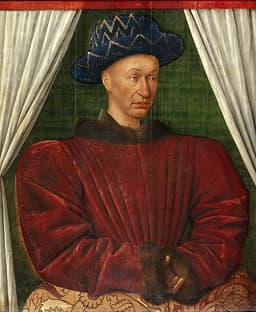
Charles VII of France
Emperor · Medieval
61.7Total

Napoleon Bonaparte
General · Modern
70.9Total
Basic Information
Born
1403
1769
Died
1461
1821
Era
Medieval
Modern
Nationality
France
France
Occupation
Emperor
General
Civilization
Western
Western
Score Comparison
Military (10%)
67.5
94.0
Political (20%)
70.0
72.0
Influence (20%)
56.7
40.0
Legacy (20%)
55.0
80.0
Leadership (15%)
66.0
78.0
Strategy (15%)
66.3
90.0
TOTAL
61.7
70.9
Charles VII of France — Complete Timeline
1429 AD
Siege of OrléansWar◆ Major
Joan of Arc, acting under Charles VII's authority, led French forces to lift the English siege of Orl
Hundred Years' WarSiegeJoan of Arc
Impact: regional
Coronation at ReimsPolitical Action
Charles VII was crowned King of France at Reims Cathedral, a traditional site for French coronations, following the military successes of Joan of Arc. This coronation legitimized his claim against the English-backed Henry VI and boosted French morale.
CoronationHundred Years' WarJoan of Arc
Impact: nationalconstructive
1435 AD
Treaty of ArrasPolitical Action◆ Major
Charles VII signed the Treaty of Arras with Philip the Good of Burgundy, ending the Burgundian alliance with England. This diplomatic victory isolated the English and paved the way for French reconquest of English-held territories.
TreatyBurgundyDiplomacy
Impact: regionalconstructive
1438 AD
Pragmatic Sanction of BourgesReform◆ Major
Charles VII issued the Pragmatic Sanction of Bourges, asserting the authority of the French crown over the Catholic Church in France. It limited papal interference in ecclesiastical appointments and revenues, strengthening royal control.
Church ReformRoyal AuthorityGallicanism
Impact: nationalconstructive
1453 AD
Battle of CastillonWar
French forces under Charles VII's command defeated the English at Castillon, the final battle of the Hundred Years' War. The English lost Gascony, ending their territorial presence in France except for Calais.
Hundred Years' WarBattleEnd of War
Impact: regional
Napoleon Bonaparte — Complete Timeline
1799 AD
Coup of 18 BrumaireOther◆ Major
Napoleon Bonaparte, with support from his brother Lucien and key political figures, overthrew the Directory in a bloodless coup. He established the Consulate with himself as First Consul, effectively becoming the ruler of France. This event ended the French Revolution's most unstable period.
French RevolutionCoupRise to Power
Impact: regional
1804 AD
Promulgation of the Napoleonic CodeOther◆ Major
Napoleon enacted the Civil Code of the French, known as the Napoleonic Code, a comprehensive set of laws that replaced the fragmented feudal legal systems. The code established legal equality, protected property rights, and secularized law. It became the basis for legal systems in many European and world countries.
Legal ReformNapoleonic CodeCivil Law
Impact: globalconstructive
1805 AD
Battle of AusterlitzWar◆ Major
Napoleon's Grande Arm
Napoleonic WarsBattleDecisive Victory
Impact: global
1812 AD
Invasion of RussiaWar◆ Major
Napoleon led the Grande Arm
Napoleonic WarsInvasionDisaster
Impact: globaldestructive
1815 AD
Battle of WaterlooWar◆ Major
Napoleon's French army was defeated by the combined forces of the Duke of Wellington's Anglo-Allied army and Gebhard Leberecht von Bl
Napoleonic WarsBattleFinal Defeat
Impact: globaldestructive
Expert Analysis
charles-vii-of-france-vs-napoleon-bonaparte
# The Crown and the Sword: Charles VII and Napoleon
On a cold December morning in 1805, Napoleon Bonaparte watched from a hilltop as the sun rose over the frozen fields of Austerlitz. Below him, the armies of Russia and Austria were marching into a trap he had spent weeks designing. By nightfall, he had destroyed two empires in a single day. Four centuries earlier, another French ruler, Charles VII, had stood on a very different kind of battlefield—not one of ice and glory, but of mud, despair, and a war that had dragged on for nearly a century. Where Napoleon commanded through sheer force of will, Charles ruled through patience, alliances, and the miraculous intervention of a teenage peasant girl. Both men saved France, but in ways so different that they reveal the very nature of power itself.
Origins
Napoleon Bonaparte was born in 1769 on the island of Corsica, a place that had only recently become French. His family was minor nobility, poor and resentful of the mainland. He spoke French with a thick Italian accent and was mocked by his classmates at military school. This outsider status burned into him a ferocious ambition—not just to succeed, but to conquer. The French Revolution had shattered the old order, and for a young artillery officer of talent, the path was wide open.
Charles VII, born in 1403, inherited a catastrophe. His father, Charles VI, had gone mad, and the English king claimed the French throne. By the time Charles became dauphin, he controlled little more than the Loire Valley. Paris was occupied, the great nobles had betrayed him, and his own mother had declared him illegitimate. He was timid, indecisive, and plagued by doubt. Where Napoleon was forged in the fire of revolution, Charles was shaped by the slow decay of a dying kingdom.
Rise to Power
Napoleon’s ascent was a masterpiece of speed and calculation. At age 24, he crushed a royalist uprising in Paris with a “whiff of grapeshot.” At 26, he led a ragged army across the Alps into Italy and won six battles in two weeks. By 30, he had made himself First Consul, and by 35, Emperor. Each step was a gamble, and each gamble paid off. He understood that in an age of chaos, audacity was the only currency.
Charles’s rise was the opposite—slow, uncertain, and dependent on others. In 1429, when he was 26, the English had besieged Orléans, the last major city still loyal to him. He seemed ready to flee to Scotland. Then came Joan of Arc, a 17-year-old peasant girl who claimed to hear voices from God. She convinced him to let her lead an army to Orléans. Against all odds, she broke the siege in nine days. Charles was crowned at Reims Cathedral that same year, the traditional site of French coronation. It was not his own doing, but he had the wisdom to accept help from wherever it came.
Leadership & Governance
Napoleon governed as he fought: with relentless energy and total control. He personally rewrote French law in the Napoleonic Code, sweeping away feudal privileges and establishing equality before the law. He built schools, roads, and a centralized bureaucracy. But he also silenced dissent, censored newspapers, and crowned himself emperor. His military genius was unmatched—he won 60 battles, from Austerlitz to Jena, by moving faster, thinking clearer, and demanding more than any general of his age. His strategy score of 93.0 reflects a mind that saw war as a chessboard where every piece had a purpose.
Charles VII governed through patience and compromise. In 1435, he signed the Treaty of Arras with Philip the Good of Burgundy, ending the alliance that had nearly destroyed France. It was not a victory of arms but of diplomacy. In 1438, he issued the Pragmatic Sanction of Bourges, asserting royal authority over the Catholic Church in France—a quiet but profound assertion of sovereignty. He reformed the army, creating a standing force paid by taxes rather than feudal levies. His leadership score of 87.3, higher than Napoleon’s 80.0, suggests a ruler who understood that survival often requires bending rather than breaking.
Triumph & Tragedy
Napoleon’s greatest triumph was Austerlitz in 1805, where he destroyed the Third Coalition in a single day. His greatest tragedy was the invasion of Russia in 1812. He marched 600,000 men into the snow; fewer than 100,000 came back. He never recovered. Exiled to Elba, he escaped and ruled for 100 days, only to be crushed at Waterloo in 1815. He died on Saint Helena in 1821, a prisoner of the British, at age 51.
Charles VII’s triumph came in 1453 at the Battle of Castillon, where French artillery destroyed the English army and ended the Hundred Years’ War. After 116 years of conflict, France was finally free. But his tragedy was quieter: he grew paranoid in his later years, suspecting even his own son of plotting against him. He died in 1461, possibly by starvation, after refusing to eat for fear of poison. He was 58.
Character & Destiny
Napoleon’s character was a force of nature—brilliant, ruthless, and insatiable. He once said, “I live only for posterity.” But his hunger for glory consumed him. He could not stop, and that inability to rest destroyed everything he built. His political score of 75.0, lower than Charles’s 83.7, reveals a man who could win battles but not peace.
Charles VII was cautious, even fearful. He did not seek glory; he sought survival. He let Joan of Arc take the credit for Orléans, let diplomats negotiate the Treaty of Arras, and let his generals win the final battles. But he had the courage to endure. His legacy score of 72.2 is lower than Napoleon’s 78.0, yet he achieved something Napoleon never could: he left France stronger than he found it.
Legacy
Napoleon’s legacy is written in law, architecture, and the very map of Europe. The Napoleonic Code influenced legal systems from Brazil to Japan. His military tactics are still studied in war colleges. But his name is also a warning: brilliance without restraint leads to ruin.
Charles VII’s legacy is quieter but more profound. He ended the Hundred Years’ War, unified France, and laid the foundations for the absolute monarchy that would reach its peak under Louis XIV. He is remembered as “Charles the Victorious,” but his victory was not his alone. It belonged to a nation that learned to trust its king again.
Conclusion
Standing on the field of Austerlitz, Napoleon saw only himself reflected in the ice. Charles VII, kneeling at Reims, saw a crown placed on his head by a girl who heard voices. One was a comet that burned too bright; the other was a steady flame that outlasted the storm. Both saved France, but they teach us different truths: that power can come from will or from patience, from conquest or from endurance. In the end, the comet fades, but the flame remains.
Rankings
🥇
Napoleon BonaparteLeader
Mil: 94.0Pol: 72.0Inf: 40.0
70.9
🥈
Charles VII of France
Mil: 67.5Pol: 70.0Inf: 56.7
61.7
+9.2 behind
How This Comparison Works
Algorithm
Each figure is scored on 6 dimensions (0—100 scale) based on structured historical data: Military (10%), Political (20%), Influence (20%), Legacy (20%), Leadership (15%), Strategy (15%). The weighted total produces the final ranking.
Data Sources
Scores are computed from structured sub-indicators in the database. Scale factors adjust for era (Ancient ×0.85, Modern ×1.0) and civilization size (Eastern ×1.05, Other ×0.80) to account for differences in population and military scale.
Maximum 3 Figures
Comparisons are limited to 2—3 figures to ensure readability and statistical meaningfulness.
Error Margins
±5 points per dimension — Sub-scores are derived from historical records with inherent uncertainty. Two figures within 5 points on a dimension should be considered roughly equivalent in that area.
Total Score Accuracy
±3 points overall — The weighted combination of 6 dimensions produces a total score with approximately ±3 points of uncertainty. Differences of less than 3 points are not statistically significant— the figures are effectively tied.
Known Limitations
- Historical records are incomplete and uneven across civilizations
- Figures from oral-tradition societies may be underrepresented
- Occupation labels can misclassify multi-role figures
- Scores measure capability and impact, not moral character
- Quantitative scoring is a comparison tool, not absolute truth
Capability Radar
Military (10%) — Battles & Warfare
Battles
65
95
Win Rate
70
90
Expansion
55
95
Political (20%) — Governance & Reform
Reform
85
95
Diplomacy
75
80
Economy
70
85
Influence (20%) — Cultural & Global Reach
Cultural
60
85
Global
55
90
Legacy (20%) — Historical Impact
Historical
75
95
Longevity
70
90
Leadership (15%) — Power & Stability
Tenure
70
85
Stability
65
70
Strategy (15%) — Tactics & Innovation
Strategy
75
95
Tactics
60
98
Reform
80
92
Similar Comparisons
Comments & Discussion
No comments yet. Be the first to share your thoughts!