Loading...
Charles IV vs Louis XI of France
Louis XI of France leads by 6.5 pts · 2 figures compared
…

Charles IV
Emperor · Medieval
59.7Total
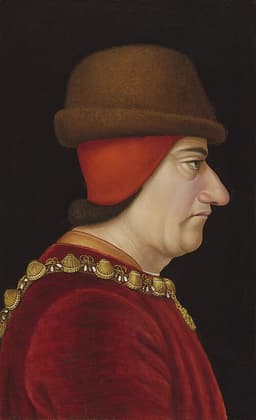
Louis XI of France
Emperor · Medieval
66.2Total
Basic Information
Born
1316
1423
Died
1378
1483
Era
Medieval
Medieval
Nationality
Holy Roman Empire
France
Occupation
Emperor
Emperor
Civilization
Western
Western
Score Comparison
Military (10%)
50.0
47.5
Political (20%)
78.0
78.0
Influence (20%)
55.0
65.0
Legacy (20%)
52.0
65.0
Leadership (15%)
78.0
78.0
Strategy (15%)
45.0
55.0
TOTAL
59.7
66.2
Charles IV — Complete Timeline
1344 AD
Made Prague the Imperial CapitalPolitical Action◆ Major
Charles IV, as King of Bohemia and Holy Roman Emperor, established Prague as the permanent imperial capital. He initiated extensive building projects including the Charles Bridge and St. Vitus Cathedral, transforming Prague into a major European cultural and political center.
Urban DevelopmentImperial CapitalPrague
Impact: regionalconstructive
1348 AD
Founded Charles UniversityCultural◆ Major
Charles IV founded the University of Prague, later named Charles University, as the first university in Central Europe. It became a leading center for learning and attracted scholars from across the continent, strengthening Prague's intellectual reputation.
EducationUniversityCultural Development
Impact: regionalconstructive
1356 AD
Issued the Golden Bull of 1356Reform
Charles IV issued the Golden Bull, a constitutional document that regulated the election of the Holy Roman Emperor by seven prince-electors. This law stabilized imperial succession and defined the electoral process for centuries, reducing papal influence.
Constitutional LawImperial ReformElectoral System
Impact: regionalconstructive
1373 AD
Acquired BrandenburgPolitical Action
Charles IV secured the Margraviate of Brandenburg for the Luxembourg dynasty through a treaty with the Wittelsbachs. This territorial acquisition expanded his family's holdings in northern Germany and strengthened imperial authority.
Territorial ExpansionLuxembourg DynastyBrandenburg
Impact: regional
Louis XI of France — Complete Timeline
1464 AD
Established the Postal ServiceReform
Louis XI established a royal postal service, creating a network of relay stations for rapid communication across France. This system improved administrative efficiency and royal control over the realm.
Postal ServiceAdministrationCommunication
Impact: nationalconstructive
1465 AD
Defeated the League of the Public WealWar◆ Major
Louis XI defeated the League of the Public Weal, a coalition of rebellious nobles led by the Duke of Burgundy and the Duke of Berry. The victory at the Battle of Montlh
Civil WarNobilityRoyal Authority
Impact: national
1469 AD
Imprisoned Cardinal BaluePolitical Action
Louis XI imprisoned his own minister, Cardinal Jean Balue, for treason after discovering his secret correspondence with Charles the Bold. Balue was held in an iron cage for over a decade, demonstrating Louis's ruthless treatment of disloyal officials.
ImprisonmentTreasonIron Cage
Impact: nationaldestructive
1474 AD
Supported the Swiss Confederacy against BurgundyWar
Louis XI provided financial and diplomatic support to the Swiss Confederacy in their war against Charles the Bold of Burgundy. This alliance contributed to Burgundy's defeat and the eventual collapse of the Burgundian state.
AllianceSwissBurgundian Wars
Impact: regionalconstructive
1475 AD
Signed the Treaty of PicquignyPolitical Action◆ Major
Louis XI signed the Treaty of Picquigny with King Edward IV of England, ending the Hundred Years' War. The treaty included a payment to Edward IV to withdraw his invading army, securing peace and saving France from invasion.
TreatyHundred Years' WarDiplomacy
Impact: regionalconstructive
1477 AD
Acquired the Duchy of BurgundyWar◆ Major
After the death of Charles the Bold at the Battle of Nancy, Louis XI seized the Duchy of Burgundy and other Burgundian territories. This acquisition significantly expanded the French crown's lands and reduced Burgundian power.
Territorial ExpansionBurgundyRoyal Domain
Impact: regionalconstructive
Expert Analysis
Origins
Charles IV was born on May 14, 1316, in Prague, the eldest son of John of Luxembourg, King of Bohemia, and Elizabeth of Bohemia. He was educated at the French court, where he spent seven years from age seven, learning Latin, French, and the arts of governance. His early exposure to the sophisticated Capetian administration shaped his later reforms. In contrast, Louis XI was born on July 3, 1423, in Bourges, France, the son of Charles VII and Marie of Anjou. He grew up in the midst of the Hundred Years' War, witnessing the decline of English power in France. His education emphasized military and political strategy, but he clashed with his father early on, leading to a rebellious youth.
Rise to Power
Charles IV's rise was methodical. He became Margrave of Moravia in 1333 and administered the Bohemian lands during his father's absences. In 1346, he was elected King of the Romans with the support of Pope Clement VI, and upon his father's death at the Battle of Crécy that same year, he inherited the Kingdom of Bohemia. He was crowned Holy Roman Emperor in 1355. His pivotal act came in 1356 with the Golden Bull, which formalized the election process by seven prince-electors, reducing papal influence and stabilizing the empire. Louis XI's path was more confrontational. He became Dauphin in 1429 and soon opposed his father's policies, even joining the Praguerie revolt in 1440. After his father's death in 1461, he ascended the throne. His early reign faced the League of the Public Weal (1465), a coalition of nobles led by Charles the Bold of Burgundy. Louis XI defeated them through a combination of military force and diplomacy, notably the Treaty of Conflans, which temporarily ceded territory but bought him time to consolidate power.
Leadership & Governance
Charles IV governed through strategic centralization. He made Prague the imperial capital, investing in architecture like the Charles Bridge and St. Vitus Cathedral, and founded Charles University in 1348, the first in Central Europe. His Golden Bull was a constitutional masterpiece, ensuring orderly succession and reducing internal conflict. Politically, he scored 78.0, reflecting his ability to balance princely autonomy with imperial authority. Louis XI, with a political score of 78.0 as well, was a master of intrigue. He established a royal postal service in 1464 to improve communication and administration. He also created a standing army and reduced noble power by appointing commoners to key positions. His acquisition of Burgundy after Charles the Bold's death in 1477 doubled the royal domain. However, his methods were often ruthless: he imprisoned Cardinal Balue for years in an iron cage for treason.
Triumph & Tragedy
Charles IV's greatest triumph was the Golden Bull, which provided a stable framework for imperial elections until 1806. He also expanded Luxembourg territories, acquiring Brandenburg in 1373. His founding of Charles University boosted education and culture. However, his overreliance on diplomacy over military strength (military score 50.0) left the empire vulnerable. He failed to secure a lasting dynasty; his sons Wenceslaus and Sigismund were less capable, leading to eventual Luxembourg decline. Louis XI's triumphs include defeating the League of the Public Weal and annexing Burgundy, which made France the dominant European power. He also ended the Hundred Years' War with the Treaty of Picquigny in 1475, paying Edward IV to withdraw. Yet his paranoia led to tragedies: he alienated allies and imprisoned many, including his own brother. His harsh rule created resentment, and his death in 1483 left a kingdom still divided in some regions.
Character & Destiny
Charles IV was pragmatic and scholarly, preferring law and culture to war. His personality scores 78.0 in leadership, reflecting his ability to forge consensus. He was often called the "Father of the Country" for his prudent governance. Louis XI, nicknamed the "Universal Spider" for his web of spies and diplomacy, was cunning and suspicious. His leadership score of 78.0 matches Charles, but his strategy score of 55.0 (versus Charles's 45.0) indicates a more tactical mind. His character led to isolation; he trusted few and died feared rather than loved.
Legacy
Charles IV's legacy endures in the Golden Bull, which shaped the Holy Roman Empire's constitution. Praguers still celebrate his building projects. His university remains a major institution. However, his overall influence score of 55.0 and legacy score of 52.0 reflect limited impact beyond the empire. Louis XI's legacy is more profound: he unified France, laying the groundwork for the absolute monarchy. His centralization policies influenced later kings. His influence score of 65.0 and legacy score of 65.0 show greater enduring impact. The postal system he established evolved into a national service.
Conclusion
While Charles IV excelled in constitutional governance, Louis XI's unification of France had a greater impact on European history. Louis's political maneuvering and territorial acquisitions created a centralized state that dominated the continent for centuries. His total score of 66.2 versus Charles's 59.7 reflects this. Louis XI was the more consequential ruler, as his actions directly shaped the modern nation-state.
Rankings
🥇
Louis XI of FranceLeader
Mil: 47.5Pol: 78.0Inf: 65.0
66.2
🥈
Charles IV
Mil: 50.0Pol: 78.0Inf: 55.0
59.7
+6.5 behind
How This Comparison Works
Algorithm
Each figure is scored on 6 dimensions (0—100 scale) based on structured historical data: Military (10%), Political (20%), Influence (20%), Legacy (20%), Leadership (15%), Strategy (15%). The weighted total produces the final ranking.
Data Sources
Scores are computed from structured sub-indicators in the database. Scale factors adjust for era (Ancient ×0.85, Modern ×1.0) and civilization size (Eastern ×1.05, Other ×0.80) to account for differences in population and military scale.
Maximum 3 Figures
Comparisons are limited to 2—3 figures to ensure readability and statistical meaningfulness.
Error Margins
±5 points per dimension — Sub-scores are derived from historical records with inherent uncertainty. Two figures within 5 points on a dimension should be considered roughly equivalent in that area.
Total Score Accuracy
±3 points overall — The weighted combination of 6 dimensions produces a total score with approximately ±3 points of uncertainty. Differences of less than 3 points are not statistically significant— the figures are effectively tied.
Known Limitations
- Historical records are incomplete and uneven across civilizations
- Figures from oral-tradition societies may be underrepresented
- Occupation labels can misclassify multi-role figures
- Scores measure capability and impact, not moral character
- Quantitative scoring is a comparison tool, not absolute truth
Capability Radar
Military (10%) — Battles & Warfare
Battles
25
45
Win Rate
20
50
Expansion
15
60
Political (20%) — Governance & Reform
Reform
80
80
Diplomacy
85
90
Economy
80
75
Influence (20%) — Cultural & Global Reach
Cultural
75
60
Global
55
65
Legacy (20%) — Historical Impact
Historical
70
80
Longevity
65
75
Leadership (15%) — Power & Stability
Tenure
85
85
Stability
75
70
Strategy (15%) — Tactics & Innovation
Strategy
35
70
Tactics
30
55
Reform
20
65
Similar Comparisons
Comments & Discussion
No comments yet. Be the first to share your thoughts!